When you buy through our links, we may earn a commission. Products or services may be offered by an affiliated entity. Learn more.

How to Clean a CPAP Machine

- Regular CPAP cleaning is essential for health and therapy effectiveness, as masks, tubing, and humidifier chambers can collect bacteria, mold, and debris over time.
- Daily and weekly cleaning routines are simple and manageable, typically involving mild soap, warm water, and air drying—no harsh chemicals required.
- Avoid unapproved CPAP cleaning machines, as they may damage equipment and have not been proven safe or effective compared to standard cleaning methods.
Cleaning a CPAP machine doesn’t have to be complicated, but it does need to be done consistently. Given that the mask, tubing, and other components are breathed into and deliver air throughout the night, their cleanliness can be a serious health concern.
Daily cleaning removes dangerous microbes, mold, dust, and debris to ensure your CPAP therapy makes you feel better and not worse. While daily cleaning may seem overwhelming, it’s a relatively quick process that is easy to integrate into your daily schedule.
Below, we’ll walk you through all the steps needed to clean your CPAP machine safely and effectively, including what to clean daily, what to clean weekly, and which products to avoid.

Exploring CPAP Machines — But Haven’t Been Tested for Sleep Apnea Yet?
Start with our easy, at-home sleep test. It’s stress-free and effective. Get results within a few days.
How to Clean a CPAP Machine
Manufacturers and experts recommend daily cleaning of your CPAP supplies, and users should commit to weekly cleaning at a minimum. There have been rare cases of serious illness that can be traced back to unclean CPAP machines, and CPAP users who don’t regularly clean their machine may also suffer from congestion and coughing.
Cleaning your CPAP machine can also extend its lifespan and help ensure that you meet the manufacturer’s warranty requirements. That said, patients shouldn’t let excessive cleaning requirements get in the way of their therapy adherence. Even a less frequent cleaning schedule can be effective.
CPAP Cleaning Supplies
- Mild soap, preferably unscented and without moisturizing ingredients
- White vinegar (if you use a humidifier tank)
- Warm, drinking-quality water
- Sink, tub, or bucket large enough to hold your hose or tubing
- Clean, non-abrasive towel

Precautions Before You Start
- For a deeper cleaning, start earlier in the day, since some of the machine components may take several hours to fully dry.
- Unplug the machine from any power source.
- Refer to manufacturer’s guidelines to see if there are any important instructions to follow, such as not submerging certain components in water.
Step-by-Step Instructions
1. Disassemble the Machine
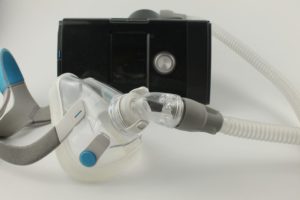
- Disconnect the tubing from both the mask and the CPAP machine before cleaning. If you use a humidifier, you should also remove the water tank and set it aside.
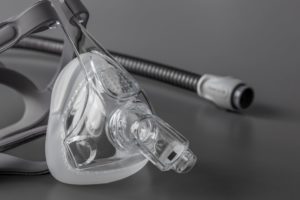
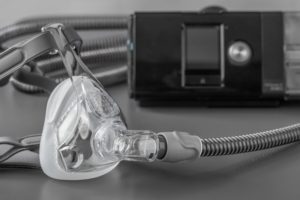
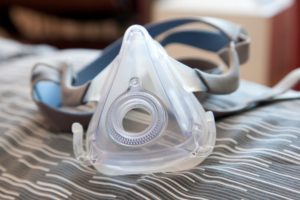
- Most CPAP masks consist of three parts — headgear, cushion, and frame — that can be separated for more effective cleaning and easier drying.
2. Clean the Machine and Equipment
- Most tubing can be cleaned by washing it in warm, soapy water. The inside of the tubing must also be cleaned, so be sure to submerge it in water for long enough that it fills up completely with the soapy water.
- Hoses with electrical components — such as heated hoses — must be cleaned more carefully. If you use a heated hose, double-check the manufacturer’s directions for more information on keeping it clean.
- Each part of your mask should be washed separately with mild soap. The cushion and headgear are particularly prone to becoming stained with face or hair oils. Since these can degrade the material and attract microbes, make sure they’re oil-free before moving on.
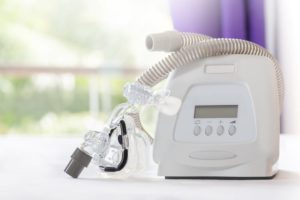
- Humidifier tanks can be sanitized by filling them with a solution of equal parts warm water and white vinegar. The tank can be left to soak while you clean the rest of your CPAP components, allowing the vinegar time to work.
3. Rinse and Air-Dry
- All CPAP components should be rinsed with cool, clean water after being washed. The components should be free of any soap. This is particularly important for thin tubing, as it is easy to miss soap bubbles trapped inside them.
- Once all of your components are rinsed and clean, you should set them out on a soft, clean towel to air-dry.
- Hoses and tubing may dry better if hung up, so try hanging them from a shower rail or door if they don’t air-dry properly on the towel.
4. Reassemble the Machine
- You should only reassemble your mask and CPAP components once they’re fully dry. Depending on the component and your climate, this may take several hours.
- Reassembly should be done away from outlets and with the CPAP machine unplugged. Always remember to follow any assembly instructions from the manufacturer of your mask and CPAP machine.
Other Considerations
- You breathe into your CPAP machine all night long. When you’re sick, this creates a reservoir of microbes in the CPAP machine itself. This contamination can easily worsen your illness, as well as potentially reinfecting you after you recover. Just as you wouldn’t use a used tissue to filter your breathing, you should keep your CPAP scrupulously clean whenever you are ill.
- People with allergies, particularly people with dust allergies, often struggle to use even the best CPAP machines. While the most important step is finding the right settings and mask with your healthcare team, the process can also be made easier by cleaning your machine daily.
- Most CPAP machines have filters that should be replaced on a regular basis. Disposable filters are the most common and should be replaced every two weeks, while reusable filters should be washed every two weeks and replaced every three months.
- Cleaning your CPAP components is a great time to double-check their condition and make sure nothing needs replacing. Most CPAP components, including masks, need to be replaced on a regular basis. You should also replace any components if they begin showing wear-and-tear.

How Often to Clean Your CPAP
Most recommendations regarding CPAP cleaning suggest that you should clean your humidifier chamber daily in warm, soapy water, since that’s the component with the most conducive environment for mold or bacteria. Some patients also wipe down their masks daily with CPAP wipes to keep them fresh and clean. Deeper cleaning of the full mask, headgear, and other machine components and hoses can be done once per week.
While these recommendations are standard, if you do happen to miss your daily or weekly cleanings on occasion, it doesn’t mean that you’re destined to get sick or have ruined your machine. Just do your best to incorporate cleaning and maintenance into your routine, just as you would other hygiene tasks.
What Happens if You Don’t Clean Your CPAP Regularly?
CPAP machines are humid and often warm, making them the perfect home for mold, bacteria, viruses, and other harmful microbes. Cleaning your CPAP components regularly washes these microbes away and prevents them from reaching dangerous levels, but neglecting your CPAP machine’s hygiene can lead to both acute and chronic respiratory conditions.
Regardless of your personal hygiene, facial oils will quickly build up on your mask’s cushion and headgear. Oil attracts dirt and bacteria, and the combination of these can quickly lead to acne and skin irritation around your mask.
Finally, a dirty CPAP machine will have a far shorter lifespan than one that’s kept clean. Facial oils and dirt can degrade the materials your mask is made of, while mold and harmful microbes can also damage the hose or humidifier tank, leading to cracks or cloudiness.
That said, you should also follow recommendations regarding how often you should change parts, such as headgear, masks or tubing.
Should You Use a CPAP Cleaning Machine?
CPAP cleaners are water-free devices that use ozone (also known as activated oxygen) or ultraviolet light to sanitize CPAP components. While these products are often marketed as convenient, the U.S. Food and Drug Administration (FDA) warns against their use due to potential health and safety risks.
The FDA reports that exposure to high levels of ozone gas released by some at-home cleaning devices may increase the risk of respiratory irritation, breathing problems, and infection, especially for people with lung conditions.
UV-based cleaners also carry risks, as improper exposure can cause burns, eye damage, and may increase the risk of skin cancer. In addition, these devices may damage CPAP equipment over time and aren’t proven to clean as effectively as regular washing with soap and water.
For these reasons, manufacturers and sleep specialists generally recommend manual cleaning with mild soap and water as the safest and most reliable way to keep CPAP equipment clean and functioning properly.
Frequently Asked Questions
Can I use dish soap to clean my CPAP equipment?
The key for cleaning CPAP equipment is to choose a mild soap. As long as the dish soap you choose is a mild formula, it should do the job.
Can I run vinegar through my CPAP machine to clean it?
No, you shouldn’t “run” vinegar through the machine. This may damage the components. Instead, if you wish to use vinegar to clean your CPAP, using a solution of equal parts vinegar and water is a good option to deep clean the humidifier chamber or other removable parts of your CPAP machine.
What should I not use to clean my CPAP machine?
Be sure to avoid harsh chemical cleaning products when cleaning your CPAP machine. This includes anything that uses bleach or chlorine, as well as heavily scented products. Stick with mild soaps or vinegar-and-water solutions. When in doubt, consult the manufacturer’s cleaning instructions.
Do I need to empty CPAP water every day?
Yes, emptying and rinsing the water chamber of your CPAP every day is the best way to prevent buildup of harmful bacteria, mold, or other particles. You should give it a thorough rinse in warm, soapy water and let it air-dry. Refill with fresh, distilled water right before you’re ready to use again.

Still have questions? Ask our community!
Join our Sleep Care Community — a trusted hub of product specialists, sleep health professionals, and people just like you. Whether you’re searching for the perfect mattress or need expert sleep advice, we’ve got you covered. Get personalized guidance from the experts who know sleep best.
Dawn Papandrea is a freelance journalist and content specialist with more than 20 years of professional writing and editing experience. She holds a master’s degree in journalism and mass communications from New York University and is a member of the American Society of Journalists and Authors (ASJA).
References8 Sources
Schnirman, R., Nur, N., Bonitati, A., & Carino, G. (2017). A case of legionella pneumonia caused by home use of continuous positive airway pressure. SAGE Open Medical Case Reports, 5, 2050313X1774498.
https://pubmed.ncbi.nlm.nih.gov/29238576/Patel SR. Providing Cleaning Recommendations for Positive Airway Pressure Devices. Ann Am Thorac Soc. 2024;21(1):27-29. doi:10.1513/AnnalsATS.202308-683VP
https://pmc.ncbi.nlm.nih.gov/articles/PMC10867908/Schotland H. The Care and Cleaning of Your PAP Device. American Journal of Respiratory and Critical Care Medicine. 2020;201(11):P23-P24. doi:https://doi.org/10.1164/rccm.2020c3
https://www.atsjournals.org/doi/pdf/10.1164/rccm.2020C3Yang Q, Li H, Wu W, et al. Effect of continuous positive airway pressure on allergic rhinitis in patients with obstructive sleep apnea-hypopnea syndrome. Ther Clin Risk Manag. 2018;14:1507-1513. Published 2018 Aug 24. doi:10.2147/TCRM.S170548
https://www.tandfonline.com/doi/full/10.2147/TCRM.S170548Ortolano GA, Schaffer J, McAlister MB, et al. Filters reduce the risk of bacterial transmission from contaminated heated humidifiers used with CPAP for obstructive sleep apnea. J Clin Sleep Med. 2007;3(7):700-705.
https://jcsm.aasm.org/doi/full/10.5664/jcsm.27026Chin CJ, George C, Lannigan R, Rotenberg BW. Association of CPAP bacterial colonization with chronic rhinosinusitis. J Clin Sleep Med. 2013;9(8):747-750. Published 2013 Aug 15. doi:10.5664/jcsm.2910
https://pmc.ncbi.nlm.nih.gov/articles/PMC3716664/Voluntary Recall of SoClean Equipment for CPAP Devices and Accessories. U.S. Food and Drug Administration. Published 2024.
https://www.fda.gov/medical-devices/safety-communications/voluntary-recall-soclean-equipment-intended-use-cpap-devices-and-accessories-fda-safetyFood and Drug Administration. (2024). Do You Need a Device That Claims to Clean a CPAP Machine?
https://www.fda.gov/consumers/consumer-updates/do-you-need-device-claims-clean-cpap-machine