When you buy through our links, we may earn a commission. Products or services may be offered by an affiliated entity. Learn more.

Do You Need a Prescription for a CPAP Machine?


- You need a doctor’s prescription to purchase a CPAP machine and face mask.
- In order to obtain a prescription, you may complete an overnight sleep study or take a home sleep test (HST).
- Your prescription will include the CPAP settings, equipment, and accessories to address your specific sleep apnea symptoms.
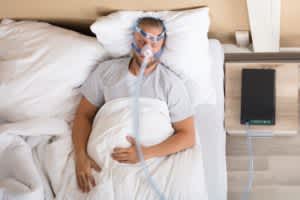
Sleep apnea is one of the most common sleep disorders in the United States. While lifestyle changes can help improve your sleep apnea symptoms in the long run, many doctors turn to continuous positive airway pressure (CPAP) therapy as a treatment option.
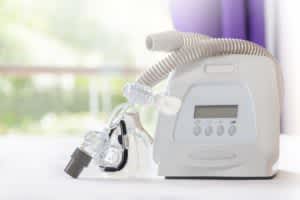
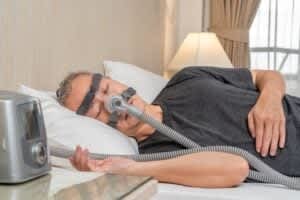
If you’re thinking about trying a CPAP machine, you’ll need a formal prescription from your doctor before you can buy or rent a CPAP machine. Although CPAP therapy is relatively safe and one of the most effective ways to treat the symptoms of sleep apnea, you’ll need approval from your doctor.
We’ll cover why you need a prescription to buy a CPAP machine, how to get a CPAP prescription, and where you can shop for CPAP equipment.
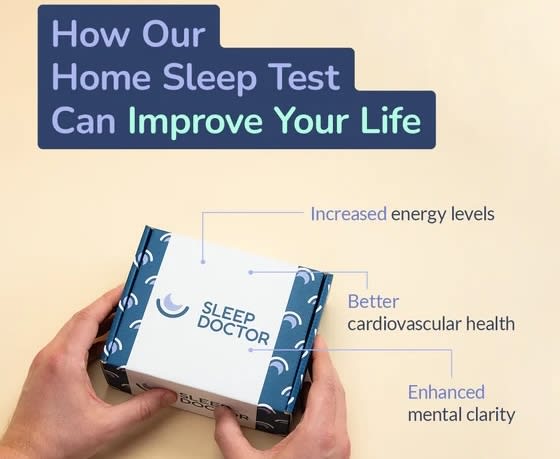
Exploring CPAP Machines — But Haven’t Been Diagnosed Yet?
Start with our easy, at-home sleep test. It’s stress-free and effective. Get results within a few days.
Why You Need a Prescription to Get a CPAP Machine
Although CPAP machines pose little risk of abuse, a prescription requirement ensures that your CPAP therapy will be safe and customized to your needs. In 2018, the FDA reclassified CPAP machines from Class III to Class II medical devices .
With this change, officials at the FDA hoped to break down regulatory hurdles, encourage product innovation, and improve access for patients. But even with the new designation, you’ll still need a prescription from your doctor before you can buy a CPAP machine and begin CPAP therapy.
If you’re experiencing any of the signs of sleep apnea, make an appointment with your doctor to discuss your symptoms. It may seem like a hassle, but requiring a prescription to buy a CPAP machine is actually in the best interest of patients. Your doctor can determine your diagnosis and write you a prescription for CPAP therapy. Once you have a CPAP prescription, you can begin shopping for the best CPAP machine.
When you consult with your doctor before starting CPAP treatment, you’ll have a better understanding of:
- Your sleep apnea diagnosis (there are different types)
- The best type of unit for your needs (CPAP, BiPAP, or APAP)
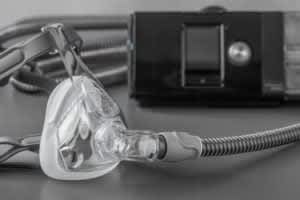
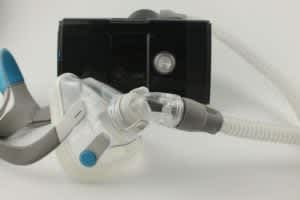
- The best CPAP mask and delivery system for your needs
- The right pressure setting for your symptoms
- When to replace key accessories
This oversight by a medical professional should improve the efficacy of your treatment . Without the guidance of your doctor, CPAP therapy may fail to improve your symptoms. Additionally, a prescription allows you to receive reimbursement through your health insurance plan for your CPAP unit and other necessary CPAP accessories.
Be wary of any retailers willing to sell you a CPAP without a prescription. The CPAP units they’re selling may not be FDA-approved.
How to Get a CPAP Prescription
Obtaining a CPAP prescription is a straightforward process, but there are a few steps to follow.
Evaluate Your Sleep Apnea Symptoms
Getting a CPAP prescription starts with recognizing the symptoms of sleep apnea. Obstructive sleep apnea (OSA) is the most common type of sleep apnea. Symptoms include:
- Frequent and severe snoring
- Disrupted breathing
- Awakening with gasping or choking
- Frequent awakenings
- Nighttime restlessness
- Sleepiness during the day
- Morning headaches
- Changes in mood
A less common form of sleep apnea is central sleep apnea (CSA). Because the airway isn’t physically blocked, the symptoms of CSA can be harder to recognize compared to OSA .
Schedule a Doctor’s Appointment
If you notice symptoms of sleep apnea, schedule an appointment with a doctor. Your primary care physician can be a good starting point. They can evaluate your symptoms and refer you to a sleep specialist, if necessary.
Healthcare providers who can prescribe CPAP equipment include:
- Primary care physicians (MD or DO)
- Sleep medicine specialists
- Pulmonologists
- Physician assistants (PA)
- Nurse practitioners
These options vary by state, and certain insurance plans have stricter requirements for reimbursement. Many online platforms offer virtual consultations with licensed physicians to help streamline the process.
Take a Sleep Study
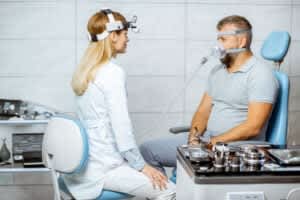
Before writing a prescription, a doctor will likely refer you to a sleep specialist who can administer a detailed sleep study . This study gives a more complete picture of your symptoms than self-reporting and helps determine the best treatment.
A sleep study is an overnight clinical test also known as a polysomnography. Sleep specialists often perform polysomnography at a sleep clinic, but some doctors may prescribe a simplified home sleep study (HST) that you can take on your own.
During polysomnography, specialists typically measure physical indicators such as heart rate, breathing, oxygen levels, respiratory effort, eye movement activity, muscle activity, and electrical activity of the heart and brain. The specialists record data while you sleep.
Get a CPAP Prescription
Once you’ve completed the sleep study, your sleep specialist will analyze the results, determine your diagnosis, and decide the best course of treatment. If you’re diagnosed with sleep apnea, you may be eligible to receive a CPAP prescription.
On a CPAP prescription , you’ll find the general information required on all prescriptions – patient’s name, description of the device (CPAP, BiPAP, or APAP), the prescribing physician’s signature, the physician’s National Provider Identifier (NPI), and the date.
Your sleep study results may include additional information for your prescription, such as:
- Diagnosis of sleep apnea, as well as the ICD (International Classification of Diseases) code
- Apnea-hypopnea index (AHI), which records the number of sleep apnea events a sleeper experiences during the night
- Recommended pressure settings
- Device specifications and requirements, including special accessories such as a heated humidifier
- Recommended mask type

Where to Buy CPAP Machines and Supplies
Once you’ve received your prescription for CPAP therapy, you can begin to shop for a CPAP machine and other CPAP equipment. You can find CPAP machines for sale through a number of suppliers including:
- Your insurance provider
- A local sleep clinic
- Online vendors
- Brick-and-mortar medical equipment retailers
If you choose to get a CPAP unit through your insurance, it’s important to note that some providers only allow you to rent your CPAP unit. Most insurance plans cover most – but not all – of the cost, so you may also need to pay out of pocket for your machine and equipment. And while brick-and-mortar stores allow you to look at items in person before you buy, they often have a limited selection. Online sellers tend to offer a wider selection and competitive prices.
Whether you shop in person or online, you’ll need a prescription for your CPAP machine. Most online vendors specializing in CPAP equipment simplify the process. You can typically email, upload, or fax a copy of your prescription. Keep in mind that you’ll also need a CPAP prescription to purchase some CPAP accessories like masks and humidifiers.
Frequently Asked Questions
How long is a CPAP prescription valid for?
Unless your prescription specifies an expiration date, CPAP prescriptions can be used indefinitely to purchase equipment. That said, insurers and suppliers may have different rules for replacing equipment that require you to get a new prescription if your type of machine or pressure settings change.
Do CPAP masks require separate prescriptions?
CPAP masks technically require a prescription, but most suppliers will accept your CPAP prescription for both the machine and mask. While some physicians still write separate prescriptions, many will specify on the prescription that it covers both the machine and mask.
Can you buy a used CPAP machine?
Used and refurbished CPAP machines are available for purchase online and in stores, but it’s important to only buy them from authorized CPAP retailers. Authorized retailers will ensure that the machines are serviced, properly sanitized, and calibrated. It’s best to avoid buying used CPAP machines from private online sellers, online marketplaces, or garage sales and flea markets.

Still have questions? Ask our community!
Join our Sleep Care Community — a trusted hub of product specialists, sleep health professionals, and people just like you. Whether you’re searching for the perfect mattress or need expert sleep advice, we’ve got you covered. Get personalized guidance from the experts who know sleep best.
Brian Clark is a writer and educator based in Los Angeles. His articles have appeared in The Austin Chronicle, Movieline and Screen Anarchy, among others. Like many, he became acutely aware of the importance of sleep after his first child was born.
Diane is a Registered Respiratory Therapist and Registered Sleep Disorders Specialist with 28 years’ experience. For the past 23 years, she’s focused on sleep medicine. She’s dedicated to helping people get the treatment they need to breathe easier and sleep more soundly by educating patients on their diagnosis and guiding them through their treatment options.
Learn more about our medical advisory boardReferences7 Sources
American Academy of Sleep Medicine. (2018, October 19). FDA reclassifies positive airway pressure as a Class II medical device.
https://aasm.org/fda-reclassifies-positive-aiway-pressure-class-ii-medical-device/Fujita, Y., Yamauchi, M., Muro, S. (2024). Assessment and management of continuous positive airway pressure therapy in patient with obstructive sleep apnea. Respiratory Infection; 62(4), 645-650
https://www.sciencedirect.com/science/article/pii/S2212534524000790MedlinePlus: National Library of Medicine (US). (2023, January 9). Obstructive sleep apnea – adults
https://medlineplus.gov/ency/article/000811.htmStrohl, K. P. (2022, September). Central sleep apnea. Merck Manual Professional Version.
https://www.merckmanuals.com/professional/pulmonary-disorders/sleep-apnea/central-sleep-apneaNational Heart, Lung, and Blood Institute. (2022, March 24). Sleep studies.
https://www.nhlbi.nih.gov/health/sleep-studiesCenters for Medicare and Medicaid Services (2023). Standard Documentation Requirements for All Claims Submitted to DME MACs
https://www.cms.gov/medicare-coverage-database/view/article.aspx?articleid=55426Centers for Medicare and Medicaid (2023). Positive Airway Pressure (PAP) Devices for the Treatment of Obstructive Sleep Apnea.
https://www.cms.gov/medicare-coverage-database/view/lcd.aspx?lcdid=33718