When you buy through our links, we may earn a commission. Products or services may be offered by an affiliated entity. Learn more.

Can You Buy CPAP Supplies In Store?

- CPAP supplies are available both in stores and online.
- For people who are new to CPAP therapy, purchasing items in person from a specialized supplier may allow you to try different products and get personalized recommendations from a professional.
- For CPAP accessories or replacement supplies, it could be worthwhile to shop online or at retailer pharmacies where you might find a wider selection of products and/or competitive pricing.
- If you’re using insurance coverage to help with out-of-pocket costs, talk to your insurer to see what’s covered and if you are required to shop from specific retailers, like a licensed durable medical equipment (DME) supplier.
CPAP devices and accessories are commonly sold online, but you can also find a selection of CPAP equipment in some in-person stores. Like with any medical device, it’s important to do your research before deciding on a CPAP machine.
Shopping online offers virtually unlimited selection, but it can feel overwhelming to sift through so many product pages. If you prefer the experience of shopping in-person, the good news is that there are still plenty of options, and you may even be able to receive professional advice while shopping, too. Below, we’ll discuss what types of stores stock CPAP equipment and what to keep in mind when buying.

Exploring CPAP Machines — But Haven’t Been Tested for Sleep Apnea Yet?
Start with our easy, at-home sleep test. It’s stress-free and effective. Get results within a few days.
Where to Buy CPAP Supplies In Store
You can buy CPAP supplies in-person at brick-and-mortar stores and durable medical equipment (DME) suppliers. Online retailers also sell a large assortment of CPAP supplies. Ultimately, the best place to buy CPAP supplies will depend on your personal preference.
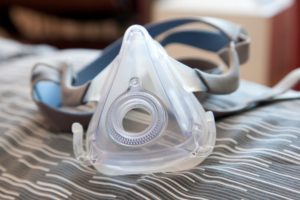
A major benefit to buying CPAP supplies in a brick-and-mortar store is the ability to see the product beforehand. If it’s your first time using CPAP therapy, you may find it especially helpful to try on different mask models, see how devices compare, and get personalized advice from CPAP professionals. It may also be easier to return the device if it doesn’t work out.
Online retailers tend to offer a larger selection, and they may also offer subscription plans so you don’t have to worry about remembering to replace your filters, cushions, and headgear.
| Supplier | Considerations |
|---|---|
| Durable Medical Equipment (DME) Supplier | A durable medical equipment (DME) supplier is licensed to sell medical equipment for long-term use in your home. If the supplier is enrolled in Medicare and if they accept assignment, then qualifying buyers can get most of their costs covered through Medicare Part B. Suppliers are regulated by the Centers for Medicare and Medicaid Services, which helps guarantee they meet certain quality standards and sell reliable equipment. Since they specialize in medical equipment, DME suppliers can also help you set up your insurance coverage or help with other questions about cost. |
| Sleep Clinics and Hospital-Affiliated Stores | If you are diagnosed with obstructive sleep apnea (OSA) via a sleep clinic or at a hospital, the provider may refer you to purchase CPAP supplies through a store affiliated with that practice. The advantage of going this route is that these stores should have a standard selection of products as well as specialists who can help you compare options. With your physician’s endorsement, you can also feel confident that the items in the store are good quality and from reputable manufacturers. |
| Large Retail Pharmacies | Large retail pharmacies like CVS and Walgreens (or big box stores with pharmacy departments like Walmart) usually don’t sell CPAP machines, but they may sell CPAP supplies at competitive price points. While you could find less expensive accessories, this might not be the best place to shop if you’re just starting out as a new patient since general retail stores usually do not have staff with specialized CPAP knowledge. You may also not have access to help with insurance questions, or get the same level of insurance coverage depending on your policy. |
| Specialty Medical Supply Stores | Another place to find CPAP supplies could be specialty medical supply stores. These locations carry a variety of medical supplies for people with chronic conditions, including people who need CPAP therapy. Because it’s a medical equipment supplier, you may be able to get more personalized customer service versus a general pharmacy. However, pricing may not be as competitive as you’d find from a big box retailer. |
Buying CPAP Supplies In Store vs. Online
Deciding if you want to purchase CPAP supplies online or in-store comes down to your shopping preferences, the level of guidance that you want, and if you’re planning on using insurance coverage to cover some or all of the expense. Here are some pros and cons of both shopping methods.
Pros of Buying In Store
- Trying everything on: You have the ability to see, feel, and try on equipment in person can help you select a mask type that fits best.
- Professional advice: You may have access to a store associate who can help you find what you need or make recommendations.
- Help with insurance: Some in-store suppliers can offer assistance with insurance paperwork.
- Less wait time: You usually don’t have to wait for delivery of items, and you may be able to take your CPAP machine home that day.
Cons of Buying In Store
- Product selection: The selection of items is limited to what’s on store shelves.
- Less accessibility: Some stores (like retail pharmacies) may not have someone knowledgeable about CPAP therapy to help you.
- Not as budget-friendly: Pricing could be higher than you’d find online, where you may be able to shop more deals.
Pros of Buying Online
- Cost: You can compare prices across several online retailers and possibly save money.
- CPAP machines available: There is a wider selection of products available.
- Ease of shopping: Buying online offers convenience, and you can even set up recurring subscriptions for replacement gear.
Cons of Buying Online
- Waiting period: Delivery times could vary, leaving you waiting for your items. You also usually have to pay for shipping.
- Solo shopping experience: You usually won’t have personalized guidance (though some websites may offer this), or the chance to try different items.
- Insurance: There may be more restrictions if you were planning to go through insurance.
- Be careful: You run the risk of purchasing low-quality items if you’re not buying from a reputable site.
Sleep Doctor also offers a curated selection of CPAP supplies from trusted brands, including masks and replacement supplies.
Tips for Buying CPAP Supplies In Store
Whether you decide to buy online or in-store, there are several things to be aware of when purchasing a CPAP machine and accessories.
Buy From a Credible Retailer
CPAP therapy blows air directly into your lungs, so it’s very important to purchase a system that’s clean and in proper working condition. Buying from a reliable, licensed retailer helps minimize the risk of receiving a defective or unsanitary device, and ensures you’re covered by the manufacturer’s warranty.
While it’s possible to use a refurbished CPAP device, we only recommend it if it’s been completely cleaned inside and out, had any worn or unsanitary parts replaced, returned to factory settings, and legally purchased at an authorized CPAP retailer. You shouldn’t ever purchase one from secondhand sites like Facebook Marketplace or eBay.
Ensure Compatibility
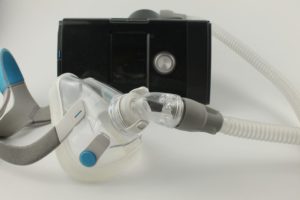
CPAP therapy involves several different parts, including the mask, the CPAP device itself, the tubing, and accessories such as a humidifier. While some parts are standardized to work between brands, others are not, so be sure to always check compatibility before buying.
Parts made by the same manufacturer are more likely to be compatible, and you can usually double-check this with compatibility tables provided by the manufacturer. If you’re in doubt, or if you just like mixing and matching brands, you can talk to your doctor, ask the shop assistant, or reach out to the manufacturer directly.
Check for Insurance Coverage
Medicare, Medicaid, and many other insurance companies cover a significant portion of the cost of CPAP therapy, but only if you meet certain usage requirements and obtain the machine through an approved supplier.
If you’re using original Medicare or Medicaid, your doctor or supplier is required to submit the insurance claim on your behalf. If you’re covered under a different plan, consult your policy to see whether your insurance covers CPAP and get information on how to submit a claim.
Note that you need a prescription to purchase a CPAP device or mask, although certain accessories such as the humidifier or mask replacement parts are sold over-the-counter. Be aware that health insurance plans are less likely to cover optional CPAP accessories, such as a travel CPAP or a CPAP battery, since those are not essential for therapy.
Medical Disclaimer: The content on this page should not be taken as medical advice or used as a recommendation for any specific treatment or medication. Always consult your doctor before taking a new medication or changing your current treatment.

Still have questions? Ask our community!
Join our Sleep Care Community — a trusted hub of product specialists, sleep health professionals, and people just like you. Whether you’re searching for the perfect mattress or need expert sleep advice, we’ve got you covered. Get personalized guidance from the experts who know sleep best.
References4 Sources
Borel JC, Tamisier R, Dias-Domingos S, et al. Type of Mask May Impact on Continuous Positive Airway Pressure Adherence in Apneic Patients. de Torres JP, ed. PLoS ONE. 2013;8(5):e64382. doi:https://doi.org/10.1371/journal.pone.0064382
https://journals.plos.org/plosone/article?id=10.1371/journal.pone.0064382U.S. Centers for Medicare and Medicaid Services. (n.d.) Durable medical equipment (DME) coverage. Medicare.gov.
https://www.medicare.gov/coverage/durable-medical-equipment-dme-coverageCenters for Medicare and Medicaid. (2024). Continuous Positive Airway Pressure (CPAP) Therapy for Obstructive Sleep Apnea (OSA).
https://www.cms.gov/medicare-coverage-database/view/ncacal-decision-memo.aspx?proposed=N&NCAId=204American Academy of Sleep Medicine. (2018, October 19). FDA reclassifies positive airway pressure as a Class II medical device.
https://aasm.org/fda-reclassifies-positive-aiway-pressure-class-ii-medical-device/