When you buy through our links, we may earn a commission. Products or services may be offered by an affiliated entity. Learn more.

If I Snore, Do I Need CPAP?


- CPAP is primarily used to treat obstructive sleep apnea and can significantly reduce snoring for people with that condition, but it’s rarely prescribed for snoring alone.
- Loud snoring with other symptoms like gasping, pauses in breathing, daytime sleepiness, or morning headaches may indicate sleep apnea.
- Alternative approaches to reducing snoring include lifestyle changes, positional therapy, nasal treatments, and oral appliances.
Snoring can be disruptive and annoying, but it isn’t always a sign of a serious sleep condition. In fact, most people who snore don’t need to use a CPAP machine. While CPAP devices are very effective at eliminating snoring, they’re typically only recommended for people with sleep apnea.
For some individuals, snoring is a symptom of sleep apnea, a condition that causes repeated pauses in breathing during sleep and can lead to daytime sleepiness and other health problems. However, the majority of people who snore don’t have sleep apnea and can often reduce snoring through treatments other than CPAP therapy.

What Causes Snoring?
Snoring occurs when airflow through the mouth or nose is partially blocked during sleep, causing the surrounding tissues to vibrate. This blockage is more likely to happen when the muscles in the throat relax, narrowing the airway.
Common factors that can cause snoring include sleeping on the back, nasal congestion, alcohol use before bedtime, and anatomical features such as a narrow airway or enlarged tonsils. Snoring can also become more frequent with age or weight gain, as changes in muscle tone and tissue distribution can further restrict airflow during sleep.
Does Snoring Mean Sleep Apnea?
Snoring is one of the main symptoms of obstructive sleep apnea (OSA), but it’s common for people to snore without having sleep apnea. Almost all people snore from time to time, and even frequent snorers often don’t have sleep apnea.
It’s estimated that, among middle-aged adults, as many as 44% of males and 28% of females snore regularly. However, studies have found that less than a third of these snorers have OSA.
Sleep apnea is a disorder that occurs when breathing periodically stops or slows during sleep. In OSA, the cause of breathing disruptions is a blockage or obstruction of the upper airway.
While most people who have OSA snore, the fact that someone snores doesn’t automatically mean they have OSA. The causes of snoring can be linked to a number of issues other than sleep apnea, such as taking certain medications or having overweight or obesity, congestion, or nasal polyps that affect airflow during sleep.
Is It Snoring or Sleep Apnea?
It’s important to differentiate someone with sleep apnea from someone who just habitually snores. Snoring that’s very loud or that sounds like gasping or choking may be more likely to be linked to OSA. However, symptoms alone can’t determine whether snoring is related to sleep apnea.
Anyone concerned about snoring should talk with a doctor, as a medical assessment is necessary to diagnose or rule out OSA. It’s especially important to see a doctor if snoring is accompanied by other signs of sleep apnea like:
- Pauses in breathing while sleeping
- Gasping, snorting, or choking during sleep
- Excessive sleepiness during the day
- Feeling unrefreshed even after a full night of sleep
- Frequent morning headaches
If a doctor believes that a person may have OSA, they can suggest a sleep study, which is the only way to conclusively diagnose sleep apnea.
Can CPAP Stop Snoring?
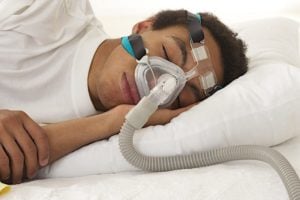
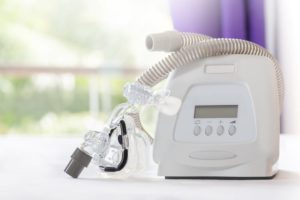
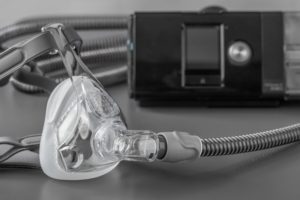
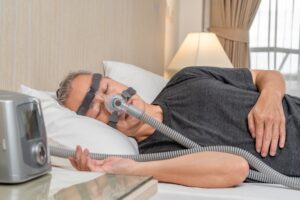
Using a CPAP machine is one of the most effective treatments for obstructive sleep apnea and can stop snoring associated with OSA. By delivering a steady stream of air that keeps the airway open, CPAP prevents the tissue collapse and vibrations that lead to both breathing pauses and snoring.
However, doctors rarely prescribe CPAP to people who snore but don’t have sleep apnea. Most insurance providers require a sleep apnea diagnosis before covering the cost of the machine.
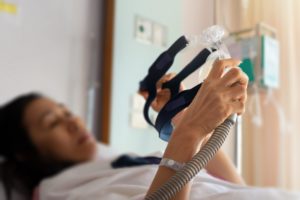
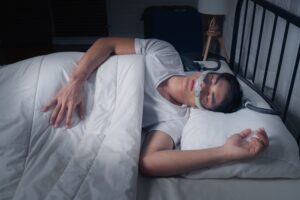
In order for a CPAP machine to treat sleep apnea and reduce snoring, it must be used regularly during sleep. For some people, discomfort while using a CPAP can make it challenging to use the device every night.

When Is CPAP Recommended?
CPAP therapy is typically recommended when a person is diagnosed with obstructive sleep apnea through a sleep study. Doctors are most likely to recommend CPAP for people with moderate to severe sleep apnea, or for those with mild sleep apnea who have significant symptoms, such as excessive daytime sleepiness, impaired concentration, or cardiovascular risk factors.
Because CPAP is designed to treat sleep apnea—not simple snoring—it’s usually prescribed only after proper evaluation. A sleep study helps determine whether CPAP is necessary and ensures that treatment is tailored to a person’s specific needs.
What Are the Alternatives to CPAP for Snoring?
CPAP is rarely prescribed for snoring in people who don’t have sleep apnea, but there are other options that can help these individuals reduce snoring. In many cases, these approaches can decrease snoring and the frustrations it can cause for a bed partner.
Lifestyle Changes
- Losing weight: Extra fat around the neck and upper airway can contribute to snoring, so losing weight may reduce snoring. The impacts of weight loss on snoring are not consistent, which means that losing weight will not benefit everyone or necessarily lead to a complete elimination of snoring.
- Quitting smoking: Studies have found a correlation between smoking and snoring, and this may be tied to smoking-related congestion or the body’s withdrawal from nicotine during sleep. Experts recommend quitting smoking as a way to decrease the likelihood of snoring while also improving overall health.
- Avoiding alcohol at night: Consuming alcohol can lead to relaxation of the muscles around the airway, which makes it easier for those muscles to obstruct airflow in a way that causes snoring. It may help to avoid alcohol for at least a few hours before going to bed.
- Doing mouth exercises: Certain types of mouth exercises can increase muscle tone in the tissues around the airway, and this may cut down on muscle slackening that can play a role in snoring.
Changing Sleep Position
Changing sleep position may also help to reduce snoring. Side sleeping is the best position to minimize snoring.
For some people, it may be difficult to switch to a side-sleeping position. A range of products are marketed to help people stay on their side throughout the night. These include posture pillows and posture alarms. Special sleep shirts are also available that have a small ball attached to the back that makes back sleeping uncomfortable.
People who can’t avoid sleeping on their back may try sleeping with their head and upper body elevated. The upper body can be raised by using an adjustable bed, putting blocks under the legs of the upper part of the bed, or using a large wedge pillow.
Medications
If the cause of the snoring is nasal congestion, then over-the-counter drugs and nasal strips may help.
Decongestants and nasal steroid sprays are two options that may reduce congestion, but individuals should always consult with a doctor or pharmacist before using them for any extended period of time.
Another option is using nasal strips , which can be placed on the nose to help widen the nasal passageways and facilitate easier breathing.
Anti-Snoring Mouthpieces
If other treatments for snoring aren’t effective, an anti-snoring mouthpiece may be an option. These devices are custom-made by a dentist and work by holding the mouth, tongue, or jaw in a specific position that doesn’t block the airway. There are two main types:
- Mandibular advancement devices (MADs) gently move the jaw forward, helping keep the airway open during sleep.
- Tongue-retaining devices (TRDs) use gentle suction to hold the tongue forward in the mouth to prevent it from falling back and blocking the airway.
While most people don’t have side effects from using oral appliances, the devices can lead to an overbite or other permanent changes to the mouth. People who use oral appliances should only use custom-fitted devices and should have regular checkups with their dentist.
Surgery
Surgery can be a treatment option for snoring if other therapies are ineffective. Some surgical procedures are intended to work by removing or adjusting the shape of oral structures such as the soft palate, tonsils, or uvula. More research is needed to understand the long-term benefits and risks of surgery to address snoring.

Still have questions? Ask our community!
Join our Sleep Care Community — a trusted hub of product specialists, sleep health professionals, and people just like you. Whether you’re searching for the perfect mattress or need expert sleep advice, we’ve got you covered. Get personalized guidance from the experts who know sleep best.
Jay Vera Summer is a writer, editor, and wellness coach. She holds a Bachelor's of Science in psychology and Master's degrees in both writing and public policy.
Dr. Abhinav Singh, board certified in Sleep Medicine and Internal Medicine, is the Medical Director of the Indiana Sleep Center, which is accredited by the American Academy of Sleep Medicine. He is also a Clinical Assistant Professor at Marian University College of Medicine in Indianapolis, where he developed and teaches a Sleep Medicine rotation.
Learn more about our medical advisory boardReferences5 Sources
Rowley, J. A. (2023, January 6). Snoring in adults. In M. S. Badr (Ed.). UpToDate.
https://www.uptodate.com/contents/snoring-in-adultsSchwab, R. J. (2022, May). Snoring. Merck Manual Consumer Version.
https://www.merckmanuals.com/home/brain,-spinal-cord,-and-nerve-disorders/sleep-disorders/snoringStrohl, K. P. (2021, July 8). Patient education: Sleep apnea in adults (Beyond the basics). In N. Collop (Ed.). UpToDate.
https://www.uptodate.com/contents/sleep-apnea-in-adults-beyond-the-basicsA.D.A.M. Medical Encyclopedia. (2021, July 19). Snoring – adults. MedlinePlus.
https://medlineplus.gov/ency/patientinstructions/000720.htmCistulli, P. A. (2023, March 14). Oral appliances in the treatment of obstructive sleep apnea in adults. In N. Collop (Ed.). UpToDate.
https://www.uptodate.com/contents/oral-appliances-in-the-treatment-of-obstructive-sleep-apnea-in-adults
Learn More About CPAP