When you buy through our links, we may earn a commission. Products or services may be offered by an affiliated entity. Learn more.

Can Your Apple Watch Detect Sleep Apnea?

- What Is Sleep Apnea?
- What Sleep Data Does the Apple Watch Track?
- Can Apple Watch Detect Sleep Apnea?
- How Do You Set Up Sleep Apnea on Apple Watch?
- What Does Sleep Apnea Look Like on Apple Watch?
- What Should You Do if Your Apple Watch Indicates Sleep Apnea?
- How Is Sleep Apnea Diagnosed?
- When to See a Doctor
- Sleep apnea often goes unnoticed and undiagnosed, but the Apple Watch Sleep Apnea feature can help catch symptoms early.
- Available in newer models like Apple Watch Ultra 2 and Apple Watch Series 9 or later, this feature tracks how fast you breathe, your oxygen levels, and movements during sleep.
- If your Apple Watch notifies you of possible sleep apnea, tell your doctor, who can set up a sleep study for official diagnosis and create a treatment plan for you.
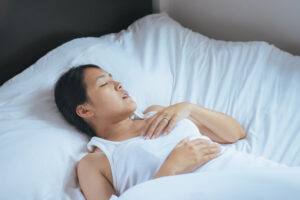
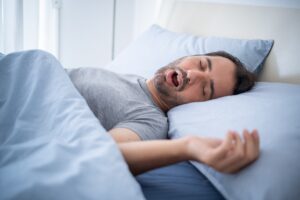
Sleep apnea causes loud snoring and pauses in breathing during sleep that can wake you up gasping for air, but it still goes undiagnosed for many. If you sleep alone or have silent breathing interruptions, you can easily miss these important sleep apnea symptoms. You may also miss connecting excessive daytime sleepiness to sleep apnea, because it comes on so gradually.
To address this challenge and help catch sleep apnea, Apple released a Sleep Apnea feature for the Apple Watch. In later versions of this wearable device, you can sleep with it on, and wake up to a report about how well you slept, how long, and if you had any breathing disruptions throughout the night.
Below, we’ll explain how the Apple Watch sleep apnea feature works, how accurate it is, and what you can do if you suspect you have sleep apnea.

What Is Sleep Apnea?
Sleep apnea is a common sleep disorder that causes breathing to stop and restart many times throughout the night, with each episode lasting anywhere from seconds to minutes. These breaks in normal breathing can lower oxygen levels and raise your blood pressure.
Sleep apnea has two types, each with different causes. In obstructive sleep apnea (OSA), your tongue, tonsils, or other tissues narrow or block your airway. But pauses in breathing from central sleep apnea (CSA) happen because of faulty brain signals to the muscles that control respiration.
For either type, sleep specialists diagnose sleep apnea during a sleep study. But the sleep apnea Apple Watch feature claims to offer early clues about your symptoms.
What Sleep Data Does the Apple Watch Track?
Apple Watches can track your heart rate, respiratory rate (breaths per minute), and blood oxygen levels in some models. For Apple Watch sleep apnea detection, the technology focuses on:
- Movements during sleep
- Breathing disturbances
- Breath pattern changes
These features are available with the latest watchOS on the Apple Watch Series 9 or later, Apple Watch Ultra 2, and Apple Watch SE. Using a specialized algorithm, the Apple Watch notifies you of disturbed breathing during sleep, which can be “Elevated” or “Not Elevated.” After 30-days of continuous nighttime wear, your watch will tell you if you experience consistent “Elevated” breathing disturbances, which may suggest sleep apnea.
Can Apple Watch Detect Sleep Apnea Directly?
An Apple Watch cannot diagnose you with sleep apnea, but it can point you in the right direction. In September 2024, the U.S. Food and Drug Administration (FDA) gave the Apple Watch sleep apnea notification feature a 510(k) clearance. This means it’s FDA-approved as an over-the-counter medical device to notify users of a potential risk for sleep apnea.
Apple’s website cautions that not everyone with sleep apnea will get a notification from their watch and advises its customers to talk to a doctor if they think they have the condition. While wrist-based sensors have come a long way, they can’t yet replace traditional sleep apnea diagnosis.
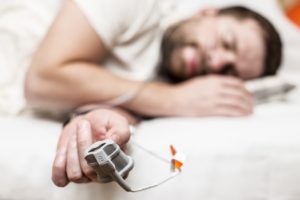
That requires a sleep study (polysomnography), which measures brain waves, breathing, oxygen, and other vital signs while you sleep. During a sleep study, providers measure oxygen levels through a device attached to the fingertip, and research hasn’t yet proven that oxygen level readings at the wrist give results as accurate as a sleep study.
However, in one study of 122 people, a wearable wrist device correctly measured breathing disturbances in 85% to 89% of participants, and researchers continue to hone this technology.

How Do You Set Up Sleep Apnea on Apple Watch?
To set up the sleep apnea feature on your Apple Watch, first update the iOS on your iPhone to the latest version. Then, turn on “Track Sleep With Apple Watch” in the Health app. Follow the prompts in the Health app to set up your sleep schedule and any alarms.
Next, set up sleep apnea notifications in the Health app:
- Tap “Search” and then “Respiratory.”
- Scroll down to Sleep Apnea Notification, tap “Set Up,” then tap “Next.”
- Answer a few questions, tap “Next,” then “Done.”
Once these steps are complete, wear your Apple Watch while you sleep for at least 10 nights over a 30-day period.
What Does Sleep Apnea Look Like on Apple Watch?
Over 30 days, your Apple Watch will measure your sleep, mark breathing disturbances as “Elevated” or “Not Elevated,” and plot them on a graph. As you continue to wear it, the graph will show you how your sleep looks from month to month, giving you a simple visual to see how often you experienced “Elevated” breathing disturbances.

After each 30-day period, your watch will give you a “Possible Sleep Apnea” notification if you have consistent “Elevated” breathing disturbances.
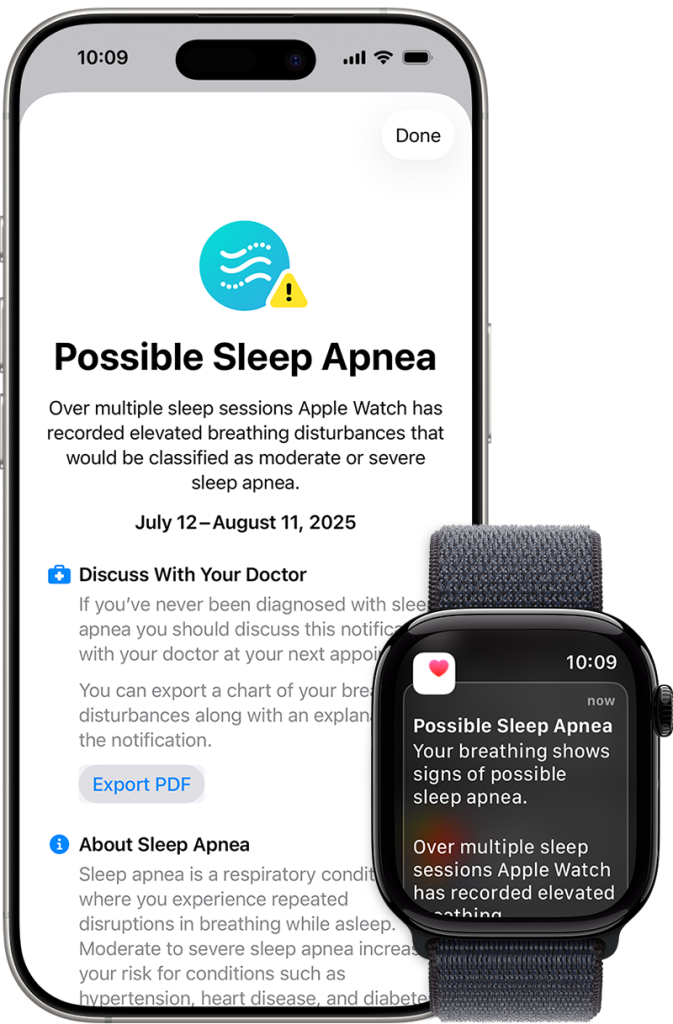
If you don’t get a notification, you can still view your results. In the Health app, tap “Search” then “Respiratory.” Tap “Sleep Apnea Notification” to check for any missed communication or “Breathing Disturbances” to see your graph.
What Should You Do if Your Apple Watch Indicates Sleep Apnea?
If your Apple Watch notifies you of possible sleep apnea, tell your healthcare provider. You can export a PDF of your results on the “Breathing Disturbances” screen by scrolling to the bottom and tapping “Export PDF.”
Even if your watch doesn’t notify you of breathing disturbances, but your sleeping partner says you snore, gasp, choke, snort, or stop breathing during sleep, let your provider know. Also notify a doctor if you get enough hours of sleep each night but don’t feel refreshed, if you have trouble staying asleep, or if you can’t concentrate or you feel very sleepy during the day. These are all potential signs of sleep apnea.
How Is Sleep Apnea Diagnosed?
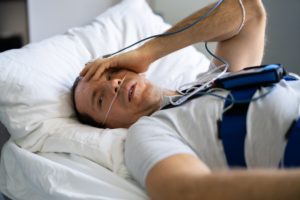
To diagnose sleep apnea, a sleep specialist monitors several body functions while you sleep during an overnight sleep study. Your doctor will recommend either a sleep study at home or in a sleep center.
As you prepare to go to sleep on the night of your study, you may use this equipment:
- Pulse oximeter: A sensor placed on your finger that measures oxygen concentration in your blood
- Nasal cannula: A tube with two prongs that fit inside your nostrils and measure air flow
- Central chest unit: Sensors that measure heart rate
- Thoracic effort belt: A strap around your chest that measures muscle movements and how hard you breathe
- EEG sensors: Stickers placed on your scalp, face, and eyelids to measure brain waves
Depending on the type of sleep study you have, you may not need all of these tools. For example, in a home sleep study, you won’t use EEG sensors.
Home studies offer a more affordable and readily available sleep study option, which works best in diagnosing obstructive sleep apnea. For suspected central sleep apnea, though, your provider may recommend an on-site sleep study.
For either study type, your provider will review your results to determine your apnea-hypopnea index (AHI) results, which is a measure of how many breathing disturbances (events) you have per hour. They can diagnose sleep apnea if you have symptoms and had more than five events per hour, or if you had over 15 events per hour with no symptoms.
When to See a Doctor
If your Apple Watch data consistently shows irregular breathing patterns, frequent nighttime awakenings, or low blood oxygen levels, it may be time to talk to a healthcare provider. While wearable devices can offer helpful insights, they can’t diagnose sleep apnea or explain why these changes are happening.
You should also see a doctor if you have symptoms such as loud or chronic snoring, excessive daytime sleepiness, difficulty concentrating, morning headaches, or if a bed partner notices pauses in your breathing during sleep. A healthcare provider can review your symptoms, discuss your wearable data, and determine whether a sleep study or further evaluation is needed to assess for sleep apnea.

Still have questions? Ask our community!
Join our Sleep Care Community — a trusted hub of sleep health professionals, product specialists, and people just like you. Whether you need expert sleep advice for your insomnia or you’re searching for the perfect mattress, we’ve got you covered. Get personalized guidance from the experts who know sleep best.
Abby McCoy is a registered nurse and health writer with more than 15 years of clinical experience. She draws on her clinical background to translate complex medical topics into clear, approachable information for readers. Her work has appeared in WebMD, Everyday Health, Next Avenue, and other health publications, and she has also served as an interim managing editor for The Nursing Beat.
References14 Sources
Sleep apnea: NHLBI sheds light on an underdiagnosed disorder | NHLBI, NIH. www.nhlbi.nih.gov.
https://www.nhlbi.nih.gov/news/2017/sleep-apnea-nhlbi-sheds-light-underdiagnosed-disorderKline, Lewis R. (2024, October 9). Clinical presentation and diagnosis of obstructive sleep apnea in adults. UpToDate.
https://www.uptodate.com/contents/clinical-presentation-and-diagnosis-of-obstructive-sleep-apnea-in-adultsNational Institutes of Health (NIH) National Heart, Lung, and Blood Institute. (2022, March 24). Sleep apnea: What is sleep apnea? National Institutes of Health (NIH) National Heart, Lung, and Blood Institute.
https://www.nhlbi.nih.gov/health/sleep-apneaKario K, Hettrick DA, Prejbisz A, Januszewicz A. Obstructive Sleep Apnea-Induced Neurogenic Nocturnal Hypertension: A Potential Role of Renal Denervation?. Hypertension. 2021;77(4):1047-1060. doi:10.1161/HYPERTENSIONAHA.120.16378
https://pubmed.ncbi.nlm.nih.gov/33641363/Celmer L. Apple Watch Series 10 features sleep apnea notifications. American Academy of Sleep Medicine – Association for Sleep Clinicians and Researchers. Published September 10, 2024.
https://aasm.org/apple-watch-series-10-features-sleep-apnea-notificationsProduct Classification. Fda.gov. Published 2025.
https://www.accessdata.fda.gov/scripts/cdrh/cfdocs/cfpcd/classification.cfm?id=213National Heart, Lung, and Blood Institute. (2022, March 24). Sleep studies.
https://www.nhlbi.nih.gov/health/sleep-studiesZhang Z, Qi M, Hügli G, Khatami R. The Challenges and Pitfalls of Detecting Sleep Hypopnea Using a Wearable Optical Sensor: Comparative Study. J Med Internet Res. 2021;23(7):e24171. Published 2021 Jul 29. doi:10.2196/24171
https://pubmed.ncbi.nlm.nih.gov/34326039/Hayano J, Adachi M, Sasaki F, Yuda E. Quantitative detection of sleep apnea in adults using inertial measurement unit embedded in wristwatch wearable devices. Sci Rep. 2024;14(1):4050. Published 2024 Feb 19. doi:10.1038/s41598-024-54817-z
https://pubmed.ncbi.nlm.nih.gov/38374225/Strohl, K. P. (2022, October). Obstructive sleep apnea (OSA). Merck Manual Professional Version.
https://www.merckmanuals.com/professional/pulmonary-disorders/sleep-apnea/obstructive-sleep-apnea-osaWalter J, Lee JY, Blake S, et al. A new wearable diagnostic home sleep testing platform: comparison with available systems and benefits of multinight assessments. J Clin Sleep Med. 2023;19(5):865-872. doi:10.5664/jcsm.10432
https://pubmed.ncbi.nlm.nih.gov/36692166/Authors, Lachance CC, Bailey S. At-Home Polysomnography versus In-Clinic Polysomnography for Sleep Disorders: CADTH Health Technology Review. Canadian Agency for Drugs and Technologies in Health; 2023.
https://www.ncbi.nlm.nih.gov/books/NBK596752/Go BC, Thaler ER. Home Sleep Testing versus Traditional Polysomnography: Pros and Cons. Otolaryngol Clin North Am. 2024;57(3):363-369. doi:10.1016/j.otc.2023.11.003
https://pubmed.ncbi.nlm.nih.gov/38042667/Kim J, Tran K, Seal K, et al. Interventions for the Treatment of Obstructive Sleep Apnea in Adults: A Health Technology Assessment [Internet]. Ottawa (ON): Canadian Agency for Drugs and Technologies in Health; 2017 Mar. (CADTH Optimal Use Report, No. 6.1b.) Appendix 15, Validity of Outcomes Measures.
https://www.ncbi.nlm.nih.gov/books/NBK535554/