
When you buy through our links, we may earn a commission. Products or services may be offered by an affiliated entity. Learn more.
Best Mattress for Snoring in 2026


Sleep Foundation
Why Trust Us


Our mission to create a healthier, more well-rested world demands that our product reviews be best-in-class. You won’t find more expertise on mattresses and sleep products anywhere else.
The Sleep Foundation product testing team uses an industry-leading evaluation process paired with real world consumer feedback to come up with objective recommendations so that you can feel confident in your product decisions.
If you’ve ever had a partner nudge you awake because you’re snoring — or even woken yourself up — then you know how disruptive snoring can be to a quality night’s sleep. While you should certainly talk to your doctor to get to the root of your snoring, you can make adjustments to your sleep environment to help reduce or prevent snoring.
Our Top Picks
Best Mattress Overall
:Helix Midnight Luxe
Shop Now
Best Value Mattress
:Nectar Adjustable Bundle
Shop Now
Most Comfortable Mattress
:Luxury Firm WinkBed
Shop Now
Best Luxury Innerspring
:Saatva Classic
Shop Now
Best Mattress for Side Sleepers
:Nolah Evolution
Shop Now
Best Mattress for Couples
:Lull Luxe Hybrid
Shop Now
Best Mattress for Heavy Sleepers
:Titan Plus Luxe
Shop Now
Best Firm Mattress
:Plank Firm Luxe
Shop Now
Best Organic Mattress
:Birch Mattress
Shop Now
Best Mattress Deals Happening Now
- Save $625 — Helix Midnight Luxe
$1,874(List Price $2,499) - Save $2,436 — Nectar Adjustable Bundle
$1,398(List Price $3,834) - Save $771 — Luxury Firm WinkBed
$1,799(List Price $2,570) - Save $650 — Saatva Classic
$1,579(List Price $2,229) - Save $797 — Nolah Evolution
$1,480(List Price $2,277)
How We Tested the Best Mattresses for Snoring
Testing Criteria for Snoring Support
Snoring can often be caused by your sleep position, airway alignment, and overall support. For this category, we focused on mattresses that can help promote a healthier sleep posture, accommodate different sleeper profiles, and provide the right balance of firmness and comfort to reduce airway obstruction.
We looked at these factors when evaluating mattresses best suited for reducing snoring.
- Variety of mattress types: We considered a range of mattress constructions to ensure options for different body types, sleep positions, and comfort preferences. This variety allows sleepers to choose a mattress that supports better breathing while accommodating different sleep positions and bed preferences.
- Firmness & support to encourage side sleeping: Side sleeping is widely considered as the best position for reducing snoring because it helps keep airways more open. We prioritized mattresses with support levels that make side sleeping more comfortable through the night, especially those with a balance of cushioning at the shoulders and hips with high enough firmness to maintain spinal alignment.
- Spinal alignment & head/neck support: Proper alignment of the spine, neck, and head can influence airway positioning during sleep. We evaluated how well each mattress supports neutral spine alignment, preventing excessive head tilt or upper-body collapse that can contribute to restricted airflow and increased snoring.
How We Evaluated
Rather than focusing on snoring as a standalone issue, our evaluation examined how mattress designs can influence sleep posture and support, two key factors tied to airway openness. We reviewed sleeper ratings and lab performance data across core categories, including:
- Pressure relief and contouring
- Support balance and firmness
- Ease of movement and position changes
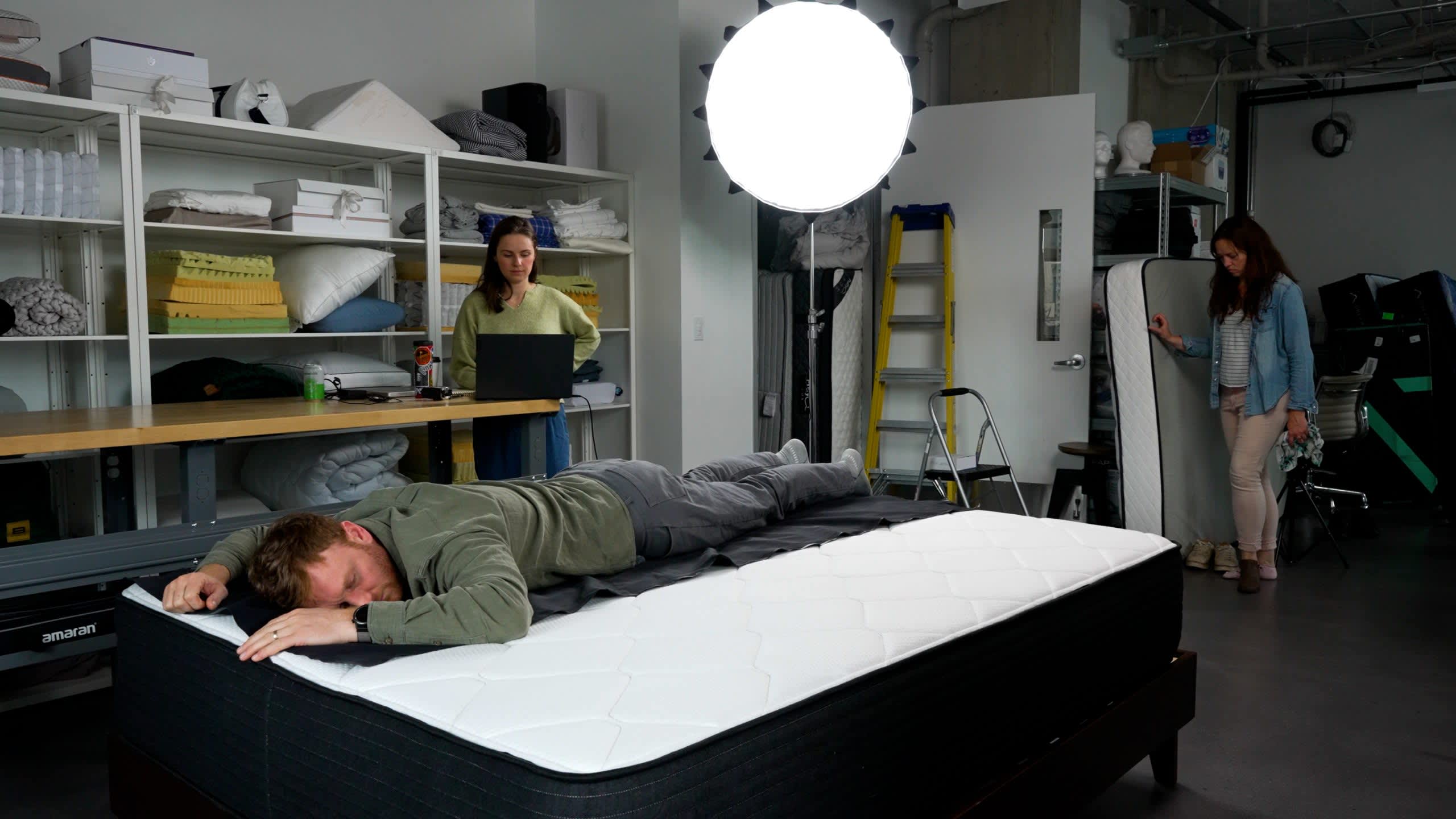
We looked for mattresses that consistently promote side sleeping and maintain stable spinal alignment without feeling restrictive. Each finalist underwent hands-on testing in our Seattle Test Lab, where our testing team assessed comfort, responsiveness, and support across multiple sleep positions.
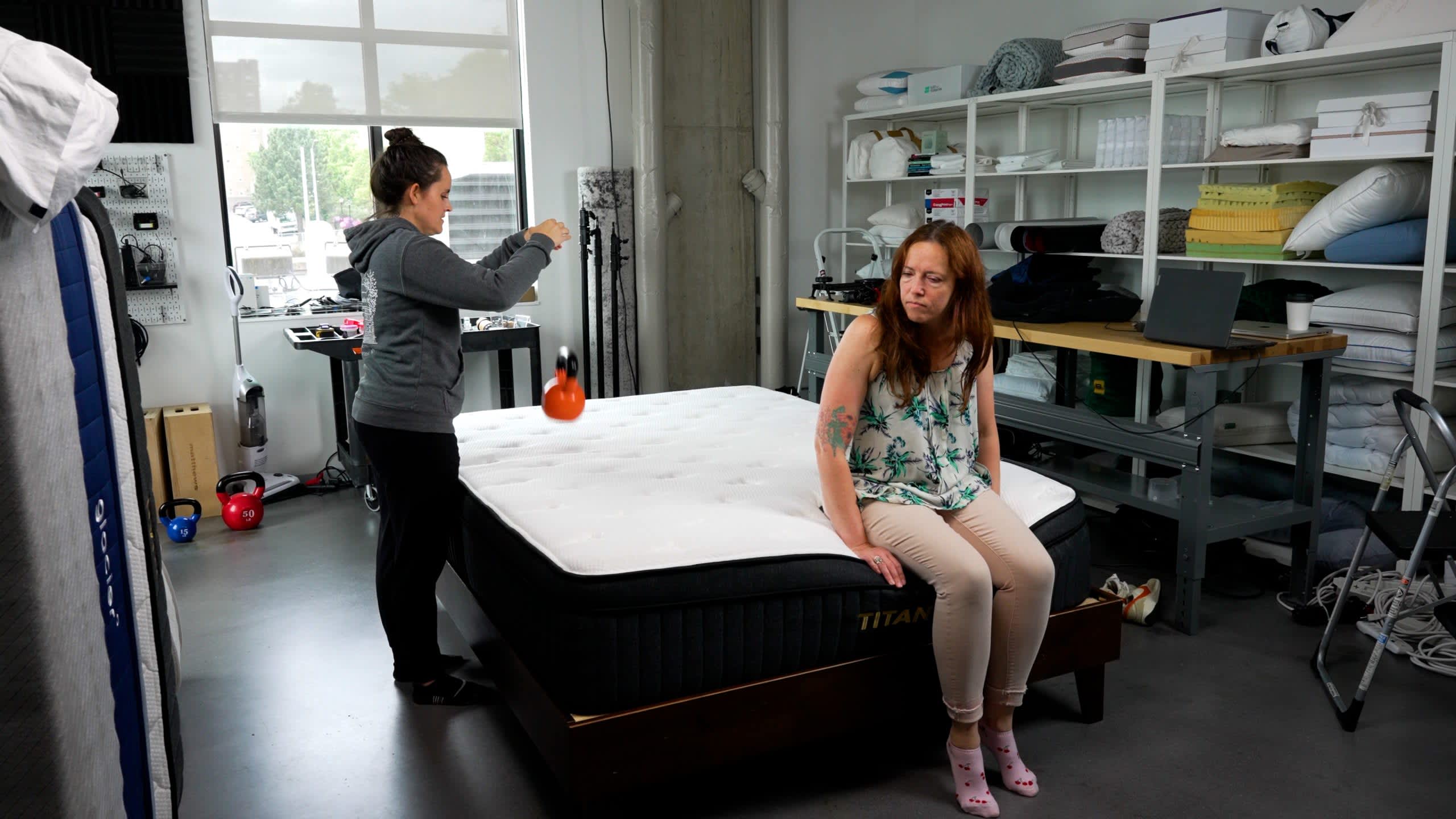
Multiple testers with different body types and sleep habits evaluated each bed to understand how well it supports positional changes and sustained side sleeping throughout the night. We also compared results across mattress constructions to ensure a range of effective options.
Based on these findings, we selected the following mattresses as the best options for snoring.
Our Testing Team

Logan Foley
Executive Product Director
Full Bio

Mary Fenton
Head of Product Content
Full Bio

Jeremy Klein
Product Testing Manager
Full Bio

Brad Nehring
Product Testing Manager
Full Bio

Colin Simpson
Product Research Manager
Full Bio
Best Overall: Helix Midnight Luxe
Best Overall
9.7/10Test Lab Score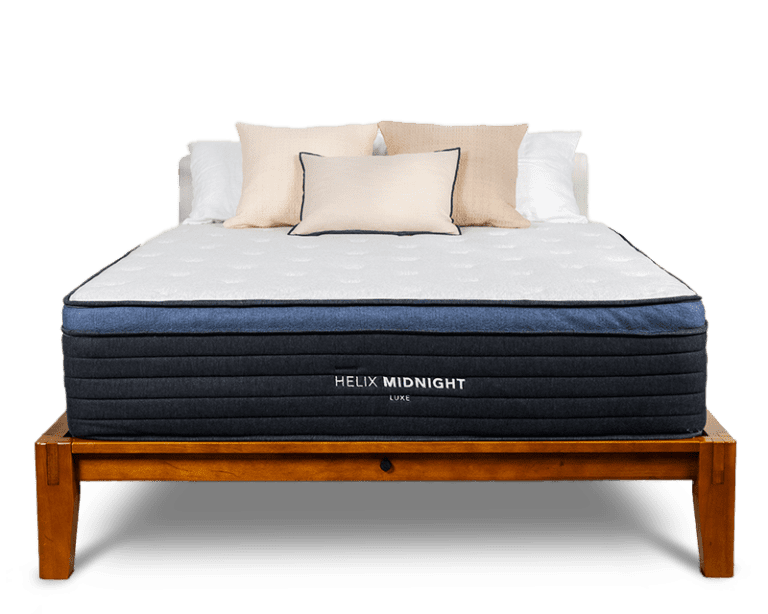
Helix Midnight Luxe
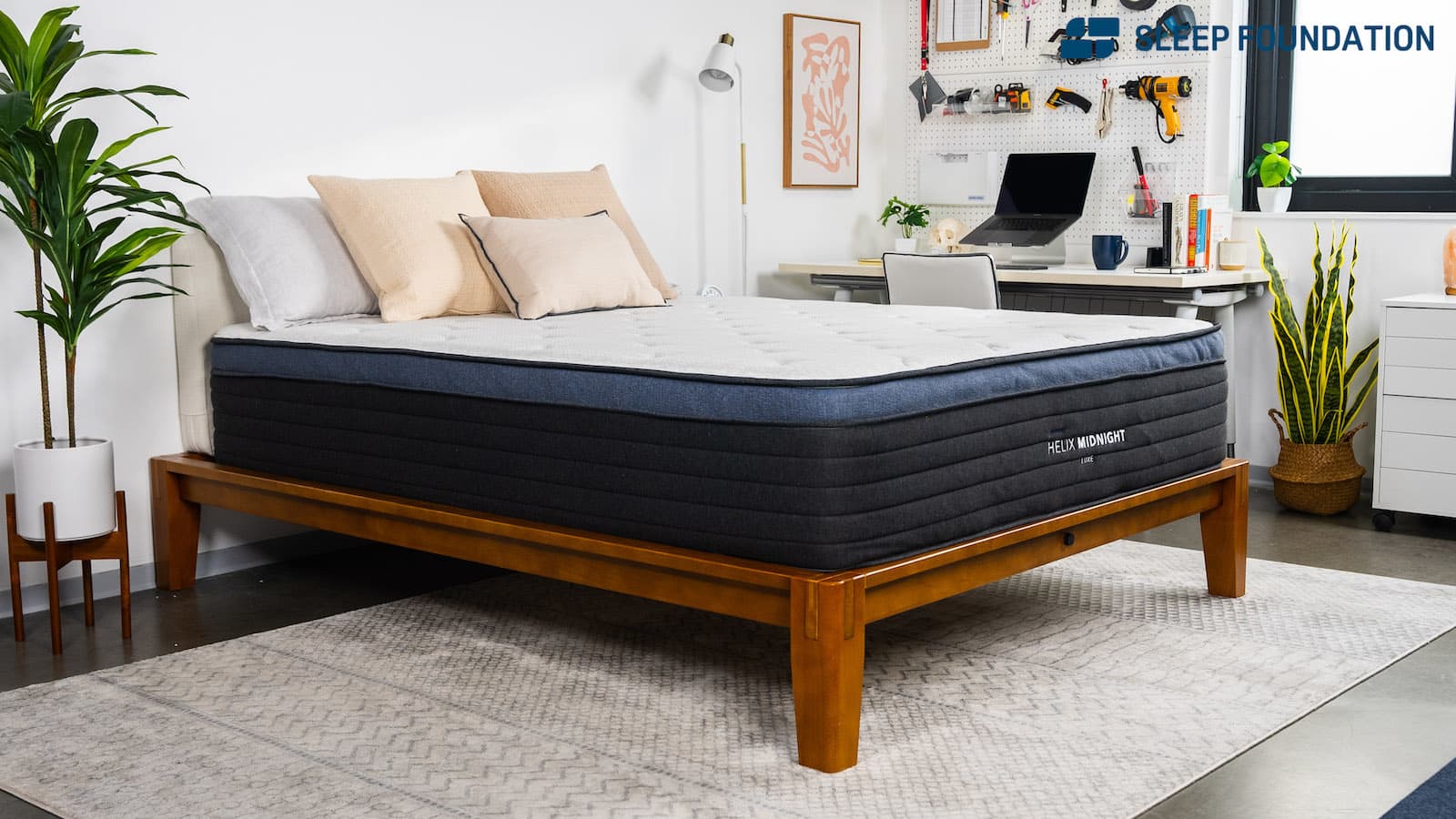
A foam-on coil hybrid that excels at pressure relief, motion isolation, and sleeper support.
Key Details
- Who It’s Best for: Side and back sleepers up to 230 pounds.
- Feel: Medium firm (6) design with a cushy, adaptive surface and targeted pushback around your midsection.
- What It’s Made Of: Two memory foam comfort layers and transitional polyfoam, followed by zoned pocketed coils with perimeter reinforcement.
- What We Don’t Like: Back and stomach sleepers over 230 pounds will probably find the mattress too soft.
Scoring & Reviews
The following ratings show how suitable this mattress is for different sleeping positions and sleeper weights. These scores are determined by how well the mattress supports and relieves pressure for each sleeper type.
In addition to the hands-on feedback from our team, we conduct a number of quantitative tests in our Test Lab. The below ratings are based on the experience of our testers.
Performance
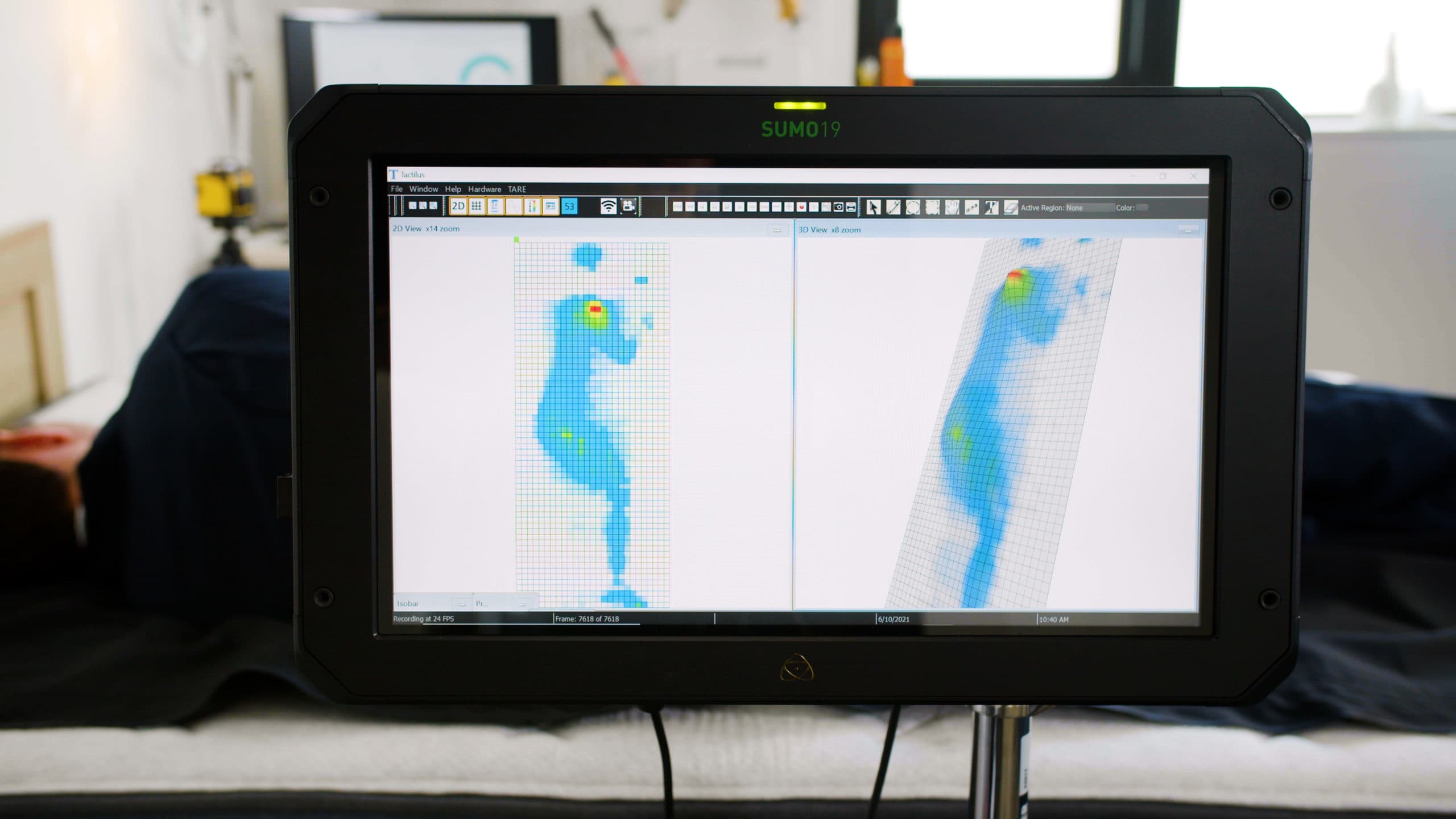
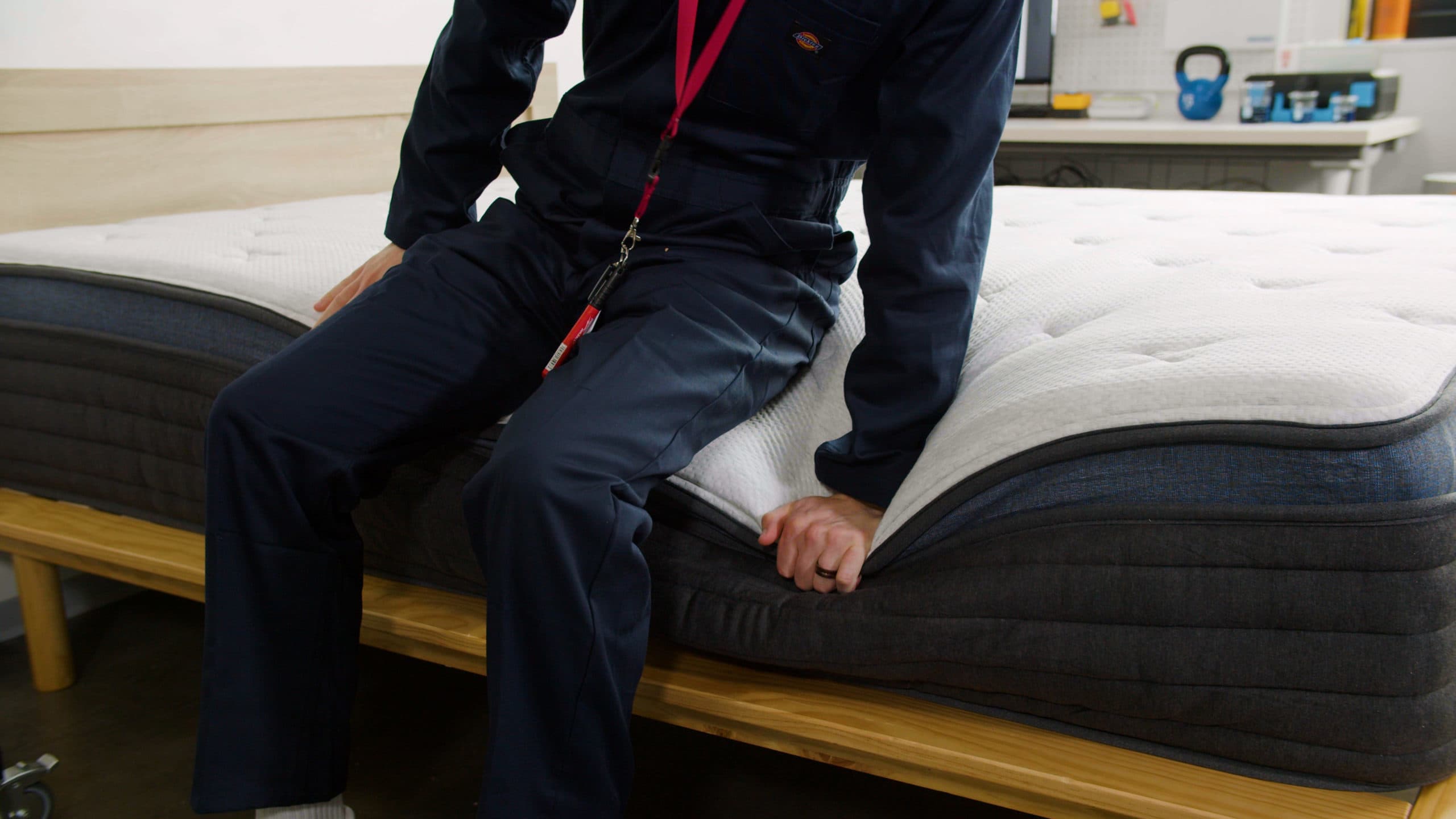
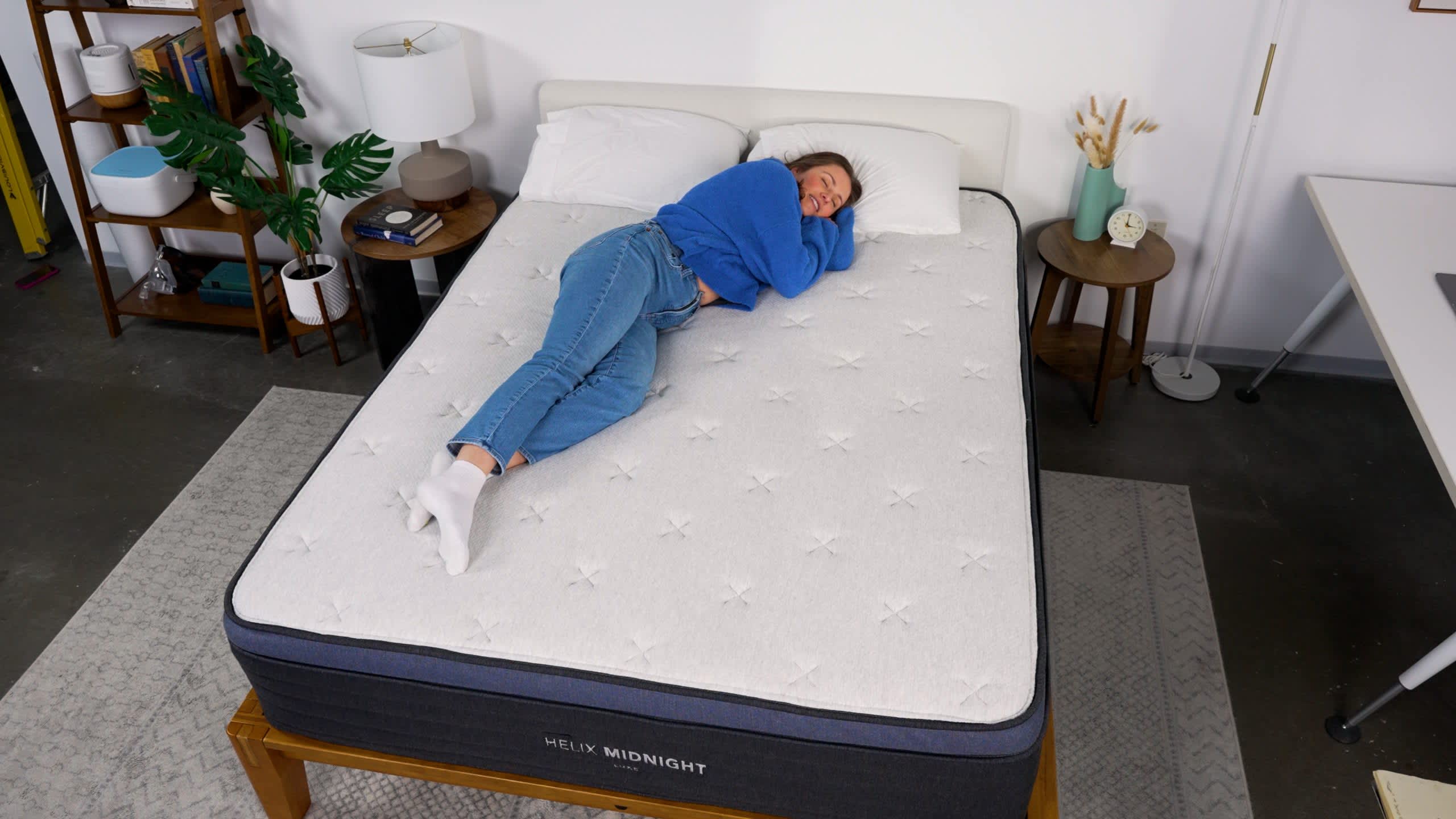
Helix Sleep’s lineup includes more than two dozen different hybrid mattresses, each one geared toward certain types of people based on their body type and preferred sleep position. Our team has tested most of these models, and the Helix Midnight Luxe is one of the brand’s most balanced offerings. Adaptive foam layers contour evenly to cushion the body while resisting sinkage and maintaining an even surface, while robust pocketed coils deliver sturdy support. Paired with the right pillow, this mattress can be a major asset for people who snore.
How It Performed
While Helix Sleep specifically designed the Midnight Luxe for side sleepers between 130 and 230 pounds, our tests show the mattress is a good fit for side and back sleepers weighing up to 230 pounds. We were also impressed with the Midnight Luxe’s motion isolation. The foam layers effectively absorb movement and reduce transfer, which can be beneficial if you share your bed with a restless partner.
Construction Breakdown
The medium firm (6) Midnight Luxe’s comfort system consists of two memory foam layers over dense transitional polyfoam. These materials create a balance of cushioning and responsiveness. You’ll notice a light bounce when you get into bed, followed by a cradling effect as your body settles. Extra coil reinforcement along the perimeter limits sinkage when you lie near the edges of the mattress or get in and out of bed. The coils also feel stronger beneath your midsection to prevent sinkage around your torso and hips. High-density base foam rounds out the hybrid design.
Standard Midnight Luxe models come with knit Tencel covers. You can upgrade to a cover made of GlacioTex, a phase change material engineered to capture and release body heat.
Trial, Shipping, and Warranty
The Midnight Luxe is about average for a high-end hybrid model in terms of price and shipping is free for customers in the contiguous U.S. You’ll also receive two complimentary pillows with your purchase. Helix Sleep’s trial period runs for 120 nights. If you’re satisfied with the mattress after the return period ends, you’ll also receive a lifetime warranty against manufacturing defects.
Read More
 Read Less

Best Value: Nectar Adjustable Bundle
Best Value
8.5/10Test Lab Score
Nectar Adjustable Bundle
An all-inclusive sleep bundle at a terrific price.
Key Details
- Who It’s Best for: Shoppers who want to refurbish their mattress, bed frame, sheets, and pillows at a reasonable price.
- Feel: Nectar mattresses vary in terms of how closely they contour, but all models eligible for this bundle are medium firm (6) or firm (7). Expect a cushy surface feel and sturdy underlying support.
- What It’s Made of: Choose between an all-foam mattress or a hybrid model, all including comfort layers of adaptive memory foam.
- What We Don’t Like: Not all standard mattress sizes are available for the adjustable bundle.
Scoring & Reviews
The following ratings show how suitable this mattress is for different sleeping positions and sleeper weights. These scores are determined by how well the mattress supports and relieves pressure for each sleeper type.
In addition to the hands-on feedback from our team, we conduct a number of quantitative tests in our Test Lab. The below ratings are based on the experience of our testers.
Performance
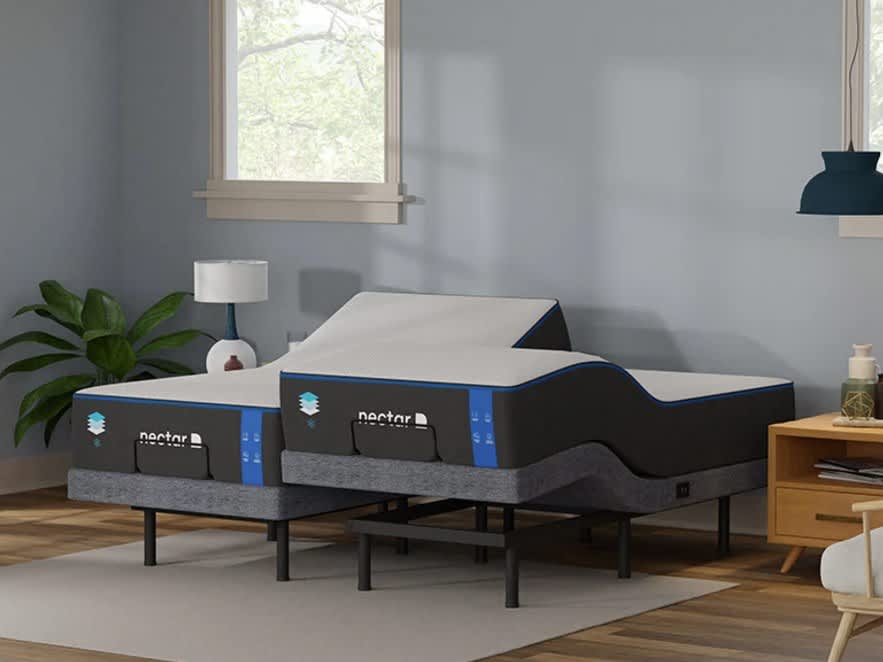
A supportive mattress paired with an adjustable bed can be a very effective deterrent to snoring. Unfortunately, purchasing these two products together can amount to big spending. The Nectar Adjustable Bundle includes not only these elements, but also a pair of pillows, a mattress protector, and a full sheet set — all at an exceptionally low price.
How It Performed
Our team has tested all of the Nectar mattresses available with this bundle. For each model, we’ve been impressed with its balance of cushioning on the surface and strong underlying support from either the dense foam base of pocketed coil support core. These mattresses also isolate motion well, especially the all-foam models.
Construction Breakdown
You can choose from any of Nectar’s current all-foam or hybrid models. The flagship Nectar Mattress is the most affordable — and most popular — option, but upgrading to another model such as the Premier or Copper Hybrid may result in better temperature control and overall performance. We recommend an all-foam mattress if you prefer deep cushioning from your sleep surface and a hybrid for more support, but all Nectar models feature memory foam layers that contour evenly and excel at pressure relief. Motion isolation for couples is another major strength of each Nectar mattress.
The Nectar Adjustable Base is a standout product in its own right. A wide range of motion for the head and feet lets you choose from various positions, including zero gravity. We recommend elevating the head to reduce snoring. The base’s remote also features an anti-snore preset that automatically lifts the head with the push of a button. USB ports on each side of the bed let you charge your devices at night, and the legs are adjustable with multiple height options if you need more under-bed space.
Trial, Shipping, and Warranty
All components in the bundle qualify for Nectar’s generous 365-night trial period. If you decide to keep the set, the mattress is backed by a lifetime warranty and the base comes with a three-year warranty. Shipping is free of charge within the contiguous U.S.
Read More
Read Less
Most Comfortable: Luxury Firm WinkBed
Most Comfortable
9.5/10Test Lab Score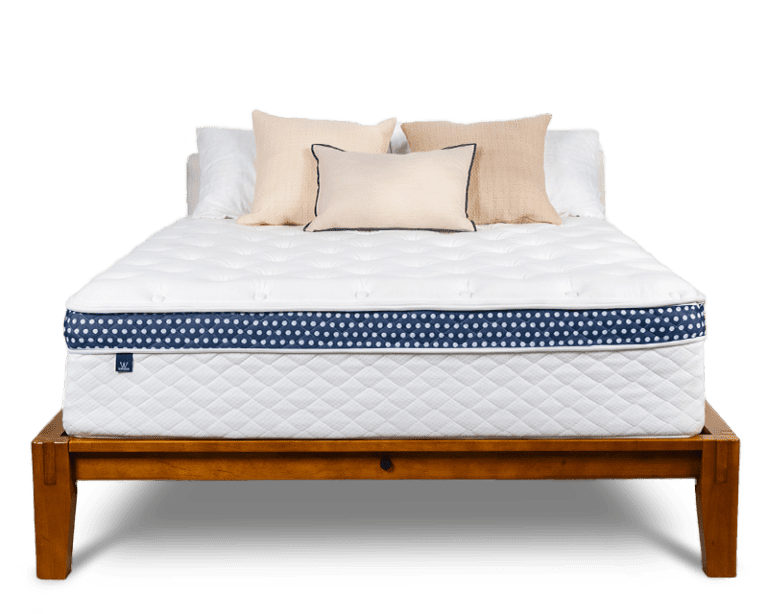
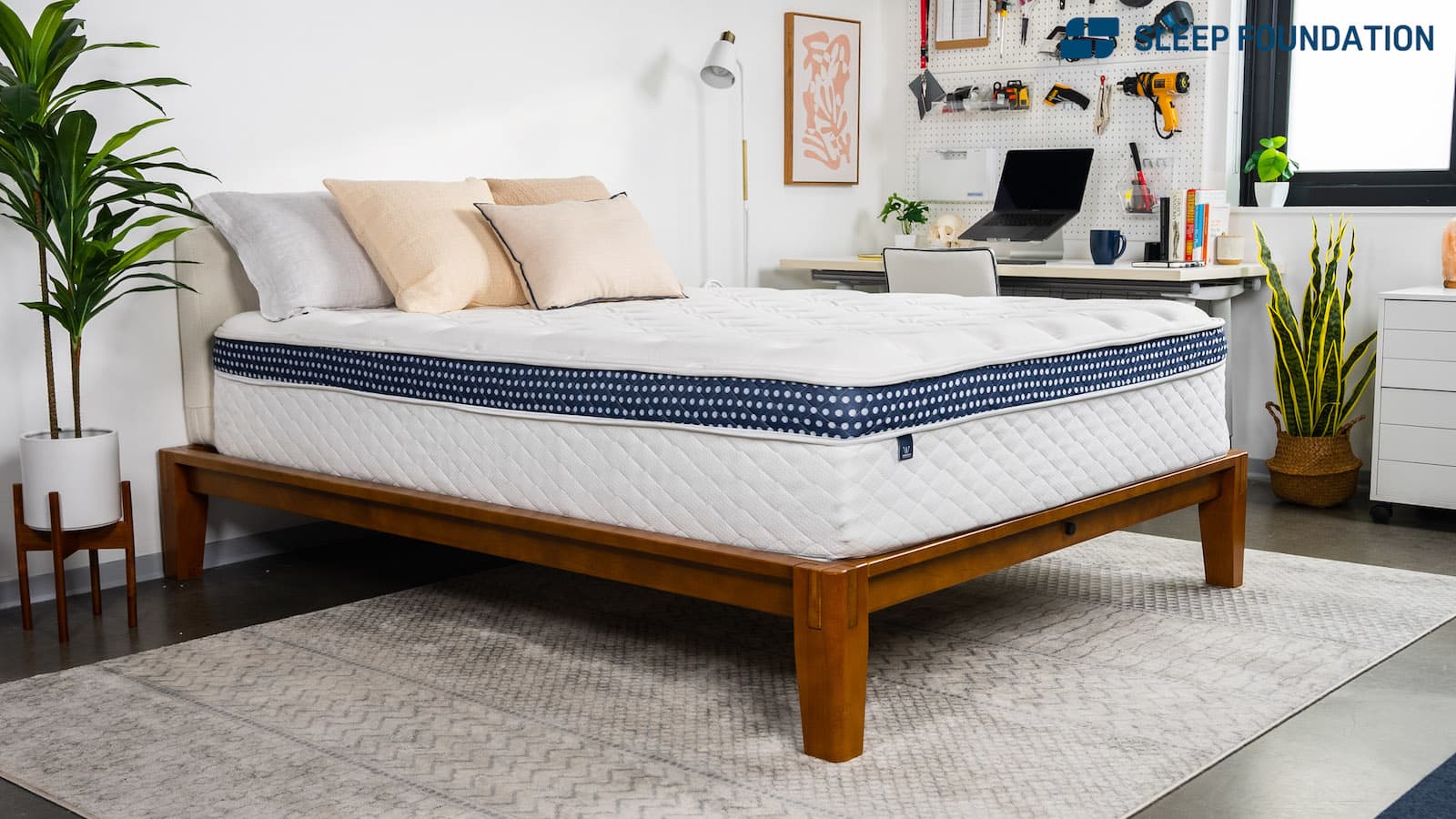
Luxury Firm WinkBed
High end hybrid bed providing ample support, cushion, and cool sleep.
Key Details
- Who It’s Best for: Side sleepers between 130 and 230 pounds, and back and stomach sleepers up to 230 pounds.
- Feel: A true medium firm (6) design with light contouring on the surface and extra pushback beneath the shoulders and hips.
- What It’s Made of: An adaptive foam comfort layer and zoned pocketed coil support core with perimeter reinforcement.
- What We Don’t Like: Back and stomach sleepers over 230 pounds will probably need a firmer WinkBed model.
Scoring & Reviews
The following ratings show how suitable this mattress is for different sleeping positions and sleeper weights. These scores are determined by how well the mattress supports and relieves pressure for each sleeper type.
In addition to the hands-on feedback from our team, we conduct a number of quantitative tests in our Test Lab. The below ratings are based on the experience of our testers.
Performance
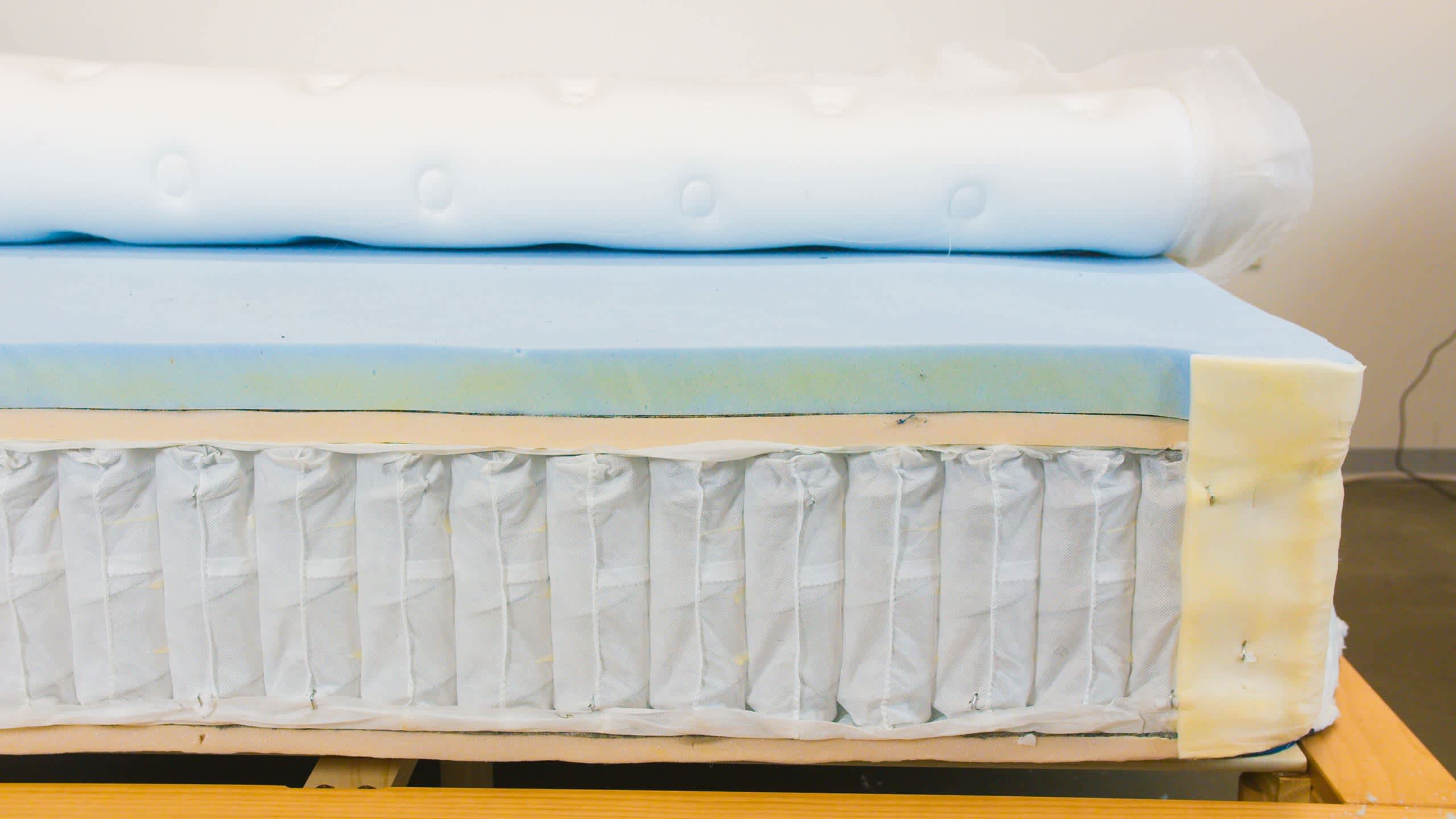
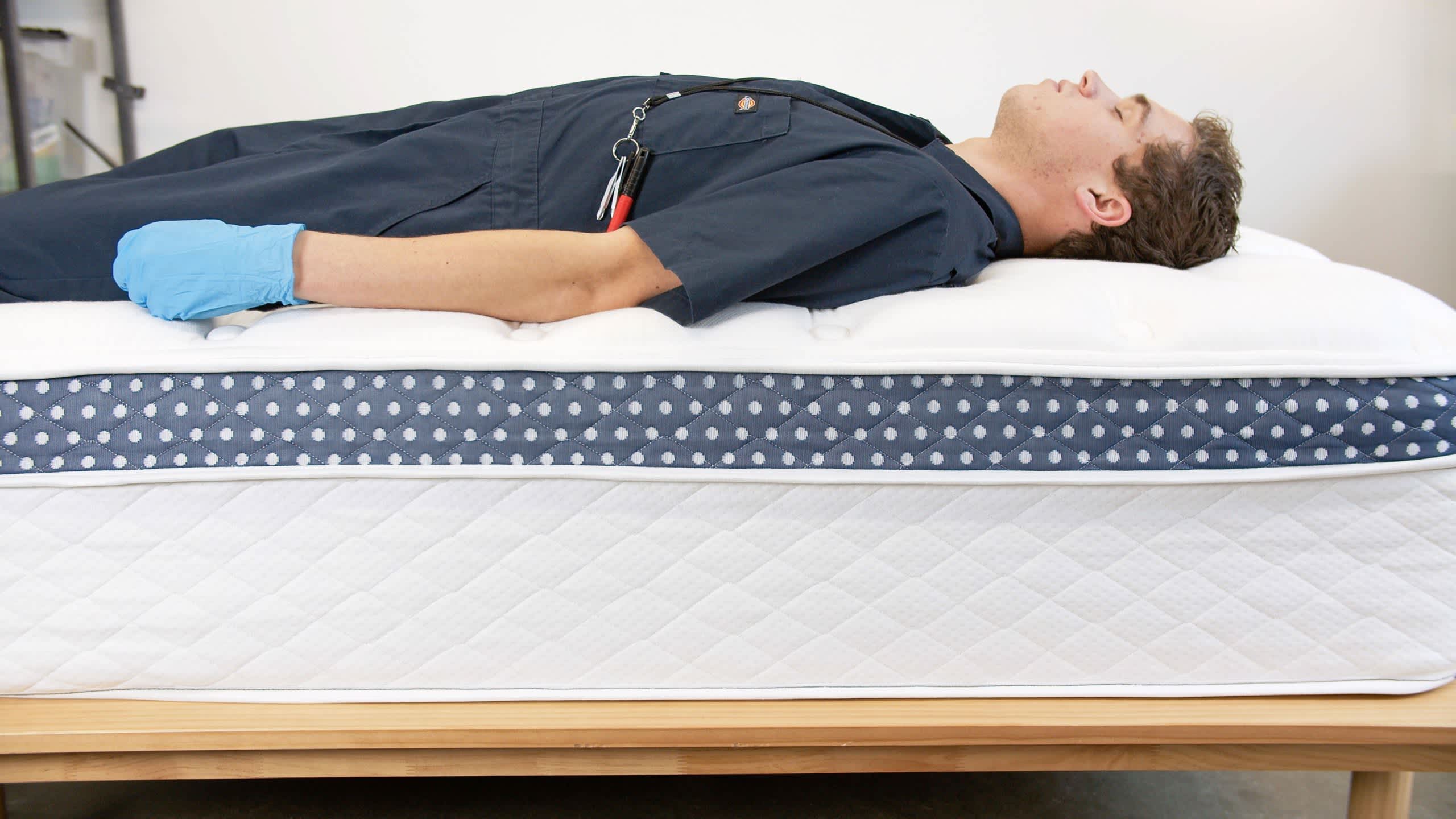
The WinkBed Mattress is a hybrid model that comes in four variations, each with a different firmness. The Luxury Firm model stands out for its cushioned Euro-top and robust coil system, which provide an excellent balance of support and contouring for sleepers who experience back pain.
How It Performed
Among the four WinkBed models, the Luxury Firm was popular among the largest number of testers on our team. The foam layers conform to a noticeable extent without sinking too deeply, and you’ll notice an inviting bounce when you get into bed and move on the surface. Zoned coils beneath your midsection also ensure extra support for heavier areas of your body. Our tests show the Luxury Firm is best suited to side sleepers who weigh 130 to 230 pounds, and back and stomach sleepers weighing 230 pounds or less.
Construction Breakdown
The WinkBed has a Euro-top quilted with cooling gel-infused polyfoam, which cradles the body for excellent pressure relief. Beneath is a layer of higher-density SupportCell polyfoam that enhances cradling while also creating a firm buffer between the comfort system and core. The coil system in the bed’s base is firm and robust. It provides enhanced support in the lower back area but also gives the bed a responsive feel. A reinforced perimeter helps prevent the edges from sagging so that more of the mattress surface is fully usable. A breathable Tencel fabric on the cover helps keep the bed cool.
Trial, Shipping, and Warranty
WinkBeds offers a 120-night sleep trial with a 30-night break-in period. WinkBeds also backs this mattress with a lifetime limited warranty.
Read More
Read Less
Best Luxury Innerspring: Saatva Classic
Best Luxury Innerspring
9.5/10Test Lab Score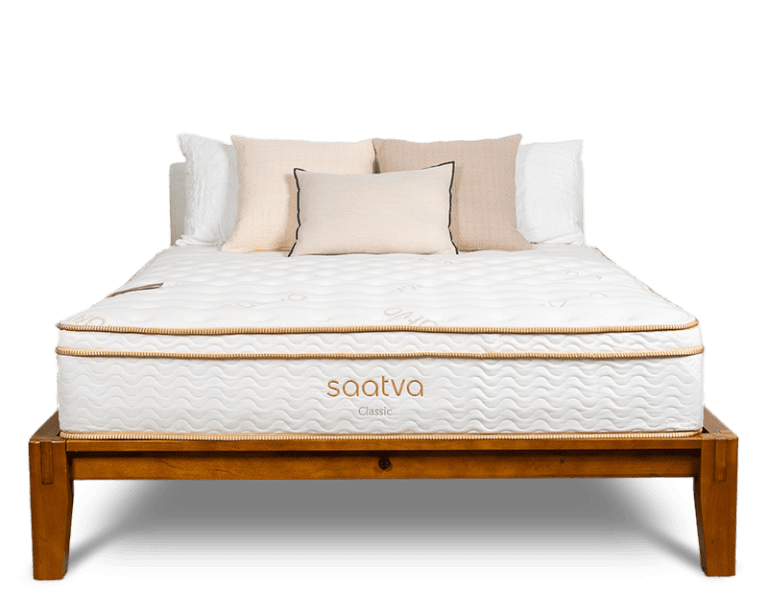
Saatva Classic
Traditional innerspring with a plush Euro-top and excellent overall support.
Key Details
- Who It’s Best for: Hot sleepers and people who prefer a bouncy, responsive sleep surface.
- Feel: Available in cushy soft (3), balanced medium firm (6), and ultra-supportive firm (8) designs – all feel springy and robust.
- What It’s Made of: Adaptive polyfoam and memory foam comfort layers encased in a Euro-top over pocketed microcoils and thick hourglass innerspring coils.
- What We Don’t Like: Couples may notice heavy motion transfer and experience sleep disruptions.
Scoring & Reviews
The following ratings show how suitable this mattress is for different sleeping positions and sleeper weights. These scores are determined by how well the mattress supports and relieves pressure for each sleeper type.
In addition to the hands-on feedback from our team, we conduct a number of quantitative tests in our Test Lab. The below ratings are based on the experience of our testers.
Performance
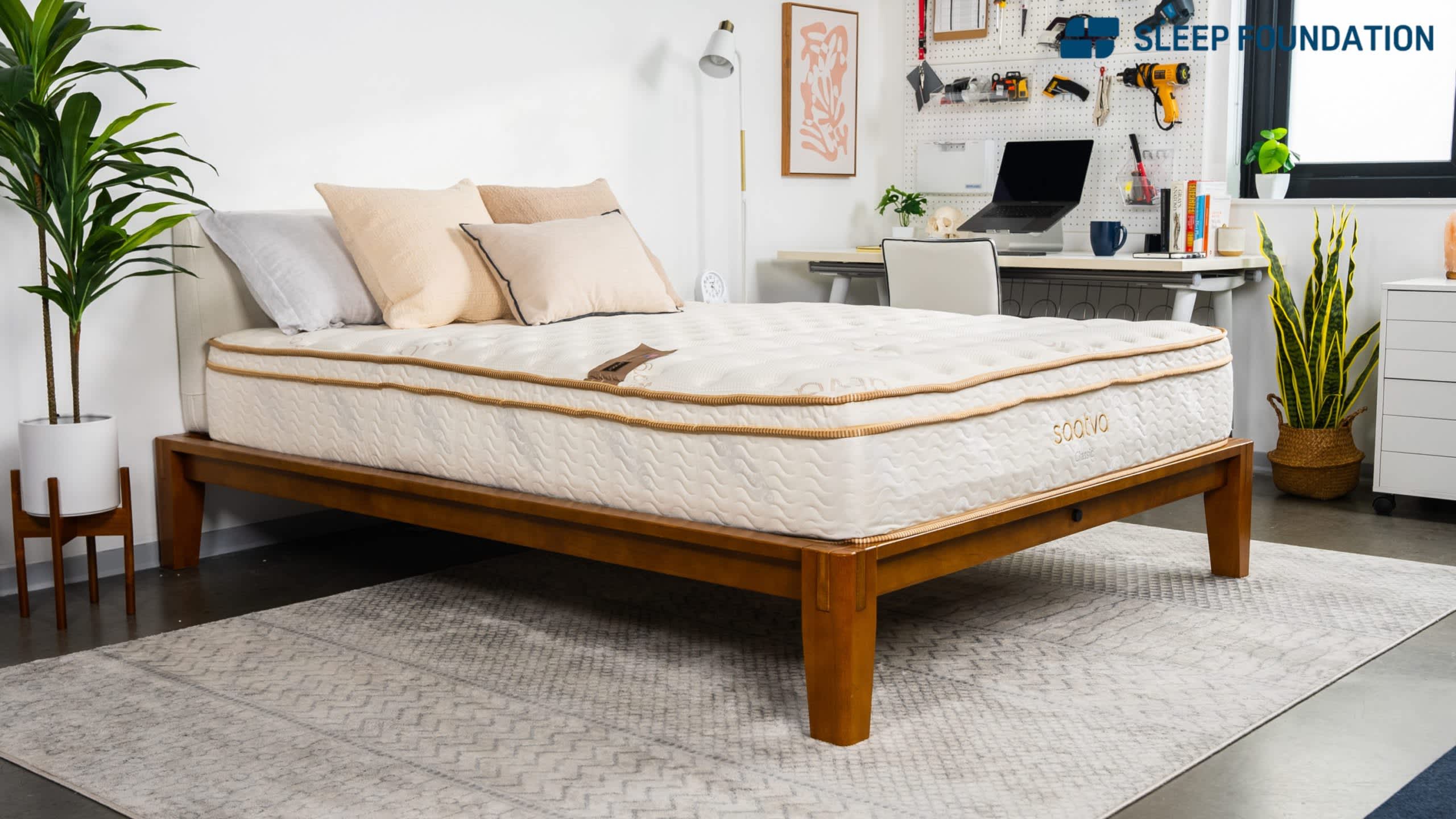
The flagship Saatva Classic features a polyfoam Euro-top, a dual coil system, and a memory foam lumbar pad to provide sleepers with ample support and pressure relief.
How It Performed
With three firmness options to choose from, including Plush Soft (3), Luxury Firm (6), and Firm (8), this bed is designed to support any body type and sleep position. It also comes in two thickness options: 11.5 inches and 14.5 inches. Our hands-on tests show most side sleepers under 130 pounds prefer the Plush Soft, while back and stomach sleepers appreciate the extra support of the Firm model. All other testers awarded their highest ratings to the Luxury Firm design.
Construction Breakdown
A plush 3-inch Euro-top composed of cotton, polyfoam, and memory foam relieves pressure from common hot spots, such as the hips and shoulders. The memory foam layer rests in the middle of the bed to support the lumbar region and promote good sleep posture. This cushioning and support may make it easier to sleep on your side, which is usually recommended for snoring.
Two layers of coils provide bounce and support. The top layer uses pocketed coils to limit motion transfer, while the core contains hourglass coils. A high-density polyfoam perimeter increases the edge support to allow sleepers to use more of the surface.
Trial, Shipping, and Warranty
Saatva offers free White Glove delivery, meaning a team will transport and install the mattress at no additional cost. The Saatva Classic is also backed by a lifetime warranty and comes with a 365-night sleep trial.
Read More
Read Less
Best for Side Sleepers: Nolah Evolution
Best For Side Sleepers
8.7/10Test Lab Score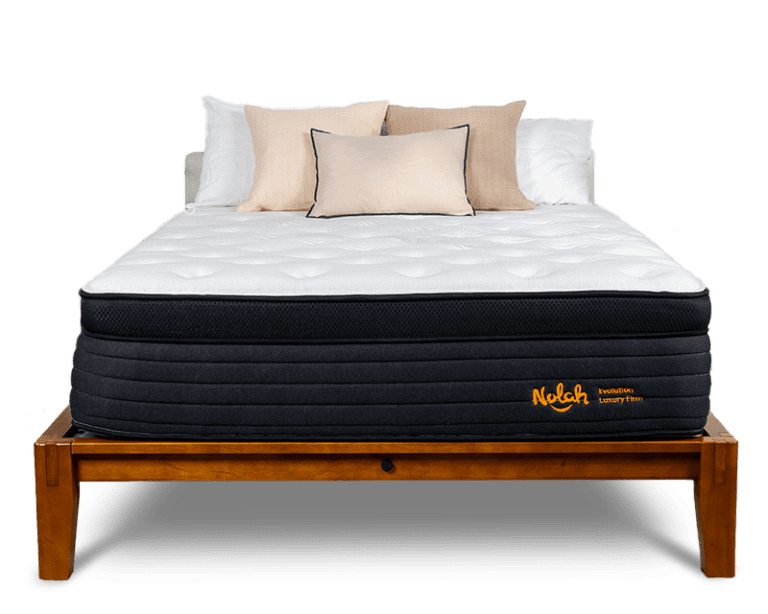
Nolah Evolution
A cloud-like experience with a plush euro-top in multiple firmnes options.
Key Details
- Who It’s Best for: Side and back sleepers across all weight groups, and stomach sleepers up to 230 pounds.
- Feel: Medium (5), medium firm (6), and firm (8) designs are available, all offering a comfy balance of surface-level cushioning and targeted support around your midsection.
- What It’s Made of: A comfort system with four individual foam layers, followed by zoned pocketed coils with a reinforced perimeter.
- What We Don’t Like: Tall profile requires a deep-pocket fitted sheet, which may be an additional investment for shoppers.
Scoring & Reviews
The following ratings show how suitable this mattress is for different sleeping positions and sleeper weights. These scores are determined by how well the mattress supports and relieves pressure for each sleeper type.
In addition to the hands-on feedback from our team, we conduct a number of quantitative tests in our Test Lab. The below ratings are based on the experience of our testers.
Performance

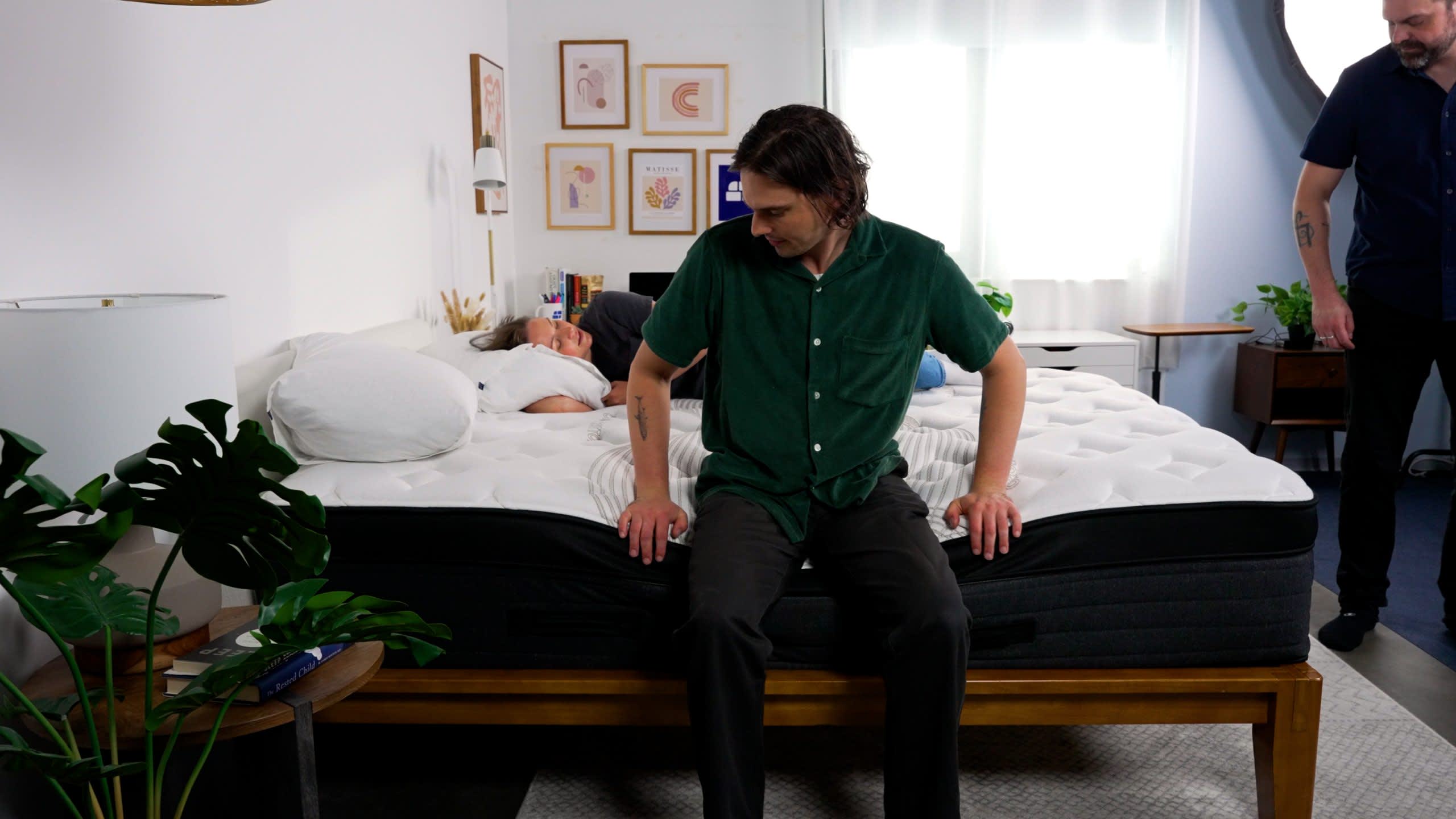
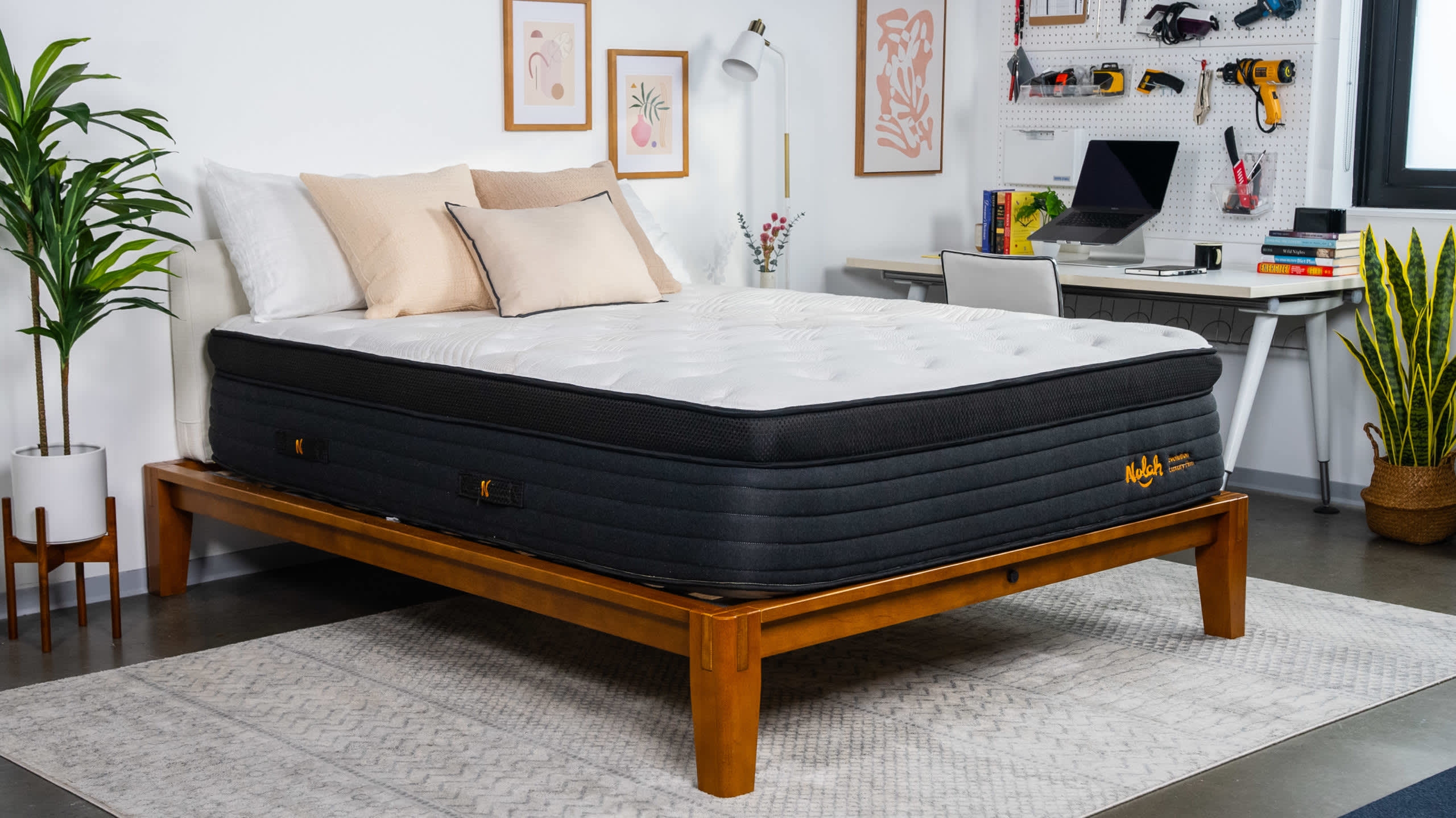
Some people find relief from snoring by sleeping on their side, but not all mattresses are built to accommodate this position. The Nolah Evolution is a versatile Euro-top hybrid available in three designs, each with a distinct firmness level. All versions of the mattress feature a comfort system stacked with adaptive foam layers to ensure plenty of cushioning for the shoulders and hips — two common areas of pressure for side sleepers.
How It Performed
We recommend choosing a firmness based on your body type. During our hands-on tests, the medium (5) Evolution earned stellar ratings from side sleepers up to 230 pounds. This model contours closely to cradle the body, promote even alignment, and prevent pressure buildup. Our side sleepers weighing more than 230 pounds preferred the medium firm (6) model, which feels more supportive while still contouring evenly. If you sleep on your back or stomach, the medium firm or firm (8) models should deliver adequate reinforcement.
Construction Breakdown
The Evolution’s Euro-top contains three layers of open-cell polyfoam, and a fourth polyfoam layer provides transitional support to keep your body aloft. Each of these layers is progressively denser from top to bottom, creating a cradle effect as your body settles into the mattress. Since the foams have an open-cell composition, they promote more airflow than conventional foam and shouldn’t trap too much heat. Thanks to the thick comfort system, the mattress also isolates motion better than most competing hybrids.
The pocketed coils are arranged in different zones based on gauge. Thicker coils rest beneath your midsection to push back against extra weight from your torso and hips, and thinner coils offer a gentler feel for the head and legs. A reinforced perimeter also protects the edges from excessive sinkage. The Evolution’s cover is composed of organic cotton woven with cooling fibers to help maintain a comfortable surface.
Trial, Shipping, and Warranty
Nolah offers free ground shipping throughout the contiguous U.S. The company’s sleep trial runs for 120 nights, but you can opt out of the trial period and save some money on your purchase — though this means you won’t be able to return the Evolution after you receive your order. The mattress is further backed by a lifetime warranty.
Read More
Read Less
Best for Couples: Lull Luxe Hybrid
Best For Couples
8.7/10Test Lab Score
Lull Luxe Hybrid
A balanced foam hybrid with light cushioning and responsive support.
Key Details
- Who It’s Best For: Side and back sleepers between 130 and 230 pounds, couples, and people with back pain.
- Feel: Medium firm (6) design with comfort layers that lightly contour to your body and a zoned support system for targeted pushback beneath your torso and hips.
- What It’s Made Of: A three-layer hybrid design consisting of a memory foam comfort layer, dense transitional foam, and three-zone pocketed coils with a reinforced perimeter.
- What We Don’t Like: Strong off-gassing odor for the first few nights after the mattress is unboxed.
Scoring & Reviews
The following ratings show how suitable this mattress is for different sleeping positions and sleeper weights. These scores are determined by how well the mattress supports and relieves pressure for each sleeper type.
In addition to the hands-on feedback from our team, we conduct a number of quantitative tests in our Test Lab. The below ratings are based on the experience of our testers.
Performance
If you share your bed with a partner and you both snore — or one of you is constantly disrupting the other person’s sleep with snoring sounds — then the Lull Luxe Hybrid might be an effective solution. This cushy foam-on-coil mattress is ideal for side sleeping, which many experts consider the best sleep position if you want to avoid snoring. It also sleepers cooler and isolates more motion than a lot of other hybrids we’ve tested in our lab.
How It Performed
Hands-on tests indicate the Lull Luxe Hybrid is a strong match for side sleepers, especially those weighing 130 pounds or more. The memory foam provides deep cushioning to prevent pressure buildup in the shoulders and hips, while the zoned coils prevent these areas from sinking too deeply into the mattress. Back sleepers on our team weighing up to 230 pounds and stomach sleepers under 130 pounds also gave the mattress favorable ratings, but people who use these positions and weigh more should consider a firmer, more supportive hybrid.
Construction Breakdown
The Lull Luxe Hybrid’s four-layer design begins with open-cell memory foam cushioning the surface. This material molds to your body’s unique curves for a soothing cradle effect, but the open-cell composition also ensures steady air circulation and minimal heat retention. Transitional polyfoam adds padding to the comfort system while creating a plush buffer between your body and the support core.
The Luxe Hybrid’s pocketed coils are divided into three zones based on gauge, or thickness. Stronger springs rest beneath your midsection to prevent your torso and hips from dipping lower than the rest of your body, while thinner springs provide softer pushback for your head and legs. The perimeter coils are also reinforced to protect the edges from excessive compression when you get in and out of bed. High-density base foam stabilizes the coils, and the cover is a breathable rayon blend.
Trial, Shipping, and Warranty
The Luxe Hybrid is competitively priced, and Lull offers free standard shipping to customers in the contiguous U.S. Your sleep trial runs for an entire year, giving you ample opportunity to test it out in your own bedroom and decide whether it meets your needs. Your purchase is also covered under a lifetime warranty against various structural and material defects.
Read More
Read Less
Best for Heavy Sleepers: Titan Plus Luxe
Best For Heavy Sleepers
8.9/10Test Lab Score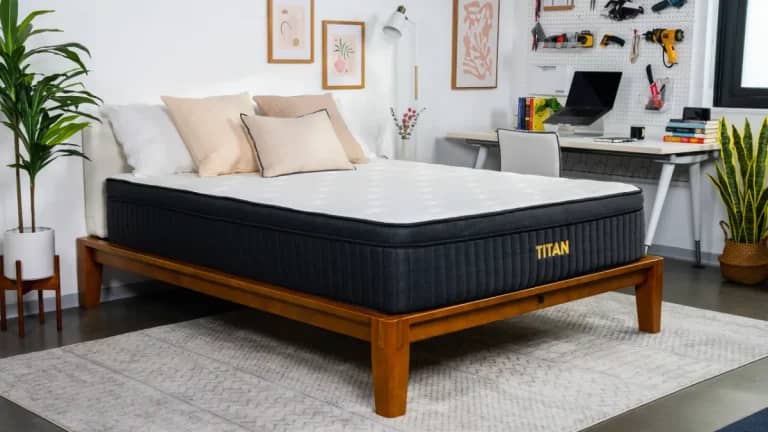
Titan Plus Luxe
Ultra-firm support and cooling properties meet a plush Euro-top surface.
Key Details
- Who It’s Best for: Side sleepers weighing at least 130 pounds and back sleepers up to 230 pounds.
- Feel: A medium firm (6) feel with gentle cushioning on the surface and robust underlying support.
- What It’s Made of: Adaptive polyfoam and memory foam comfort layers, followed by transitional foam and a pocketed coil support core.
- What We Don’t Like: Side sleepers under 130 pounds may find the mattress too firm, whereas most back and stomach sleepers over 230 pounds need a firmer surface.
Scoring & Reviews
The following ratings show how suitable this mattress is for different sleeping positions and sleeper weights. These scores are determined by how well the mattress supports and relieves pressure for each sleeper type.
In addition to the hands-on feedback from our team, we conduct a number of quantitative tests in our Test Lab. The below ratings are based on the experience of our testers.
Performance
Your ideal mattress is directly tied to how much you weigh. If you’re 230 pounds or more, chances are you’ll prefer a firmer mattress with a strong support system — this ensures an even surface for your body and limited sinkage beneath your torso and hips. The Titan Plus Luxe fits the bill on all counts. A medium firm (6) feel finds the right balance between plushness and stability, making this mattress particularly well-suited to side and back sleepers over 230 pounds.
How It Performed
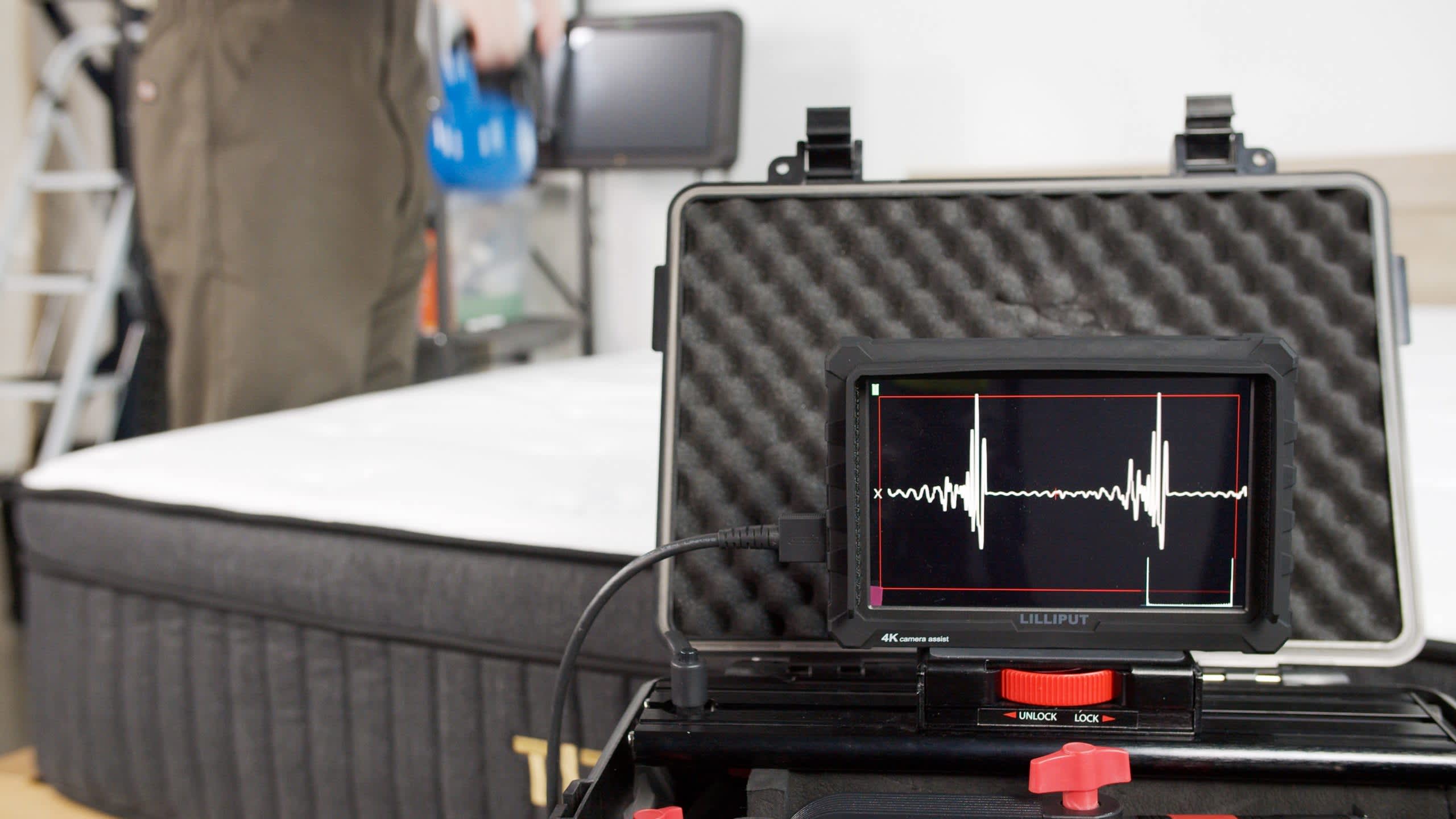
During hands-on tests, the Plus Luxe was a big hit among most of our testers who weigh 130 pounds or more. The highest ratings came from our side sleepers weighing at least 130 pounds, back sleepers weighing up to 230 pounds, and stomach sleepers under 130 pounds pounds. Since the mattress is somewhat bouncy, you and your sleep partner may notice ripples of movement when the other person moves in bed. At the same time, this responsive feel helps you move across the surface with ease and the perimeter feels quite stable.
Construction Breakdown
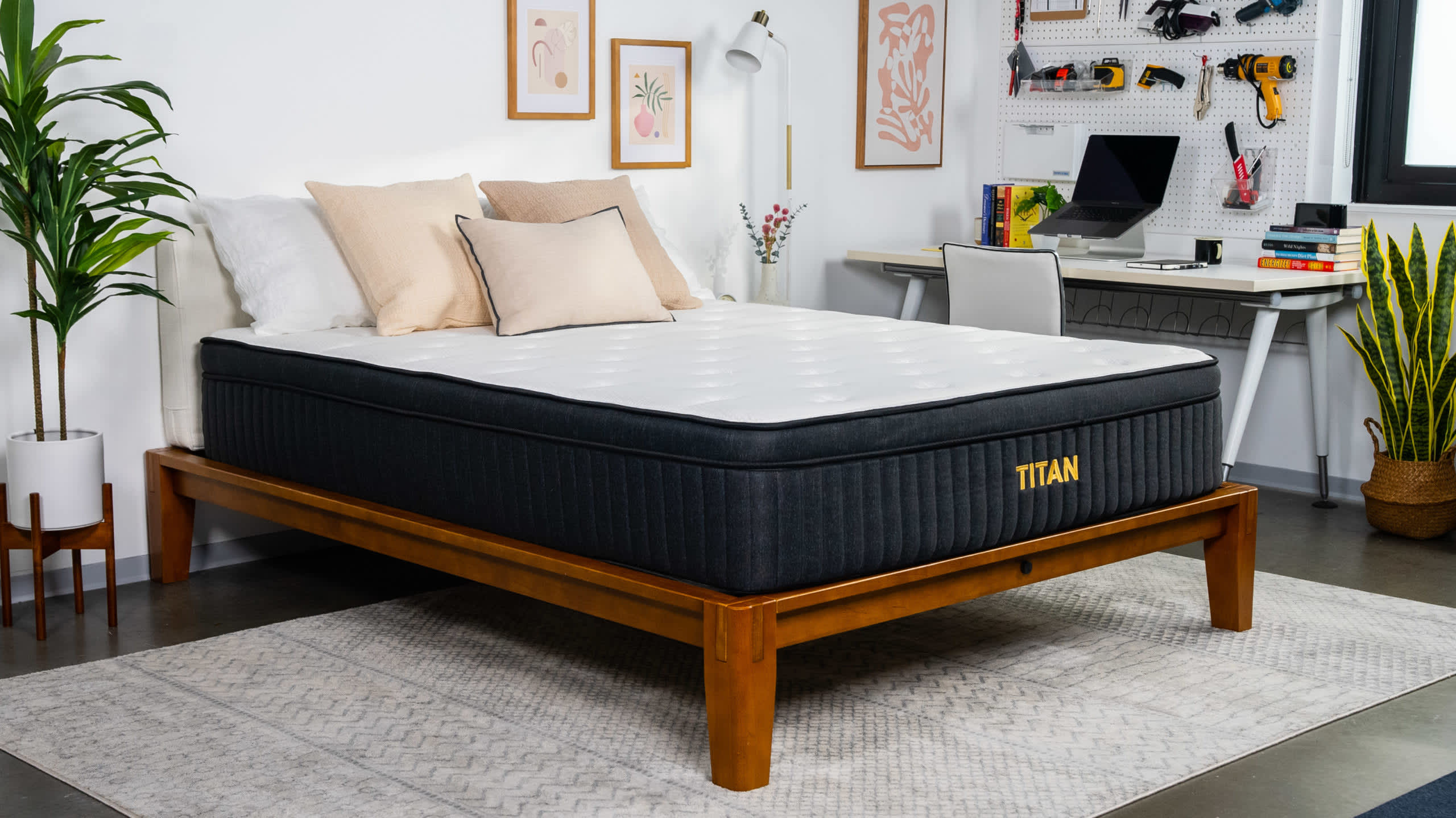
The Titan Plus Luxe is a mixed-foam hybrid mattress featuring thick comfort layers and a pocketed coil support core. It has a 13-inch profile, standing 2 inches taller than the original Titan, with a medium-firm (6) feel that balances contouring and support.
A 1-inch quilted memory foam top layer provides an initial plush feel, infused with gel to dissipate heat. The main comfort layer consists of 2 inches of TitanFlex, a proprietary material that blends the adaptability of polyfoam with the responsiveness of latex. Beneath this, a 1-inch Energex polyfoam transitional layer prevents excessive sinkage.
The support core features an 8-inch pocketed coil system over a high-density polyfoam base. These coils are 2 inches thicker than those in the original Titan, enhancing support while maintaining a slightly softer feel.
Trial, Shipping, and Warranty
Brooklyn Bedding offers free shipping via FedEx to the contiguous 48 states. The mattress also comes with a 120-night sleep trial and a lifetime limited warranty.
Read More
Read Less
Best Firm Mattress: Plank Firm Luxe
Best Firm Mattress
8.7/10Test Lab Score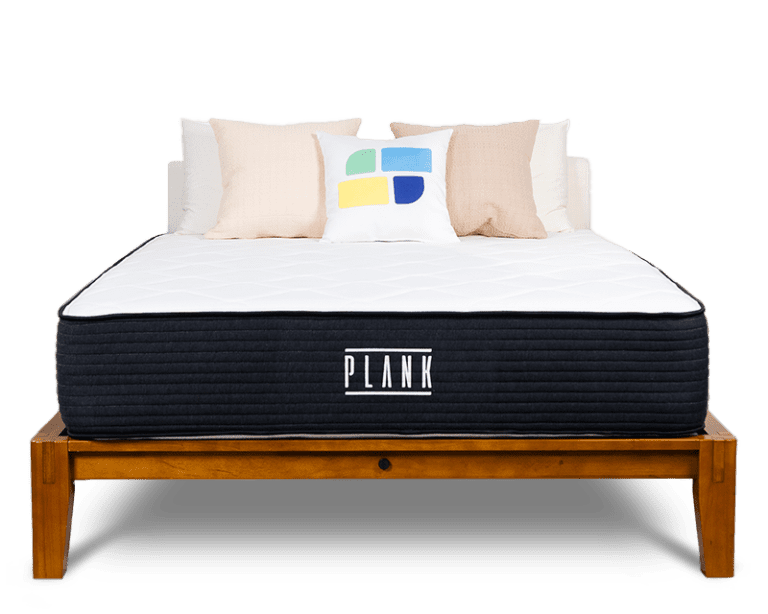
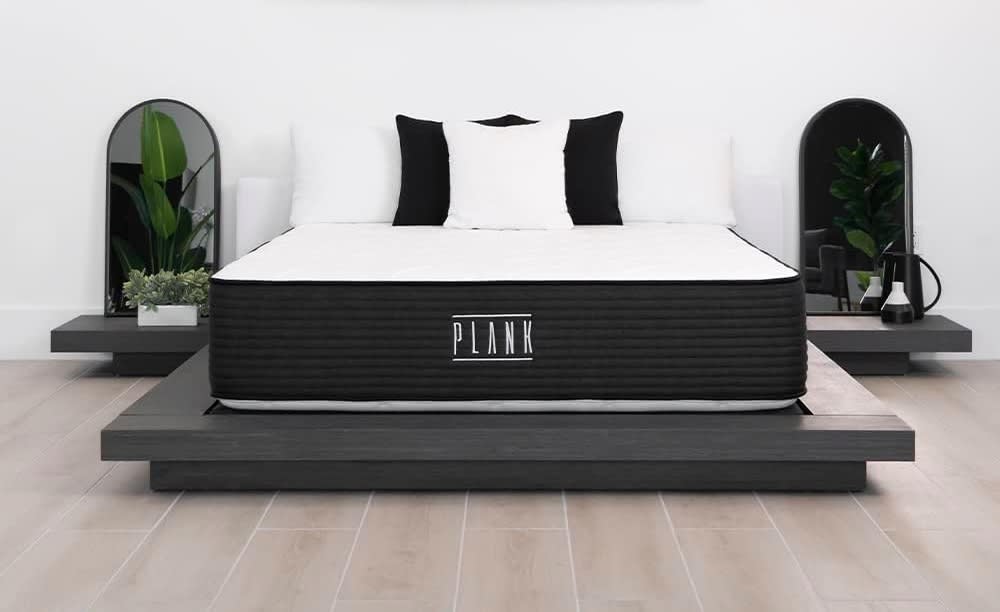
Plank Firm Luxe
High-end flippable bed that’s firm on one side, and even firmer on the other.
Key Details
- Who It’s Best for: People who weigh more than 230 pounds, especially back and stomach sleepers.
- Feel: Flippable design with two ultra-supportive surfaces we’ve rated as firm (7) and extra firm (9), respectively.
- What It’s Made of: Dense polyfoam comfort layers on each side, with a shared pocketed support core reinforcing both sides.
- What We Don’t Like: Too firm for most side sleepers.
Scoring & Reviews
The following ratings show how suitable this mattress is for different sleeping positions and sleeper weights. These scores are determined by how well the mattress supports and relieves pressure for each sleeper type.
In addition to the hands-on feedback from our team, we conduct a number of quantitative tests in our Test Lab. The below ratings are based on the experience of our testers.
Performance
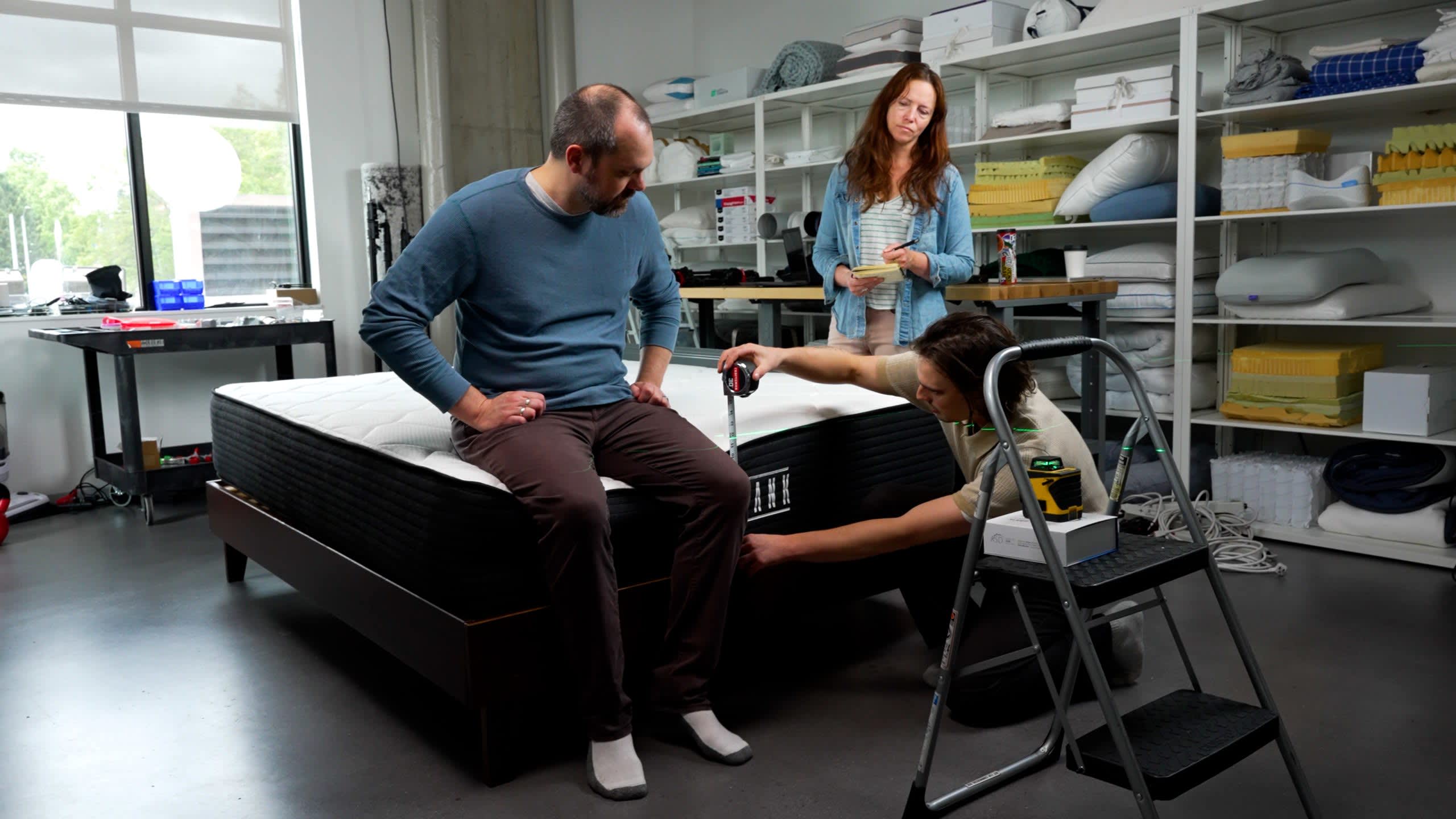
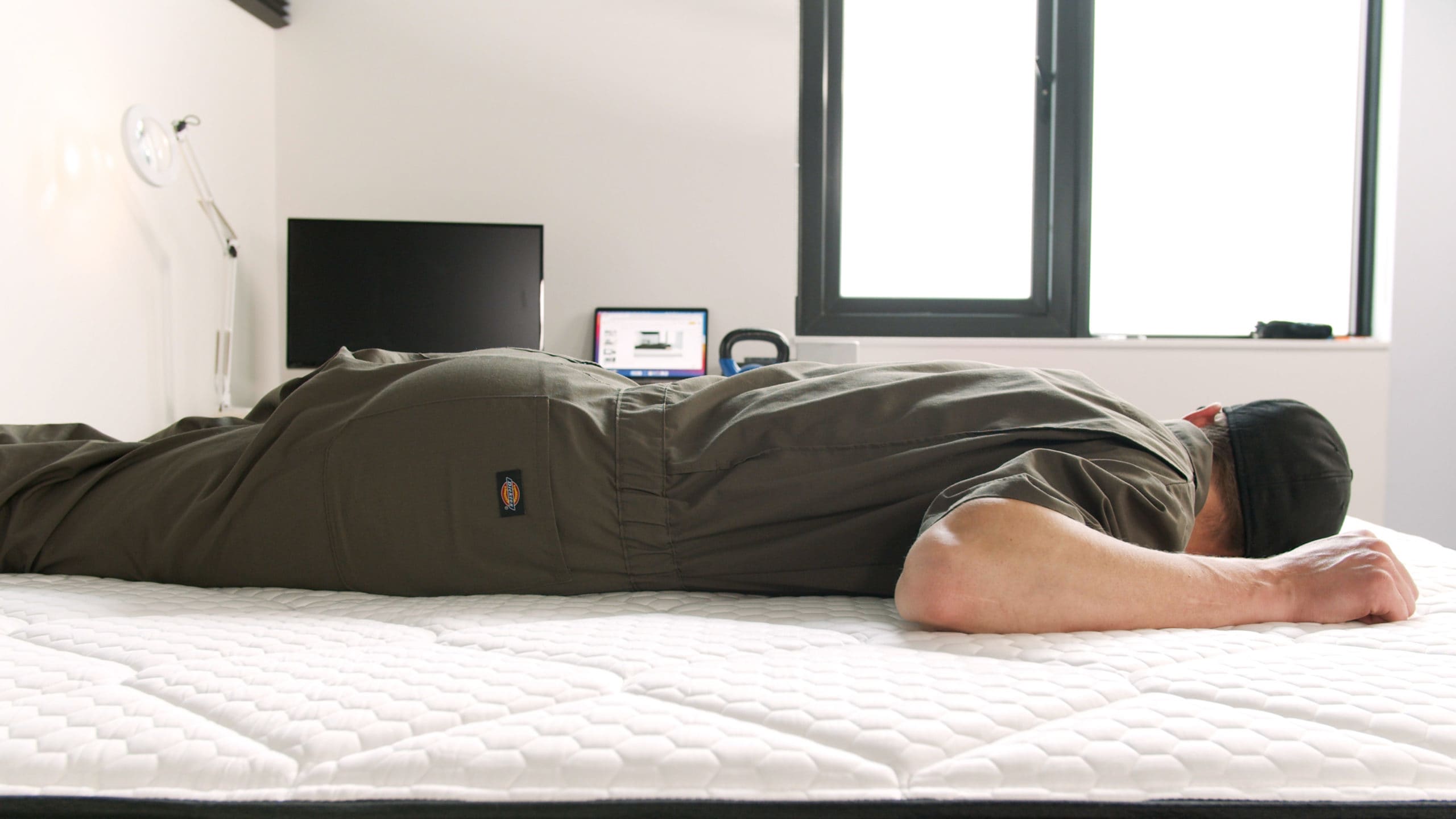
The Plank Firm Luxe from Brooklyn Bedding is a flippable mattress that caters to people who prioritize firmness in their beds. Both sides of the mattress have above-average firmness levels that offer plenty of support to people with back pain issues.
How It Performed
This model excels in delivering support, moreso than many mattresses on the market. It’s very well suited to back and stomach sleepers who need a lot of support to maintain proper spinal alignment. The hybrid is also a good fit for sleepers who weigh over 230 pounds, as it produces minimal sinkage when you lie on the surface. Hot sleepers should find this bed very comfortable thanks to the air circulation within the coils and the natural cooling properties of latex. Shoppers who wish to enhance temperature neutrality may also purchase a cooling panel made of phase change material to better regulate temperature.
Construction Breakdown
The Plank Firm Luxe has a firm (7) and extra firm (9) side. The firm side has a cover quilted with adaptive foam, followed by a comfort layer made of TitanFlex foam. TitanFlex is a proprietary material that has the contouring properties of foam combined with some latex-like responsiveness. Beneath is a transitional layer of high-density polyfoam. The extra firm side begins with a thinner quilted cover followed by a firm polyfoam layer. This side does not include TitanFlex foam, resulting in a firmer feel. Both sides share a support core made of pocketed coils.
Trial, Shipping, and Warranty
Brooklyn Bedding ships mattresses for free within the contiguous U.S. All beds come with a lifetime warranty and are backed by a 120-night sleep trial.
Read More
Read Less
Best Organic: Birch Mattress
Best Organic
8.8/10Test Lab Score
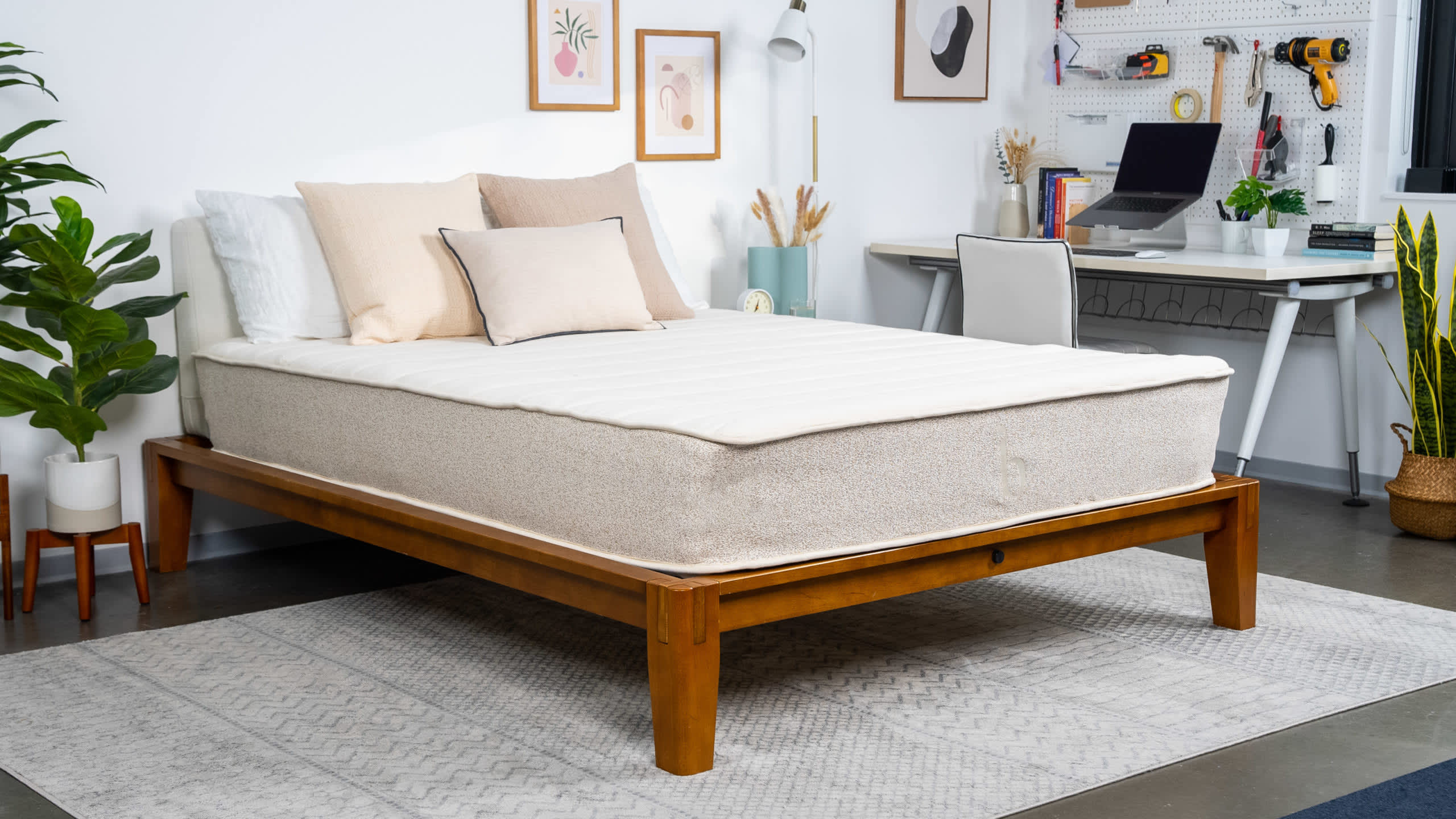
Birch Mattress
A latex hybrid with responsive comfort materials and a robust support system.
Key Details
- Who It’s Best for: Side sleepers weighing at least 130 pounds, and back and stomach sleepers between 130 and 230 pounds.
- Feel: Medium firm (6) construction with surface that responds to your movement with a gentle bounce.
- What It’s Made of: Layers of organic cotton and organic wool over springy latex and pocketed coils with a reinforced perimeter.
- What We Don’t Like: Motion can transfer across the mattress surface, which may be bothersome to light sleepers who share their bed with a partner.
Scoring & Reviews
The following ratings show how suitable this mattress is for different sleeping positions and sleeper weights. These scores are determined by how well the mattress supports and relieves pressure for each sleeper type.
In addition to the hands-on feedback from our team, we conduct a number of quantitative tests in our Test Lab. The below ratings are based on the experience of our testers.
Performance
If your mattress lacks the support needed to keep your body upright and aloft at night, then you may sink too deeply and this can worsen your snoring. The Birch Mattress is a latex hybrid with a medium firm (6) feel, so you’ll notice a significant bounce when getting in and out of bed. This responsiveness can help you change sleep positions and move across the surface with ease, while the latex conforms to a minimal extent.
How It Performed
During our tests, the mattress’ most favorable ratings came from side sleepers weighing at least 130 pounds, and back and stomach between 130 and 230 pounds. Testers noticed a gentle bounce from the latex, which allowed them to move on the mattress surface and change positions with ease. Temperature control is another defining strength, with most of us noticing little to no heat buildup when lying on the Birch Mattress.
Construction Breakdown
The Talalay latex used in the comfort layer is naturally breathable, and doesn’t retain as much heat as polyfoam or memory foam. A layer of wool batting beneath the surface acts as a fire barrier. This material also has moisture-wicking properties, as does the organic cotton cover, allowing you to stay dry even on humid nights. Another cooling component is the pocketed coil support core, which promotes airflow throughout the interior. Like other latex hybrids we’ve tested, the Birch excels at overall temperature control.
Trial, Shipping, and Warranty
The Birch’s sticker price is well below average for a latex hybrid, and shipping is free to customers in all 50 states. Your order includes two pillows at no extra cost. Birch allows returns within 120 nights of your purchase, and backs the mattress with a lifetime warranty against structural defects.
Read More
Read Less
Why Do People Snore?
According to Dr. Audrey Wells, MD, snoring occurs when airflow through the nose or throat is partially obstructed during sleep. “This causes the tissues in the upper airway to vibrate,” says Dr. Wells, “which makes the familiar sound of snoring. Many factors can contribute to snoring. Anatomical issues, such as a deviated nasal septum, enlarged tonsils, or a thick, soft palate, can narrow the airway and make it more prone to vibration.”
Dr. Wells adds obesity is another cause, since excess fat around the neck and throat can compress the airway. “Sleeping on your back often exacerbates snoring because gravity causes the tongue and soft tissues to collapse backward into the airway. Alcohol consumption and sedatives relax the throat muscles, increasing the likelihood of obstruction. Nasal congestion from allergies or colds can also play a role.”
While snoring is often dismissed as a harmless nuisance, Dr. Wells notes it can significantly impact sleep quality for both the snorer and their bed partner. “The frequent interruptions in airflow can lead to fragmented sleep, daytime fatigue, and reduced cognitive performance,” she says. “In some cases, snoring may signal a more serious condition, such as obstructive sleep apnea (OSA), where breathing repeatedly stops and starts during sleep. Addressing snoring is essential not only for improving rest but also for maintaining overall health and well-being.”
How to Choose the Best Mattress for Snoring
When shopping for a mattress to relieve snoring, shoppers should look for options that conform to the body and relieve pressure while remaining supportive enough to keep the spine and neck aligned. An even and supportive surface that incorporates foam or latex comfort layers can adjust to the body to help reduce pressure buildup. This can, in turn, reduce snoring by encouraging good posture and/or side sleeping.
Sleeping Position
Your sleep position is one of the first things you should consider when purchasing a mattress. Those who sleep on their backs or stomachs tend to require more support to keep their spines in a neutral position, so these sleepers may prefer a firmer bed. Meanwhile, side sleepers usually prefer plusher surfaces that cradle their sharper pressure points, such as their hips and shoulders.
Additionally, those who snore may benefit from mattresses that contour enough to encourage side sleeping because this position can help reduce pressure around the throat. “While side sleeping may be effective for snoring, keep monitoring,” Dr. Wells says. “Some people go on to develop snoring even while sleeping in a lateral (side) position.”
Quality Materials
While quality materials often come with a higher price tag, they can be worth the investment. Organic, ethically sourced, and durable materials may promote healthier sleep – especially for individuals who are sensitive – by remaining free from harsh chemicals, which can be worth the extra cost. Those who snore due to allergies may particularly benefit from hypoallergenic materials, like memory foam or latex, because these denser materials resist allergen buildup. Additionally, higher-quality materials tend to last much longer, which can prevent the sinking or sagging that comes with years of use.
Firmness Level
Firmness is an important consideration when searching for the ideal mattress. Beds that are too firm may discourage side sleeping, and beds that are too soft may not keep the spine properly aligned. Either scenario could contribute to snoring.
Side sleepers who snore typically prefer slightly softer models that shape to their bodies, while stomach and back sleepers usually need firmer options to keep their spines and necks aligned.
Price
Price is often the first thing shoppers consider. Mattresses are available at various price-points, though buyers should typically expect to pay between $1,000 and $2,000 for a quality queen mattress. However, shoppers can also find excellent options outside of this range. Materials, quality, and company policies can all affect the overall price. Direct-to-consumer mattresses sold online are often less expensive, since the manufacturer isn’t paying for showrooms and additional staff.
Shoppers looking for mattresses to relieve snoring may want to invest in a mattress with premium materials. High-quality, hypoallergenic materials may help prevent snoring by reducing allergens that could irritate the airway and preventing sagging that could contribute to poor sleep posture.

Pressure Relief
Pressure relief refers to a mattress’ ability to distribute body weight and remove pressure from heavier spots like the hips and shoulders. Beds that feature foam or latex comfort layers tend to offer more pressure relief due to their contouring abilities.
Pressure relief is usually an important factor for snorers. Mattresses that cradle the body evenly can help keep the head and neck aligned, which can limit airway pressure. Strong pressure relief is also beneficial for side sleeping, which is often recommended for snorers.
Motion Isolation
Beds that isolate motion well prevent vibrations from traveling across the surface of the bed. Motion isolation can be useful for couples who are sensitive to each other’s movements. Models that feature foam tend to offer above-average motion isolation, while innerspring mattresses may not absorb motion as efficiently.
Temperature Regulation
Temperature regulation is an important consideration for sleepers who tend to overheat. Mattresses with poor temperature regulation can trap heat close to the body, which may become uncomfortable and disrupt rest.
Temperature control is based on a mattress’ materials. Traditional memory foam is prone to trapping heat, but many manufacturers include special cooling features intended to counteract this tendency. Latex and coils are usually more breathable.
Edge Support
Edge support refers to how sturdy the perimeter of the bed is. Reinforced edges can make the sleep area feel bigger by allowing sleepers to use the whole surface of the bed, even the very edge. Perimeter support may also be an important consideration for sleepers who rely on firm, supportive edges to get in and out of bed.
What Types of Mattresses Are Best for Snoring?
Those who snore and their partners may struggle to find the right mattress that pairs comfort with snoring relief. With so many mattresses on the market, it can be difficult to figure out which bed best meets your needs and preferences. While each brand and model is unique, most mattresses fall into one of four categories based on their construction.
Hybrid
Hybrid mattresses use a coil support core underneath a layer of plusher material, such as latex or foam. The coils provide sleepers with durable support, breathability, bounce, and edge support, while the comfort system relieves pressure and decreases motion transfer.
This type of mattress tends to offer sleepers a good combination of support and pressure relief, making this category of beds a great option for a wide variety of sleepers. Since hybrids often balance motion isolation and bounce, they may also be ideal for couples. Hybrid models may also help reduce snoring by supporting proper alignment to limit stress on the neck and throat while offering enough contouring to make side sleeping comfortable.
Innerspring
Like hybrid mattresses, innerspring models feature a coil support core. However, innerspring mattresses have a thin top layer, which often limits their pressure-relieving properties.
Those who snore often benefit from sleeping on their sides, and innerspring models may not provide enough pressure relief to be comfortable in this position unless the sleeper also uses a mattress topper. Back and stomach sleepers who snore may appreciate the even support and minimal conforming of an innerspring model.
Foam
Foam mattresses are known for their contouring pressure relief. All-foam models typically contain memory foam, polyfoam, and/or latex. Snorers may benefit from a foam mattress with the right firmness and level of contouring because it can both cradle the neck while also resisting sagging that could otherwise lead to snoring.
While foam mattresses can be particularly comfortable for those who sleep on their sides, softer versions of these beds may not offer enough support for back or stomach sleepers. Additionally, memory foam tends to trap heat close to the body, which can contribute to overheating.
Some models, however, are specifically designed to increase support and/or airflow. Firmer foam and high-density foam can reduce sinkage and make back and stomach sleeping more comfortable, and gel infusions, air channels, phase change material, and other cooling features are designed to combat heat retention.
Latex
Latex mattresses are constructed using natural or synthetic latex, or a combination of both. Natural latex is made using the sap of rubber trees, while synthetic latex is a product of a chemical process intended to mimic the feel of natural latex. Latex is known for its durability, breathability, and responsiveness. While it conforms to the body, it spreads the weight out over a wider area than memory foam or polyfoam. Sleepers often compare this to a floating sensation rather than a hug.
A high-quality latex mattress may benefit those who snore. Natural latex is hypoallergenic, which may reduce allergy-induced snoring. Additionally, this material tends to regulate temperatures well. Since latex is usually quite durable and quick to return to its original shape when the sleeper moves, it should also provide enough support to prevent the head and neck from sinking too deeply and aggravating snoring.
“For individuals who snore,” says Dr. Wells, “optimizing sleep posture with the help of a latex mattress may be a simple and effective strategy to promote better airflow and more restful sleep.”
Airbed
Airbeds are mattresses with adjustable air chambers in their support cores. Using a remote control or mobile app, depending on the model, you can inflate or deflate air in individual chambers to change how soft or firm the mattress feels in different areas. Most airbeds also feature foam or latex comfort layers, and some have coil layers as well.
Many airbed owners pair their mattress with an adjustable bed. The combination of a mattress that can be customized for firmness and a frame that can be adjusted to different angles can be especially helpful for people with neck, shoulder, back, or hip pain. Since adjustable beds can be programmed to elevate your head, this type of frame may also be beneficial if you snore.
Other Products to Help With Snoring
While the right mattress can help reduce or prevent snoring, there are also many other products on the market crafted to provide relief for snorers and their partners. Some of these products, such as pillows and anti-snoring devices, can be more affordable than replacing your bed, which may make them good options for those whose mattresses are still in good condition. For chronic snorers, many of these products can be used together to provide greater relief.
Some snorers find relief from a new mattress or sleep accessory, but you should always discuss health symptoms with your doctor. Snoring can be the result of an underlying condition that requires treatment, so professional medical advice is critical.
Pillows
The position of the neck plays a large role in snoring since excessive pressure around the throat can lead to airway compression. Many pillows for snoring are designed to provide enough lift and support to limit pressure on the airway, thereby reducing or preventing snoring.
These pillows typically come in different shapes, lofts, and firmness levels, so there are options for snorers of every body type and sleep position. Some pillows made to relieve snoring even come with automatic snoring responses, meaning that they inflate to provide extra lift if they sense the sleeper is snoring. A pillow specifically made to prevent snoring can be a simple and affordable place to start when looking to find relief.
Adjustable Beds
Similar to pillows designed to lift the head and limit airway compression, adjustable beds can lift the upper body to reduce pressure on the throat. If you are considering purchasing an adjustable base, you should investigate whether the mattress you’re interested in is compatible. Foam, latex, and hybrid models usually work, but innerspring mattresses may or may not.
Some adjustable beds also come with additional features, such as USB ports, massage functions, and automatic snoring responses. These beds may be more expensive than other snoring solutions, typically costing between $1,000 and $3,500. However, they can be a worthwhile investment for those struggling to find relief from snoring.
Anti-Snoring Devices
Anti-snoring mouthpieces and mouthguards are intended to provide structure to keep soft tissue from collapsing into the airways and vibrating.
There are two main types of anti-snoring mouthpieces: mandibular advancement devices (MADs) and tongue retaining devices (TRDs). MADs work by pushing the lower jaw forward to open the airway, while TRDs aim to hold the tongue in place and prevent it from blocking the throat. These devices can be an affordable way to reduce or prevent snoring and help you and your partner get a quality night of rest.
How We Test: Your Comfort Is Our Science
Our industry-leading product testing team cares deeply about improving your sleep. Having a holistic understanding of a mattress’s role as part of a sleep system is paramount to our testing process. Since a bed’s comfort and feel depend largely on body weight and sleeping position, our testing team represents a wide range of body types, sleep positions, and comfort preferences.
In our Seattle-based Test Lab, we use an objective, hands-on process to evaluate mattresses across performance categories. The following are the key guidelines that inform our performance ratings. Our ultimate goal is to ensure you have all the information you need to make the best purchase decision for you.
Construction analysis:We begin testing each mattress by analyzing its design and making note firmness, height, individual layer composition, and sticker price. This allows us to evaluate qualities like support, durability, and value.
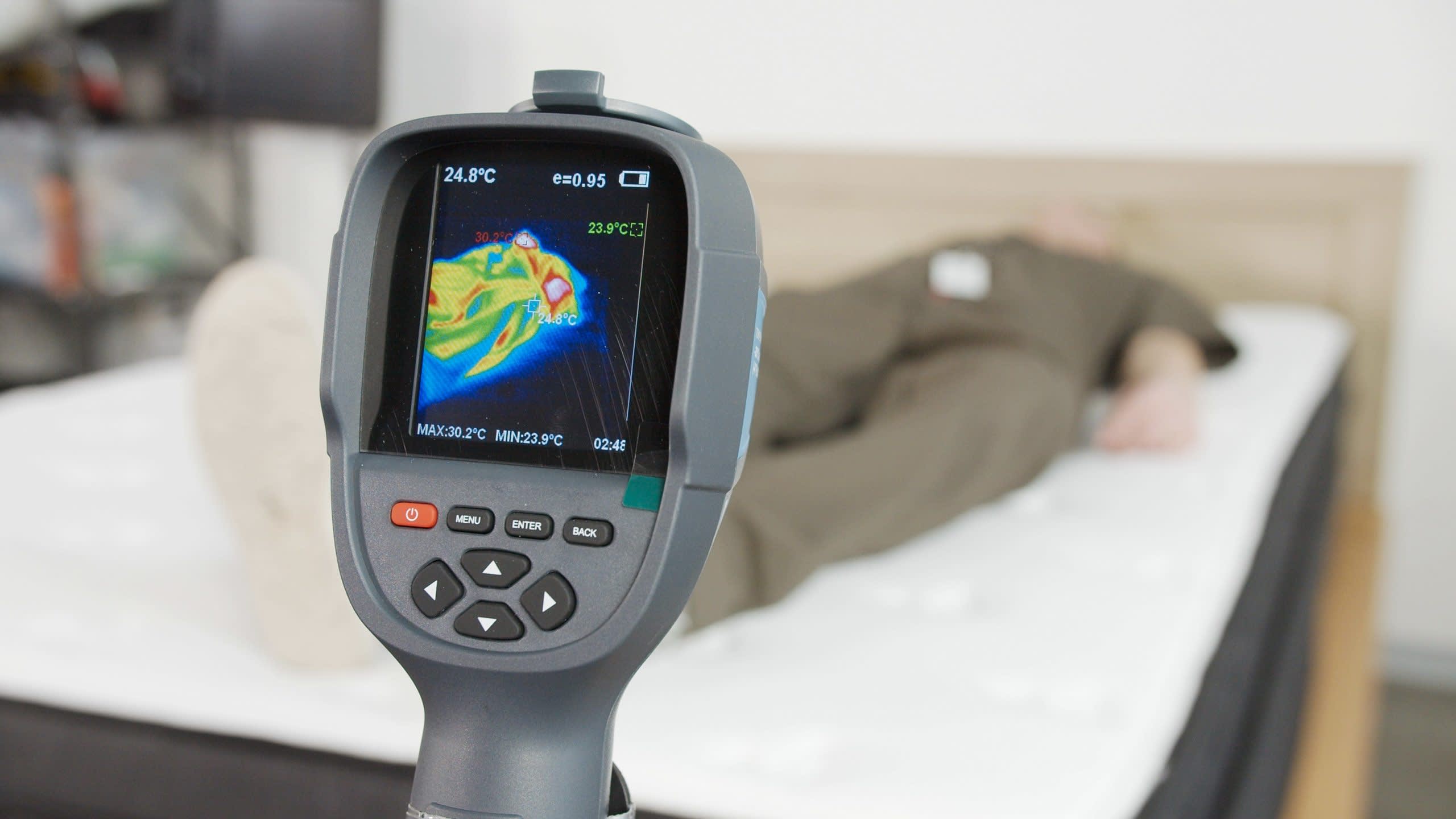
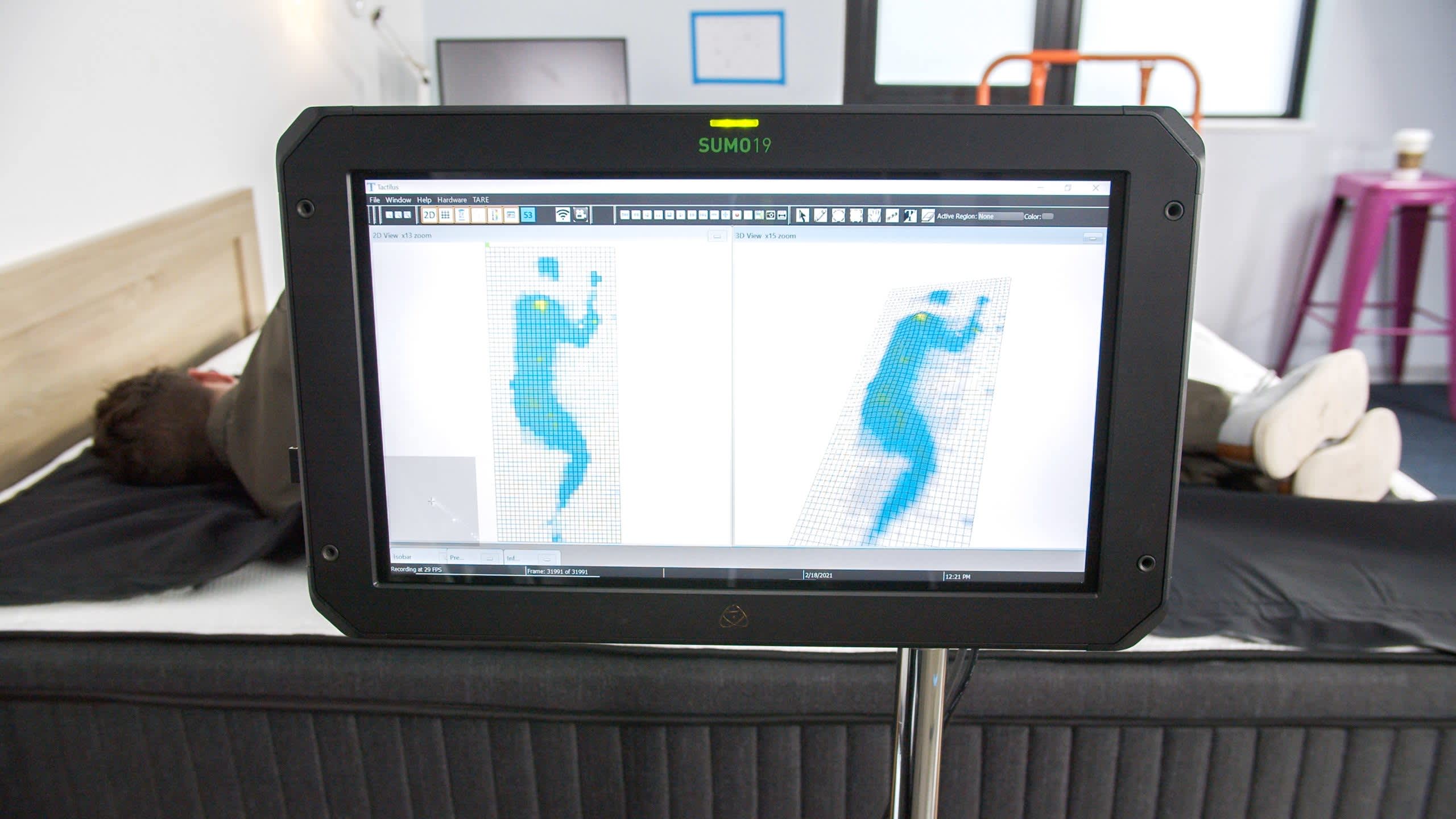
Product testing:Firsthand testing is crucial to our evaluation and ratings system. We use a wide range of tools and technology to test mattresses in six performance categories: motion isolation, pressure relief, temperature control, ease of movement, edge support, and odor potential.
Field testing: In addition to lab-based tests, we base our ratings on feedback from field testers who use the mattresses in their own homes. They spend several weeks collecting data — this gives us insights into how the mattress performs night after night for an extended period.
User testing:We curate feedback verified owners have provided in surveys, sleep stories, and product reviews. This helps us evaluate our initial findings and, if needed, tweak our ratings to reflect real-world experiences.
How We Determine Our Overall Scores
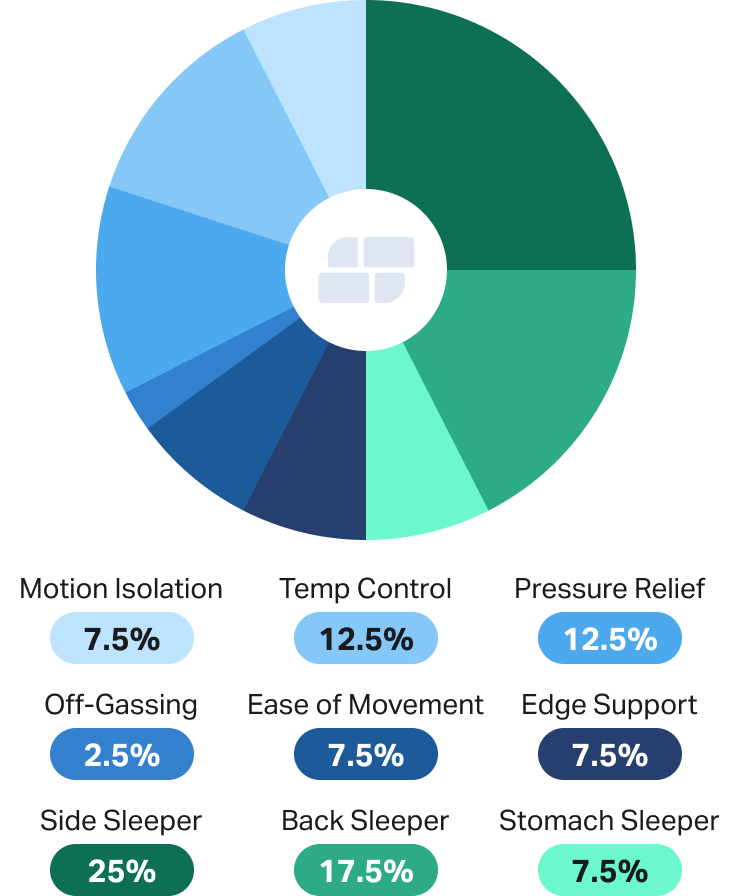

To determine a mattress’s overall score, we assign weighted percentages to performance categories based on how important they are to the individual sleep experience. For instance, areas like pressure relief and temperature control tend to matter more to people than something like off-gassing, and because more people sleep on their side and back than on their stomach, we weigh those positions more heavily.
Performance Categories
Motion Isolation
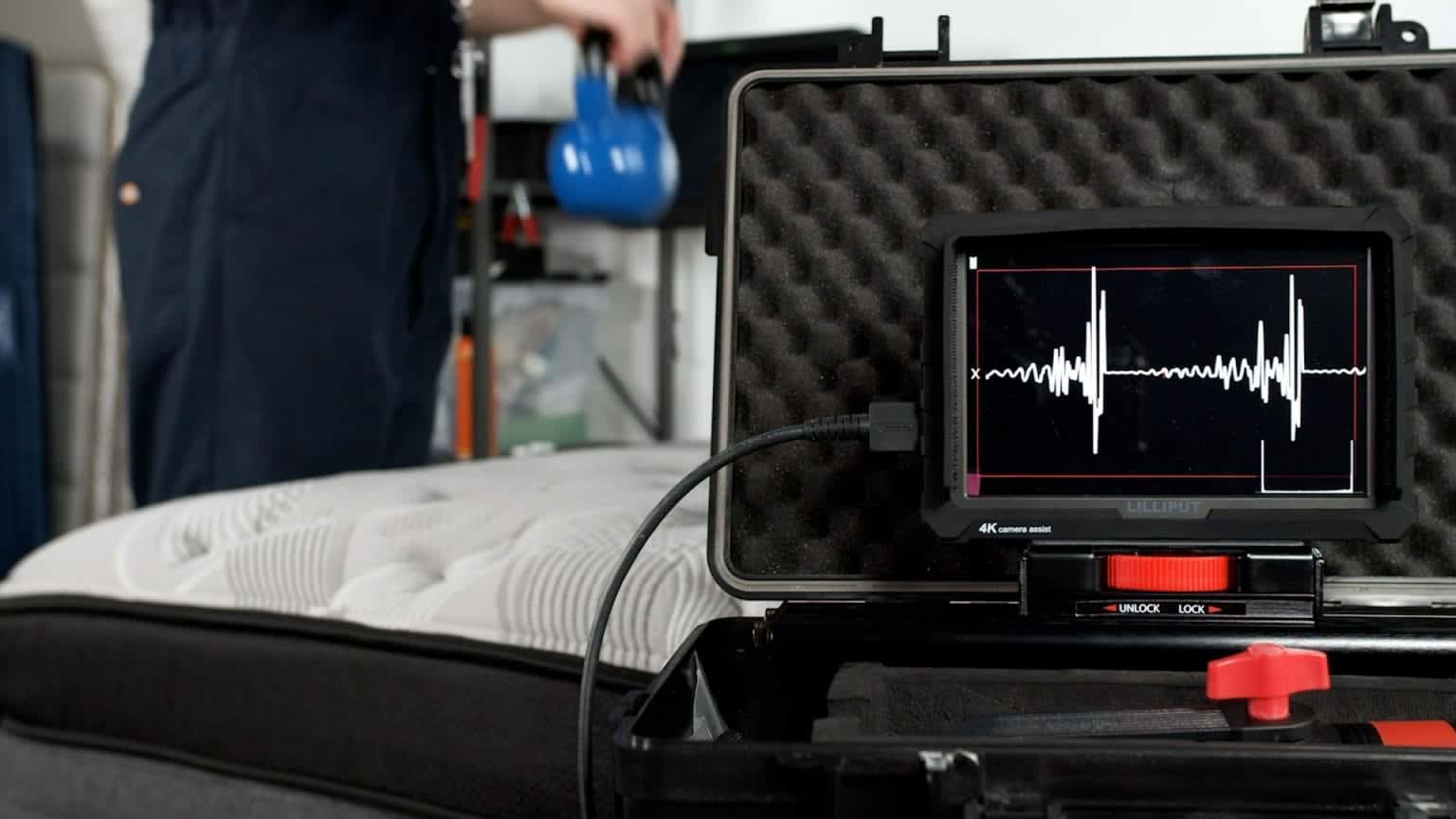
This criteria alludes to the amount of motion a mattress absorbs when a sleeper moves on the surface. We use two testers lying side by side to evaluate motion isolation, who each feel for transfer while the other person moves on the mattress.
Temperature Control
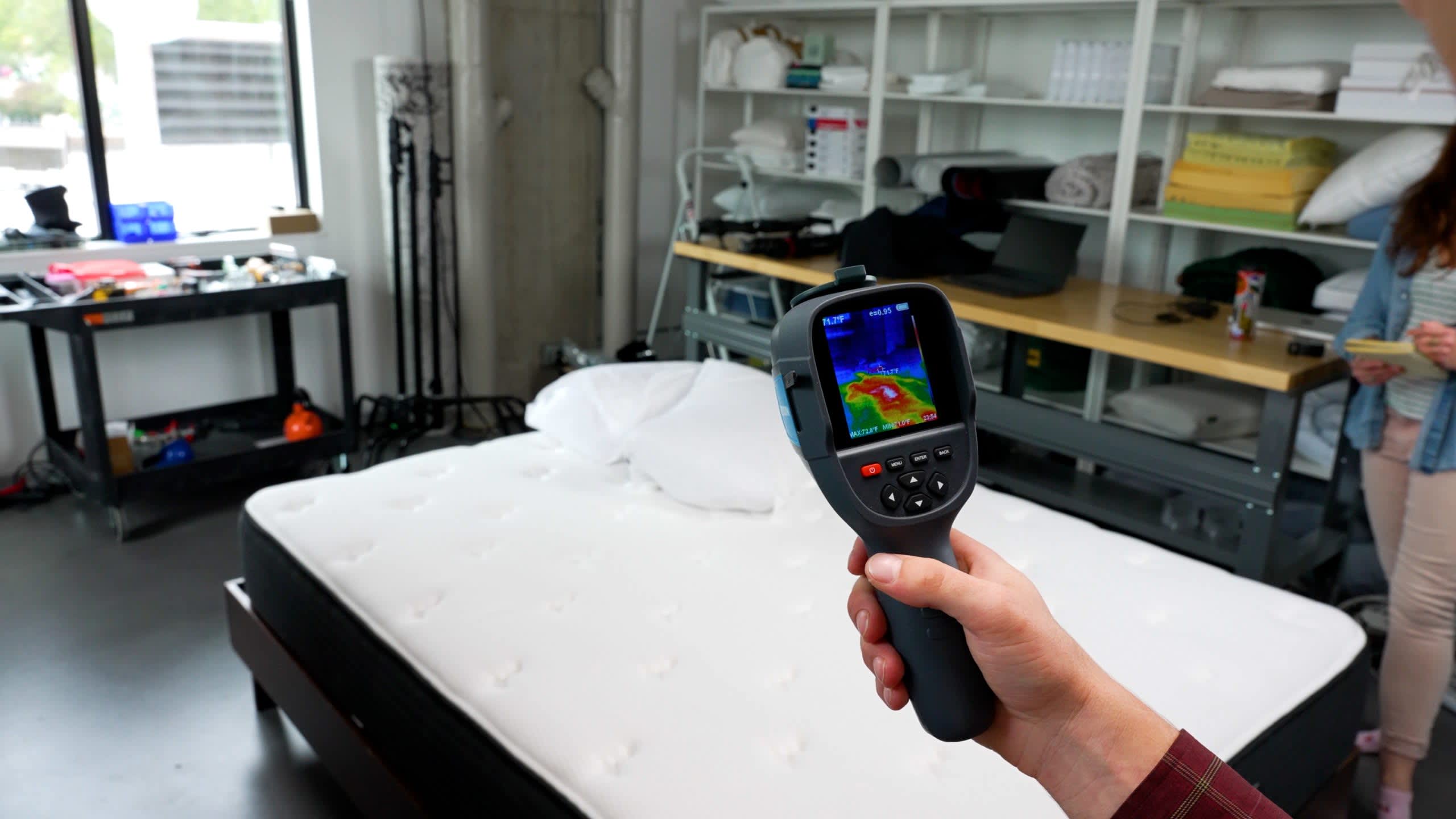
To determine how well a mattress regulates temperature, we perform temperature tests and look closely at its materials and construction. Many mattresses are designed with cooling components meant to reduce heat retention.
Pressure Relief
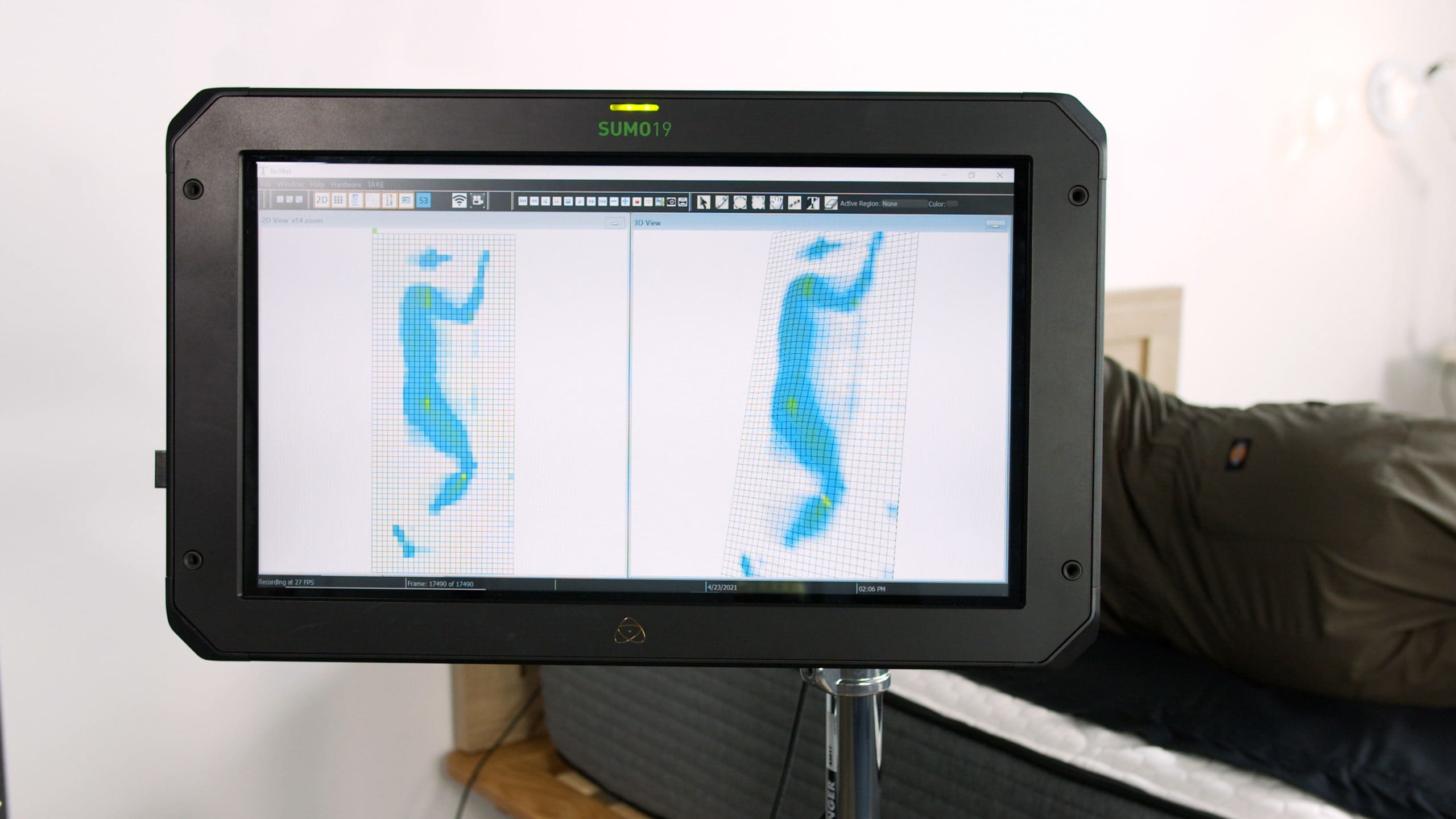
A bed with strong pressure relief excels at preventing pressure from building up in areas like the shoulders and hips. Beds with even contouring and weight distribution are top performers when it comes to pressure relief.
Off-Gassing
A mattress in a box may release unpleasant chemical odors for a short period after you’ve unboxed it. The initial smell may be strong but typically fades within 2 or 3 days.
Ease of Movement
This criteria reflects how easily a sleeper can move across a bed’s surface. Responsive surfaces made of latex typically perform better than foam surfaces, which can inhibit movement.
Edge Support
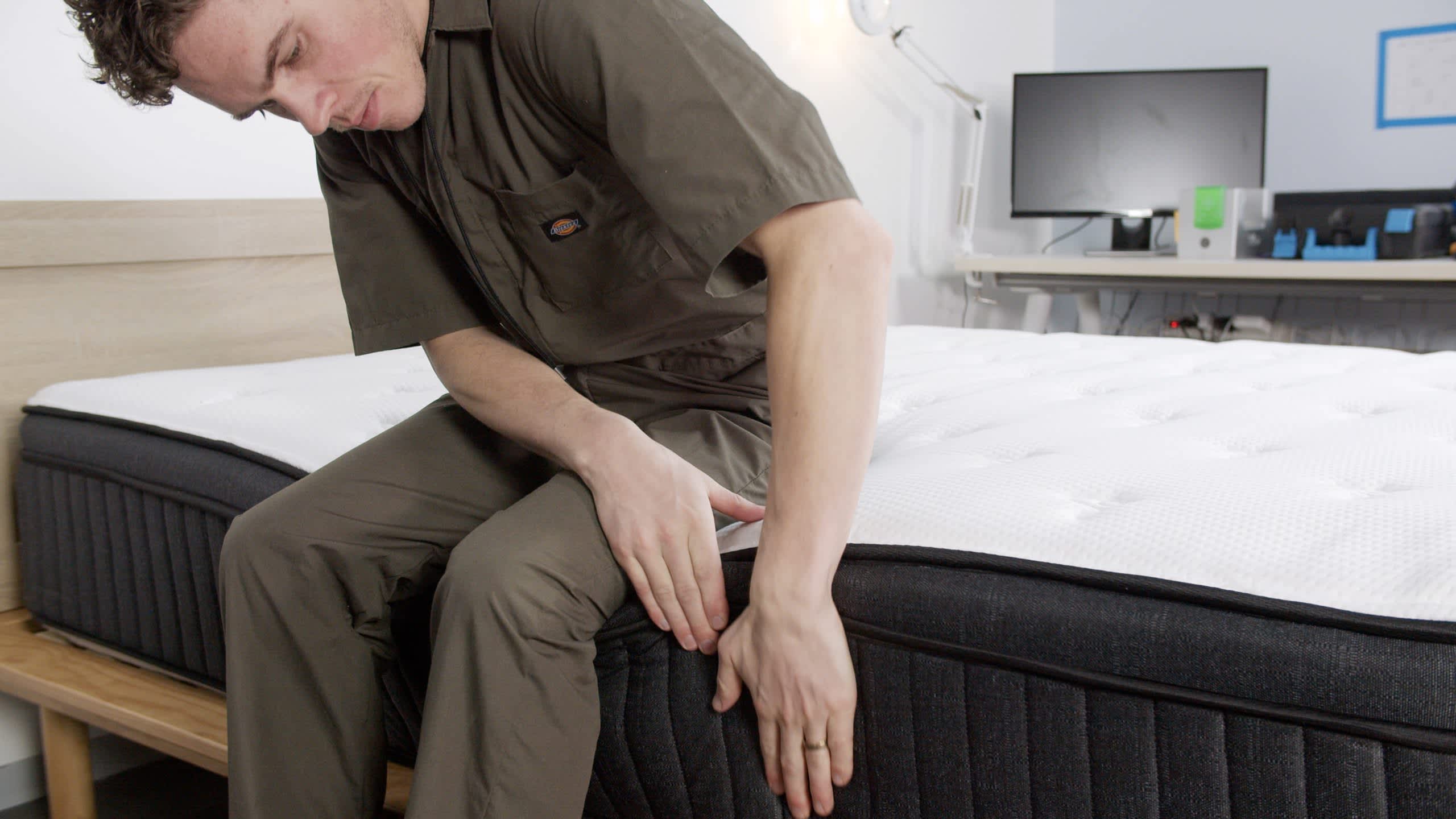
We perform sit tests along a bed’s perimeter to measure how well the edges push back against weight. Mattresses with strong edge support have minimal sagging when sleepers sit on or lie close to the perimeter.
Dive Deeper – Mattress Guides by Purpose
For more help deciding which mattress is best for your situation, check out our guides broken down by mattresses that help tackle specific pain points.
Best Mattress by Specific Purpose

Still have questions? Ask our community!
Join our Sleep Care Community — a trusted hub of product specialists, sleep health professionals, and people just like you. Whether you’re searching for the perfect mattress or need expert sleep advice, we’ve got you covered. Get personalized guidance from the experts who know sleep best.
Jeremy is a sleep product tester with a passion for methodology and data collection. He’s spent the last six years at Sleep Foundation testing nearly every mattress, pillow, and sheet on the market, and has gained a holistic understanding of how to get the most accurate and universal results possible. When he’s not working, Jeremy likes to make music, play tennis, and watch old movies.
Audrey Wells, MD, attended University of Michigan Medical School and went on to train at Washington University School of Medicine in pediatrics and pediatric pulmonary medicine. It was during this time that she developed a specific interest in adult and pediatric sleep medicine. She returned to her home state of New Mexico to complete a sleep medicine fellowship.
Learn more about our medical advisory board