 10% off Home Sleep Tests
 When you buy through our links, we may earn a commission. Products or services may be offered by an affiliated entity. Learn more.

CPAP Alternatives: Sleep Apnea Treatments Without CPAP

- CPAP therapy is the most common and effective way to treat obstructive sleep apnea (OSA), but some patients might prefer to try alternative treatments.
- Studies have shown that people with milder OSA have found relief through a variety of lifestyle changes including using special mouth guards, changes in sleep positions, and weight loss.
- Newer treatments include the GLP-1 prescription medication Zepbound and sleep apnea surgeries.
Getting quality sleep each night is important, but if you find that you’re snoring, frequently waking up throughout the night, and feeling exhausted all day, you may want to get tested for sleep apnea. And while continuous positive airway pressure (CPAP) therapy is a common and effective solution for sleep apnea, it’s not the only remedy to sleep apnea symptoms. In fact, there are other CPAP alternatives to try if you get diagnosed with obstructive sleep apnea (OSA).
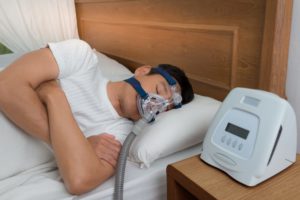
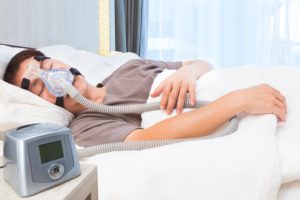
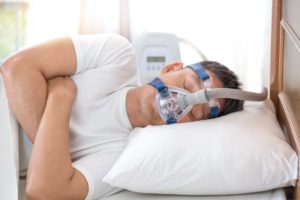
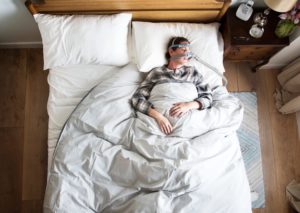
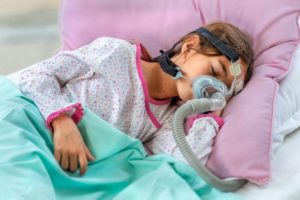
A CPAP machine delivers pressurized air as you sleep to ensure your airway stays open. However, if you would prefer to try another option first, speak with your doctor about other treatments that might work for you. Here are some alternatives.
Start sleeping better with a Home Sleep Study
Take a one-night sleep study in your own bed, review results with a certified sleep expert, and get a personalized treatment plan.
Alternative PAP Therapies
Though CPAP therapy is the most commonly recommended treatment for sleep apnea, there is a such thing as sleep apnea treatment without CPAP that you can discuss with your doctor.
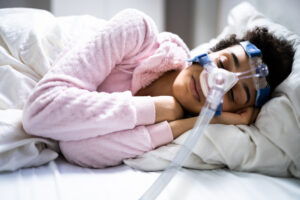
CPAP machines deliver a constant stream of air at the same level throughout the night. Some people may find this pressure uncomfortable. Here are some alternative PAP machines and emerging treatments that may be considered:
- BiPAP: Bilevel positive airway pressure (BiPAP) machines allow for different pressure settings for inhalation and exhalation. Users who find it uncomfortable to exhale against the constant pressure of a CPAP machine may prefer the lower expiratory pressure on a BiPAP machine.
- APAP: An auto-adjusting positive airway pressure (APAP) machine, or auto-CPAP, responds to changes in the user’s breathing patterns.
- EPAP: Expiratory positive airway pressure (EPAP) therapy is a newer alternative to CPAP. Instead of using a machine that delivers pressurized air, a nasal EPAP device uses valves to create air pressure when the user exhales, keeping the upper airway from collapsing.
- cNEP: Research into emerging treatments is ongoing. CPAP alternatives such as continuous negative external pressure (cNEP) and oral pressure therapy (OPT) may be effective at treating OSA.
Sleep Apnea Mouth Guards
Oral appliances can address anatomical factors that contribute to sleep apnea, such as a small lower jaw or a tongue that obstructs the airway.
Mandibular Advancement Devices
Mandibular advancement devices cover the upper and lower teeth and keep the jaw in a position that prevents it from blocking the upper airway. These devices are silent, easy to use, and less expensive than CPAP machines.
However, it’s important to keep in mind that mandibular advancement devices work best for people who have mild OSA or those who experience OSA only when sleeping on their back .
Tongue Retaining Devices
Tongue retaining devices keep the tongue forward so that it does not block the airway. These devices also help reduce the number of apnea events experienced, although studies have shown issues with compliance. Some people tend to prefer mandibular advancement devices over tongue retaining devices .

Home Remedies and Changes
At-home or lifestyle changes can help manage sleep apnea symptoms and may also help those who want to lower their risk of developing sleep apnea. Home remedies are typically complementary to a doctor’s recommended approach for treating sleep apnea and are not enough to treat moderate to severe cases of sleep apnea .
Sleeping Position
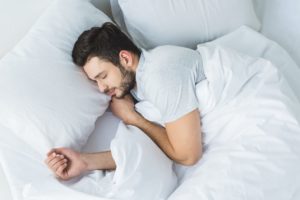
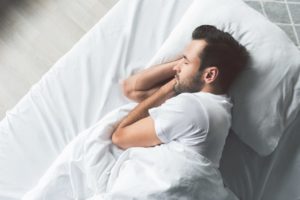
Sleeping in a supine position, or back sleeping, can increase the number of apnea episodes a person has in a night. In this sleep position, the tongue and larynx can obstruct breathing . One study found that nearly 62% of people with OSA have supine-predominant sleep apnea.
Instead of back sleeping, experts recommend side sleeping to reduce the impacts of OSA. Studies have shown that patients who wear devices that alert them when they are on their backs have fewer apnea events . That being said, these devices don’t always stay on that well throughout the night and the technology itself needs improvement, so it’s not a fool-proof method.
Quitting Smoking
There has been some research connecting smoking with OSA, as both can impact sleep and upper airway function. When paired together, they can make sleep apnea worse. As such, quitting smoking may help people with OSA find at least some relief, though more research is needed to determine the full effect on sleep quality .
Avoiding Alcohol
Alcohol use can worsen OSA symptoms in many people. The American Academy of Sleep recommends avoiding alcohol as one of the first steps in treating OSA, along with losing excess weight and changing sleep position.
Myofunctional Therapy
Myofunctional therapy, or therapy for facial and mouth muscles, may help reduce apnea events. This therapy includes exercises to strengthen the muscles in the tongue, soft palate, lips, and face. Correcting the position of the tongue can help prevent it from blocking the airway .
Shop Top CPAP Alternatives
Apnea Sciences
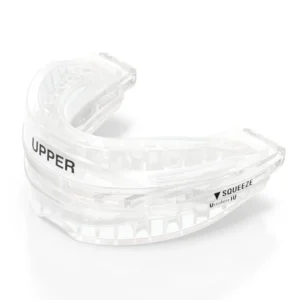
ApneaRx Sleep Apnea Mouthpiece
$199
SmartGuard Rx
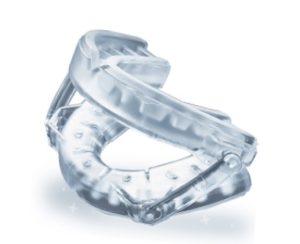
SmartGuard Anti-Snore Device
$49.99$59.99
exciteOSA
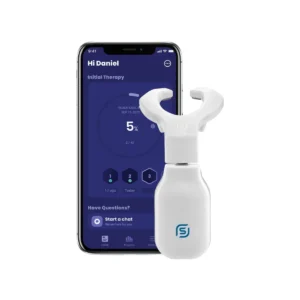
Tongue Stimulator for Sleep Apnea
$1,650
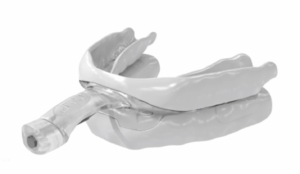
Airway Management
myTAP Oral Appliance
$199$249
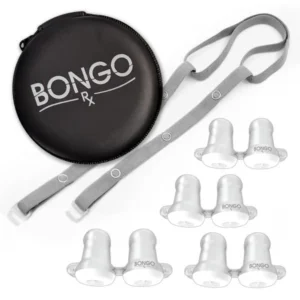
AirAvant Medical
Rx EPAP Starter Kit
$199
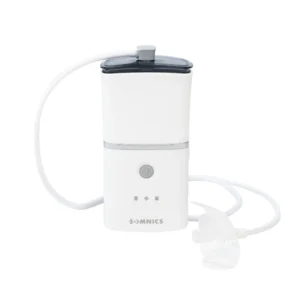
Somnics
iNap Sleep Apnea Therapy System
$1,199$1,499
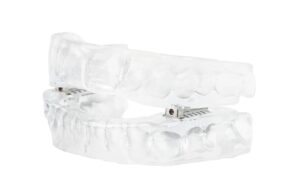
American Sleep Dentistry
Oral Appliance
$1,295
Weight Loss
Obesity is a risk factor for OSA, but the relationship between weight and sleep apnea is complex. It is important to consult with a medical professional when considering weight loss to treat symptoms of sleep apnea.
Research shows that losing excess weight can reduce the severity of OSA symptoms . A combination of a change in diet and moderate exercise may be recommended. However, weight loss alone cannot completely eliminate OSA .
People who lose weight and change their sleeping positions see better results than those who only lose weight.
Zepbound for Sleep Apnea
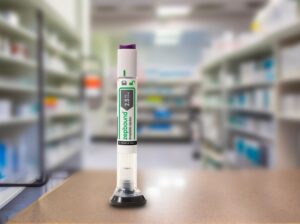
In January 2025, Zepbound became the first medication to be approved by the FDA to treat sleep apnea. Zepbound is more widely known as a weight loss injectable prescription medication that targets GIP and GLP-1 hormones to regulate appetite and metabolism. However, after promising trials showed that patients taking Zepbound saw reduced breathing disruptions and achieved sleep apnea remission (for mild cases), it can now be prescribed for OSA patients .
Bariatric Surgery
Because of the links between OSA and a higher body mass index, bariatric surgery, which is primarily done to help with weight loss, has been shown in studies to have a positive impact on patients’ sleep apnea as well. This is especially true in people with milder cases of OSA .
Sleep Apnea Surgery
A number of surgeries can reduce apnea events, though the evidence for their efficacy is limited to small studies.
- Adenotonsillectomy: Commonly, children who have OSA will have their tonsils and adenoids removed.
- Maxillomandibular advancement: The upper and lower jawbones are repositioned to help keep the upper airway open.
- Uvulopalatopharyngoplasty: This surgery includes removal or repositioning of tissue from around the upper airway.
- Hypoglossal nerve stimulation: For this treatment, a surgeon inserts a stimulator into the nerve that controls tongue movement. When this nerve is stimulated, the tongue is positioned to keep the airway open.
Why Use an Alternative to a CPAP Machine?
While CPAP machines are the most common treatment for OSA, some people may seek out alternative treatment for a number of reasons. If you’re considering trying any of these methods out, you should talk to your doctor or a specialist, who can offer advice on what alternatives may be most suitable for your specific case.
Here are some reasons why someone may be interested in using an alternative to a CPAP machine.
- Cost: The machine’s out-of-pocket cost can start near $500 and can be up to $1,000 or more. Those who use insurance to get a CPAP machine may be required to enroll in a rent-to-own plan with strict compliance requirements.
- Compliance requirements: Insurers such as Medicare may require CPAP machine users to adhere to a 30-day compliance period , using the machine for at least four hours a night on 70% of nights. CPAP users may struggle to meet these requirements or feel it is an invasion of privacy.
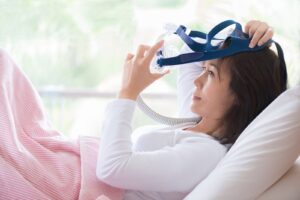
- Side effects: Side effects vary among CPAP users. Some find the mask uncomfortable or experience dry mouth, red or itchy eyes, and a dry, stuffy, or runny nose. CPAP users and their sleeping partners may also be affected by noise caused by mask leaks. All of these CPAP side effects may impact adherence or how often a person uses their machine.
- Adherence: Adherence rates for CPAP machines may be as low as 50% .
When to Talk to Your Doctor
Depending on the severity of your OSA and if you have other health conditions, there are a range of CPAP alternatives that you can discuss with your doctor. Talk to your doctor if:
- You suspect you have or have already been diagnosed with OSA, but are hesitant to try CPAP therapy for any of the reasons outlined above.
- You are using a CPAP machine but are having challenges with it. In some cases, a doctor might be able to suggest a different type of PAP therapy, a different mask, or other accessories that can make it more comfortable to use.
- You are considering other treatments, such as bariatric surgery or Zepbound, that may also help your OSA.
In most cases, CPAP will be the first-line treatment suggested for OSA since it’s been proved to be most effective. However, it requires high compliance in order to be impactful, meaning that if you don’t actually wear your mask through the night on most nights, then it’s not going to help. In that case, it could be worth looking into alternatives.
Medical Disclaimer: The content on this page should not be taken as medical advice or used as a recommendation for any specific treatment or medication. Always consult your doctor before taking a new medication or changing your current treatment.

Still have questions? Ask our community!
Join our Sleep Care Community — a trusted hub of sleep health professionals, product specialists, and people just like you. Whether you need expert sleep advice for your insomnia or you’re searching for the perfect mattress, we’ve got you covered. Get personalized guidance from the experts who know sleep best.
Logan is a Certified Sleep Science Coach with a deep understanding of what it means to struggle with sleep. Her years of experience researching and testing sleep products – including mattresses, natural sleep aids, and bedding – are critical to her role helping lead the editorial team. When she’s not testing mattresses or researching CBT-I, she enjoys spending time in the sunshine with her husband and her dogs Pepper and Winston.
Dr. Anis Rehman, MD is an American Board of Internal Medicine (ABIM) certified physician in Internal Medicine as well as Endocrinology, Diabetes, and Metabolism who practices in Illinois. He completed his residency at Cleveland Clinic Akron General, and fellowship training at the University of Cincinnati in Ohio. Dr. Rehman has several dozens of research publications in reputable journals and conferences.
References
22 Sources
-
UpToDate. (2021, July 8). Patient education: Sleep apnea in adults (Beyond the basics). UpToDate.
https://www.uptodate.com/contents/sleep-apnea-in-adults-beyond-the-basics -
Kryger, M. H. & Malhotra, A. (2022, August 11). Management of obstructive sleep apnea in adults. In N. Collop (Ed.). UpToDate.
https://www.uptodate.com/contents/obstructive-sleep-apnea-overview-of-management-in-adults -
Kram, J. A., Woidtke, R. V., Klein, K. B., & Rose, R. M. (2017). Evaluation of continuous negative external pressure (cNEP) for the treatment of obstructive sleep apnea: A pilot study. Journal of Clinical Sleep Medicine, 13(8), 1009–1012.
https://pubmed.ncbi.nlm.nih.gov/28633720/ -
Farid-Moayer, M., Siegel, L. C., & Black, J. (2013). Oral pressure therapy for treatment of obstructive sleep apnea: Clinical feasibility. Nature and Science of Sleep, 5, 53–59.
https://pubmed.ncbi.nlm.nih.gov/23750108/ -
National Heart, Lung, and Blood Institute. (2021). Sleep apnea.
https://www.nhlbi.nih.gov/health-topics/sleep-apnea -
Francis CE, Quinnell T. Mandibular Advancement Devices for OSA: An Alternative to CPAP?. Pulm Ther. 2021;7(1):25-36. doi:10.1007/s41030-020-00137-2
https://pmc.ncbi.nlm.nih.gov/articles/PMC8137783/ -
Lazard, D. S., Blumen, M., Lévy, P., Chauvin, P., Fragny, D., Buchet, I., & Chabolle, F. (2009). The tongue-retaining device: Efficacy and side effects in obstructive sleep apnea syndrome. Journal of Clinical Sleep Medicine, 5(5), 431–438.
https://pubmed.ncbi.nlm.nih.gov/19961027/ -
De Dios JA, Brass SD. New and unconventional treatments for obstructive sleep apnea. Neurotherapeutics. 2012;9(4):702-709. doi:10.1007/s13311-012-0146-5
https://pmc.ncbi.nlm.nih.gov/articles/PMC3480568/ -
Lee, C. H., Kim, D. K., Kim, S. Y., Rhee, C. S., & Won, T. B. (2015). Changes in site of obstruction in obstructive sleep apnea patients according to sleep position: A DISE study. The Laryngoscope, 125(1), 248–254.
https://pubmed.ncbi.nlm.nih.gov/25154495/ -
Joosten, S. A., Hamza, K., Sands, S., Turton, A., Berger, P., & Hamilton, G. (2011). Phenotypes of patients with mild to moderate obstructive sleep apnoea as confirmed by cluster analysis. Respirology, 17(1), 99–107.
https://pubmed.ncbi.nlm.nih.gov/21848707/ -
Ravesloot, M. J. L., van Maanen, J. P., Dun, L., & de Vries, N. (2012). The undervalued potential of positional therapy in position-dependent snoring and obstructive sleep apnea—a review of the literature. Sleep and Breathing, 17(1), 39–49.
https://pubmed.ncbi.nlm.nih.gov/22441662/ -
Krishnan V, Dixon-Williams S, Thornton JD. Where there is smoke…there is sleep apnea: exploring the relationship between smoking and sleep apnea. Chest. 2014;146(6):1673-1680. doi:10.1378/chest.14-0772
https://pmc.ncbi.nlm.nih.gov/articles/PMC4251622/ -
Ramar, K., Dort, L. C., Katz, S. G., Lettieri, C. J., Harrod, C. G., Thomas, S. M., & Chervin, R. D. (2015). Clinical practice guideline for the treatment of obstructive sleep apnea and snoring with oral appliance therapy: An update for 2015. Journal of Clinical Sleep Medicine, 11(07), 773–827.
https://pubmed.ncbi.nlm.nih.gov/26094920/ -
Camacho, Macario et al. “Myofunctional Therapy to Treat Obstructive Sleep Apnea: A Systematic Review and Meta-analysis.” Sleep vol. 38,5 669-75. 1 May. 2015, doi:10.5665/sleep.4652.
https://www.ncbi.nlm.nih.gov/pmc/articles/PMC4402674/ -
Malhotra A, Heilmann CR, Banerjee KK, Dunn JP, Bunck MC, Bednarik J. Weight reduction and the impact on apnea-hypopnea index: A systematic meta-analysis. Sleep Med. 2024;121:26-31. doi:10.1016/j.sleep.2024.06.014
https://pubmed.ncbi.nlm.nih.gov/38908268/ -
theffron. Zepbound approved by FDA as first sleep apnea medication. American Academy of Sleep Medicine – Association for Sleep Clinicians and Researchers. Published December 22, 2024.
https://aasm.org/zepbound-approved-fda-first-sleep-apnea-medication/ -
Peromaa-Haavisto, P., Luostarinen, M., Juusela, R. et al. Obstructive Sleep Apnea: The Effect of Bariatric Surgery After Five Years—A Prospective Multicenter Trial. OBES SURG 34, 1544–1551 (2024). https://doi.org/10.1007/s11695-024-07124-5
https://link.springer.com/article/10.1007/s11695-024-07124-5 -
Weaver, E.M. & Kapur, V.K. (2021, May 14). Surgical treatment of obstructive sleep apnea in adults. In N. Collop (Ed.). UpToDate.
https://www.uptodate.com/contents/surgical-treatment-of-obstructive-sleep-apnea-in-adults -
U.S. Centers for Medicare & Medicaid Services. (n.d.) Continuous positive airway pressure (CPAP) devices, accessories, & therapy. Department of Health and Human Services.
https://www.medicare.gov/coverage/continuous-positive-airway-pressure-devices -
Naik, S., Al-Halawani, M., Kreinin, I., & Kryger, M. (2019). Centers for Medicare and Medicaid Services positive airway pressure adherence criteria may limit treatment to many Medicare beneficiaries. Journal of Clinical Sleep Medicine, 15(02), 245–251.
https://pubmed.ncbi.nlm.nih.gov/30736874/ -
Rotty, M. C., Suehs, C. M., Mallet, J. P., Martinez, C., Borel, J. C., Rabec, C., Bertelli, F., Bourdin, A., Molinari, N., & Jaffuel, D. (2021). Mask side-effects in long-term CPAP-patients impact adherence and sleepiness: The InterfaceVent real-life study. Respiratory Research, 22(1).
https://pubmed.ncbi.nlm.nih.gov/33451313/ -
Calik M. W. (2016). Treatments for obstructive sleep apnea. Journal of Clinical Outcomes Management, 23(4), 181–192.
https://pubmed.ncbi.nlm.nih.gov/27134515/