When you buy through our links, we may earn a commission. Products or services may be offered by an affiliated entity. Learn more.

Sleep Apnea Symptoms


- The most common symptoms of sleep apnea include loud snoring, gasping or choking during sleep, and excessive daytime sleepiness.
- Sleep apnea symptoms can also include morning headaches, dry mouth, trouble concentrating, irritability, and nighttime urination.
- Women with sleep apnea may be more likely to report symptoms like fatigue, insomnia, morning headaches, anxiety, depression, and difficulty concentrating.
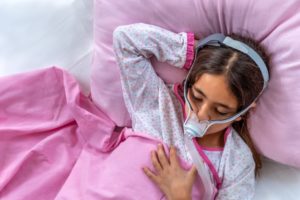
- Symptoms may also look different in children, who are more likely to experience restless sleep, bedwetting, behavioral changes, or difficulty focusing.
Sleep apnea is a sleep-related breathing disorder that affects millions of people in the United States. Although some people with sleep apnea experience loud and frequent snoring that catches the attention of a family member or bed partner, many others are unaware of their symptoms and remain undiagnosed.
Because symptoms occur during sleep, many people don’t realize that nighttime breathing issues are causing them to toss and turn, feel sleepy during the day, and experience a range of other symptoms that can negatively affect their quality of life.
In this article, we’ll cover the most common signs and symptoms of sleep apnea; how they can vary between men, women, and children; and when it may be time to talk to a doctor.

Most Common Symptoms of Sleep Apnea
Sleep apnea is associated with a wide variety of symptoms, which can vary based on factors like the condition’s severity and the underlying cause of abnormal breathing. In general, there are two main types of sleep apnea:
- Obstructive sleep apnea (OSA) is the most common form of sleep apnea and occurs when the upper airway narrows or collapses during sleep.
- Central sleep apnea (CSA) is the less common type and happens when there’s an interruption in the signals from the brain that trigger breathing.
People with sleep apnea can be asymptomatic or not recognize their symptoms until told by a doctor, caregiver, or bed partner. When symptoms occur, they may include both nighttime signs of abnormal breathing and disruptions to daily living.
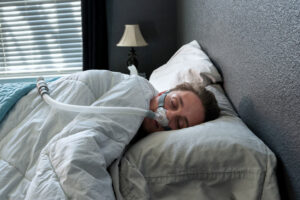
Snoring, Gasping, and Pauses in Breathing During Sleep
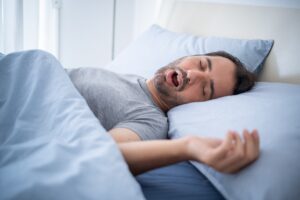
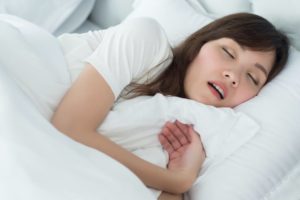
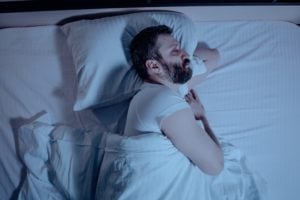
Snoring is one of the most recognizable symptoms of sleep apnea. This symptom occurs due to a narrowing or collapse of the upper airway. In OSA, this is due to a combination of an individual’s anatomy and natural changes in the body that happen during sleep, which increase the risk of the tissues collapsing. The sound of snoring occurs when breathing causes these tissues to vibrate.
As many as 90% of people with OSA snore during sleep. Although snoring is a common symptom of OSA, not everyone who snores has sleep apnea. In fact, fewer than half of people who snore meet the criteria for obstructive sleep apnea. Snoring is less common in people with CSA.
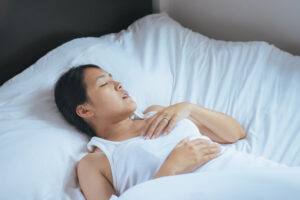
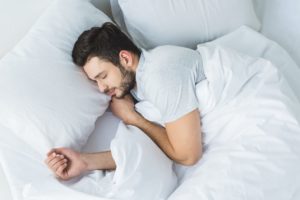
As a person with sleep apnea is resting, a bed partner may notice brief lapses in their breathing that last from several seconds to minutes . This pause in respiration causes the sleeper to wake up . As they awaken and resume breathing, they may sound as if they are gasping, snorting, or choking. People with CSA may also wake up with shortness of breath.
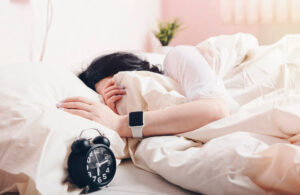
Daytime Sleepiness
Daytime sleepiness is frequently reported in people with both obstructive sleep apnea and central sleep apnea. Sleepiness may occur throughout the day or be more noticeable during monotonous activities such as watching TV or driving long distances.
Excessive daytime tiredness affects between 40% and 58% of people with OSA, depending on the severity of their condition. It is also common for people with CSA to feel overly sleepy during the day. Unfortunately, this symptom is commonly overlooked, as daytime sleepiness increases gradually over time, people may mask their tiredness with activity or caffeine, or people may believe that their level of sleepiness is normal.
In people with sleep apnea, excessive daytime sleepiness is believed to be caused by not getting enough sleep and repeatedly waking up to breathe. Experts suggest that repeated drops in the level of oxygen in the blood and co-existing health conditions may also contribute to daytime sleepiness in people with sleep apnea.
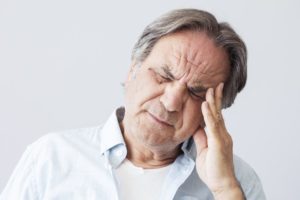
Morning Headaches
Headaches after waking up are a frequently reported symptom in people with both obstructive and central sleep apnea. Around 10% to 30% of people with OSA experience headaches, which may last for several hours each morning.
Headaches may feel like both sides of the forehead are being squeezed. Unlike other types of headaches though, morning headaches related to sleep apnea do not usually involve nausea or sensitivity to light or noise.
Researchers are still uncovering the exact cause of morning headaches. Waking up with a headache may be related to the effects of interrupted sleep, pressure building in the skull, or cardiovascular changes caused by breathing disruptions.
Dry Mouth and Sore Throat
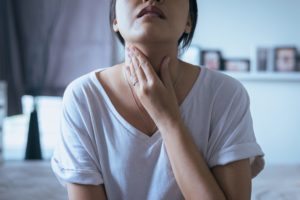
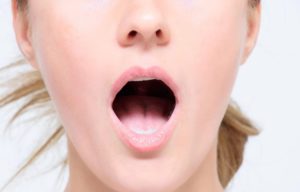
People with sleep apnea may also wake up with a dry mouth or throat. Although estimates vary, one-third or more of people with OSA experience symptoms like oral dryness , burning in the mouth, sore throat, difficulty swallowing, or changes in taste.
Dry mouth can be caused by snoring or breathing with an open mouth during sleep. Dry mouth may be an important sign of OSA, as research has found that the severity of morning dry mouth may be linked to the severity of a person’s nighttime breathing disruptions.
Cognitive and Mood Changes
Sleep apnea can affect a person’s mental health. People with sleep apnea may notice changes in their memory as well as their ability to concentrate and maintain attention. Sleep apnea is also associated with mood changes like increased impatience and irritability. People with sleep apnea may also be at an increased risk of certain mental health conditions like depressive disorders, anxiety disorders, and post-traumatic stress disorder.
Although the connection between sleep apnea and mood is not fully understood, cognitive and mood changes may be a side effect of poor quality sleep. Other factors that may contribute to mood changes in sleep apnea include reduced oxygen in the blood, inflammation, and alterations in brain chemicals.

Other Symptoms of Sleep Apnea
Other symptoms may be caused by complications of sleep apnea or underlying medical conditions that contribute to nighttime breathing disruptions. Other signs or symptoms of sleep apnea include:
- Frequent awakenings and insomnia: Many people with sleep apnea wake repeatedly throughout the night without realizing it. These interruptions can lead to restless sleep, difficulty staying asleep, and feeling unrefreshed in the morning.
- Nighttime urination: Sleep apnea can increase nighttime urine production due to changes in oxygen levels and pressure in the chest during breathing disruptions. As a result, many people wake up multiple times per night to use the bathroom.
- Loss of sex drive and sexual dysfunction: Interrupted sleep and reduced oxygen levels may affect hormones, circulation, and overall energy levels, which can contribute to decreased libido and sexual performance issues in both men and women.
- Nighttime chest pain: Reduced oxygen levels and strain on the cardiovascular system during sleep may cause chest discomfort or pain in some people with sleep apnea.
- Heart palpitations: Sleep apnea can place stress on the heart and may contribute to sensations of a racing, pounding, or irregular heartbeat, especially during the night.
- Shortness of breath during physical activity: Poor sleep quality and reduced oxygen levels may make physical exertion feel more difficult and leave some people feeling winded more easily.
- Breathlessness when lying down: Some people with sleep apnea feel short of breath when lying flat, particularly if they also have underlying heart or lung conditions.
Sleep Apnea Symptoms in Women
Sleep apnea symptoms in women and those assigned female a birth can sometimes look different than the “classic” signs commonly associated with the condition. While loud snoring and gasping during sleep can occur, women are often more likely to report symptoms like fatigue, insomnia, morning headaches, anxiety, depression, mood changes, and difficulty concentrating. Some women may also experience restless sleep or wake up frequently during the night without realizing that breathing disruptions are the cause.
Because these symptoms can overlap with conditions like stress, menopause, anxiety, or insomnia, sleep apnea in women is sometimes overlooked or misdiagnosed. Hormonal changes related to pregnancy, perimenopause, and menopause may also increase the risk of developing sleep apnea. Recognizing these less obvious symptoms can help women seek evaluation and treatment earlier.
Symptoms of Sleep Apnea in Children
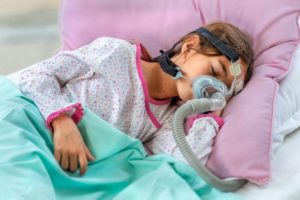
Sleep apnea can also affect infants and children and may cause unique symptoms in this age group. Although sleep apnea is less common in younger people, experts estimate that from 1% to 5% of children have obstructive sleep apnea and even fewer have central sleep apnea.
Many symptoms of sleep apnea in children are similar to the symptoms seen in adults, such as snoring or gasping, restless sleep, and visible changes in breathing patterns. Children may also experience daytime sleepiness, morning headaches, and changes in mood.
Given that young children may be limited in their ability to describe their symptoms, some symptoms of sleep apnea may appear differently in children. Caregivers may find it helpful to watch out for symptoms of abnormal nighttime breathing such as:
- Sweating at night
- Sleepwalking
- Night terrors
- Falling asleep at school
- Difficulty paying attention
- Bedwetting
- Overactivity
- Rebellious, aggressive, or impulsive behavior
- Worsening asthma
Obstructive Sleep Apnea vs. Central Sleep Apnea Symptoms
Although obstructive sleep apnea and central sleep apnea are different medical conditions, both are characterized by abnormal nighttime breathing that can interrupt sleep and affect oxygen levels in the blood. Doctors cannot tell the difference between these sleep-related breathing disorders based on a person’s symptoms alone.
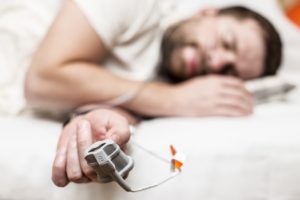
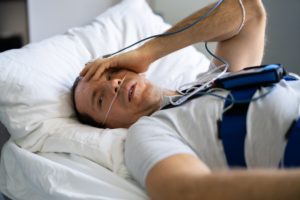
Because the symptoms of these conditions are similar, doctors use the results of a sleep study to differentiate between obstructive and central sleep apnea . Also called polysomnography, a sleep study takes various measurements while a person sleeps through the night in a specialized sleep laboratory.
To distinguish between obstructive and central sleep apneas, doctors consider several factors including measurements that assess whether a person is attempting to breathe during a period of reduced or paused respiration.
If tests show that a person is trying to breathe against a closed or obstructed airway, they may be diagnosed with OSA . Conversely, if tests show that they stop trying two breathe during periods of disrupted breathing, they may be diagnosed with CSA. Because many people experience aspects of both obstructive and central sleep apnea, a doctor will consider whether most breathing disruptions are obstructive or central in origin.
When to Talk to Your Doctor
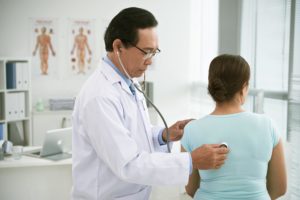
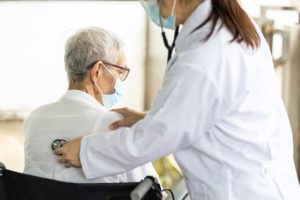
If you experience persistent daytime sleepiness or other symptoms of sleep apnea, it is important to contact your doctor or a sleep specialist. While untreated sleep apnea can contribute to a myriad of complications, sleep apnea treatment may reduce symptoms and improve your sleep.
Several tips may help you figure out the cause of your symptoms and get the most out of working with your doctor.
- Keep a sleep diary: Keeping a daily record can help your doctor get the clearest picture of your symptoms. A sleep diary should include information about your sleep habits as well as both nighttime and daytime symptoms.
- Assess caffeine use: Some people use coffee or energy drinks to cover up daytime sleepiness caused by nighttime breathing disruptions. Be sure to tell your doctor if you find yourself drinking excessive caffeine or using caffeine to prevent yourself from falling asleep during daytime activities.
- Ask your bed partner: Because many of the symptoms of sleep apnea occur during sleep, people who share your room or otherwise see you sleep are important sources of information. If you are concerned about sleep apnea, ask bed partners, caregivers, and loved ones about your nighttime breathing.
Medical Disclaimer: The content on this page should not be taken as medical advice or used as a recommendation for any specific treatment or medication. Always consult your doctor before taking a new medication or changing your current treatment.

Still have questions? Ask our community!
Join our Sleep Care Community — a trusted hub of sleep health professionals, product specialists, and people just like you. Whether you need expert sleep advice for your insomnia or you’re searching for the perfect mattress, we’ve got you covered. Get personalized guidance from the experts who know sleep best.
Rob Newsom is a health and science writer and mental health counselor with extensive experience communicating complex medical information to general audiences. He spent a decade at the National Cancer Institute, where he helped translate health and medical information for the public.
Dr. Anis Rehman, MD is an American Board of Internal Medicine (ABIM) certified physician in Internal Medicine as well as Endocrinology, Diabetes, and Metabolism who practices in Illinois. He completed his residency at Cleveland Clinic Akron General, and fellowship training at the University of Cincinnati in Ohio. Dr. Rehman has several dozens of research publications in reputable journals and conferences.
Learn more about our medical advisory boardReferences19 Sources
Badr, M. S. (2022, April 15). Pathophysiology of upper airway obstruction in obstructive sleep apnea in adults. In N. Collop (Ed.). UpToDate.
https://www.uptodate.com/contents/pathophysiology-of-upper-airway-obstruction-in-obstructive-sleep-apnea-in-adultsNational Institute of Health Office of Communications and Public Liaison. (2017, July). Struggling to sleep? Don’t let apnea steal your sweet dreams.
https://newsinhealth.nih.gov/2017/07/struggling-sleepBadr, M. S. (2021, April 15). Central sleep apnea: Pathogenesis. In R. D. Chervin (Ed.). UpToDate.
https://www.uptodate.com/contents/central-sleep-apnea-pathogenesisLal, C., Weaver, T. E., Bae, C. J., & Strohl, K. P. (2021). Excessive daytime sleepiness in obstructive sleep apnea: Mechanisms and clinical management. Annals of the American Thoracic Society, 18(5), 757–768.
https://pubmed.ncbi.nlm.nih.gov/33621163/Chervin, R. D. (2021, September 29). Approach to the patient with excessive daytime sleepiness. In T. E. Scammell (Ed.). UpToDate.
https://www.uptodate.com/contents/approach-to-the-patient-with-excessive-daytime-sleepinessPico-Orozco, J., Carrasco-Llatas, M., Silvestre, F. J., & Silvestre-Rangil, J. (2020). Xerostomia in patients with sleep apnea-hypopnea syndrome: A prospective case-control study. Journal of Clinical and Experimental Dentistry, 12(8), e708–e712.
https://pubmed.ncbi.nlm.nih.gov/32913565/Talha, B., & Swarnkar, S. A. (2022, May 21). Xerostomia. In StatPearls. StatPearls Publishing.
https://www.ncbi.nlm.nih.gov/books/NBK545287/Zhang, C., Shen, Y., Liping, F., Ma, J., & Wang, G. F. (2021). The role of dry mouth in screening sleep apnea. Postgraduate Medical Journal, 97(1147), 294–298.
https://pubmed.ncbi.nlm.nih.gov/32913036/Kim, J. Y., Ko, I., & Kim, D. K. (2019). Association of obstructive sleep apnea with the risk of affective disorders. JAMA Otolaryngology, 145(11), 1020–1026.
https://pubmed.ncbi.nlm.nih.gov/31513273/Zheng, D., Xu, Y., You, S., Hackett, M. L., Woodman, R. J., Li, Q., Woodward, M., Loffler, K. A., Rodgers, A., Drager, L. F., Lorenzi-Filho, G., Wang, X., Quan, W. W., Tripathi, M., Mediano, O., Ou, Q., Chen, R., Liu, Z., Zhang, X., Luo, Y., … Anderson, C. S. (2019). Effects of continuous positive airway pressure on depression and anxiety symptoms in patients with obstructive sleep apnoea: Results from the sleep apnoea cardiovascular endpoint randomised trial and meta-analysis. EClinicalMedicine, 11, 89–96.
https://pubmed.ncbi.nlm.nih.gov/31312807/Raheem, O. A., Orosco, R. K., Davidson, T. M., & Lakin, C. (2014). Clinical predictors of nocturia in the sleep apnea population. Urology Annals, 6(1), 31–35.
https://pubmed.ncbi.nlm.nih.gov/24669119/Maeda, T., Fukunaga, K., Nagata, H., Haraguchi, M., Kikuchi, E., Miyajima, A., Yamasawa, W., Shirahama, R., Narita, M., Betsuyaku, T., Asano, K., & Oya, M. (2016). Obstructive sleep apnea syndrome should be considered as a cause of nocturia in younger patients without other voiding symptoms. Canadian Urological Association Journal, 10(7-8), E241–E245.
https://pubmed.ncbi.nlm.nih.gov/28255415/Liu, L., Kang, R., Zhao, S., Zhang, T., Zhu, W., Li, E., Li, F., Wan, S., & Zhao, Z. (2015). Sexual dysfunction in patients with obstructive sleep apnea: A systematic review and meta-analysis. The Journal of Sexual Medicine, 12(10), 1992–2003.
https://pubmed.ncbi.nlm.nih.gov/26395783/Martin, J. L., Carlson, G., Kelly, M., Fung, C. H., Song, Y., Mitchell, M. N., Zeidler, M. R., Josephson, K. R., Badr, M. S., Zhu, R., Alessi, C. A., Washington, D. L., & Yano, E. M. (2021). Sleep apnea in women veterans: Results of a national survey of VA health care users. Journal of Clinical Sleep Medicine, 17(3), 555–565.
https://pubmed.ncbi.nlm.nih.gov/33124975/Mallampalli, M. P., & Carter, C. L. (2014). Exploring sex and gender differences in sleep health: a Society for Women’s Health Research Report. Journal of women’s health (2002), 23(7), 553–562.
https://pubmed.ncbi.nlm.nih.gov/24956068/Paruthi, S. (2022, April 15). Evaluation of suspected obstructive sleep apnea in children. In L. Wilkie (Ed.). UpToDate.
https://www.uptodate.com/contents/evaluation-of-suspected-obstructive-sleep-apnea-in-childrenAuckley, D. (2021, June 24). Sleep disorders in hospitalized adults: Evaluation and management. In R. Benca & N. Collop (Eds.). UpToDate.
https://www.uptodate.com/contents/sleep-disorders-in-hospitalized-adults-evaluation-and-managementAkbarian, S., Montazeri Ghahjaverestan, N., Yadollahi, A., & Taati, B. (2020). Distinguishing obstructive versus central apneas in infrared video of sleep using deep learning: Validation study. Journal of Medical Internet Research, 22(5), e17252.
https://pubmed.ncbi.nlm.nih.gov/32441656/Schulman, D. (2022, January 12). Polysomnography in the evaluation of sleep-disordered breathing in adults. In S. M. Harding (Ed.). UpToDate.
https://www.uptodate.com/contents/polysomnography-in-the-evaluation-of-sleep-disordered-breathing-in-adults