

When you buy through our links, we may earn a commission. Products or services may be offered by an affiliated entity. Learn more.
Best Quiet CPAP Machines of 2026

Modern continuous positive airway pressure (CPAP) machines are much quieter than their predecessors. Still, considering it sits on your bedside table all night, you’ll want to make sure your CPAP machine is as quiet as possible so it doesn’t interfere with you or your partner’s sleep.
We’ll take a look at the quietest CPAP machines available today and share some noise reduction tips to help you create the quietest possible CPAP setup.
Best Overall: ResMed AirSense 11 AutoSet CPAP Machine
Best Overall
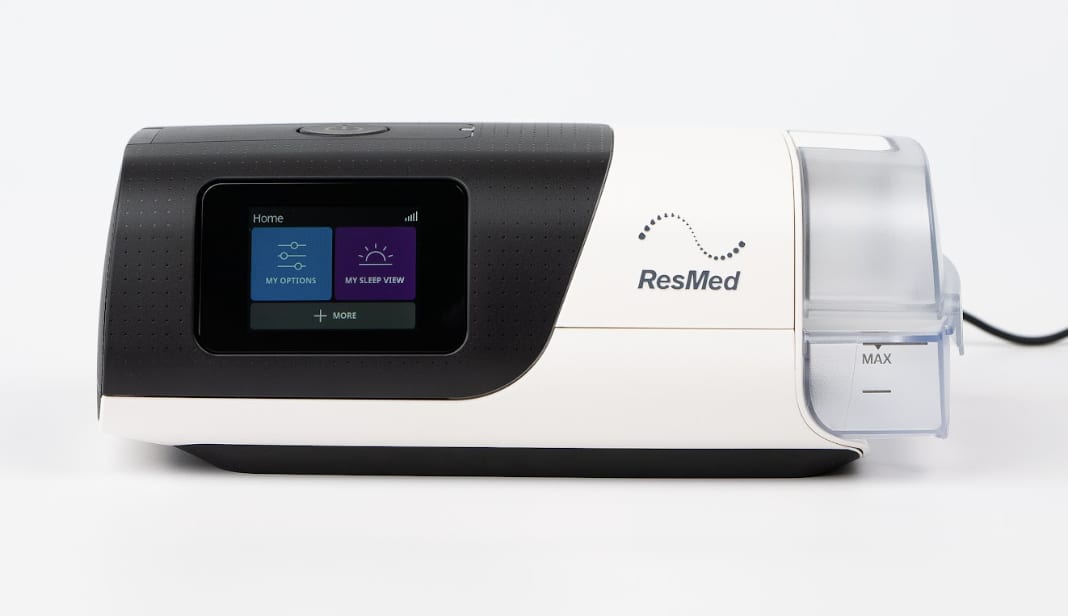
ResMed AirSense 11 AutoSet CPAP Machine
Why We Picked It
This CPAP machine boasts a plethora of features designed to smooth out your CPAP experience, and it also just happens to be one of the quietest models on the market.
Key Features
The ResMed AirSense 11 allows you to choose between fixed air pressure or an AutoSet model with an algorithm that makes real-time adjustments based on your breathing patterns. Since obstructive sleep apnea tends to show up differently in women, ResMed also offers a For Her setting.
The device is controlled via touchscreen and can be turned on or off with the press of a button. The myAir app gives you control over your CPAP therapy by displaying data related to your mask seal and usage hours, as well as providing personalized tips and troubleshooting advice.
The AirSense 11 includes additional features to make CPAP therapy more comfortable. AutoRamp begins your therapy at a gentler air pressure setting and gradually increases airflow once you fall asleep, while expiratory pressure relief minimizes breathing effort by lowering the air pressure when you exhale.
The optional climate control feature sets automatic temperature and humidity levels to reduce rainout, or you can change these manually.
What We Don’t Like
Some users report growing pains with the automatic temperature and humidity settings. The ResMed AirSense 11 is also priced higher than some of its competitors, which may be a consideration if you’re paying out-of-pocket.
Best Budget Option: Luna G3X Auto-CPAP Machine
Best Budget Option
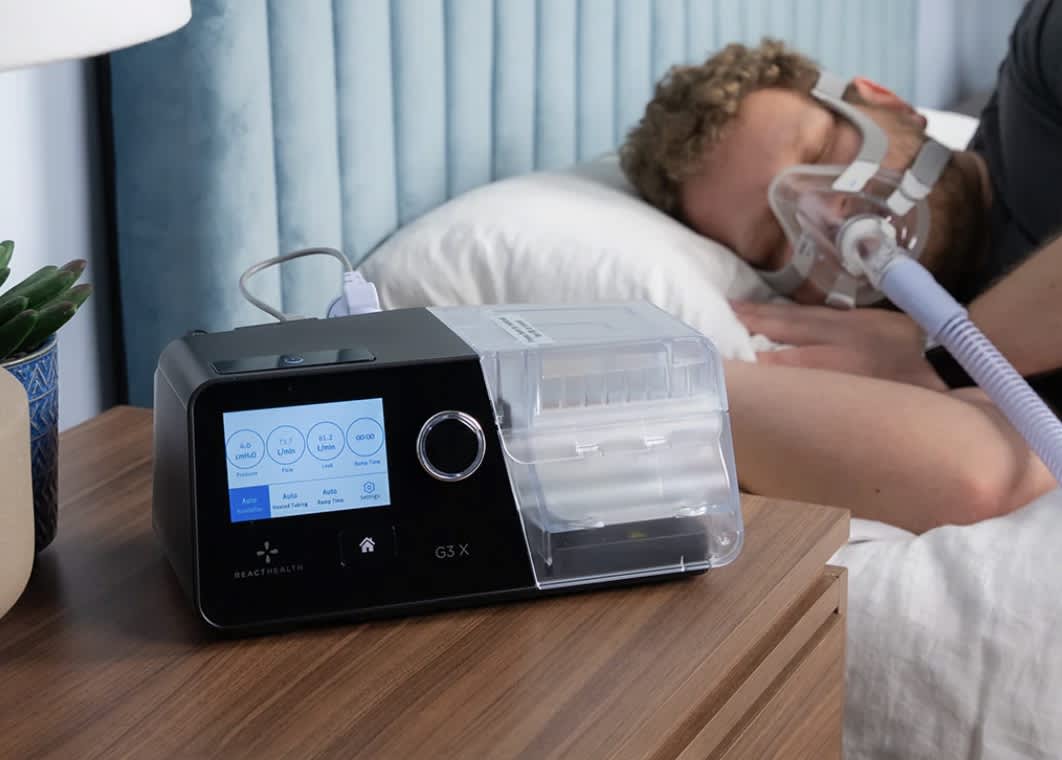
Luna G3 Auto-CPAP Machine
Why We Picked It
The Luna G3X Auto-CPAP offers the standard features of a modern CPAP machine at a price that’s easy on the wallet – especially if you’re paying out-of-pocket for your device.
Key Features
This CPAP unit has an integrated heated humidifier with a preheat function. The humidifier settings can be dialed in manually, or you can set the machine to automatically adapt to your bedroom temperature.
A nice perk about the unit is optional heated tubing. This helps reduce rainout, a term for condensation inside the tubes that can lead to breathing issues, and you don’t pay anything extra for including it with your order.
The auto-ramp setting enables the machine to gradually increase air pressure as you fall asleep. Using smart technology, the device monitors your breathing throughout the night and adjusts pressure levels whenever you need more or less airflow.
What We Don’t Like
The Luna G3X is on the bulkier side, so the device isn’t very well suited for traveling. People who respond well to standard CPAP therapy may also find that they don’t require the G3X’s bells and whistles to sleep comfortably and can get by with a more streamlined device.
Best for Travel: ResMed AirMini
Best for Travel

ResMed AirMini
Why We Picked It
The AirMini uses a proprietary design to achieve the same therapy pressure using a smaller motor. It comes with all the standard features of a modern CPAP machine, including exhalation relief and ramp options. The AirMini is FAA-compliant and has automatic altitude adjustment for use on an airplane.
Key Features
The ResMed AirMini is designed to be used with HumidX, a waterless humidifier that can be inserted into the tubing to humidify the air using exhaled water droplets. This means you won’t need to carry distilled water on your trip or clean your water chamber while you’re away from home. That said, it’s also compatible with a standard external humidifier if you prefer more control over the temperature and humidity settings.
The AirMini offers a choice between fixed and adaptable pressure, including a For Her option. The device can be controlled via an app, which also shares data about your sleep to help you stay compliant with your CPAP therapy. The AirMini works with most ResMed masks, but is not compatible with masks from other brands.
What We Don’t Like
The main drawback to the ResMed AirMini is that it’s unlikely to be covered by your insurance plan, especially if you already have a standard CPAP device. Insurance providers often consider travel CPAP machines to be “non-essential.”
The AirMini is designed for slimmer tubing, meaning you’ll have to purchase either a different set of tubes or an adapter.
How We Test
Our team of sleep care advocates and sleep product testing experts is dedicated to bringing you reliable and actionable product recommendations. We draw on decades of experience in the field of sleep health, and we personally research and evaluate the products discussed on our site.
Our picks for the best quiet CPAP machines were developed after carefully analyzing the range of devices on the market and how their features line up with the needs of typical CPAP users. We also study verified reviews and evaluate each manufacturer’s reputation for product quality and customer service.
We also consider product recalls and warranties. Recalls occur when a device is taken off the market because of a potential safety issue. Warranties provide a remedy if your device has defects in its materials or workmanship. Typical CPAP machine warranties expire after two years, but some last for up to five years.
How Loud Is a CPAP Machine?
Modern CPAP machines emit around 30 decibels of sound, which is considered whisper-quiet .
Decibels are logarithmic, which means that a sound that’s 40 decibels sounds about twice as loud as a sound that’s 30 decibels. In terms of CPAP machines, this means even slight differences between models may make a difference. If noise is important to you, you can usually find information on a machine’s sound output in its online user guide before buying.
The World Health Organization considers that a bedroom environment with no more than 30 decibels is conducive to good sleep. Being exposed to sounds louder than 30 decibels can disrupt sleep, and sounds louder than 40 decibels may have adverse health consequences . In fact, some experts recommend the use of CPAP therapy to protect against snoring-related hearing loss .
People with untreated sleep apnea often snore loudly at a noise level of 40 decibels or higher . Whereas snoring is uneven and unpredictable, CPAP therapy makes a fairly steady hum that’s less likely to wake your partner. The CPAP machine may even function as “white noise” to help block out outside sounds from traffic or other sources.
How to Make a CPAP Machine Quieter
As a general rule, the noise from a CPAP machine should sound like a low, steady hum coupled with the naturally amplified sounds of your breathing. If your CPAP machine is noisy enough to be bothersome, it’s probably due to something not working right.
- Eliminate leaks: Squeaking or hissing sounds can be caused by unintentional air leaks. Air leaks can occur through the mouth or in certain sleeping positions where the mask is unable to form a good seal . You can also lose air at joints like the tubing cuffs.
- Clean or replace filters: Dirty filters cause resistance as the pressurized air passes through, and they may increase strain on the motor.
- Replace old parts: Tubing, masks, and other CPAP parts can become stiff or cracked with age, which may cause noisy air leaks where they fail to form a good seal. Consider subscribing to a replacement plan to ensure your accessories are always in top shape.
- Place on a vibration mat: Setting your CPAP machine on a soft towel or anti-vibration mat can help absorb some of the noise. It can also be helpful to place your CPAP machine at a height that’s lower than you, such as on a low stool.
- Check for kinks: Kinked tubing may block the passage of air. There are several options for keeping your tubing tidy, such as a tubing holder or a CPAP pillow with cutouts designed for CPAP compatibility.
- Look for loose parts: Loose internal components can produce noise if they rattle and vibrate. Be sure to tighten screws and connecting pieces, and be on the lookout for holes or deformities.
- Address Rainout: You may hear a gurgling sound if condensation accumulates in your tubing. Heated tubing or tubing covers bring the temperature inside the tubes more in line with the ambient temperature, helping you avoid this “rainout” effect.
- Fill the water chamber: Another source of a gurgling sound could be an empty humidifier water chamber. Make sure to add enough water every evening to last you through the night.
- Turn off the humidifier: The humidifier adds a couple of decibels to the overall CPAP noise level. While most experts recommend using a humidifier to avoid side effects like a dry nose and mouth, you might find relief from noise by turning the humidifier off.
- Adjust air pressure: Higher air pressure tends to be noisier, so ask your doctor if it’s possible to use a lower pressure without affecting your therapy . You can also use ramp settings or auto-adjusting pressure options to lower airflow when you don’t need it to be so strong .
- Repair with provider or manufacturer: If your machine is making unusual sounds, contact the manufacturer or the equipment provider for a professional opinion .
- Update to a newer model: Older CPAP models tend to be noisier, so consider updating your equipment for a quieter design. CPAP motors may also start to make noise as they age.
- Use earplugs or a white noise machine: If you or your partner are very sensitive to noise, the best course of action may be to block out noise completely using earplugs or a white noise machine.
How to Make CPAP Mask Quieter
An important component in the overall noise level of your CPAP setup is the mask. CPAP masks often produce a whooshing noise where the exhaled air is ventilated, so try looking for a design that splits up this air into smaller, quieter streams. If your mask seems noisier than before, your exhalation valve may need repairing.
Masks can also make extra noise if they have air leaks. To minimize noise from leaks, look for a mask that fits snugly and use the straps to fasten it securely to your face .
What Else to Consider When Buying a CPAP Machine
Not all CPAP devices are built alike, and it can be confusing to compare them if you don’t know what you should be looking for when buying a CPAP machine. If you’re new to CPAP therapy or in the market for a new machine, you can narrow down your choices by focusing on some key considerations:
- Type of CPAP machine
- Pressure range
- Ability to track compliance data
- Compatibility with your mask, heated tubing, and other components
- Price and insurance coverage
- Size and portability
- Built-in vs. external humidifier
- Features like auto-ramp and personalized air pressure algorithms
- Interface/smartphone app
- Durability and warranty coverage
Dive Deeper: In-Depth CPAP Guides
If you’re looking for a CPAP mask or other CPAP supplies, we’ve got you covered. Our team breaks down the best CPAP machines, masks, and other essential products in the guides listed below.

Still have questions? Ask our community!
Join our Sleep Care Community — a trusted hub of sleep health professionals, product specialists, and people just like you. Whether you need expert sleep advice for your insomnia or you’re searching for the perfect mattress, we’ve got you covered. Get personalized guidance from the experts who know sleep best.
Danielle Pacheco is a writer and researcher specializing in sleep health and sleep science. She holds a degree in psychology from the University of British Columbia, where she studied the science of sleep.
References10 Sources
National Institute on Deafness and Other Communication Disorders (NIDCD). (2025, April 28). How is Sound Measured?.
https://www.nidcd.nih.gov/health/how-sound-measuredGuzman, M. A., Sgambati, F. P., Pho, H., Arias, R. S., Hawks, E. M., Wolfe, E. M., Ötvös, T., Rosenberg, R., Dakheel, R., Schneider, H., Kirkness, J. P., Smith, P. L., & Schwartz, A. R. (2017). The Efficacy of Low-Level Continuous Positive Airway Pressure for the Treatment of Snoring. Journal of clinical sleep medicine : JCSM : official publication of the American Academy of Sleep Medicine, 13(5), 703–711.
https://pubmed.ncbi.nlm.nih.gov/28356182/Smith, M. G., Cordoza, M., & Basner, M. (2022). Environmental Noise and Effects on Sleep: An Update to the WHO Systematic Review and Meta-Analysis. Environmental health perspectives, 130(7), 76001.
https://pubmed.ncbi.nlm.nih.gov/35857401/Chen, C. K., Shen, S. C., Lee, L. A., Sun, M. H., Chen, N. H., Chuang, L. P., & Li, H. Y. (2021). Idiopathic Sudden Sensorineural Hearing Loss in Patients with Obstructive Sleep Apnea. Nature and science of sleep, 13, 1877–1885.
https://pubmed.ncbi.nlm.nih.gov/34703345/Sleep Apnea. Merck Manual Consumer Version. Published May 2025.
https://www.merckmanuals.com/home/quick-facts-lung-and-airway-disorders/sleep-apnea/sleep-apneaLebret, M., Arnol, N., Martinot, J. B., Lambert, L., Tamisier, R., Pepin, J. L., & Borel, J. C. (2018). Determinants of unintentional leaks during CPAP treatment in OSA. Chest, 153(4), 834–842.
https://pubmed.ncbi.nlm.nih.gov/28847549/Noah, W. H., White, D. P., Hete, B., & Messineo, L. (2025). Rebreathing during CPAP therapy and its implications in obstructive sleep apnea. Journal of clinical sleep medicine : JCSM : official publication of the American Academy of Sleep Medicine, 21(10), 1759–1771.
https://pubmed.ncbi.nlm.nih.gov/40605363/Patil, S. P., Ayappa, I. A., Caples, S. M., Kimoff, R. J., Patel, S. R., & Harrod, C. G. (2019). Treatment of adult obstructive sleep apnea with positive airway pressure: An American Academy of Sleep Medicine systematic review, meta-analysis, and GRADE assessment. Journal of Clinical Sleep Medicine, 15(2), 301–334.
https://pubmed.ncbi.nlm.nih.gov/30736888/A.D.A.M. Medical Encyclopedia. (2023, April 20). Positive airway pressure treatment. MedlinePlus.
https://medlineplus.gov/ency/article/001916.htmSchotland H. (2021). PAP therapy: Quick tips for troubleshooting to address problems with use. American Journal of Respiratory and Critical Care Medicine, 204(6), P11–P12.
https://pubmed.ncbi.nlm.nih.gov/34543160/