Meredith Kreisa is a writer and sleep product tester with more than 15 years of experience. She holds a master’s degree in communication and specializes in transforming complex information into clear, practical guidance for readers.
At SleepFoundation.org, we conduct extensive first-person experience tests on all but a select few products. This hands-on approach allows us to provide accurate, data-driven recommendations for mattresses, pillows, sheets, and other sleep essentials.
Guidelines for our testing methodology are as follows:
Every member of our team brings years of industry experience and knowledge to our hands-on evaluations. In addition to testing products, we’ve spoken to sleep experts and toured manufacturing sites.
Our testers fall into different categories based on body type, sleep position, and personal preferences. This level of diversity helps to ensure our product ratings are holistic and inclusive of all sleepers.
Each type of sleep product is tested using a unique set of performance criteria. We also assign ratings based on feedback from testers who fall into specific categories based on weight and sleep position (i.e. side sleepers who weigh 130 to 230 pounds).
We do not personally test CPAP equipment, anti-snoring mouthguards, supplements, and other medical devices that require a doctor's prescription. Rather than using specific rating criteria, we rely on our team's extensive knowledge of sleep products and medical industry standards to pair each reader with the right devices. These evaluations are also based on material and design quality, features, and other noteworthy product attributes.
20% off all toppers and mattresses with code: SLEEPFOUND
Price Range:
$1,299 – $1,999
Mattress Type: Foam
Firmness Options: Medium (5)
At a Glance
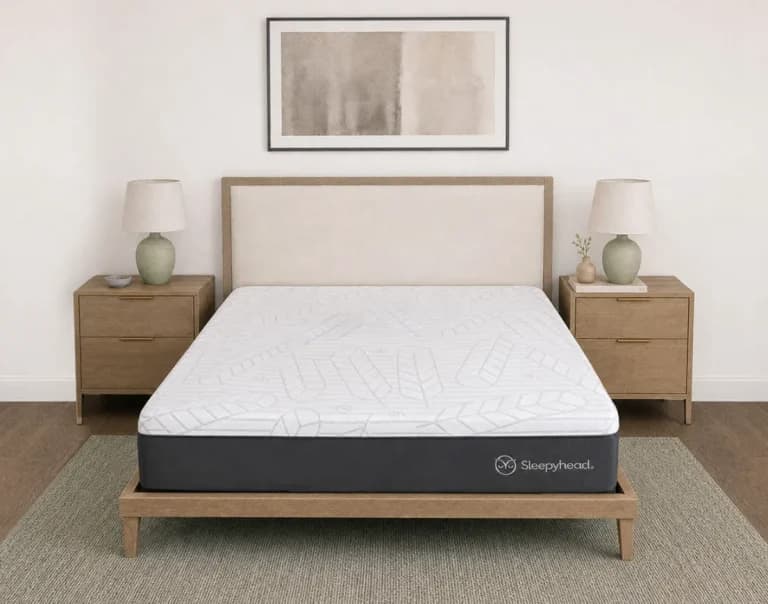
The Sleepyhead Mattress is an all-foam model engineered for close conforming and temperature regulation. Memory foam infused with gel and copper is designed to reduce heat and microbial buildup while hugging the sleeper closely to ease pressure.
Ratings Summary
Motion Isolation
9/10
Edge Support
6/10
Temperature Control
8/10
Ease of Movement
6.5/10
Durability
7/10
Pressure Relief
9.5/10
Pros
Memory foam contours closely to alleviate pressure points
Very little motion transfer for co-sleepers
Copper and gel infusions built for temperature control
Founded in 2016, Sleepyhead is known primarily for producing mattress toppers with college students in mind. Those models include the Sleepyhead Gel Mattress Topper and the Sleepyhead Super Topper. As the popularity of the brand’s mattress toppers has remained steady, Sleepyhead added a mattress to its product line in 2026.
The Sleepyhead Mattress, also known as the Sleepyhead First Edition Mattress, is a medium (5) all-foam model that incorporates materials designed to regulate temperatures and relieve pressure. While Sleepyhead products traditionally target college students, the Sleepyhead Mattress comes in most standard mattress sizes and is appropriate for a wide range of sleepers.
During our in-house tests, we assessed the mattress performance and who this model may be best for. We’ll share those results along with construction, sizing, and policy information to help you decide if the Sleepyhead Mattress is the model you’re looking for.
Let us help you find the perfect bed
Answer a few questions to find the right mattress for your unique needs
Please select all options
Testing Team Takeaways
To test the Sleepyhead First Edition Mattress, we had three people on our testing team each take the bed home with them for one week. Here are their initial observations.
Logan Foley
Executive Product Director
side sleeper
140 lbs.
has too many dogs in bed
“Sleeping on my side on the Sleepyhead Mattress was great. I woke up without any aches or pains. It seemed like the mattress effectively reduced pressure around my shoulders and hips without letting me sink in too far.”
Jeremy Klein
Product Testing Manager
side sleeper
165 lbs.
nightly melatonin user
“For a mattress with exceptional pressure relief, I was surprised that the Sleepyhead didn’t heat up more. Close hugging often traps body warmth, but I stayed at a comfortable temperature.”
Mary Fenton
Head of Product Content
combo sleeper
150 lbs.
sleeps with a noise machine
“I liked sleeping on my side and back on the Sleepyhead, but sleeping on my stomach was less comfortable. Changing positions took a little effort, although I didn’t feel restricted.”
Sleepyhead Mattress Video Review
Check out our exclusive video to see how the Sleepyhead First Edition Mattress performed for our testing team.
Sleeping Style and Body Weight
Sleepyhead First Edition Mattress
Sleeper Type
Under 130 lbs
130-230 lbs
Above 230 lbs
Side Sleepers
8.5/10
7.5/10
6/10
Back Sleepers
8.5/10
7/10
6/10
Stomach Sleepers
7.5/10
6.5/10
5.5/10
Side Sleepers
The Sleepyhead Mattress is well suited to many side sleepers. Its top layer of memory foam provides significant contouring, limiting pressure buildup by spreading out the sleeper’s weight more evenly. Since the mattress has a medium (5) feel, most sleepers can sink in deeply enough to notice the material molding to their shape.
In our testing, the Sleepyhead Mattress was most popular with our side sleepers under 130 pounds because it was plush enough for contouring without letting them sink in too far. Many team members weighing 130 pounds or more also felt comfortable sleeping on their sides, but the surface was softer than some would prefer.
Back Sleepers
Most back sleepers under 130 pounds are likely to get the support and conforming they need from the Sleepyhead Mattress’ medium (5) surface. By adjusting to the body’s natural curves, the bed may make it easier for some who prefer this position to maintain good posture overnight.
However, the opinions of our back-sleeping testers weighing at least 130 pounds were more mixed, with some reporting that their hips sank in deeply enough to cause their spine to curve out of its neutral position.
Stomach Sleepers
As a medium (5) model, the Sleepyhead Mattress may feel comfortably plush for stomach sleepers, but many people who use this position would benefit from more support.
Among our stomach-sleeping team members, the Sleepyhead Mattress was the closest match for those under 130 pounds. Many in this group found the surface comfortable, though some who carry more of their weight around their midsections noticed mild discomfort in their lower backs. Those over 130 pounds found it more challenging to maintain an even sleeping posture because their midsections tended to sink more deeply into the surface.
Mattress Performance
In addition to the hands-on feedback from our team, we conduct a number of quantitative tests in our Test Lab. The below ratings are based on the experience of our testers.
Motion Isolation
9
/ 10
“The memory foam really dampened the surface vibrations. I barely felt any movement transfer across the bed to my side.” – Logan
Motion isolation is one of the Sleepyhead Mattress’ strong suits. Since the memory foam compresses directly under the sleeper rather than spreading movement across the surface, very little motion transfers when a sleeper changes positions or gets in and out of bed.
When we dropped a kettlebell on the bed during testing, our vibration sensor picked up minimal motion across the surface. Team members also said they were not disturbed by testing partners moving around on the opposite side of the bed.
For sleepers who are easily awakened by their partner’s movements, the Sleepyhead may be a top contender.
Pressure Relief
9.5
/ 10
“As a brand known primarily for its mattress toppers, I had high expectations for the Sleepyhead’s pressure relief, and it didn’t disappoint.” – Jeremy
The Sleepyhead Mattress stands out for its pressure relief. Its medium (5) feel lets you sink into the mattress and enjoy close cradling. The memory foam comfort layer hugs closely to the sleeper’s body, so pressure is less likely to build up around the widest or heaviest areas like the midsection and hips. Two additional layers of foam separate the top comfort layer from the denser core, so sleepers are unlikely to press directly against it.
For the majority of our team members, the deep contouring meant a pressure-free testing process. We also mapped pressure using a specialized pad, which showed few — if any — hot spots.
Temperature Control
8
/ 10
“Heat didn’t build up a lot on the mattress. I wouldn’t say it felt cool, but it also didn’t feel too warm. Given how closely the mattress conformed, I’d call that a win.” – Mary
Compared to other medium (5) models with memory foam comfort layers, the Sleepyhead Mattress regulates temperature relatively well. Several components are built for the task. The mattress cover is designed for breathability, while copper and gel infusions in the top layer are intended to transfer heat away from the sleeper’s body. The second foam layer is also engineered for breathability to help heat escape.
Our temperature readings showed mild heat retention, though our testers noted that it was not remarkable enough to impact their overall comfort.
This level of temperature control may make the Sleepyhead Mattress a good option for sleepers who tend to overheat but still want the close hug of memory foam.
Edge Support
6
/ 10
“The edge felt moderately secure to me. I didn’t worry I’d roll off, though I felt more stable a bit farther in.” – Logan
Medium (5) all-foam models aren’t known for their edge support, and the Sleepyhead Mattress follows suit. Since it’s on the plusher end of the mattress firmness range, the foam compresses noticeably when a sleeper sits or lies along the perimeter. To some individuals, this can feel like the mattress is sinking out from under them, limiting the usable space, and forcing them toward the middle of the bed.
While most of our testers reported they could use the full mattress surface, many noticed that the edge felt somewhat unstable. For sleepers over 230 pounds, this trait was more challenging since they sank in more deeply.
Ease of Movement
6.5
/ 10
“Changing positions wasn’t overly difficult. At the same time, the Sleepyhead Mattress molds closely to the body and isn’t very responsive, so it also didn’t actively facilitate movement like some models.” – Jeremy
The Sleepyhead Mattress’ close hug makes the surface less conducive to movement than some models, particularly those with coil cores. The memory foam molds to the body and doesn’t instantly return to its original shape when the sleeper moves, leaving a momentary impression to get out of when changing positions.
In our testing, team members moved freely across the surface and changed positions mostly unencumbered. While it took some effort, they didn’t report any interference with their sleep or comfort. However, for sleepers with mobility issues, especially those who frequently switch positions overnight, movement may be more difficult.
Durability
7
/ 10
Most all-foam mattresses last 6 to 7 years, and the Sleepyhead Mattress should enjoy a similar life expectancy.
Foam naturally deteriorates over time, even with routine care and careful use. However, the Sleepyhead Mattress’ multilayer design could help spread out that wear and tear so it is less noticeable on the surface.
Use the mattress as directed and follow care instructions to help extend your Sleepyhead Mattress’ lifespan.
Sleepyhead Mattress Review Breakdown
The Sleepyhead Mattress is an 11-inch all-foam model with a medium (5) feel.
Its cover uses polyester-based CoolTech 2.0 fabric engineered for breathability. The mattress cover can also be removed and washed for easy cleaning.
Interested in learning more about what goes into building a good mattress?
Check out our guide on everything you need to know about mattress construction here.
The top layer of the mattress consists of memory foam that contours closely to limit pressure points. Meanwhile, copper and gel infusions in the material are built for temperature control. This layer is also intended to resist microbes, dust mites, and odors.
A secondary layer of foam underneath deepens the cradling, and it’s also engineered for airflow. Next, a high-density polyfoam layer helps redistribute weight while reducing the likelihood that the sleeper will sink in against the firmer core.
At the base of the mattress sits a supportive polyfoam core that acts as a stable foundation for the layers above.
Sleepyhead First Edition Mattress
Firmness
Medium (5)
Mattress Type
Foam
Construction
Cover Material:
CoolTech 2.0 (polyester)
Comfort Layer:
Memory foam (copper and gel infused)
Memory foam
Polyfoam
Support Core:
Polyfoam
Sleepyhead Mattress Sizing
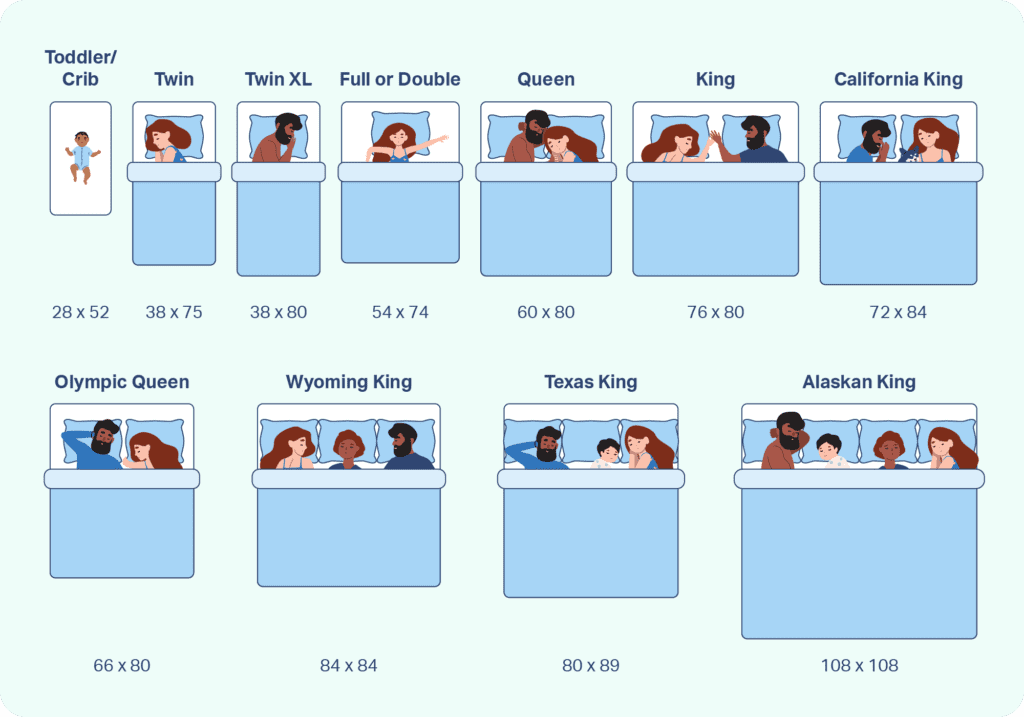
The Sleepyhead Mattress comes in most of the standard mattress sizes, though California king is not available.
Sizes
Dimensions
Height
Weight
Twin
38″ x 75″
11″
N/A
Twin XL
38″ x 80″
11″
N/A
Full
54″ x 75″
11″
N/A
Queen
60″ x 80″
11″
N/A
King
76″ x 80″
11″
N/A
Trial, Shipping, and Warranty Policies
Availability
The Sleepyhead Mattress is available through the Sleepyhead website. Select Sleepyhead products are also sold through Amazon and Walmart, though availability and policies vary.
Shipping
Sleepyhead offers free shipping within the contiguous U.S. Shipping to Alaska and Hawaii is available for an additional charge.
Customers will receive an email with tracking information when their mattress ships. Most orders are shipped two to four business days after they’re placed and arrive two to six business days after that.
The mattress is delivered compressed, rolled, sealed, and encased in a box. To set it up, move it to the room where you’ll use it, remove the box, carefully cut away the plastic, unroll the mattress, and allow it to decompress. While the mattress starts expanding right away, it may take 24 to 48 hours to reach its full shape.
Additional Services
For an additional charge, Sleepyhead offers White Glove delivery, old mattress removal, or a combination of the two.
Package protection is also available for an additional charge to protect against damage or loss during shipping.
Sleep Trial
The Sleepyhead Mattress comes with a 100-night sleep trial. Once you’ve tried the bed for at least 30 nights, you can initiate a return during the eligible window if the mattress isn’t right for you.
Alternatively, unopened mattresses may be returned from the time they’re delivered to the end of the trial window.
A $99 return fee applies.
Warranty
The Sleepyhead Mattress has a 10-year limited warranty for the foam and a 6-month limited warranty for the fabric.
Eligible foam defects may include splitting, cracking, deep impressions, slowed rebounding, uneven feel, and other signs of abnormal deterioration. Covered fabric defects may include damaged fabric upon delivery, faulty stitching, and defective zippers.
This policy is valid for the original mattress owner under normal household use with a proper foundation. Damage from misuse and abuse does not qualify.
You may be asked for photos, video, and proof of purchase. If Sleepyhead confirms an eligible defect, it may choose to repair or replace the mattress.
Still have questions? Ask our community!
Join our Sleep Care Community — a trusted hub of sleep health professionals, product specialists, and people just like you. Whether you need expert sleep advice for your insomnia or you’re searching for the perfect mattress, we’ve got you covered. Get personalized guidance from the experts who know sleep best.
Meredith Kreisa is a writer and sleep product tester with more than 15 years of experience. She holds a master’s degree in communication and specializes in transforming complex information into clear, practical guidance for readers.