When you buy through our links, we may earn a commission. Products or services may be offered by an affiliated entity. Learn more.

Pain and Sleep


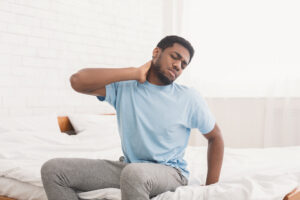
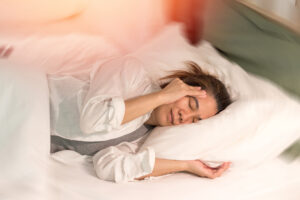
- Chronic pain can make it harder to fall asleep, stay asleep, and get enough restorative sleep.
- Poor or fragmented sleep may increase pain sensitivity and make chronic pain feel more intense the next day.
- Pain, insomnia, anxiety, and depression can reinforce one another and create a difficult cycle of poor sleep and worsening symptoms.
- Sleep position, mattress and pillow support, and treatment for underlying sleep disorders can all influence comfort at night.
People who suffer from chronic pain know firsthand how difficult it can be to get a good night’s sleep. Sleep and pain appear to have a bidirectional relationship. For instance, many people report their painful symptoms are somewhat alleviated after a better night’s sleep. For those living with chronic pain, prioritizing sleep may be a key component in the path to recovery.
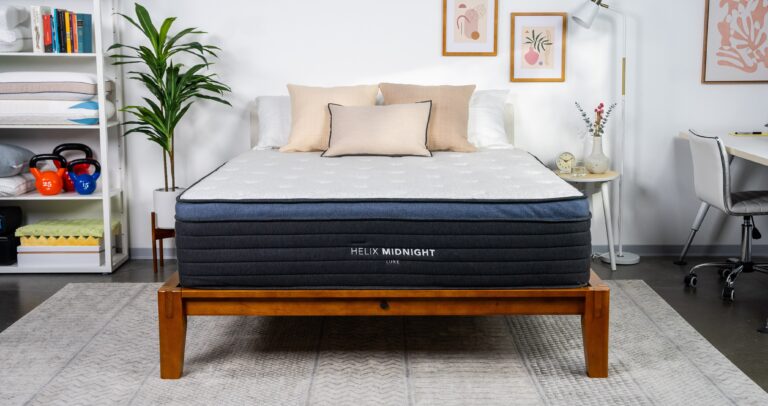
Looking to improve your sleep? Try upgrading your mattress.
What Is Pain?
Pain is an unpleasant sensation that we experience when nerve receptors send a signal to the brain telling us something is wrong. Pain can be acute or chronic.
Acute pain refers to pain that lasts for a short time, such as a broken bone that eventually heals. Chronic pain refers to recurring pain or pain that lasts for longer than a few months, such as lower back pain, recurrent headaches, fibromyalgia, arthritis, or cancer pain.
The way our brain interprets pain depends on a number of factors, including our physical health, our mood, and the reason for the pain. When pain arises at night, it can interfere with sleep. People living with chronic pain may end up suffering from long-term sleep deprivation.
Common Sleep Disturbances in Those With Chronic Pain
Chronic pain can affect sleep differently and depends on the nature of the pain. Some conditions may flare up at night or be provoked by certain sleeping positions. Others may cause persistent pain that does not ease at night. A hospital or long-term care facility may pose additional challenges, such as a noisy environment or an uncomfortable bed.
In addition to shorter overall sleep time, chronic pain can also cause frequent nighttime wakings. In fact, this appears to be the most common sleep complaint in people with chronic pain.
As we sleep, we cycle through light sleep, slow-wave sleep, and rapid eye movement (REM) sleep. In order to feel well-rested we need a balance of all these sleep stages, especially slow-wave sleep and REM sleep. Disrupting this cycle interferes with the progression of the sleep stages, and leads to less restful sleep and next-day tiredness.
Apart from the pain itself, some people with chronic pain also experience one or more sleep disorders, such as obstructive sleep apneaor restless legs syndrome. Medication for pain or for a chronic illness may carry side effects that interfere with sleep. Pain can also be accompanied by anxiety, stress, or depression. These conditions can cause sleep problems in their own right, and should be treated as part of an overall health plan.
How Does Pain Affect Sleeping Positions?
When learning how to sleep with pain, the type of pain may dictate your sleeping position. Those with hip, knee, or shoulder pain — as in the case of rheumatoid arthritis — may need to avoid sleeping on their side.
By contrast, people who are sensitive to pressure build-up in the lower back may need to be careful when sleeping on the back or stomach. A mattress and pillow designed to cushion pressure points and support the natural curvature of the spine may help alleviate some of the pain.
Other conditions cause diffuse pain, such as multiple sclerosis. These conditions attack the nerves, which means people may need to switch sleeping positions more frequently to avoid numbness and tingling. These sleepers may need a more responsive mattress that facilitates movement on top of the bed. Reach out to a caregiver or sleeping partner for help if you have trouble adjusting positions on your own.
How Sleep Affects Pain
There is an unquestionable link between sleep and pain, but emerging evidence suggests that the effect of sleep on pain may be even stronger than the effect of pain on sleep.
Researchers have found that short sleep times, fragmented sleep, and poor sleep quality often causes heightened sensitivity to pain the following day in chronic conditions like rheumatoid arthritis. People with sleep problems also appear to be at a higher risk of eventually developing conditions like fibromyalgia and migraines. Encouragingly, many studies have also found that in the long term, quality sleep may improve chronic pain.
Sleep and pain appear to share similar pathways and neurotransmitters. For example, melatonin is best known for its role in regulating our circadian rhythm, and new research is starting to uncover melatonin’s role in our perception of pain. Sleep loss also causes inflammation in the immune system, with corresponding effects on our body’s resilience. Vitamin D and dopamine also appear to play a role in both sleep and pain.
Studies have found differing results for the effects of sleep deprivation on our pain threshold and the brain’s capacity for pain inhibition. It may be that sleep alters pain through different pathways depending on the condition and the type of sleep deprivation.
The ability to deal with sleep disturbance and pain may have a sociodemographic aspect as well. Many studies show when it comes to increased pain due to insomnia, women are more sensitive than men, and young people are more resilient than older people.
People with chronic pain may feel fatigued during the day. Depending on their level of disability, they may be less likely to exercise or follow a healthy diet, both of which are important for getting a good night’s sleep. Unsettled sleep due to chronic pain can also disturb a spouse who shares the bed, with corresponding consequences for their sleep quality and health.
Both adults and children with chronic pain report poor sleep quality, and those who sleep poorly also have more intense pain and greater levels of disability. Though sleep undoubtedly plays its own independent role, researchers believe this relationship is due in part to psychological factors.
The Connection Between Sleep, Pain, and Mental Health
People with chronic pain may suffer from a self-perpetuating cycle of pain, insomnia, and depression or anxiety. For example, someone who is in pain may become anxious when they cannot sleep. They may sleep poorly and wake up feeling depressed, which increases their sensitivity to pain. The next night, they are in pain again, so they cannot sleep well, and the cycle continues. Over time, this negative cocktail may worsen existing conditions and even have an influence on a person’s level of disability.
One of the more important psychological factors seems to be the tendency to catastrophize. A study on osteoarthritis patients found a link between catastrophizing, poor sleep quality, and a more active central nervous system, suggesting that catastrophizing amplifies felt pain.
It’s estimated that one-third of people with chronic pain also meet the requirements for clinical depression. On the whole, it appears that chronic pain patients with depression have higher pain levels, poorer sleep hygiene, and find it harder to switch off their brains at night.
Cognitive behavioral therapy for insomnia (CBT-I) and, to a lesser extent, cognitive behavioral therapy for pain (CBT-P), have been shown to help treat insomnia in patients with chronic pain. There is limited evidence for the effectiveness of CBT-I in people who have both chronic pain and a coexisting condition such as anxiety or depression. However, close attention to both sleep quality and catastrophizing appears to lower the chances of developing chronic pain in patients recovering from trauma.
The sensation of pain varies widely from person to person. Psychological factors are among several factors that affect the severity of the pain we feel. This does not mean the pain is not real, but it means that treating pain may require a multifaceted approach that accounts for these various and complex psychological factors.

Tips and Coping Strategies to Get Sleep When Dealing With Pain
Because it’s more difficult to drift off when dealing with chronic pain, it’s important to make sleep a priority. People who are permanently sleep-deprived due to their chronic pain may develop an unhealthy relationship with sleep. For instance, they may rely on caffeine or become stressed in the lead-up to bedtime because they know they will have trouble sleeping. Learning how to sleep while in pain starts by retraining your brain with healthy thoughts and behaviors.
Deep breathing, mindfulness techniques, or guided imagery may allow you to reconceptualize the pain in a way that’s easier to deal with. One of the principal ways in which pain affects sleep is by keeping the central nervous system aroused. Therefore, in order to be effective, these strategies must help you to relax and not focus on the pain.
Following some basic sleep hygiene strategies can help prepare your body for sleep. Good sleep habits start in the morning, so make sure you get enough sunlight, exercise early in the day, and follow a healthy diet. Avoid stimulants like screens, caffeine, or alcohol too close to bed. Meditation can also help cope with the pain and help with a better quality of sleep.
To break the cycle of negative thoughts, avoid bringing life’s daily hassles into the bedroom. The bedroom should be a calming haven used only for sleep and sex. Keep it cool, dark, and quiet at night, and go to bed and wake up at the same time every day. It may help to carry out a bedtime routine in a set order, such as having a bath, brushing your teeth, reading a light book, and then turning out the light.
If you find yourself ruminating or if you are in too much pain to sleep, don’t stay in bed. Get up, go to another room, and distract yourself with something else for a while. When you feel sleepy, try going to bed again.
Talk to your doctor or mental health professional for more help with sleep and pain management. They may be able to recommend additional therapies or prescribe medication to help you sleep better.
Frequently Asked Questions
Why does my body hurt when I wake up?
General aches and pains in the morning can be caused by a variety of factors, including stress, an unsuitable sleeping surface
, age, and physical activity
. Also, some stiffness may occur because your body hasn’t moved for a long period of time while you were sleeping.
Pain and stiffness when waking up can also be caused by certain medical conditions, such as osteoarthritis
, rheumatoid arthritis
, and fibromyalgia
. If you’re experiencing chronic pain in the morning, consider visiting your healthcare provider to help determine the cause.
Why is pain worse at night?
While researchers haven’t definitively determined why pain feels worse at night, some research suggests that this occurs because of pain’s connection to circadian rhythm or nighttime changes in hormone production.
One small study of healthy young men found that sensitivity to heat pain followed a circadian rhythm and peaked in the middle of the night
. Other researchers believe pain may feel worse at night because levels of cortisol, a hormone that helps reduce inflammation, drop during nighttime hours
.
How can I stop arthritis pain at night?
To manage arthritis pain at night, you can choose a comfortable sleeping position and surface, use hot or cold therapy, and take medication. Your ideal sleeping position, pillow, and mattress firmness will depend on what part of your body is affected by the arthritis. A healthcare professional will be able to help you determine the best configuration.
Applying heat or cold to the affected joints can also be effective. A doctor can also discuss medication options. In the long term, lifestyle changes like exercising, eating healthy foods, and getting rest may help manage symptoms.
How should I sleep with lower back pain?
If you’re experiencing lower back pain, it may help to use a pillow for additional support and ensure that your mattress gives ample support and promotes spinal alignment. The National Institutes of Health (NIH) suggests that you try sleeping in a curled-up fetal position with a pillow between your legs. If you sleep on your back, the NIH recommends placing a pillow or rolled towel under your knees to reduce pressure
.
Research suggests that a medium-firm mattress may best support spinal alignment
, but keep in mind that the feel of a mattress depends on your body type and sleep position.
Can sleeping wrong cause chest pain?
Poor sleep posture may contribute to chest pain if the pain is a result of gastroesophageal reflux disease (GERD) or a muscle or tendon strain.
GERD, a common cause of chest pain, may worsen when you lie down, as gravity no longer helps keep the stomach acid in your esophagus
. Some research suggests that sleeping on the left side or raising the head of your bed may relieve this pain
.
Pain caused by muscle or tendon strain may also be worsened by poor sleep posture
. However, a number of serious medical conditions, including a heart attack, can cause chest pain. If you experience sudden chest pain or pressure, call 911 or seek emergency care.

Still have questions? Ask our community!
Join our Sleep Care Community — a trusted hub of sleep health professionals, product specialists, and people just like you. Whether you need expert sleep advice for your insomnia or you’re searching for the perfect mattress, we’ve got you covered. Get personalized guidance from the experts who know sleep best.
Danielle Pacheco is a writer and researcher specializing in sleep health and sleep science. She holds a degree in psychology from the University of British Columbia, where she studied the science of sleep.
Dr. Anis Rehman, MD is an American Board of Internal Medicine (ABIM) certified physician in Internal Medicine as well as Endocrinology, Diabetes, and Metabolism who practices in Illinois. He completed his residency at Cleveland Clinic Akron General, and fellowship training at the University of Cincinnati in Ohio. Dr. Rehman has several dozens of research publications in reputable journals and conferences.
Learn more about our medical advisory boardReferences32 Sources
Watson, J.C. (2020, April). Merck Manual Consumer Version: Overview of Pain.
https://www.merckmanuals.com/home/brain,-spinal-cord,-and-nerve-disorders/pain/overview-of-painBrandow, A. M., & DeBaun, M. R. (2018). Key Components of Pain Management for Children and Adults with Sickle Cell Disease. Hematology/oncology clinics of North America, 32(3), 535–550.
https://pubmed.ncbi.nlm.nih.gov/29729787/Rampes, S., Ma, K., Divecha, Y. A., Alam, A., & Ma, D. (2019). Postoperative sleep disorders and their potential impacts on surgical outcomes. Journal of Biomedical Research, 34(4), 271–280.
https://pubmed.ncbi.nlm.nih.gov/32519977/Finan, P. H., Goodin, B. R., & Smith, M. T. (2013). The association of sleep and pain: an update and a path forward. The journal of pain : official journal of the American Pain Society, 14(12), 1539–1552.
https://pubmed.ncbi.nlm.nih.gov/24290442/Mathias, J. L., Cant, M. L., & Burke, A. (2018). Sleep disturbances and sleep disorders in adults living with chronic pain: a meta-analysis. Sleep medicine, 52, 198–210. https://doi.org/10.1016/j.sleep.2018.05.023
https://pubmed.ncbi.nlm.nih.gov/30314881/Tang, N. K., Goodchild, C. E., Sanborn, A. N., Howard, J., & Salkovskis, P. M. (2012). Deciphering the temporal link between pain and sleep in a heterogeneous chronic pain patient sample: a multilevel daily process study. Sleep, 35(5), 675–87A.
https://pubmed.ncbi.nlm.nih.gov/22547894/Irwin, M. R., Olmstead, R., Carrillo, C., Sadeghi, N., Fitzgerald, J. D., Ranganath, V. K., & Nicassio, P. M. (2012). Sleep loss exacerbates fatigue, depression, and pain in rheumatoid arthritis. Sleep, 35(4), 537–543.
https://pubmed.ncbi.nlm.nih.gov/22467992/Vitiello, M. V., McCurry, S. M., Shortreed, S. M., Baker, L. D., Rybarczyk, B. D., Keefe, F. J., & Von Korff, M. (2014). Short-term improvement in insomnia symptoms predicts long-term improvements in sleep, pain, and fatigue in older adults with comorbid osteoarthritis and insomnia. Pain, 155(8), 1547–1554.
https://pubmed.ncbi.nlm.nih.gov/24793909/Palmer, A., Souza, A., Dos Santos, V. S., Cavalheiro, J., Schuh, F., Zucatto, A. E., Biazus, J. V., Torres, I., Fregni, F., & Caumo, W. (2019). The Effects of Melatonin on the Descending Pain Inhibitory System and Neural Plasticity Markers in Breast Cancer Patients Receiving Chemotherapy: Randomized, Double-Blinded, Placebo-Controlled Trial. Frontiers in pharmacology, 10, 1382.
https://pubmed.ncbi.nlm.nih.gov/31824318/Nijs, J., Mairesse, O., Neu, D., Leysen, L., Danneels, L., Cagnie, B., Meeus, M., Moens, M., Ickmans, K., & Goubert, D. (2018). Sleep Disturbances in Chronic Pain: Neurobiology, Assessment, and Treatment in Physical Therapist Practice. Physical therapy, 98(5), 325–335.
https://academic.oup.com/ptj/article/98/5/325/4841863de Oliveira, D. L., Hirotsu, C., Tufik, S., & Andersen, M. L. (2017). The interfaces between vitamin D, sleep and pain. The Journal of endocrinology, 234(1), R23–R36.
https://joe.bioscientifica.com/view/journals/joe/234/1/R23.xmlHolst, S. C., Bersagliere, A., Bachmann, V., Berger, W., Achermann, P., & Landolt, H. P. (2014). Dopaminergic role in regulating neurophysiological markers of sleep homeostasis in humans. The Journal of neuroscience : the official journal of the Society for Neuroscience, 34(2), 566–573.
https://pubmed.ncbi.nlm.nih.gov/24403155/Martire, L. M., Keefe, F. J., Schulz, R., Parris Stephens, M. A., & Mogle, J. A. (2013). The impact of daily arthritis pain on spouse sleep. Pain, 154(9), 1725–1731.
https://pubmed.ncbi.nlm.nih.gov/23953126/Evans, S., Djilas, V., Seidman, L. C., Zeltzer, L. K., & Tsao, J. (2017). Sleep Quality, Affect, Pain, and Disability in Children With Chronic Pain: Is Affect a Mediator or Moderator?. The journal of pain : official journal of the American Pain Society, 18(9), 1087–1095.
https://pubmed.ncbi.nlm.nih.gov/28479208/Roberts, M. B., & Drummond, P. D. (2016). Sleep Problems are Associated With Chronic Pain Over and Above Mutual Associations With Depression and Catastrophizing. The Clinical journal of pain, 32(9), 792–799.
https://journals.lww.com/00002508-201609000-00007Amtmann, D., Askew, R. L., Kim, J., Chung, H., Ehde, D. M., Bombardier, C. H., Kraft, G. H., Jones, S. M., & Johnson, K. L. (2015). Pain affects depression through anxiety, fatigue, and sleep in multiple sclerosis. Rehabilitation psychology, 60(1), 81–90.
https://pubmed.ncbi.nlm.nih.gov/25602361/Sivertsen, B., Lallukka, T., Petrie, K. J., Steingrímsdóttir, Ó. A., Stubhaug, A., & Nielsen, C. S. (2015). Sleep and pain sensitivity in adults. Pain, 156(8), 1433–1439.
https://journals.lww.com/00006396-201508000-00010Campbell, C. M., Buenaver, L. F., Finan, P., Bounds, S. C., Redding, M., McCauley, L., Robinson, M., Edwards, R. R., & Smith, M. T. (2015). Sleep, Pain Catastrophizing, and Central Sensitization in Knee Osteoarthritis Patients With and Without Insomnia. Arthritis care & research, 67(10), 1387–1396.
https://pubmed.ncbi.nlm.nih.gov/26041510/Emery, P. C., Wilson, K. G., & Kowal, J. (2014). Major depressive disorder and sleep disturbance in patients with chronic pain. Pain research & management, 19(1), 35–41.
https://pubmed.ncbi.nlm.nih.gov/24367795/McCrae, C. S., Williams, J., Roditi, D., Anderson, R., Mundt, J. M., Miller, M. B., Curtis, A. F., Waxenberg, L. B., Staud, R., Berry, R. B., & Robinson, M. E. (2019). Cognitive behavioral treatments for insomnia and pain in adults with comorbid chronic insomnia and fibromyalgia: clinical outcomes from the SPIN randomized controlled trial. Sleep, 42(3), zsy234.
https://pubmed.ncbi.nlm.nih.gov/30496533/Accardi-Ravid, M. C., Dyer, J. R., Sharar, S. R., Wiechman, S., Jensen, M. P., Hoffman, H. G., & Patterson, D. R. (2018). The Nature of Trauma Pain and Its Association with Catastrophizing and Sleep. International journal of behavioral medicine, 25(6), 698–705.
https://pubmed.ncbi.nlm.nih.gov/30324583/Radwan, A., Fess, P., James, D., Murphy, J., Myers, J., Rooney, M., Taylor, J., & Torii, A. (2015). Effect of different mattress designs on promoting sleep quality, pain reduction, and spinal alignment in adults with or without back pain; Systematic review of controlled trials. Sleep Health, 1(4), 257–267.
https://pubmed.ncbi.nlm.nih.gov/29073401/MedlinePlus: National Library of Medicine (US). (2018, August 10). Pain.
https://medlineplus.gov/pain.htmlMedlinePlus: National Library of Medicine (US). (2022, February 23). Osteoarthritis.
https://medlineplus.gov/osteoarthritis.htmlMedlinePlus. Rheumatoid arthritis. U.S. National Library of Medicine. Reviewed January 28, 2025.
https://medlineplus.gov/ency/article/000431.htmNational Institute of Arthritis and Musculoskeletal and Skin Diseases. (2019, September). Fibromyalgia.
https://www.niams.nih.gov/health-topics/fibromyalgiaKnezevic NN, Nader A, Pirvulescu I, Pynadath A, Rahavard BB, Candido KD. Circadian pain patterns in human pain conditions – A systematic review. Pain Pract. 2023;23(1):94-109. doi:10.1111/papr.13149
https://pubmed.ncbi.nlm.nih.gov/35869813/O’Byrne NA, Yuen F, Butt WZ, Liu PY. Sleep and Circadian Regulation of Cortisol: A Short Review. Curr Opin Endocr Metab Res. 2021;18:178-186. doi:10.1016/j.coemr.2021.03.011
https://pubmed.ncbi.nlm.nih.gov/35128146/A.D.A.M. Medical Encyclopedia. (2018, March 20). Low back pain – acute.
https://medlineplus.gov/ency/article/007425.htmA.D.A.M. Medical Encyclopedia. (2020, January 12). Gastroesophageal reflux disease.
https://medlineplus.gov/ency/article/000265.htmSimadibrata, D. M., Lesmana, E., Amangku, B. R., Wardoyo, M. P., & Simadibrata, M. (2023). Left lateral decubitus sleeping position is associated with improved gastroesophageal reflux disease symptoms: A systematic review and meta-analysis. World journal of clinical cases, 11(30), 7329–7336.
https://doi.org/10.12998/wjcc.v11.i30.7329MedlinePlus. Chest pain. U.S. National Library of Medicine. Reviewed April 28, 2026.
https://medlineplus.gov/ency/article/003079.htm