When you buy through our links, we may earn a commission. Products or services may be offered by an affiliated entity. Learn more.

Why Am I Waking Up Gasping for Air?


At a Glance
Waking up gasping for air may be caused by conditions such as obstructive sleep apnea, acid reflux, anxiety, or a panic attack during sleep. In some cases, it may indicate a serious breathing or heart issue that disrupts airflow during rest. If this happens frequently or is accompanied by other symptoms like chest pain or loud snoring, talk to a doctor to rule out underlying conditions.
Waking up gasping for air can be scary, but you’re not alone—and the cause may be more common (and treatable) than you think. This unsettling experience can stem from a variety of issues, ranging from sleep apnea and acid reflux to anxiety or even a panic attack. Understanding what might be triggering these episodes is the first step toward finding relief and reclaiming restful, uninterrupted sleep.

Sleep Apnea
Sleep apnea is a sleep-related breathing disorder that causes total or partial pauses in breathing during sleep. These disruptions can lead to sudden awakenings, often with a sensation of gasping or choking, as the body reacts to a drop in oxygen levels. There are different types of sleep apnea, each with distinct causes and treatments, but all can significantly affect sleep quality and overall health if left unaddressed.
Obstructive Sleep Apnea
Obstructive sleep apnea (OSA) develops when the airways collapse and become obstructed. People with OSA may snore loudly or wake up choking or gasping for breath. Additional symptoms include morning headaches, trouble focusing, and feeling excessively tired or irritable during the day.
One of the most effective treatments for OSA is continuous positive airway pressure (CPAP) therapy. The CPAP machine delivers a steady stream of air to keep the airway open via an interface worn over the face during sleep. There are also alternative options for people who do not respond well to CPAP therapy, such as positive airway pressure with automatically adjusting airflow or mouthpieces that move the jaw forward.
Additionally, people with OSA may receive a recommendation to lose weight, as obesity significantly increases the risk of OSA. Doctors may also recommend switching to sleep on the side instead of the back.
Central Sleep Apnea
Central sleep apnea (CSA) is a less common form of sleep apnea believed to affect approximately 1% of middle-aged to older adults. Instead of a physical obstruction, the pauses in breathing occur when the brain fails to send the signal to breathe.
Heart failure, opioid use, and sleeping at high altitudes are all correlated with CSA. Treatment of CSA depends on the cause and may involve positive airway pressure therapy, medication, or treatment for an underlying condition.
Panic Disorder
Nocturnal panic attacks can cause people to wake up with shortness of breath, choking, or feelings of being smothered. These may be accompanied by other panic attack symptoms such as a pounding heart, sweating, tingling sensations, or feelings of unreality or not being yourself.
People may experience panic attacks only at night, or during the day as well. When they occur at night, panic attacks can disrupt sleep. Nocturnal panic attacks typically occur during the first third of the night. Researchers believe they are more common during deep sleep and may be related to night terrors.
Treatment for panic disorder may include prescription antidepressants or anti-anxiety medications. Deep, slow breathing techniques can help relax the body before bed, as well as make it easier to fall asleep after a nighttime awakening.
Asthma
Asthma is a chronic respiratory condition that causes inflammation and narrowing of the airways, making it harder to breathe . Nighttime asthma symptoms—such as wheezing, coughing, chest tightness, or shortness of breath—can disrupt sleep and sometimes cause a person to wake up gasping for air .
These episodes may be triggered by allergens, cold air, or lying flat, which can worsen airflow restriction during sleep. Managing asthma with appropriate medications, avoiding triggers, and using an elevated sleeping position can help reduce the risk of nighttime symptoms and improve sleep quality.
Acid Reflux
Acid reflux describes a condition when stomach acid flows upward into the esophagus. Approximately one in five adults in the U.S. have gastroesophageal reflux disease (GERD), in which acid reflux symptoms are chronic or severe.
Symptoms of GERD often worsen after eating or when lying down. People with GERD may experience nighttime awakenings and symptoms such as heartburn, regurgitation, coughing, or choking. GERD symptoms can also trigger asthma. As with many other conditions, GERD symptoms impact sleep, but sleep deprivation can also worsen GERD symptoms.
GERD may be managed through medications as well as lifestyle changes, such as:
- Losing weight if you are overweight
- Sleeping with the head and torso slightly elevated
- Eating your last meal at least three hours before bed
Hypnic Jerks
Hypnic jerks, also known as sleep starts, are the sudden, involuntary muscle jerks you may experience as you fall asleep. They can feel like a jolt or falling sensation and may be strong enough to wake you up, sometimes with a gasp.
While hypnic jerks are generally harmless and common—especially during periods of stress, fatigue, or caffeine use—they can be unsettling. In most cases, they don’t indicate an underlying health issue, but if they occur frequently or disrupt your sleep regularly, it’s a good idea to talk with a doctor.
Sleep Paralysis
Sleep paralysis is a temporary inability to move or speak that occurs when you’re falling asleep or waking up . During an episode, you may be mentally awake but unable to move your body, which can last for a few seconds to a couple of minutes. Some people also experience a feeling of pressure on their chest or vivid hallucinations, which can make the experience frightening.
Sleep paralysis is usually harmless and linked to disrupted sleep, stress, or irregular sleep schedules. While occasional episodes are common, frequent occurrences may be a sign of an underlying sleep disorder such as narcolepsy and should be discussed with a healthcare provider.

Post-Nasal Drip
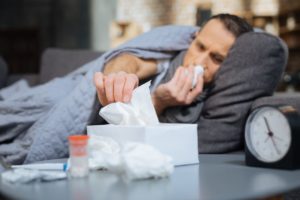
Post-nasal drip occurs when mucus moves down the throat, often causing the urge to cough for relief. If enough accumulates during sleep, sleepers may wake up coughing. Post-nasal drip can be caused by conditions like a sinus infection, the common cold or flu, and seasonal allergies.
Post-nasal drip can worsen when you are lying on your back. If you are feeling sick or stuffed up, try propping up your head while sleeping. Breathing in warm steam or using a humidifier in the bedroom can help thin out mucus. Your doctor may also recommend nasal sprays, antihistamines, or decongestants to relieve congestion and help you breathe more easily.
Heart Failure
In congestive heart failure, the heart becomes less effective at pumping blood, which can lead to fluid buildup in the lungs and other parts of the body. The excess fluid can create congestion and trouble breathing, especially when lying down. As a result, people with congestive heart failure may gasp for breath during sleep.
Between 1 to 2% of adults have heart failure. Symptoms include shortness of breath, cough, weakness, fatigue, and swelling in the abdomen, legs, and ankles. Heart failure is a chronic condition that is usually managed with medications, lifestyle changes, and sometimes surgery.
An estimated 50 to 80% of people with heart failure have some form of sleep-disordered breathing, such as OSA or CSA. For people with heart failure and mild OSA, lifestyle changes such as losing weight, avoiding alcohol and sedatives, and switching to a non-back sleeping position may help relieve sleep apnea symptoms. Some cases may also be managed with typical sleep apnea treatments such as CPAP therapy.
Pulmonary Edema
Pulmonary edema occurs when fluid accumulates in the lungs, making it difficult to breathe and potentially causing a person to wake up gasping for air. This condition is often linked to underlying heart problems, such as congestive heart failure, but it can also result from high altitudes, kidney issues, or acute respiratory infections.
Symptoms may include shortness of breath when lying down, wheezing, coughing up frothy or pink-tinged sputum, and a feeling of suffocation during sleep. Pulmonary edema is a serious medical condition that requires immediate evaluation and treatment to prevent complications and restore proper lung function.
Respiratory Conditions
Disorders such as cystic fibrosis or chronic obstructive pulmonary disease can cause ongoing breathing problems that may interfere with sleep.
Cystic Fibrosis
Cystic fibrosis is characterized by mucus buildup in the airways. People with this disease often awaken from night coughs or trouble breathing during sleep, and they may be more likely to have an accompanying sleep-related breathing disorder. Sleep disturbances may further exacerbate cystic fibrosis symptoms.
Chronic Obstructive Pulmonary Disease (COPD)
Common in people who smoke, chronic obstructive pulmonary disease (COPD) refers to decreased airflow due to lung damage. Over time, people with COPD develop symptoms such as coughing, wheezing, and shortness of breath. Physiological changes in breathing during sleep may cause additional trouble breathing that can lead to nighttime awakenings, especially for back sleepers.
When to Talk to Your Doctor
Occasionally waking up gasping may not be cause for alarm, especially if it happens infrequently and without other symptoms.
However, if this experience becomes regular, disrupts your sleep, or is accompanied by symptoms like chest pain, persistent coughing, daytime fatigue, or a racing heart, it’s time to speak with a doctor. These may be signs of an underlying condition such as sleep apnea, asthma, or a cardiac or neurological issue that requires treatment.
A healthcare provider can evaluate your symptoms, recommend appropriate testing—such as a sleep study—and help you find a safe, effective treatment plan. Don’t ignore repeated episodes; early intervention can improve sleep quality and protect your long-term health.

Still have questions? Ask our community!
Join our Sleep Care Community — a trusted hub of sleep health professionals, product specialists, and people just like you. Whether you need expert sleep advice for your insomnia or you’re searching for the perfect mattress, we’ve got you covered. Get personalized guidance from the experts who know sleep best.
Jay Vera Summer is a writer, editor, and wellness coach. She holds a Bachelor's of Science in psychology and Master's degrees in both writing and public policy.
Dr. Abhinav Singh, board certified in Sleep Medicine and Internal Medicine, is the Medical Director of the Indiana Sleep Center, which is accredited by the American Academy of Sleep Medicine. He is also a Clinical Assistant Professor at Marian University College of Medicine in Indianapolis, where he developed and teaches a Sleep Medicine rotation.
Learn more about our medical advisory boardReferences22 Sources
American Academy of Sleep Medicine. (2014). The International Classification of Sleep Disorders – Third Edition (ICSD-3). Darien, IL.
https://aasm.org/clinical-resources/international-classification-sleep-disorders/Mohammadieh, A., Sutherland, K., & Cistulli, P. A. (2017). Sleep disordered breathing: Management update. Internal Medicine Journal, 47(11), 1241–1247.
https://pubmed.ncbi.nlm.nih.gov/29105265/Goyal, M., & Johnson, J. (2017). Obstructive sleep apnea diagnosis and management. Missouri Medicine, 114(2), 120–124.
https://pubmed.ncbi.nlm.nih.gov/30228558/Donovan, L. M., & Kapur, V. K. (2016). Prevalence and Characteristics of Central Compared to Obstructive Sleep Apnea: Analyses from the Sleep Heart Health Study Cohort. Sleep, 39(7), 1353–1359.
https://pubmed.ncbi.nlm.nih.gov/27166235/Dempsey, J. A. (2019). Central sleep apnea: Misunderstood and mistreated! F1000Research, 8, F1000 Faculty Rev-981.
https://pubmed.ncbi.nlm.nih.gov/31297185/Nakamura, M., Sugiura, T., Nishida, S., Komada, Y., & Inoue, Y. (2013). Is nocturnal panic a distinct disease category? Comparison of clinical characteristics among patients with primary nocturnal panic, daytime panic, and coexistence of nocturnal and daytime panic. Journal of Clinical Sleep Medicine, 9(5), 461–467.
https://pubmed.ncbi.nlm.nih.gov/23674937/Kaczkurkin, A. N., Tyler, J., Turk-Karan, E., Belli, G., & Asnaani, A. (2021). The association between insomnia and anxiety symptoms in a naturalistic anxiety treatment setting. Behavioral Sleep Medicine, 19(1), 110–125.
https://pubmed.ncbi.nlm.nih.gov/31955594/Jerath, R., Beveridge, C., & Barnes, V. A. (2019). Self-Regulation of Breathing as an Adjunctive Treatment of Insomnia. Frontiers in psychiatry, 9, 780.
https://pubmed.ncbi.nlm.nih.gov/30761030/Koinis-Mitchell, D., Kopel, S. J., Seifer, R., LeBourgeois, M., McQuaid, E. L., Esteban, C. A., Boergers, J., Nassau, J., Farrow, M., Fritz, G. K., & Klein, R. B. (2017). Asthma-related lung function, sleep quality, and sleep duration in urban children. Sleep Health, 3(3), 148–156.
https://pubmed.ncbi.nlm.nih.gov/28526251/Campana, L. M., Owens, R. L., Suki, B., & Malhotra, A. (2012). Measuring upper and lower airway resistance during sleep with the forced oscillation technique. Annals of Biomedical Engineering, 40(4), 925–933.
https://pubmed.ncbi.nlm.nih.gov/22127514/National Institute of Diabetes and Digestive and Kidney Diseases. (2020, July). Acid reflux (GER & GERD) in adults. U.S. Department of Health and Human Services, National Institutes of Health.
https://www.niddk.nih.gov/health-information/digestive-diseases/acid-reflux-ger-gerd-adultsAntunes, C., Aleem, A., & Curtis, S. A. (2021). Gastroesophageal reflux disease. In StatPearls. StatPearls Publishing.
https://pubmed.ncbi.nlm.nih.gov/28722967/de Sá, J. F., & Mota-Rolim, S. A. (2016). Sleep paralysis in Brazilian folklore and other cultures: A brief review. Frontiers in Psychology, 7, 1294.
https://pubmed.ncbi.nlm.nih.gov/27656151/A.D.A.M. Medical Encyclopedia. (2019, July 11). Stuffy or runny nose – adult. MedlinePlus.
https://medlineplus.gov/ency/article/003049.htmSingh, D. P., Jamil, R. T., & Mahajan, K. (2021). Nocturnal Cough. In StatPearls. StatPearls Publishing.
https://pubmed.ncbi.nlm.nih.gov/30335306/National Heart, Lung, and Blood Institute. (n.d.). Heart failure. U.S. Department of Health and Human Services, National Institutes of Health.
https://www.nhlbi.nih.gov/health-topics/heart-failureKhayat, R., Small, R., Rathman, L., Krueger, S., Gocke, B., Clark, L., Yamokoski, L., & Abraham, W. T. (2013). Sleep-disordered breathing in heart failure: Identifying and treating an important but often unrecognized comorbidity in heart failure patients. Journal of Cardiac Failure, 19(6), 431–444.
https://pubmed.ncbi.nlm.nih.gov/23743494/Tanai, E., & Frantz, S. (2015). Pathophysiology of heart failure. Comprehensive Physiology, 6(1), 187–214.
https://pubmed.ncbi.nlm.nih.gov/26756631/Shakkottai, A., Nasr, S. Z., Hassan, F., Irani, S., O’Brien, L. M., & Chervin, R. D. (2020). Sleep-disordered breathing in cystic fibrosis. Sleep Medicine, 74, 57–65.
https://pubmed.ncbi.nlm.nih.gov/32841845/Katz E. S. (2014). Cystic fibrosis and sleep. Clinics in Chest Medicine, 35(3), 495–504.
https://pubmed.ncbi.nlm.nih.gov/25156765/Agarwal, A. K., Raja, A., & Brown, B. D. (2021). Chronic obstructive pulmonary disease. In StatPearls. StatPearls Publishing.
https://pubmed.ncbi.nlm.nih.gov/32644707/McNicholas, W. T., Hansson, D., Schiza, S., & Grote, L. (2019). Sleep in chronic respiratory disease: COPD and hypoventilation disorders. European Respiratory Review, 28(153), 190064.
https://pubmed.ncbi.nlm.nih.gov/31554703/