
When you buy through our links, we may earn a commission. Products or services may be offered by an affiliated entity. Learn more.
Best Flannel Sheets of 2026

For many people, flannel is a quintessential part of winter. Commonly made of wool, cotton, or polyester, flannel has a characteristically fuzzy feel that comes from brushing out the fibers after the fabric is woven. This adds an extra layer of warmth and coziness. Whether you plan to use flannel sheets to save on your heating bills or you just like the feel, we’re here to help, with a comprehensive guide to flannel sheets and a list of our top picks.
Best Overall: Bare Home Flannel Sheet Set
Best Overall
8.7/10Test Lab Score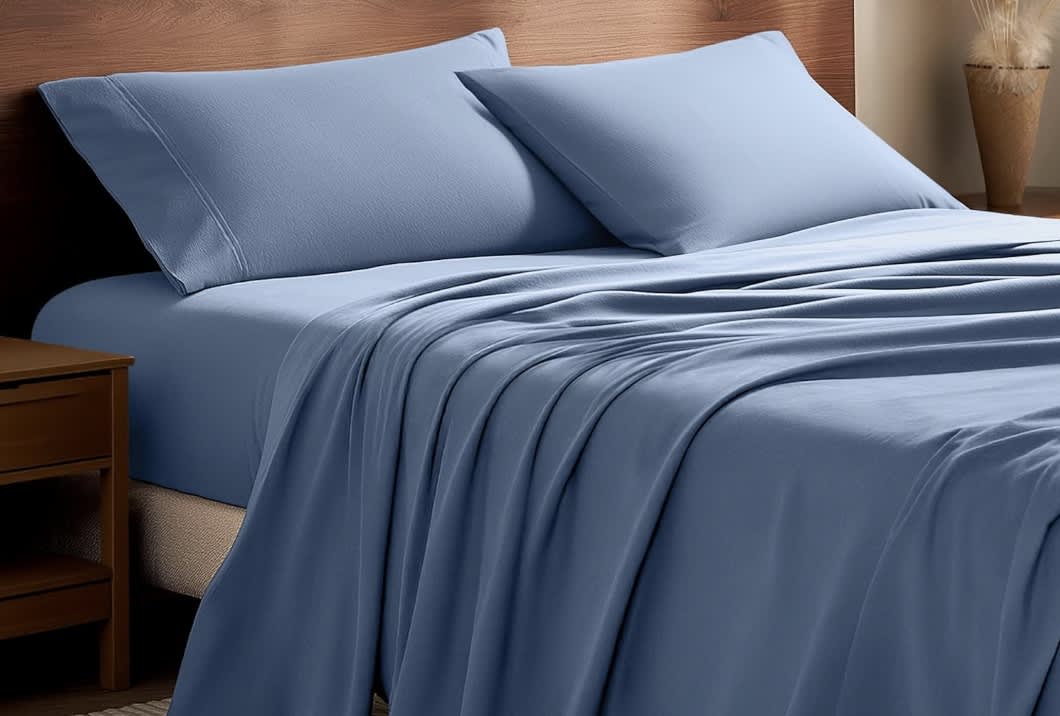
Bare Home Flannel Sheet Set
The budget-friendly Bare Home Flannel Sheet Set delivers the softness and cozy insulation people have come to expect from this material, but at a sticker price that falls well below average. Each item in this collection is composed of cotton flannel that’s tightly woven and brushed twice for an inviting, velvety hand-feel.
The set checks most of the important boxes for flannel sheets buyers. The fitted sheet has a pocket depth of 15 inches, so it should accommodate most mattresses made today, and all of the set’s components are fully machine-washable. You can choose from a wide range of sizes, including split king and California king styles for couples with adjustable beds, and there are more than a dozen color options.
The specific sticker price you’ll pay for the Bare Home Flannel Sheet Set depends on where you buy the bedding and which color you select. If you order through Amazon.com and have an active Prime membership, expedited shipping is free of charge.
Best Soft: LL Bean Ultrasoft Comfort Flannel Sheet Set
Best Soft
8.5/10Test Lab Score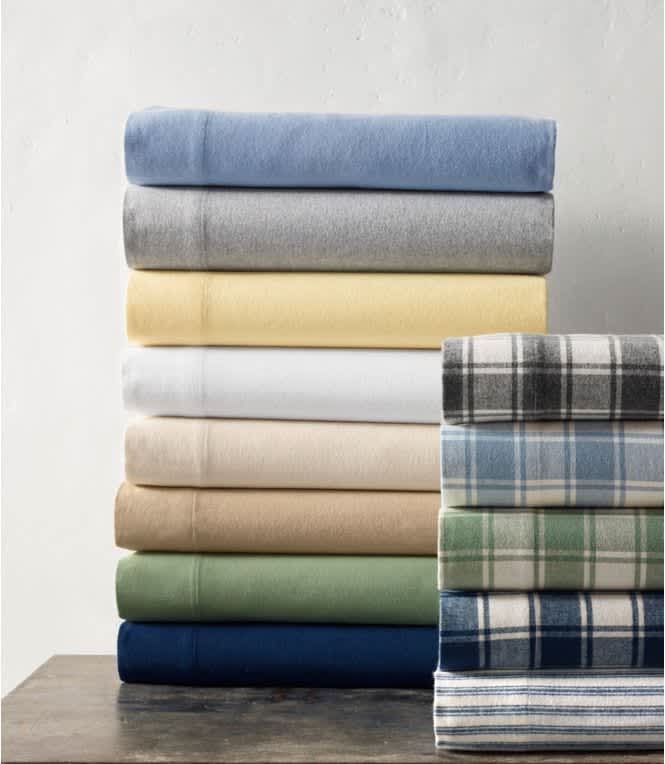
LL Bean Ultrasoft Comfort Flannel Sheet Set
Woven in Portugal, the LL Bean Ultrasoft Comfort Flannel Sheet Set is available in a generous range of bright earthy tones such as driftwood, mineral green, and silver sage. The breathable sheets are made of 100 percent cotton and have a medium weight that makes them suitable for use in summer as well as in winter.
Together with the team in Portugal, LL Bean has developed a way to remove excess fibers in order to give the sheets a smoother feel. The result is a set of hardy, pill-resistant sheets that keep their color and softness over time, even with repeated washing. The sheets are available in twin, full, queen, or king sizes and hold OEKO-TEX Standard 100 certification.
During the first year, if you decide the sheets aren’t for you, you can send them in for a full refund. After this time, LL Bean will only accept returns of sheets that present defects in materials or workmanship.
Best Prints: Eddie Bauer Cotton Flannel Sheet Set
Best Prints
7.9/10Test Lab Score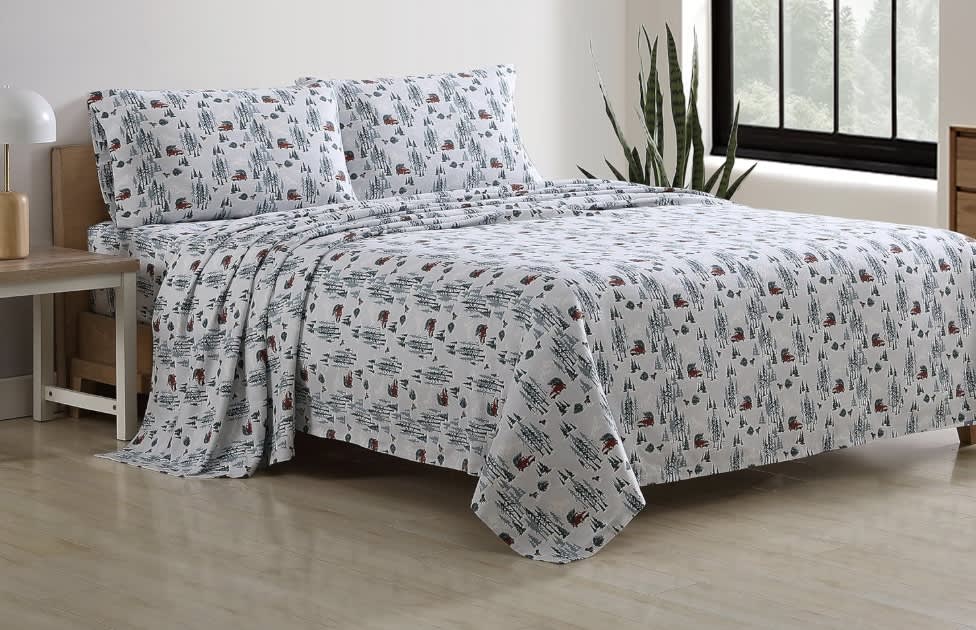
Eddie Bauer Cotton Flannel Sheet Set
If you’re looking for bedding designs that go beyond the usual neutrals and solid colors, Eddie Bauer’s Cotton Flannel Sheet Set is available in more than three dozen fun exclusive prints. These include fun animal and outdoorsy themes that bring extra personality to your bedroom aesthetic.
The sheets and pillowcases in this collection are made from 100% cotton that’s been brushed multiple times for a smooth, velvety hand-feel. Designed to resist pilling and wrinkling, these items hold up well over time. All components are machine-washable for quick, convenient cleaning and care. Five sizes are available ranging from twin to king.
Prices vary by print, but all sets are affordably priced and backed with free, expedited shipping when you complete your purchase with an Amazon Prime membership. Please note that some sets are previously used in like-new condition.
What Is Flannel?
Flannel dates back to 16th-century Wales, where it was made using carded (untangled) sheep’s wool. This heavy, smoothed-out yarn was woven in a thick weave, usually twill or plain weave, and then almost always brushed, or napped. The method resulted in a durable fabric that was soft and warm, getting even softer over time.
Flannel spread to the U.S. in the 1800s, where it protected chilly workers in trades such as railway construction and logging. Throughout the 20th century, flannel was used by a wide range of people, including the army, working class, outdoor enthusiasts, and people in the Seattle grunge movement. The fabric eventually spread to the mainstream, and the plaid flannel shirt is now considered a staple in the American wardrobe.
No longer relegated to freezing outdoor jobs, cozy flannel is now a popular choice for winter bed sheets and pajamas. Today’s flannel sheets come in a diverse range of materials, including cotton and microfiber.
How to Choose Flannel Sheets
Flannel is a fairly general term, and flannel sheets vary widely in quality and feel depending on factors like their weight and what material they’re made from. We’ll dive into how flannel sheets are made and what to look for when buying to help you can narrow down your choices.
What to Consider When Buying Flannel Sheets
We’ve made a list of the most important things to keep in mind when buying bed sheets. Some of these are inherent to every type of bed sheet, while others more specifically apply to flannel. Luxury prices aren’t always a promise of higher-quality materials, but with a better understanding of these factors you’ll be able to see past the marketing jargon and hone in on the best bang for your buck.
- Material: Regardless of their weave, all sheets made of a certain material tend to have some common characteristics. Cotton is breathable, wool is warm and moisture-wicking, and polyester microfiber is wrinkle- and stain-resistant. Flannel sheets can be made of any of these fibers, but most people find that cotton flannel provides a happy medium between warmth, softness, and breathability.
- Weave: Common sheet fabrics such as percale or sateen are defined by their weave, which plays an important role in determining the feel and properties of the sheets. In contrast, flannel can be made of any of a number of weaves, most often twill weave or plain weave. What makes it flannel is that it’s woven in a way that confers warmth without sacrificing breathability.
- Feel: The feel of a sheet set is most affected by the material and the way it’s woven together. Flannel gets its “fuzzy” feel from being napped, a technique in which the fabric is brushed after it’s woven. Flannel sheets can be napped on both sides or just one side, and the napping can be heavy or light. Sheets with a long nap on both sides are usually the softest and warmest, as the nap traps more warm air.
- Fit: While most bedsheet sets are tailored to fit the standard mattress sizes, it pays to double-check because not all manufacturers sell their sheets in all sizes. Additionally, mattresses with a higher-than-average profile may require deep-pocket fitted sheets. As with other types of cotton sheets, cotton flannel often shrinks the first time it is washed. Many manufacturers pre-shrink their sheets or make them a little bigger to compensate for this.
- Price: Sheets come in every budget, starting at around $20 and reaching into the hundreds for luxury sheet sets. The price of your flannel sheets will depend on what material they’re made of, whether they are organic and ethically made, and how they’ve been treated — whether double-napped, sheared, brushed, etc. You can usually expect to pay between $100 and $200 for a good flannel sheet set.
- Weight: Unlike other types of sheets, flannel sheets are measured by weight instead of thread count. Described in grams per square meter (GSM), the weight gives you an indication of the durability and warmth of the sheets. Heavier sheets (around 170 gsm) are usually more durable and retain more warmth, while lightweight sheets (around 135 gsm) will sleep cooler. Of course, this also depends on other factors such as what material the sheets are made of.
- Design, Color, and Pattern: We all want our sheets to match our bedroom, and the good news for flannel lovers is that flannel comes in lots of different colors and designs. That said, the colors on offer may be limited depending on the type of flannel.
- Breathability: The breathability of your sheets mostly depends on how loosely they are woven and the quality of the fibers. Loose-woven fabrics or long-staple fibers tend to allow more room for air to pass through. The fabric itself also plays a role. Wool is hands-down the most breathable type of flannel due to its ability to wick moisture away from your body. Cotton is also quite breathable, while some synthetic materials may have you waking up in a pool of sweat.
- Durability: Compared to other types of sheets, flannel sheets are fairly durable and don’t normally tear as easily. However, because of its brushed fibers, flannel can be vulnerable to pilling. Some manufacturers recommend adding vinegar to the first wash cycle to enhance their durability and keep the fabric soft.
- Ease of Care: Ease of care is especially important for bed sheets, which need to be washed regularly. Care instructions for flannel sheets vary according to the material, but most can be machine washed in cold or warm water, and dried on low heat or line-dried.
What Types of Flannel Sheets Are Available?
Originally made from wool, flannel has since branched out and can now be found in a variety of materials. While all flannel sheets share broad advantages, such as their insulating ability, each material brings its own additional benefits and drawbacks.
- Cotton: Cotton flannel is soft and lightweight, making it a common choice for bed sheets. Cotton flannel bed sheets will perform differently depending on the cotton staple and the tightness of the weave, so it’s smart practice to check these details before purchasing. Low-quality cotton sheets are known to pill quite easily and have a shorter lifespan.
- Wool: Wool is the original flannel material, and arguably still the best. Known for its unbeatable moisture-wicking properties, good-quality wool is warm, lightweight, strong, and practically dry to the touch even when it’s full of moisture. Unfortunately, it’s also one of the more expensive materials and is hard to find in sheets, being more often used in blankets and mattress comfort layers.
- Synthetic: Synthetic flannel, usually made from polyester microfiber, is stain- and wrinkle-resistant, durable, and easy on the wallet. However, it may not feel as soft and luxurious as flannel made from natural fibers, and it’s often treated with flame-retardant chemicals to reduce its natural flammability.
- Blend: Some flannel manufacturers blend cotton and polyester in an effort to reap the benefits of both. Blended flannel can be softer and warmer than polyester flannel, and more resistant than cotton flannel. The addition of synthetic fabrics can also help reduce wrinkling and stretching.
What Are the Pros and Cons of Flannel Sheets?
Soft and fuzzy flannel is a favorite with many people, especially in winter. However, hot sleepers may not be so enthusiastic about its warm and cozy feel. Here are some of the main pros and cons of flannel.
| Pros | Cons |
|---|---|
|
|
Who Is Best Suited to Flannel Sheets?
Flannel sheets are primarily chosen for their cozy feel and ability to keep sleepers warm. They’re often used as a supplement to a heavier comforter or duvet and can even suffice on their own in moderately cool weather. Because flannel made from wool or cotton is also relatively breathable, some sleepers may opt to use lightweight flannel sheets year-round.
Despite their advantages, flannel sheets aren’t for everyone. Sleepers who tend to run hot or those who live in warm climates will likely find that flannel traps heat and makes for an uncomfortably warm night. Hot sleepers usually prefer breathable percale or linen sheets.
Flannel requires careful washing and drying to prevent pilling and wrinkling, which may be frustrating if you’re short on time. If this is a concern, synthetic flannel made from polyester or microfiber is the way to go.
How We Test
We’re passionate about all things bedding, and our goal is to help match every sleeper to their perfect sheets. At our Seattle-based Test Lab, we’ve tested hundreds of different sheet sets, looking at factors like temperature regulation, fit, durability, ease of cleaning, and overall feel.
After aggregating all our testing data with real-world feedback from sleepers like you, we translate our research into easily digestible guides to save you time on your search. The sleepers on our testing team all have different sleep preferences, positions, and body types, so we’re confident our recommendations apply to a wide segment of the population. Here’s what we look at in a set of sheets:
Construction analysis: Factors like thread count, material, and weave help give us a fairly accurate initial impression of how a sheet set will perform and how long it can be expected to last.
Product testing: To see if our hunches are correct, we make up the bed with the flat sheet, fitted sheet, and pillowcases and take note of whether the sheets feel crisp or smooth, and if the fitted sheet stays in place. We also adjust the room temperature and different sleeping positions to see how the sheets respond to heat and movement.
Field testing: Testing in a lab is one thing, but there’s no place like home. A few of our testers take home each sheet set and see how it performs and holds up in day-to-day life over the course of a few months.
User testing: To flesh out our analysis, we also consider feedback from customer reviews. Reviews can tell us a lot about durability and different quirks that we might not have picked up on.
More Sheet Guides
If you’re still not sure you’ve found the perfect set of sheets — or you’ve decided flannel sheets aren’t for you — take a look at some of our other recommendations based on material.
Frequently Asked Questions
What is the typical price range for flannel sheets?
Synthetic flannel sheets start in the $20 to $30 price range, with cotton flannel coming in between $50 and $150, and wool costing significantly more. The price can vary depending on quality, country of origin, and other factors.
How long do flannel sheets last?
Like other good-quality sheets, flannel sheets can last for years if properly cared for. Flannel sheets are most vulnerable to pilling, especially if washed in too-high temperatures or mixed with zippers or synthetic fabrics in the machine. This doesn’t mean you should refrain from washing your flannel sheets regularly, just be careful to follow the care instructions to the letter to avoid premature pilling.
How do I wash and care for flannel sheets?
Synthetic and cotton flannel can usually be machine-washed and dried on low temperatures, while wool flannel may require dry-cleaning. Most manufacturers recommend avoiding fabric softeners and bleach, and using less than the recommended amount of detergent to prevent product residue.
To avoid pilling of the exposed fiber ends, some also recommend adding vinegar the first time you wash your napped flannel sheets. Taking the sheets out of the dryer before they’re completely dry may help reduce wrinkles. Always follow manufacturer instructions to get the best results, and don’t be scared if you see lint in the dryer the first few times you dry the sheets. This is a natural by-product of the napping process.
What is napping, and why do I want it on both sides of my flannel sheets?
Napping refers to the practice of brushing the fiber ends with a metal tool, raising them to create small air pockets which insulate against the cold. Most flannel is napped on at least one side, and many sheets are “double-napped,” or napped on both sides, to increase their warmth and softness. The length of the nap will also affect the feel, and higher-end sheets may be sheared after the napping process to make them even smoother.
Where do the best flannel sheets come from?
Portugal is most reputed for the quality of its flannel, due to a combination of expert craftsmanship and high-quality long-staple cotton. Germany is a close second, and England is not far behind.

Still have questions? Ask our community!
Join our Sleep Care Community — a trusted hub of product specialists, sleep health professionals, and people just like you. Whether you’re searching for the perfect mattress or need expert sleep advice, we’ve got you covered. Get personalized guidance from the experts who know sleep best.
Logan is a Certified Sleep Science Coach with a deep understanding of what it means to struggle with sleep. Her years of experience researching and testing sleep products – including mattresses, natural sleep aids, and bedding – are critical to her role helping lead the editorial team. When she’s not testing mattresses or researching CBT-I, she enjoys spending time in the sunshine with her husband and her dogs Pepper and Winston.

Best Linen Sheets of 2026
Looking for sheets that are breathable and durable? Check out our in-depth guide to the…
The Best Bedding to Improve Your Sleep
Learn how to pick out the best pillows, sheets, and comforter for your budget and…