When you buy through our links, we may earn a commission. Products or services may be offered by an affiliated entity. Learn more.

Sleep During the Second Trimester


- Many people sleep better in the second trimester as nausea and frequent nighttime bathroom trips become less disruptive.
- As pregnancy progresses, side sleeping is generally recommended, with the left side often favored for supporting circulation.
- Back pain, leg cramps, heartburn, vivid dreams, and other pregnancy changes can still interfere with sleep.
- Supportive pillows, regular sleep habits, daytime exercise, and a comfortable sleep environment can make it easier to rest.
The second trimester of pregnancy causes a number of changes to the body. For many people, the second trimester may bring relief from some uncomfortable symptoms, including sleep troubles. Still, there are a number of factors to take into consideration for optimal sleep during your second trimester.
Below, we explore the effects of stomach, side, and back sleeping during the second trimester, and examine potential causes and treatments for common pregnancy-related sleep conditions, including sleep apnea and heartburn.
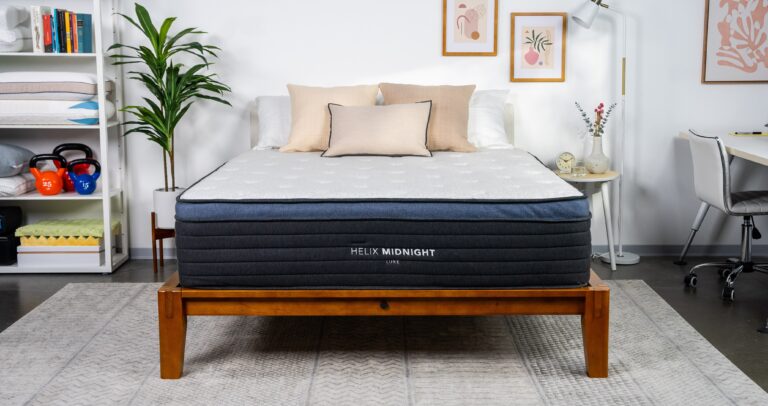
Looking to improve your sleep? Try upgrading your mattress.
How Does Sleep Change in the Second Trimester?
Many people find it easier to sleep in the second trimester compared to the first and third trimesters. Stabilizing hormone levels can give a welcome break from morning sickness and tender breasts, and the baby is usually not yet large enough to interfere drastically with sleep. Moreover, the uterus has moved farther away from the bladder, reducing the frequency of trips to the bathroom.
On average, pregnant people tend to get around 7.5 hours of sleep per night in their second trimester. It can be beneficial to use this trimester to rest and prepare for the baby’s arrival.
However, the second trimester brings some sleep problems of its own. Pregnant people may experience leg cramps and swollen feet. Weight gain and loosening ligaments in the pelvic area can cause lower back pain. Many pregnant people also have strange, vivid dreams and find that they tend to wake and fall asleep earlier during this trimester. Headaches are also common, but most are benign like migraines and tension headaches. It is important to mention these symptoms to a health care provider, as they can sometimes indicate something more serious.
The second trimester may bring about congestion of the nasal passages , which may trigger increased snoring and obstructive sleep apnea. Constipation and heartburn also plague some people, although the latter is usually worse in the third trimester.
Why Sleep Is Important During Your Second Trimester
The second trimester is a good opportunity to get quality sleep before the baby comes, and prioritizing sleep is beneficial for a healthy pregnancy. Inadequate sleep in the second trimester has been linked to gestational diabetes , stress, depression, and reduced quality of life. Sleep apnea, in particular, can be a risk factor for preterm delivery , preeclampsia , and gestational diabetes mellitus .
Managing pregnancy-related sleep conditions and practicing healthy sleep hygiene can help prevent insomnia in the second trimester. This includes adopting the best sleeping positions for you and the baby.
What Is the Best Second Trimester Sleeping Position?
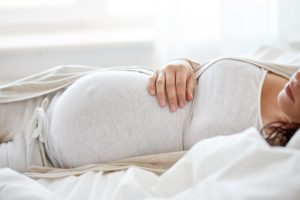
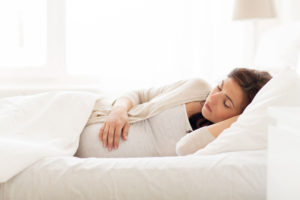
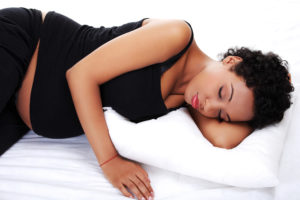
Side sleeping is considered the best sleeping position for the second trimester, as it allows for unrestricted blood flow to the fetus and kidneys. Some research favors sleeping on the left side, but most current evidence supports the idea that either side is fine.
If you aren’t a natural side sleeper, you can try using strategically placed pillows to prevent yourself from rolling over onto your back while asleep. A pregnancy body pillow or wedge pillow may help you adopt a more comfortable position. Smaller pillows tucked under the waist and belly may relieve pressure, and a pillow between the knees can help improve the alignment of the hips and spine.
Sleeping Products to Help With Second Trimester Sleep
During pregnancy, medications, supplements, and sleep aids should only be used under the guidance of a doctor. Mineral supplements and light stretching before bed may help reduce leg cramps. Some pregnant people use herbal remedies, although you should always consult with your doctor first. The scent of lavender is a relatively innocuous choice that may help some people sleep. Additional options include cognitive behavioral therapy for insomnia (CBT-I), guided relaxation exercises, yoga, and acupuncture.
If your bedroom is noisy or too bright, it can be helpful to use a white noise machine or an eye mask. As your body grows and changes, it is also important to find a properly supportive mattress and pillow.

Sleep Hygiene Tips for the Second Trimester
Regular sleep hygiene advice is just as imperative during the second trimester of pregnancy. Create a sleep-friendly bedroom by turning down the thermostat, quieting noise, and blocking any potential light sources. Save your bed for sleep and sex only, and try to keep a regular schedule of waking up and going to sleep at more or less the same time every day.
In preparation for bedtime, put away electronic devices. The blue light from these devices delays sleep by making your brain think it is daytime. Instead of watching TV, try reading a book, listening to music, or practicing meditation and relaxation techniques. A prenatal massage or a warm bath are other ways to relax your body and mind in preparation for sleep.
You may not need to visit the bathroom as often as you did in the first trimester, but it is still helpful to drink liquids throughout the day and avoid caffeine. To ward off heartburn, stick to smaller meals, and refrain from lying down right after eating. Spicy and greasy foods can also trigger acid reflux. If you suffer from heartburn despite these preventative measures, try sleeping on your left side with your head slightly raised, to keep the esophagus higher than the stomach.
If you notice increased energy levels, try to get some morning or afternoon exercise, which is beneficial for fatigue and depression. As your baby bump grows bigger, exercises to strengthen your core may also help reduce back and leg pain, and pave the way for smoother labor. However, if you do feel the need to nap, try to keep it short and early in the day so it does not interfere with your nightly sleep.
Mental Health Tips
Pregnancy hormones may cause mood swings and anxiety , which can take their toll on your energy levels. Reach out to your support network to help you navigate tough changes or issues that might be causing stress. If you find yourself worrying excessively during the night, try jotting down a to-do list or writing in a journal to ease the mind.
Guided imagery, deep breathing, or mindfulness techniques can help lower stress levels. A prenatal yoga group may be a productive way of sharing your experience with other pregnant people while getting some exercise. This is an opportunity to practice self-care, as research shows that your coping style can have a direct impact on your stress level , which in turn affects your sleep quality.
If you are struggling with depression, anxiety, or other mental health concerns that seem overwhelming, reach out to your doctor for help.
Frequently Asked Questions
Can I sleep on my back during the second trimester?
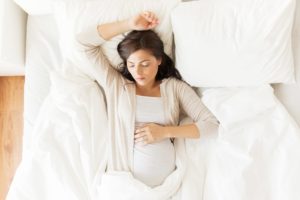
According to a large study funded by the National Institutes of Health, sleeping on your back during the second trimester is fine and won’t increase the risk of stillbirth, reduced size at birth, or high blood pressure disorders of pregnancy . The study found that sleeping on the back was safe through the 30th week of pregnancy. Beyond this point, it’s recommended that you sleep on your side to avoid compressing major blood vessels.
Can I sleep on my right side during the second trimester?
Yes, it’s safe to sleep on your right side during the second trimester. While there’s a common belief that you should sleep only on the left side to increase circulation, there’s no scientific evidence that this is necessary .
Can I sleep on my stomach in the second trimester?
Yes, you can sleep on your stomach during the second trimester. However, while there’s no evidence that it causes harm, it may become increasingly uncomfortable as your stomach grows larger.
Eventually, it’s recommended that you transition to sleeping on your side. You may find it more comfortable to bend one or both knees and use a full body pillow, or pillows under your stomach and between your knees for support
.
When should I stop sleeping on my stomach during pregnancy?
Stomach sleeping may be fine for the first part of the second trimester, until the growing baby bump makes this position uncomfortable.
Can I sleep sitting up while pregnant in the second trimester?
You can sleep in a reclined position or using a pillow to prop yourself up during the second trimester. However, sleeping fully upright may be less comfortable and cause neck or back pain and decreased circulation in the legs .
Can lack of sleep cause a miscarriage in the second trimester?
There’s no definitive evidence that sleep deprivation can cause miscarriage in the second trimester. Some studies have suggested that sleep deficiency could be a risk factor for miscarriage
, but these studies don’t account for other factors that could cause miscarriage, and don’t prove that sleep deprivation plays a primary role.
If you have questions or concerns about your sleep during pregnancy, it’s best to talk to your doctor.
How much sleep do you need in the second trimester?
There is no specific recommendation for the amount of sleep you need during the second trimester of pregnancy. The American Academy of Sleep Medicine recommends that adults get seven or more hours of sleep each night
.
Often, pregnancy can make you more tired than usual, so you may find yourself sleeping longer, though this fatigue is most common in the first and third trimesters
.

Still have questions? Ask our community!
Join our Sleep Care Community — a trusted hub of sleep health professionals, product specialists, and people just like you. Whether you need expert sleep advice for your insomnia or you’re searching for the perfect mattress, we’ve got you covered. Get personalized guidance from the experts who know sleep best.
Danielle Pacheco is a writer and researcher specializing in sleep health and sleep science. She holds a degree in psychology from the University of British Columbia, where she studied the science of sleep.
Dr. Callender is a board-certified obstetrician-gynecologist who has been working in women’s health for over a decade.
Learn more about our medical advisory boardReferences22 Sources
A.D.A.M Medical Encyclopedia. (2021, July 13). Morning sickness. MedlinePlus.
https://medlineplus.gov/ency/article/003119.htmReid, K. J., Facco, F. L., Grobman, W. A., Parker, C. B., Herbas, M., Hunter, S., Silver, R. M., Basner, R. C., Saade, G. R., Pien, G. W., Manchanda, S., Louis, J. M., Nhan-Chang, C. L., Chung, J. H., Wing, D. A., Simhan, H. N., Haas, D. M., Iams, J., Parry, S., & Zee, P. C. (2017). Sleep During Pregnancy: The nuMoM2b Pregnancy and Sleep Duration and Continuity Study. Sleep, 40(5), zsx045.
https://pubmed.ncbi.nlm.nih.gov/28369543/Cherni, Y., Desseauve, D., Decatoire, A., Veit-Rubinc, N., Begon, M., Pierre, F., & Fradet, L. (2019). Evaluation of ligament laxity during pregnancy. Journal of gynecology obstetrics and human reproduction, 48(5), 351–357.
https://linkinghub.elsevier.com/retrieve/pii/S2468784718300709Gilbey, P., McGruthers, L., Morency, A. M., & Shrim, A. (2012). Rhinosinusitis-related quality of life during pregnancy. American journal of rhinology & allergy, 26(4), 283–286.
http://journals.sagepub.com/doi/10.2500/ajra.2012.26.3776Ferdinande, K., Dorreman, Y., Roelens, K., Ceelen, W., & De Looze, D. (2018). Anorectal symptoms during pregnancy and postpartum: A prospective cohort study. Colorectal Disease, 20(12), 1109–1116.
https://pubmed.ncbi.nlm.nih.gov/29972721/A.D.A.M Medical Encyclopedia. (2020, October 5). Common symptoms during pregnancy. MedlinePlus.
https://medlineplus.gov/ency/patientinstructions/000583.htmRawal, S., Hinkle, S. N., Zhu, Y., Albert, P. S., & Zhang, C. (2017). A longitudinal study of sleep duration in pregnancy and subsequent risk of gestational diabetes: findings from a prospective, multiracial cohort. American journal of obstetrics and gynecology, 216(4), 399.e1–399.e8.
https://pubmed.ncbi.nlm.nih.gov/27939328/Na-Rungsri, K., Lertmaharit, S., Lohsoonthorn, V., Totienchai, S., & Jaimchariyatam, N. (2016). Obstructive sleep apnea and the risk of preterm delivery. Sleep & breathing = Schlaf & Atmung, 20(3), 1111–1117.
http://link.springer.com/10.1007/s11325-016-1339-7Jaimchariyatam, N., Na-Rungsri, K., Tungsanga, S., Lertmaharit, S., Lohsoonthorn, V., & Totienchai, S. (2019). Obstructive sleep apnea as a risk factor for preeclampsia-eclampsia. Sleep & breathing = Schlaf & Atmung, 23(2), 687–693.
http://link.springer.com/10.1007/s11325-018-1758-8Reutrakul, S., Zaidi, N., Wroblewski, K., Kay, H. H., Ismail, M., Ehrmann, D. A., & Van Cauter, E. (2013). Interactions between pregnancy, obstructive sleep apnea, and gestational diabetes mellitus. The Journal of clinical endocrinology and metabolism, 98(10), 4195–4202.
https://pubmed.ncbi.nlm.nih.gov/23966237/Rossi, A., Cornette, J., Johnson, M. R., Karamermer, Y., Springeling, T., Opic, P., Moelker, A., Krestin, G. P., Steegers, E., Roos-Hesselink, J., & van Geuns, R. J. (2011). Quantitative cardiovascular magnetic resonance in pregnant women: Cross-sectional analysis of physiological parameters throughout pregnancy and the impact of the supine position. Journal of Cardiovascular Magnetic Resonance, 13(1), 31.
https://pubmed.ncbi.nlm.nih.gov/21708015/Watelain, E., Pinti, A., Doya, R., Garnier, C., Toumi, H., & Boudet, S. (2017). Benefits of physical activities centered on the trunk for pregnant women. The Physician and sportsmedicine, 45(3), 293–302.
https://www.tandfonline.com/doi/full/10.1080/00913847.2017.1351286Crowley, S. K., O’Buckley, T. K., Schiller, C. E., Stuebe, A., Morrow, A. L., & Girdler, S. S. (2016). Blunted neuroactive steroid and HPA axis responses to stress are associated with reduced sleep quality and negative affect in pregnancy: A pilot study. Psychopharmacology, 233(7), 1299–1310.
https://pubmed.ncbi.nlm.nih.gov/26856852/Latendresse, G., & Ruiz, R. J. (2010). Maternal coping style and perceived adequacy of income predict CRH levels at 14-20 weeks of gestation. Biological research for nursing, 12(2), 125–136.
https://pubmed.ncbi.nlm.nih.gov/20798157/Eunice Kennedy Shriver National Institute of Child Health and Human Development. Sleeping position during early and mid pregnancy does not affect risk of complications, NIH-funded study suggests. National Institutes of Health. Published September 20, 2019.
https://www.nichd.nih.gov/newsroom/news/092019-pregnancy-sleep-positionSrisuro A. The top 6 pregnancy questions I hear from first-time moms. American College of Obstetricians and Gynecologists. Published April 2022.
https://www.acog.org/womens-health/experts-and-stories/the-latest/the-top-6-pregnancy-questions-i-hear-from-first-time-momsAmerican College of Obstetricians and Gynecologists. Can I sleep on my back when I’m pregnant? Published January 2021.
https://www.acog.org/womens-health/experts-and-stories/ask-acog/can-i-sleep-on-my-back-when-im-pregnantKurosawa Y, Nirengi S, Tabata I, Isaka T, Clark JF, Hamaoka T. Effects of Prolonged Sitting with or without Elastic Garments on Limb Volume, Arterial Blood Flow, and Muscle Oxygenation. Med Sci Sports Exerc. 2022;54(3):399-407. doi:10.1249/MSS.0000000000002822
https://pubmed.ncbi.nlm.nih.gov/34711709/Samaraweera Y, Abeysena C. Maternal sleep deprivation, sedentary lifestyle and cooking smoke: Risk factors for miscarriage: A case control study. Aust N Z J Obstet Gynaecol. 2010;50(4):352-357. doi:10.1111/j.1479-828X.2010.01190.x
https://pubmed.ncbi.nlm.nih.gov/20716263/Hammer P, Hageman I, Garde A, et al. Night work and postpartum depression: a national register-based cohort study. Scand J Work Environ Health. 2019;45(6):577-587. doi:10.5271/sjweh.3831
https://pubmed.ncbi.nlm.nih.gov/31125110/Seven or more hours of sleep per night: A health necessity for adults. American Academy of Sleep Medicine – Association for Sleep Clinicians and Researchers. Published June 1, 2015.
https://aasm.org/seven-or-more-hours-of-sleep-per-night-a-health-necessity-for-adults/Eunice Kennedy Shriver National Institute of Child Health and Human Development. About pregnancy. National Institutes of Health. Last reviewed May 29, 2024.
https://www.nichd.nih.gov/health/topics/pregnancy/conditioninfo