How Do Weighted Blankets Work?

Weighted blankets work by applying gentle, even pressure across the body—a technique known as deep pressure stimulation. This pressure helps activate the parasympathetic nervous system, which can lower heart rate, reduce stress, and promote a sense of calm.
Ever wonder why slipping under a weighted blanket feels instantly calming? These cozy, heavy blankets have surged in popularity for good reason. Below, we’ll break down the science behind the soothing power of weighted blankets and what makes them so comforting.
What Is a Weighted Blanket?
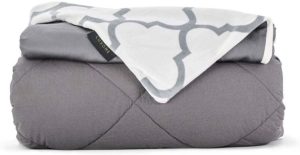
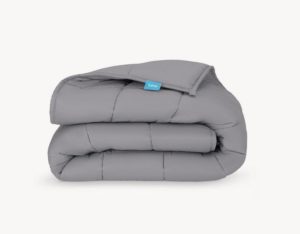
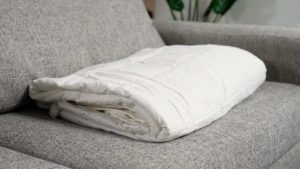
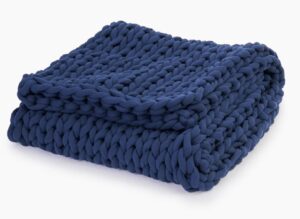
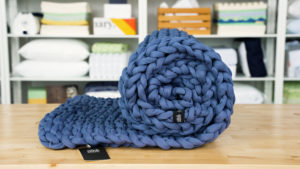
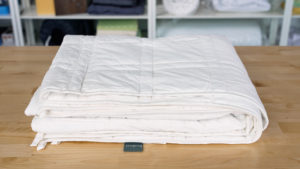
A weighted blanket is a blanket that contains glass beads, plastic pellets, ball bearings, or other materials that add to the blanket’s overall weight. While weight options vary, most weighted blankets range from 15 to 25 pounds. In some cases, travel and child sizes of under 10 pounds are also available.
How Do Weighted Blankets Work?
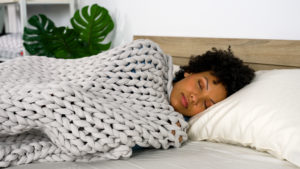
Weighted blankets work through a technique called deep pressure stimulation, which involves applying gentle, evenly distributed pressure across the body. This sensation is similar to a firm hug, a comforting hand on your shoulder, or the feeling of being swaddled, and it can have powerful effects on the nervous system.
When you use a weighted blanket, that steady pressure helps activate the parasympathetic nervous system, your body’s natural “rest and digest” mode. This can ease feelings of stress and anxiety by slowing the heart rate, lowering blood pressure, and calming the mind. At the same time, the brain may increase production of serotonin and melatonin, chemicals that support mood regulation and healthy sleep, while decreasing levels of cortisol, the stress hormone.
This combination of physical comfort and neurological response is what makes weighted blankets so effective for promoting relaxation, reducing anxiety, and improving sleep quality. While they’re not a cure-all, they can be a helpful tool, especially for people who experience sleep disorders like insomnia or have sensory sensitivities.
“A weighted blanket may induce the sensation of being hugged, swaddled, or gently held. It may gently push down on the body, helping you feel safe, secure, or in a protected space. Just as a firm, warm, and cozy hug can be a powerful agent for relaxation, a weighted blanket may help you wind down and de-stress before bed.”
– Sarah Silverman, Psy.D., a licensed psychologist and holistic sleep wellness consultant
What Are the Benefits of Using a Weighted Blanket?
Weighted blankets offer a range of benefits, thanks to deep pressure stimulation. This gentle, even pressure can help lower stress hormones, slow your heart rate, and signal to your body that it’s time to rest. Many people find that weighted blankets:
- Promote relaxation and comfort, helping you feel grounded, secure, and ready for sleep
- Ease stress and anxiety by encouraging the release of serotonin and reducing cortisol
- Support better sleep by boosting melatonin and reducing nighttime restlessness
- Calm the nervous system, shifting the body out of fight-or-flight mode and into a restful state
While more research is still needed, early studies suggest that weighted blankets may help ease symptoms of certain conditions. These include:
- Anxiety and depression
- Autism spectrum disorder
- Attention deficit/hyperactivity disorder (ADHD)
- Insomnia
- Chronic pain
- Restless leg syndrome
It’s important to note, though, that they’re not a cure and should be seen as a supportive tool rather than a standalone treatment.
Our Top Weighted Blanket Picks


Are Weighted Blankets Safe?
For most people, weighted blankets are safe to use and can be a helpful addition to a calming bedtime routine. However, it’s important to choose the right weight and use the blanket correctly to avoid discomfort or potential risks.
Experts generally recommend selecting a blanket that’s about 10% of your body weight, which provides soothing pressure without feeling too heavy or restrictive. If the blanket feels hard to move under or causes overheating, it may be too heavy for your needs.
Who Shouldn’t Use a Weighted Blanket?
Those with underlying medical conditions, such as respiratory or circulatory issues, should consult with their doctor before use. In particular, the pressure of a weighted blanket may be problematic for those with:
- Sleep apnea
- Asthma
- Low blood pressure
- Type 2 diabetes
- Claustrophobia
- Mobility issues
Can Kids Use a Weighted Blanket?
Weighted blankets can be safe for children, but it’s important to proceed with care. In general, they’re considered appropriate for kids over age 3 who weigh at least 50 pounds, but you should always consult your child’s pediatrician before introducing one.
Just like with adults, a child’s weighted blanket should weigh about 10% of their body weight. The blanket should never be so heavy that the child can’t remove it on their own, as this poses a safety risk during sleep.
Many brands offer weighted blankets designed for kids, but even if a product is labeled as child-safe, your family doctor can help you determine whether it’s a good fit for your child’s age, size, and needs.

Still have questions? Ask our community!
Join our Sleep Care Community — a trusted hub of sleep health professionals, product specialists, and people just like you. Whether you need expert sleep advice for your insomnia or you’re searching for the perfect mattress, we’ve got you covered. Get personalized guidance from the experts who know sleep best.
Rachel combines a background in health journalism with hands-on experience testing sleep products. In her time at Sleep Foundation, she's researched and evaluated mattresses, pillows, bedding, and sleep tech to help readers find the products best suited to their sleep needs. Outside of work, Rachel enjoys hiking and spending time outdoors with her kids.
References6 Sources
Yu J, Yang Z, Sun S, et al. The effect of weighted blankets on sleep and related disorders: a brief review. Front Psychiatry. 2024;15:1333015. Published 2024 Apr 15. doi:10.3389/fpsyt.2024.1333015
https://pmc.ncbi.nlm.nih.gov/articles/PMC11056563/Bolic Baric V, Skuthälla S, Pettersson M, Gustafsson PA, Kjellberg A. The effectiveness of weighted blankets on sleep and everyday activities – A retrospective follow-up study of children and adults with attention deficit hyperactivity disorder and/or autism spectrum disorder. Scand J Occup Ther. 2023;30(8):1357-1367. doi:10.1080/11038128.2021.1939414
https://pubmed.ncbi.nlm.nih.gov/34184958/Lönn M, Aili K, Svedberg P, Nygren J, Jarbin H, Larsson I. Experiences of Using Weighted Blankets among Children with ADHD and Sleeping Difficulties. Occup Ther Int. 2023;2023:1945290. Published 2023 Feb 14. doi:10.1155/2023/1945290
https://pmc.ncbi.nlm.nih.gov/articles/PMC9943603/Ekholm B, Spulber S, Adler M. A randomized controlled study of weighted chain blankets for insomnia in psychiatric disorders. J Clin Sleep Med. 2020 Sep 15
https://pubmed.ncbi.nlm.nih.gov/32536366/Baumgartner JN, Quintana D, Leija L, et al. Widespread Pressure Delivered by a Weighted Blanket Reduces Chronic Pain: A Randomized Controlled Trial. J Pain. 2022;23(1):156-174. doi:10.1016/j.jpain.2021.07.009
https://pubmed.ncbi.nlm.nih.gov/34425251/Nouman Aslam M, Kafle R, Shawl SH, Khan AS, Kagzi MW. Weighted Blanket Therapy for Periodic Limb Movement Disorder: A Case Report Highlighting Improved Sleep Quality and Reduced Symptoms. Cureus. 2023;15(5):e39622. Published 2023 May 29. doi:10.7759/cureus.39622
https://pmc.ncbi.nlm.nih.gov/articles/PMC10300619/