When you buy through our links, we may earn a commission. Products or services may be offered by an affiliated entity. Learn more.

Oversleeping: How Much Sleep Is Too Much?


At a Glance
Most adults need between seven and nine hours of sleep per night, but regularly sleeping more than nine hours is considered oversleeping. While getting extra rest occasionally isn’t usually a cause for concern, consistently oversleeping can be linked to underlying health issues, such as depression, sleep disorders, or chronic illness. It may also contribute to daytime grogginess, headaches, and increased risk for certain health problems.
Oversleeping happens for lots of reasons. Maybe you oversleep because you’re fighting off an illness, or you’re catching up after a few nights of sleep deprivation. But consistently clocking more than nine hours of sleep each night can be the sign of something serious.
What Is Oversleeping?
Oversleeping, or long sleeping, is defined as sleeping more than nine hours in a 24-hour period .
People who chronically oversleep may be evaluated for hypersomnia , a condition in which you both oversleep and experience excessive sleepiness during the day. Narcolepsy and other sleep disorders commonly cause hypersomnia.
Doctors might also call consistent oversleeping that causes you distress in daily life an excessive quantity of sleep (EQS) .

Average Sleep Needs
On average, most adults require seven to nine hours of sleep nightly . The exact amount of sleep you need each night depends on your daytime habits and activities, health, and sleep patterns. Older adults may need only six hours of sleep while other people, such as athletes, may need an extra hour of sleep. Occasionally you may require more sleep than normal, such as after strenuous activity or travel.
If another hour of shuteye helps you feel your best, then that amount of sleep is right for your body. But if consistently sleeping longer still leaves you feeling tired or even nodding off during the day, it may be a sign of an underlying health issue.
Oversleeping Symptoms
In addition to sleeping more than nine hours a night, other symptoms of oversleeping include:
- Excessive napping during the day
- Excessive daytime sleepiness
- Headache
- Brain fog, poor memory, and sleep drunkenness (i.e., feeling confused or disoriented upon waking)
People with hypersomnia may also experience :
- Anxiety, irritation, and restlessness
- Reduced appetite
- Low energy
- Slow thinking or speech
What Causes Oversleeping?
Most causes of oversleeping are temporary and harmless. Oversleeping can occur when you try to make up for your “sleep debt.” For example, you may have to stay up late several nights in a row to complete a big project and therefore become sleep deprived. Then, on the weekend, you might make up the sleep debt by sleeping longer than normal.
However, a number of health conditions can also lead to chronic oversleeping and excessive daytime sleepiness:
Sleep Apnea
Sleep apnea causes you to stop breathing temporarily during your sleep. As a result, you snore and choke during the night and feel sleepy during the day. To make up for poor sleep, you may nap during the day and try to sleep longer at night, leading to oversleeping.
Sleep apnea symptoms are often resolved with appropriate treatment. After a sleep study confirming you have sleep apnea, your healthcare provider may write a prescription for a CPAP machine. This machine helps support your breathing during sleep.
Narcolepsy
There are two types of narcolepsy, but in almost all cases you experience excessive daytime sleepiness and overpowering urges to sleep, called sleep attacks . In secondary narcolepsy, caused by injury to the hypothalamus, you may sleep for more than 10 hours each night . While narcolepsy is a lifelong disorder, it can be managed with treatment, including medication and lifestyle changes.
Idiopathic Hypersomnia
If healthcare professionals can’t identify an underlying cause for your oversleeping, they may diagnose you with idiopathic hypersomnia. This sleep disorder is characterized by difficulty waking , excessive sleepiness, and the inability to feel rested after sleeping at night or napping during the day. With this disorder, you may sleep as much as 14 to 18 hours a day.
For treatment, doctors often prescribe medications similar to what is prescribed for narcolepsy. These medications may not treat idiopathic hypersomnia as effectively as they treat narcolepsy, however. Additionally, if you have idiopathic hypersomnia, you may need to make lifestyle changes such as limiting alcohol and avoiding late-night activities.
Depression and Anxiety
People with depression and anxiety often struggle with sleep disorders or other health disorders. Both oversleeping and difficulty sleeping are effects of depression, and adolescents and young adults with depression are most likely to experience excessive sleepiness .
People with depression may have an imbalance in brain chemicals that can affect energy levels, leading to fatigue. Additionally, some medications used to treat depression can also trigger tiredness and sleepiness .
Some research has shown a higher rate of depression in long sleepers. For example, one study found that people who slept longer than 8 hours per night had 1.49 times higher odds of feeling depressed . Other studies show longer sleep may be a symptom of anxiety, especially in older adults .
Many treatments exist for both depression and anxiety. In addition to cognitive behavioral therapy, a number of prescription medications can improve your symptoms. Consult your healthcare provider to determine which methods of treatment are appropriate for you.
Medications and Substance Use
Oversleeping or daytime sleepiness could be related to medications. Certain drugs are notorious for side effects like drowsiness. The most common include :
- Tranquilizers
- Sleeping pills
- Antihistamines
- Certain painkillers
- Some psychiatric drugs
Additionally, substances like alcohol and cannabis can also affect sleep patterns and contribute to sleeping a lot.
If you suspect your medicine is making you sleep too much, don’t stop taking it. First, talk to your doctor who may be able to adjust your dosage or prescribe an alternative that’s nonsedating.

How Does Oversleeping Impact Your Body?
Oversleeping impacts your overall health and can have negative effects, just as a lack of sleep does. Early research suggests that longer sleep:
- Worsens inflammation in the body
- Decreases your immune function
- Can lead to chronic diseases
Both short and long sleep durations are associated with a number of health concerns and chronic diseases:
Obesity
Sleeping longer hours (and with poor sleep quality) is linked to a greater risk of obesity . That’s because sleep and metabolism are connected. Any kind of sleep disruption or deviation from optimal sleep can throw off your hunger hormones. If a person frequently feels hungry, they’re more likely to eat, and, consequently, gain weight.
Long sleepers also tend to have poor quality sleep. Poor sleep quality due to issues like light sleep or fragmented sleep can disrupt how the body releases insulin and processes glucose, which can impact metabolism .
Heart Disease
Oversleeping raises a person’s risk of cardiometabolic syndrome, stiff arteries, stroke, or death from heart disease or stroke . One theory is that too much sleep may increase chronic inflammation, which is a known risk factor for cardiovascular disease and other heart-related health conditions.
Diabetes
Research suggests higher odds for type 2 diabetes for long sleepers. According to one study, individuals who sleep up to 12 hours had a heightened risk of type 2 diabetes compared to people who logged 8 hours of shuteye each night . The connection was significant even after adjusting for other lifestyle factors like diet, smoking, or exercise.
Scientists theorize the connection between excessive sleep and type 2 diabetes may involve several underlying mechanisms, one being a disruption in circadian rhythm (the body’s natural sleep-wake cycle) that can affect metabolic processes and hormonal balance.
Stroke
People who oversleep have a greater chance of stroke. One study concluded that sleeping for more than 9 hours a night increased your risk for all types of stroke . These odds intensified for people who also napped 90 minutes a day. Additionally, poor sleep quality, which is associated with longer sleep, also played a part. People who reported poor sleep quality had a 29 to 56% higher risk of stroke.
Though the reasons behind this association aren’t fully clear, some theories include increased inflammation, sedentary lifestyle, and underlying sleep disorders, which are all known risk factors for stroke.
Headaches
For some people, sleeping too much can trigger headaches, especially tension-type headaches . Scientists believe oversleeping can disrupt a person’s circadian rhythm and impact levels of serotonin, a neurotransmitter that plays a role in sleep regulation and pain perception.
Back Pain
Lying in bed for a long time can cause back pain, especially in people with back problems or those with underlying conditions like arthritis or sciatica. During sleep, especially for extended periods, the body can become stiff and achy due to inactivity and lack of blood flow. Additionally, certain sleep positions, like lying on your stomach, puts extra strain on your back and neck.
Death
Some research suggests that sleeping 10 hours or more a night nearly doubles a person’s risk of death compared to those who get seven to eight hours of sleep . Once again, oversleeping is associated with serious health conditions, including obesity, diabetes, and cardiovascular disease, which all come with risks for your overall health and mortality.
How Do You Stop Oversleeping?
Regardless of the cause of your oversleeping, you can implement healthy sleep tips to improve your sleep habits:
- Set a Regular Sleep Schedule: Go to bed and wake up at the same time each day. This helps you avoid sleep loss and sleep debt.
- Create a Bedtime Routine: Your bedtime routine should help you relax and prepare for sleep. Avoid light from electronics in the hours before bedtime, as this light can delay sleep onset.
- Consider Your Sleep Environment: Your bedroom should be a cool temperature (between 65 and 68 degrees Fahrenheit) and free of excess light and noise.
- Keep Active: Daily exercise and sunlight exposure help you sleep well at night. Avoid excessive exercise close to bedtime.
- Nap Early: Naps later in the afternoon can make it difficult for you to fall asleep on time at night.
When Should You See a Doctor?
If you’re concerned about oversleeping, or you’re experiencing symptoms like excessive daytime sleepiness, fatigue, or brain fog that interfere with your quality of life, talk with your doctor about your sleep and health habits.
You may want to keep a sleep diary to record your nighttime sleep and wake times, as well as any naps you take during the day. Your doctor can use this information to help you identify the cause of your oversleeping and suggest a treatment plan.
Diagnosing Oversleeping
To make a proper diagnosis of oversleeping, your care provider will perform a physical exam to identify any underlying medical issues that might cause excessive sleep. Your practitioner will also take a medical history and review any medications you take that may cause excessive sleepiness.
A psychiatric evaluation may be recommended as well to rule out mental health conditions, such as depression and anxiety, which are both associated with long sleep.
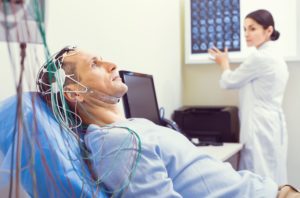
Additionally, your provider might require a sleep study. Tests like the polysomnogram, which measures brain waves and other functions during sleep, are used to diagnose sleep disorders like sleep apnea, narcolepsy, and hypersomnia, which can all contribute to oversleeping.
Treatment for Oversleeping
The first line of treatment for oversleeping almost always involves improving sleep hygiene. Creating healthy sleep habits is key to promoting sleep quality:
- Follow a regular sleep schedule.
- Create a bedtime routine.
- Optimize your sleep environment.
- Stay active during the day.
- Cut down on caffeine and alcohol in the afternoon and evening.
If excessive sleeping is related to an underlying medical condition, addressing that issue is a crucial part of treatment. For example, if a person has a circadian rhythm disorder, a provider might recommend light therapy or melatonin. Likewise, if sleep apnea is the root cause triggering excessive sleep, continuous positive airway pressure (CPAP) might be needed.
Depending on the situation, a medical provider might also prescribe certain medications to help relieve symptoms of oversleeping.
Frequently Asked Questions
How many hours is considered oversleeping?
Sleeping more than nine hours in a 24-hour period is considered oversleeping. According to most research, the sweet spot for health is between seven and nine hours of sleep each night.
Is it okay to sleep 12 hours a day?
Occasionally, yes. For example, you might need to get extra shuteye if you’re recovering from an illness or jet lag. However, sleeping for 12 hours a day on a regular basis could be a sign of an underlying issue that should be addressed.
On average, most adults require seven to eight hours per night (though sleep needs vary based on age, lifestyle, and health). If you’re sleeping more than nine hours a night, and still experiencing symptoms like excessive sleepiness or mental fogginess, consult with a doctor.
What deficiency causes too much sleep?
Several nutrient deficiencies can cause excessive sleep including:
Iron: Insufficient iron can contribute to anemia, which can lead to fatigue and sleepiness
.
Vitamin B12: Though rare, a vitamin B12 deficiency can cause excessive daytime sleepiness
. In some people, it can also lead to anemia.
Vitamin D: Vitamin D is critical to multiple bodily systems, including your bones, nerves, muscles, and immune function, and it plays a role in regulating sleep as well. A deficiency may contribute to excessive daytime sleepiness, sleep disorders, or both
.
Selenium: Selenium is essential for healthy thyroid function, which is pivotal for sleep regulation
. When selenium is too low, the thyroid may not work optimally, potentially throwing off sleep.
Your health provider can perform simple blood tests to test for nutrient deficiencies. In most cases, eating a nutrient-dense diet can resolve the issue, but supplementation can also help fill in nutrient gaps.

Still have questions? Ask our community!
Join our Sleep Care Community — a trusted hub of product specialists, sleep health professionals, and people just like you. Whether you’re searching for the perfect mattress or need expert sleep advice, we’ve got you covered. Get personalized guidance from the experts who know sleep best.
Austin Meadows is a professional writer, researcher, and sleep product tester with more than a decade of experience covering sleep science and sleep products. His work combines in-depth research with hands-on product testing to help readers better understand their sleep and make informed decisions about products that may improve it.
Dr. Anis Rehman, MD is an American Board of Internal Medicine (ABIM) certified physician in Internal Medicine as well as Endocrinology, Diabetes, and Metabolism who practices in Illinois. He completed his residency at Cleveland Clinic Akron General, and fellowship training at the University of Cincinnati in Ohio. Dr. Rehman has several dozens of research publications in reputable journals and conferences.
Learn more about our medical advisory boardReferences27 Sources
Kim, Y., Wilkens, L. R., Schembre, S. M., Henderson, B. E., Kolonel, L. N., & Goodman, M. T. (2013). Insufficient and excessive amounts of sleep increase the risk of premature death from cardiovascular and other diseases: The multiethnic cohort study. Preventive Medicine, 57(4), 377–385.
https://pubmed.ncbi.nlm.nih.gov/23811525/A.D.A.M. Medical Encyclopedia. (2020, January 29). Sleep disorders. MedlinePlus.
https://medlineplus.gov/ency/article/000800.htmOhayon, M. M., Reynolds, C. F., & Dauvilliers, Y. (2013). Excessive sleep duration and quality of life. Annals of Neurology, 73(6), 785–794.
https://pubmed.ncbi.nlm.nih.gov/23846792/Consensus Conference Panel, Watson NF, Badr MS, et al. Recommended Amount of Sleep for a Healthy Adult: A Joint Consensus Statement of the American Academy of Sleep Medicine and Sleep Research Society. J Clin Sleep Med. 2015;11(6):591-592. Published 2015 Jun 15. doi:10.5664/jcsm.4758
https://pubmed.ncbi.nlm.nih.gov/25979105/Kikuchi, H., Yoshiuchi, K., Yamamoto, Y., Komaki, G., & Akabayashi, A. (2011). Does sleep aggravate tension-type headache?: An investigation using computerized ecological momentary assessment and actigraphy. BioPsychoSocial Medicine, 5(1), 10.
https://pubmed.ncbi.nlm.nih.gov/21835045/Trotti LM, Ong JC, Plante DT, Friederich Murray C, King R, Bliwise DL. Disease symptomatology and response to treatment in people with idiopathic hypersomnia: initial data from the Hypersomnia Foundation registry. Sleep Med. 2020;75:343-349. doi:10.1016/j.sleep.2020.08.034
https://pmc.ncbi.nlm.nih.gov/articles/PMC7669698/Idiopathic hypersomnia Information | Mount Sinai – New York. Mount Sinai Health System.
https://www.mountsinai.org/health-library/diseases-conditions/idiopathic-hypersomniaStrohl, K. P. (2019, March). Merck Manual Consumer Version: Sleep Apnea.
https://www.merckmanuals.com/home/lung-and-airway-disorders/sleep-apnea/sleep-apneaA.D.A.M. Medical Encyclopedia. (2021, May 4). Narcolepsy. MedlinePlus.
https://medlineplus.gov/ency/article/000802.htmNational Institute of Neurological Disorders and Stroke. (2020, September 30). Narcolepsy fact sheet. Sleep Medicine Reviews.
https://aasm.org/wp-content/uploads/2022/07/ProviderFS-Narcolepsy.pdfA.D.A.M. Medical Encyclopedia. (2019, April 8). Idiopathic hypersomnia. MedlinePlus.
https://medlineplus.gov/ency/article/000803.htmNational Institute of Mental Health. (2020). Depression.
https://www.nimh.nih.gov/health/publications/depression/Targum SD, Fava M. Fatigue as a residual symptom of depression. Innov Clin Neurosci. 2011;8(10):40-43.
https://pmc.ncbi.nlm.nih.gov/articles/PMC3225130/Dong L, Xie Y, Zou X. Association between sleep duration and depression in US adults: A cross-sectional study. J Affect Disord. 2022;296:183-188. doi:10.1016/j.jad.2021.09.075
https://pubmed.ncbi.nlm.nih.gov/34607059/van den Berg JF, Luijendijk HJ, Tulen JH, Hofman A, Neven AK, Tiemeier H. Sleep in depression and anxiety disorders: a population-based study of elderly persons. J Clin Psychiatry. 2009;70(8):1105-1113. doi:10.4088/JCP.08m04448
https://pubmed.ncbi.nlm.nih.gov/19607762/A.D.A.M. Medical Encyclopedia. (2022, July 14). Drowsiness. MedlinePlus.
https://medlineplus.gov/ency/article/003208.htmKeramat SA, Alam K, Basri R, et al. Sleep duration, sleep quality and the risk of being obese: Evidence from the Australian panel survey. Sleep Med. 2023;109:56-64. doi:10.1016/j.sleep.2023.06.012
https://pubmed.ncbi.nlm.nih.gov/37418828/Tan X, Chapman CD, Cedernaes J, Benedict C. Association between long sleep duration and increased risk of obesity and type 2 diabetes: A review of possible mechanisms. Sleep Med Rev. 2018;40:127-134. doi:10.1016/j.smrv.2017.11.001
https://pubmed.ncbi.nlm.nih.gov/29233612/St-Onge MP, Aggarwal B, Fernandez-Mendoza J, et al. Multidimensional Sleep Health: Definitions and Implications for Cardiometabolic Health: A Scientific Statement From the American Heart Association. Circulation: Cardiovascular Quality and Outcomes. Published online April 14, 2025. doi:https://doi.org/10.1161/hcq.0000000000000139
https://www.ahajournals.org/doi/10.1161/HCQ.0000000000000139Albers JD, Meertens RM, Savelberg HHCM, et al. Both short and long sleep durations are associated with type 2 diabetes, independent from traditional lifestyle risk factors-The Maastricht Study. Sleep Health. 2023;9(5):733-741. doi:10.1016/j.sleh.2023.06.009
https://pubmed.ncbi.nlm.nih.gov/37573207/Zhou L, Yu K, Yang L, et al. Sleep duration, midday napping, and sleep quality and incident stroke: The Dongfeng-Tongji cohort. Neurology. 2020;94(4):e345-e356. doi:10.1212/WNL.0000000000008739
https://pubmed.ncbi.nlm.nih.gov/31827003/Ferini-Strambi L, Galbiati A, Combi R. Sleep disorder-related headaches. Neurol Sci. 2019;40(Suppl 1):107-113. doi:10.1007/s10072-019-03837-z
https://pubmed.ncbi.nlm.nih.gov/30906963/Nagai, M., Hoshide, S., & Kario, K. (2010). Sleep duration as a risk factor for cardiovascular disease- a review of the recent literature. Current cardiology reviews, 6(1), 54–61.
https://pubmed.ncbi.nlm.nih.gov/21286279/MedlinePlus: National Library of Medicine (US). (2016, July 29). Anemia.
https://medlineplus.gov/anemia.htmlKhawaja, I., Yingling, K., Bukamur, H., & Abusnina, W. (2019). Vitamin B12 deficiency: A rare cause of excessive daytime sleepiness. Journal of Clinical Sleep Medicine, 15(9), 1365–1367.
https://pubmed.ncbi.nlm.nih.gov/31538608/McCarty DE, Reddy A, Keigley Q, Kim PY, Marino AA. Vitamin D, race, and excessive daytime sleepiness. J Clin Sleep Med. 2012;8(6):693-697. Published 2012 Dec 15. doi:10.5664/jcsm.2266
https://pmc.ncbi.nlm.nih.gov/articles/PMC3501666/National Institutes of Health. Office of Dietary Supplements – Selenium. Nih.gov. Published March 26, 2021.
https://ods.od.nih.gov/factsheets/Selenium-HealthProfessional/