When you buy through our links, we may earn a commission. Products or services may be offered by an affiliated entity. Learn more.

What Does Healthy Sleep Look Like?


- Healthy sleep means getting enough uninterrupted sleep on a regular schedule so your body and brain can fully rest and recover.
- Good sleep is about more than the number of hours you sleep. It also depends on sleep quality, sleep continuity, and maintaining a consistent sleep schedule.
- Waking up refreshed, staying alert during the day, and having steady energy and mood are common signs of healthy sleep.
- Healthy habits like keeping a regular bedtime, getting morning sunlight, exercising, and creating a comfortable sleep environment can help improve sleep.
When you’re getting good sleep, it’s easy to take this vital body function for granted. But if you aren’t getting healthy sleep, everyday tasks like reading a book or paying attention during a meeting can feel challenging, and you’re more likely to get sick, have an accident, or forget something important.
Because your health and wellbeing depend on your ability to sleep well, it’s important to understand how sleep works and what you can do to support healthy sleep. Below, we’ll explain what healthy sleep looks like, why it matters for your health, and practical steps you can take to improve your sleep.

Healthy Sleep Patterns
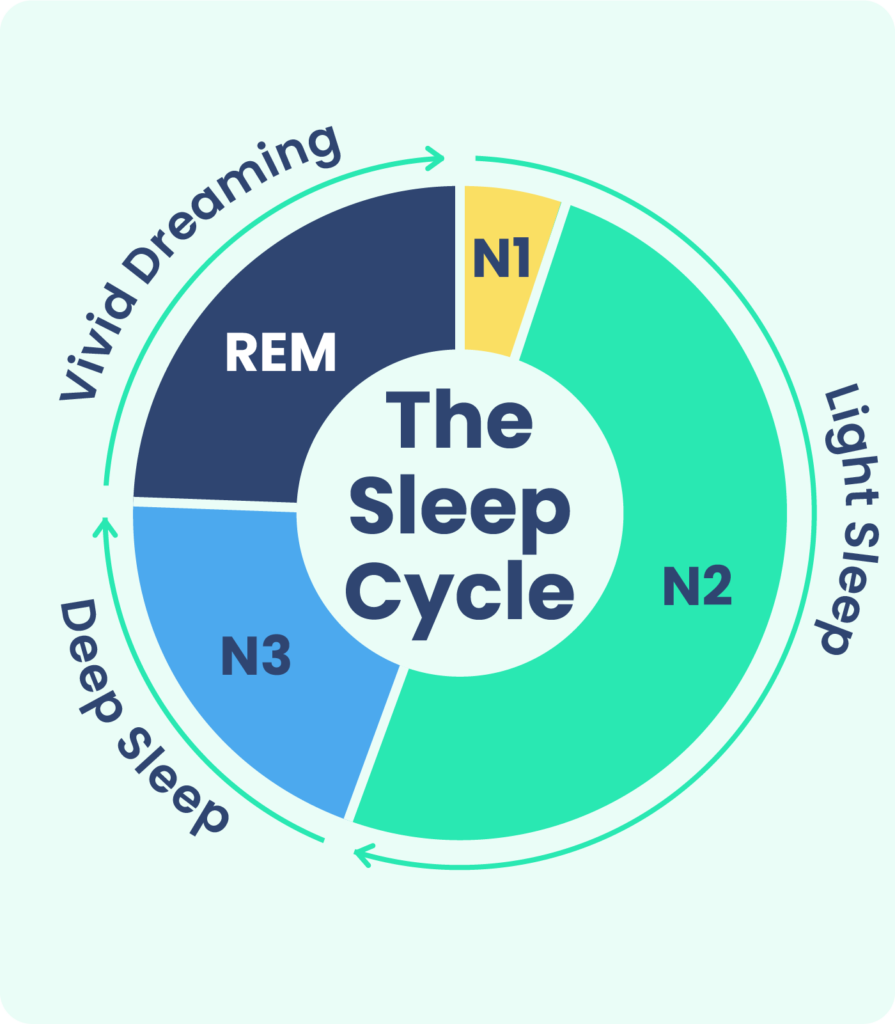
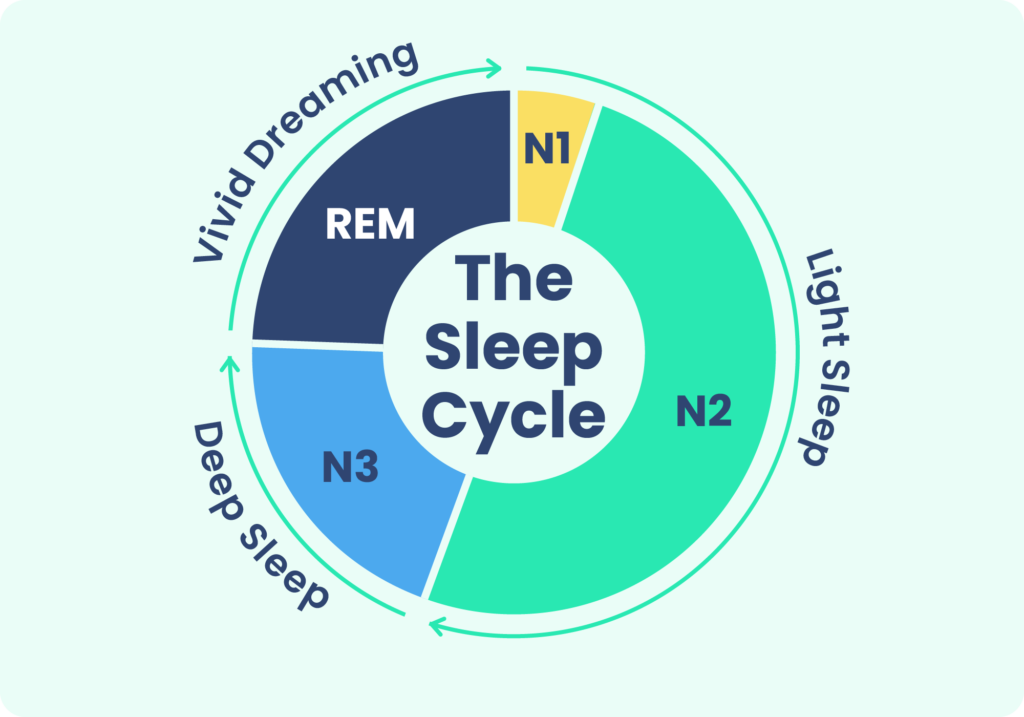
Healthy sleep allows you to cycle through several stages of sleep multiple times every night. The sleep cycle progresses through three stages of non-rapid eye movement (non-REM) sleep — moving from light sleep to deep sleep — and concludes with rapid eye movement (REM) sleep, the stage in which dreaming takes place. Over the course of a night, non-REM sleep stages become gradually shorter, and REM sleep occurs in longer intervals.
This pattern is essential to getting a good night’s sleep. If your body has cycled through all sleep stages as many times as it needs to, you should:
- Wake up refreshed
- Feel clear-headed and capable of paying attention
- Look well-rested
- Feel in a good mood
- Have enough energy to get you through the day
Healthy Sleep Schedule
One of the best ways to ensure that you get healthy sleep is to commit to a consistent sleep schedule. Going to bed and getting up at the same time every day can help you get the amount of sleep you need, as long as you budget seven or more hours for sleeping.
A regular sleep schedule can also help boost the quality of your sleep. That’s because of your body’s circadian rhythms: the natural, biological cycles that operate according to a 24-hour internal clock. Your circadian rhythms influence:
- When you feel ready to sleep and wake up
- How your body cycles through the stages of sleep
- Your ability to sleep continuously through the night
Both your environment and your behaviors affect your circadian rhythms. For example, darkness is a sleep cue that triggers production of the sleep-inducing hormone melatonin. Similarly, having a regular bedtime — especially one preceded by a bedtime routine — can serve as a sleep cue that supports healthy sleep and aligns your circadian rhythms with your preferred sleep schedule.
Sleep Quantity vs. Sleep Quality
Healthy sleep requires more than just sleeping for a certain number of hours. Sleep quantity is important, but for sleep to be satisfying and refreshing, it must also be of high quality — that is, without interruptions that disrupt the sleep cycle.
Sleep Duration
Sleep duration is the amount of sleep you get over the course of a night. Exactly how much sleep is necessary can vary from person to person and may change depending on life circumstances. For example, if you are pregnant, sick, or in the midst of a particularly demanding week, you might need more sleep than usual.
Experts recommend that adults get at least seven hours of sleep each night. Not getting the sleep your body needs can lead to sleep debt and can affect your health, mood, relationships, and your performance at work or school.
Sleep Continuity
One of the primary markers of sleep quality is sleep continuity, your ability to sleep continuously so that you can effectively cycle through all stages of sleep. Sleep disruptions might cause you to wake up and have trouble falling back asleep, but they can also be subtle enough that you don’t remember them in the morning. Common sources of sleep disruptions include:
- Sleep disorders, such as sleep apnea and restless legs syndrome
- Pain or discomfort
- Caregiving responsibilities
- Night sweats
- A noisy, bright, or hot sleep environment
- Snoring or movement of a bed partner
- Nighttime bathroom trips
Sleep continuity is vital to healthy sleep. Without it, you might have trouble waking up in the morning or feeling energized throughout the day, even if you’ve spent plenty of time in bed.

Signs You’re Not Getting Healthy Sleep
You may not be getting enough high quality sleep if you:
- Find it hard to get out of bed in the morning
- Feel daytime tiredness
- Nod off during meetings, while riding in car, or while watching TV
- Have difficulty paying attention or remembering information
- Experience brain fog or feel “out of it”
- Feel moody, anxious, or depressed
- Have more conflict than usual with family members, romantic partners, or co-workers
Establishing healthy sleep habits can help you improve the quality of your sleep. However, if you make changes to support healthy sleep and continue to experience these problems or have trouble sleeping, you should talk to your doctor. Don’t wait to talk to your doctor if you suspect your sleep problems are the result of an underlying medical or mental health condition.
How to Get Healthy Sleep
Set yourself up to get a good night’s sleep every night by adopting healthy sleep hygiene practices. In addition to maintaining a consistent sleep schedule, it’s important to:
- Get at least 30 minutes of sunlight first thing in the morning
- Limit naps to 20 minutes in the early afternoon
- Engage in a nightly bedtime routine with relaxing activities, such a reading or stretching
- Ensure that your bedroom is cool, dark, and quiet
- Exercise for at least 30 minutes during the day
- Avoid screen time as you are winding down for the night
- Avoid alcohol, nicotine, and caffeine in the hours before bedtime
Frequently Asked Questions
Is it healthy to sleep naked?
Sleeping naked, or with minimal clothing, is generally healthy for you as long as you practice good hygiene before bedtime and keep your bedding clean. Especially in warm climate environments, sleeping without clothing can help regulate your core body temperature. It may also help support vaginal health, protect sperm count, and enhance partner intimacy.
Is it healthy to sleep without underwear?
Sleeping without underwear is generally healthy, as it allows more airflow to private areas that are covered the rest of the day. This can help prevent skin irritations and bacterial infections that thrive when you sweat or wear tight clothing. For men, sleeping without underwear may also be beneficial for sperm health.
How much REM sleep is healthy?
A healthy, quality night’s sleep, should include between 90 and 120 minutes of REM sleep. This equates to around 20% of your sleep. REM sleep happens in smaller chunks throughout the night as you go through the full sleep cycle. REM is when vivid dreams take place, and you tend to have more REM sleep later into the night.
What is a healthy heart rate while sleeping?
According to the American Heart Association, a normal resting heart rate during the day is 60 to 100 beats per minute. However, it’s normal for your sleeping heart rate to go below your daytime resting heart rate, dropping by 20 to 30% to between 40 and 60 bpm.
Is biphasic sleep healthy?
Biphasic sleep, which breaks up your total hours of sleep into two separate sleep times, can be healthy if you’re able to follow a consistent schedule. Humans before the modern era regularly slept this way, and some cultures that have “siestas” still do to this today. True biphasic sleep can be a challenge for people who follow a traditional work/school schedule, however.
Is it healthy to sleep on the floor?
Sleeping on the floor can be beneficial for certain circumstances, such as if you have a minor backache. Lying on a flat, firm surface may help relieve pain. While some cultures regularly sleep on the floor using pillows and thin cushions, it isn’t generally a common practice, as sleeping on a mattress can be more hygienic and supportive for your body.
Is it healthy to sleep on your stomach?
Sleeping on your stomach isn’t necessarily unhealthy, but other sleep positions may be better for you. When you sleep on your stomach, it could add strain to your neck, shoulder, and back, as you’re forced to turn your head. This isn’t ideal for spinal alignment. If you do choose to sleep on your stomach, a firmer mattress and a thinner pillow is best.
Is it healthy to sleep without a pillow?
Whether sleeping without a pillow is healthy or not depends on your preferred sleep position. In general, back and side sleepers benefit from sleeping with a pillow, as it can help promote proper spinal alignment and support your neck. Trying to sleep without a pillow in those positions could cause you to wake up with neck and shoulder pain. Stomach sleepers who choose not to use a pillow may have less of an issue, however.

Still have questions? Ask our community!
Join our Sleep Care Community — a trusted hub of sleep health professionals, product specialists, and people just like you. Whether you need expert sleep advice for your insomnia or you’re searching for the perfect mattress, we’ve got you covered. Get personalized guidance from the experts who know sleep best.
Lucy Bryan is a writer and editor with more than a decade of experience in higher education. She holds a B.A. in journalism from the University of North Carolina at Chapel Hill and an M.F.A. in creative writing from Penn State University.
Dustin Cotliar, MD, holds a medical degree from the State University of NY (SUNY) Downstate College of Medicine, and a master’s in public health from Columbia University, where he focused on healthcare policy and management. He is board-certified in Emergency Medicine, with over eight years of practice that includes emergency medicine, urgent care, and telemedicine.
Learn more about our medical advisory boardReferences6 Sources
Reddy, S., Reddy, V., & Sharma, S. (2023 May). Physiology, Circadian Rhythm. StatPearls.
https://www.ncbi.nlm.nih.gov/books/NBK519507/Cirello, C. (2023 November). Insufficient sleep: Definition, epidemiology, and adverse outcomes. In R. Benca & A. Eichler (Ed.). UpToDate.
https://www.uptodate.com/contents/insufficient-sleep-definition-epidemiology-and-adverse-outcomesParuthi, S., Brooks, L. J., D’Ambrosio, C., Hall, W. A., Kotagal, S., Lloyd, R. M., Malow, B. A., Maski, K., Nichols, C., Quan, S. F., Rosen, C. L., Troester, M. M., & Wise, M. S. (2016). Recommended Amount of Sleep for Pediatric Populations: A Consensus Statement of the American Academy of Sleep Medicine. Journal of clinical sleep medicine : JCSM : official publication of the American Academy of Sleep Medicine, 12(6), 785–786.
https://pubmed.ncbi.nlm.nih.gov/27250809/Potter GDM, Grosicki GJ, Tinsley GM, Wood TR, Garner D, Galpin AJ. Dreamy dwellings: How the sleep environment affects sleep health in adults—a narrative review. Lifestyle Medicine. 2025;6(4):e70022. doi:10.1002/lim2.70022
https://onlinelibrary.wiley.com/doi/10.1002/lim2.70022InformedHealth.org [Internet]. Cologne, Germany: Institute for Quality and Efficiency in Health Care (IQWiG); 2006-. In brief: What is “normal” sleep? [Updated 2024 Aug 1]. Available from:
https://www.ncbi.nlm.nih.gov/books/NBK279322/American Heart Association. Target Heart Rates Chart. American Heart Association. Published August 12, 2024.
https://www.heart.org/en/healthy-living/fitness/fitness-basics/target-heart-rates