When you buy through our links, we may earn a commission. Products or services may be offered by an affiliated entity. Learn more.

Revenge Bedtime Procrastination


At a Glance
“Revenge bedtime procrastination” is when people intentionally stay up late to enjoy personal time, even when they know it will negatively affect their sleep. It often happens when individuals feel they have little control over their daily schedules.
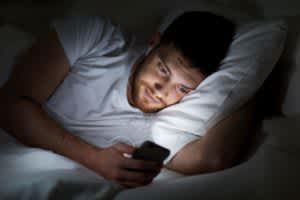
Does this sound familiar? You know you’re exhausted, but somehow, one more episode, one more scroll, one more chapter feels like reclaiming your life. That’s called revenge bedtime procrastination. Although it’s tempting in the moment, late nights followed by early mornings can lead to sleep deprivation and negatively impact your mental and physical health in both the short and long term.
Understanding sleep procrastination, including its symptoms, causes, and consequences, can help you recognize when you’re engaging in it. Then, you can take steps to stop bedtime procrastination from leading to insufficient sleep.
What Is Revenge Bedtime Procrastination?
There are three main factors that are required for a late sleep time to be considered bedtime procrastination:
- A delay in going to sleep that reduces someone’s total sleep time
- The absence of a valid reason for staying up later than intended (like an emergency or night shift)
- An awareness that delaying bedtime could lead to negative consequences
People often put off going to bed the same way they postpone homework or household chores, but sleep procrastination feels different because the trade-off is usually something fun—another episode of your favorite TV show, one more level of a video game, or a late-night chat with friends.
This behavior shows up in two ways: delaying bedtime itself or climbing under the covers on time but scrolling, streaming, or otherwise postponing the moment you try to fall asleep. Many people do both, especially given the lure of electronic devices in bed, and both habits chip away at total sleep time and overall sleep quality.

What Does Revenge Have to Do With It?
The addition of the word “revenge” to the concept of bedtime procrastination became popular on social media . The English term “revenge bedtime procrastination” emerged from a translation of an expression in Chinese that reflected frustration tied to long, stressful work hours that left little time for personal enjoyment.
In this way, bedtime procrastination is seen as a way of getting “revenge” on daytime hours with little or no free time. Though initially expressed by people in China, the idea has resonated across the globe and gained additional traction in response to stress induced by the COVID-19 pandemic.
What Causes Bedtime Procrastination?
Sleep procrastination is still an emerging concept in sleep science. As a result, there are ongoing debates about the psychology behind—and causes of—this voluntary sleep reduction.
Significant Daytime Stress
Revenge sleep procrastination appears to be tied to significant daytime stress. For many people, sleep procrastination may be a response to extended work hours that, if combined with a full night’s sleep, leave virtually no time for entertainment or relaxation.
Revenge bedtime procrastination may also be on the rise because of COVID-19 and stress associated with stay-at-home orders. Surveys have found that working from home has often extended working hours , and thus people have had less leisure time since the pandemic started.
These factors may trigger stress and sleep procrastination and contribute to the fact that nearly 40% of people have had sleeping problems during the pandemic.
Decreased Self-Control
People who push off going to bed are usually aware of what they’re doing and want to get sufficient sleep, but they fail to actually do so. This is known as an intention-behavior gap.
One explanation for this gap is a failure in self-regulation or self-control. Our capacity for self-control is already at its lowest at the end of the day, which may facilitate sleep procrastination. Some people may be naturally inclined to procrastination in general, including around bedtime. In addition, daytime demands at work or school may reduce the reserves of self-control available in the evening.
Differing Chronotypes
Not everyone agrees with this explanation, though, and some argue that it places too much emphasis on self-control. Instead, sleep procrastination may result from people who have an evening chronotype — “night owls” — who are forced to try to adapt to schedules designed for “early birds.”
Other Contributing Factors
Further research is needed to better understand sleep procrastination, which may be the result of multiple interacting factors, including poor time management, difficulty transitioning from wakefulness to rest, and a mismatch between internal circadian rhythm and external schedules.
The widespread use of screens before bed can also encourage procrastination by stimulating the brain and delaying the natural wind-down process needed for sleep.
Who Is Most Affected by Bedtime Procrastination?
Because research about sleep procrastination is still in the early stages, experts aren’t certain who is most affected by it. That said, one study found that students and women were most likely to engage in bedtime procrastination.
Additionally, people with an evening chronotype are inclined to stay up later, which may manifest as bedtime procrastination. Sleep procrastination also appears to be more frequent in people who procrastinate in other aspects of their life.

What Are the Consequences of Bedtime Procrastination?
Ultimately, consistent bedtime procrastination can cause sleep deprivation. And without enough hours of sleep, the mind and body can’t properly recharge, which can have widespread negative effects on health.
Insufficient sleep degrades thinking, memory, and decision-making. Sleep deprivation also raises the risk of daytime sleepiness, which can harm productivity and academic achievement while heightening the risks of drowsy driving.
A lack of sleep is tied to irritability and other difficulties regulating emotions. It’s also been connected to mental health disorders, such as depression and anxiety.
Sleep deprivation worsens physical health, making people more susceptible to cardiovascular problems and metabolic disorders, like diabetes. In addition, and especially concerning in light of COVID-19, insufficient sleep can erode immune function and reduce the effectiveness of vaccines.
The consequences of sleep loss can arise quickly or build up over time, contributing to significant long-term health problems. With sleep procrastination, the effects of sleep deprivation may become even more worrisome. Sleep deprivation has been linked to reduced self-regulation and impulse control, which means that sleep procrastination may become part of a reinforcing negative cycle of reduced sleep and worse overall health.
How Do You Stop Sleep Procrastination?
The best remedy for sleep procrastination is healthy sleep hygiene, which involves creating good sleep habits and an environment conducive to sleep. Remember that it takes more than one night’s sleep to truly get into good sleep habits.
Having a set bedtime routine can make these behaviors feel almost automatic, reducing the impulse to stay up later instead of going to bed. Examples of positive sleep habits include:
- Keeping a consistent bedtime and wake-up time, including on non-working days
- Avoiding alcohol or caffeine late in the afternoon or evening
- Stopping the use of electronic devices, including cell phones and tablets, for at least half-an-hour, and ideally longer, before bed
- Developing a stable routine to use every night to prepare for bed
Relaxation methods, such as reading a book, meditating, or gently stretching, can be part of your bedtime routine and help ease you into sleep. Relaxation techniques may also decrease the stress that can drive revenge bedtime procrastination.
Creating an inviting bedroom environment that’s dark, quiet, and cool and has a comfortable mattress and bedding can also make going to sleep more appealing. An inviting sleep space may counteract the desire to sacrifice sleep for leisure activities.
If you find that your sleep problems are ongoing or causing notable daytime sleepiness, talk with a doctor who can review your sleep habits, determine if you have a sleep disorder, and create a plan to help you get better rest.

Still have questions? Ask our community!
Join our Sleep Care Community — a trusted hub of sleep health professionals, product specialists, and people just like you. Whether you need expert sleep advice for your insomnia or you’re searching for the perfect mattress, we’ve got you covered. Get personalized guidance from the experts who know sleep best.
Eric Suni has over a decade of experience as a science writer and was previously an information specialist for the National Cancer Institute.
Dr. Alex Dimitriu is the founder of Menlo Park Psychiatry and Sleep Medicine. He is board-certified in psychiatry as well as sleep medicine.
Learn more about our medical advisory boardReferences13 Sources
Magalhães, P., Cruz, V., Teixeira, S., Fuentes, S., & Rosário, P. (2020). An exploratory study on sleep procrastination: Bedtime vs. while-in-bed procrastination. International Journal of Environmental Research and Public Health, 17(16), 5892.
https://pubmed.ncbi.nlm.nih.gov/32823762/Kroese, F. M., De Ridder, D. T., Evers, C., & Adriaanse, M. A. (2014). Bedtime procrastination: Introducing a new area of procrastination. Frontiers in Psychology, 5, 611.
https://pubmed.ncbi.nlm.nih.gov/24994989/Liang, L.-H. (2020, November 26). The psychology behind “revenge bedtime procrastination.” BBC.
https://www.bbc.com/worklife/article/20201123-the-psychology-behind-revenge-bedtime-procrastinationGiurge, L. M., Yemiscigil, A., Sherlock, J., & Whillans, A. V. (2020, September). Uncovering inequalities in time-use and well-being during COVID-19: A multi-country investigation. Harvard Business School Working Paper, No. 21-037.
https://www.hks.harvard.edu/centers/mrcbg/programs/growthpolicy/uncovering-inequalities-time-use-and-well-being-during-covid-19Jahrami, H., BaHammam, A. S., Bragazzi, N. L., Saif, Z., Faris, M., & Vitiello, M. V. (2021). Sleep problems during the COVID-19 pandemic by population: A systematic review and meta-analysis. Journal of Clinical Sleep Medicine, 17(2), 299–313.
https://pubmed.ncbi.nlm.nih.gov/33108269/Garza, K. B. (2003). How do we close the intention-behavior gap? Journal of the American Pharmacists Association, 58(3), 240-241.
https://pubmed.ncbi.nlm.nih.gov/29739503/Kamphorst, B. A., Nauts, S., De Ridder, D., & Anderson, J. H. (2018). Too depleted to turn in: The relevance of end-of-the-day resource depletion for reducing bedtime procrastination. Frontiers in Psychology, 9, 252.
https://pubmed.ncbi.nlm.nih.gov/29662459/Kühnel, J., Syrek, C. J., & Dreher, A. (2018). Why don’t you go to bed on time? A daily diary study on the relationships between chronotype, self-control resources and the phenomenon of bedtime procrastination. Frontiers in Psychology, 9, 77.
https://pubmed.ncbi.nlm.nih.gov/29456519/Kroese, F. M., Adriaanse, M. A., Evers, C., Anderson, J., & de Ridder, D. (2018). Commentary: Why don’t you go to bed on time? A daily diary study on the relationships between chronotype, self-control resources and the phenomenon of bedtime procrastination. Frontiers in Psychology, 9, 915.
https://pubmed.ncbi.nlm.nih.gov/29942269/Herzog-Krzywoszanska, R., & Krzywoszanski, L. (2019). Bedtime procrastination, sleep-related behaviors, and demographic factors in an online survey on a Polish sample. Frontiers in Neuroscience, 13, 963.
https://pubmed.ncbi.nlm.nih.gov/31619947/Chattu, V. K., Manzar, M. D., Kumary, S., Burman, D., Spence, D. W., & Pandi-Perumal, S. R. (2018). The global problem of insufficient sleep and its serious public health implications. Healthcare, 7(1), 1.
https://pubmed.ncbi.nlm.nih.gov/30577441/Zimmermann, P., & Curtis, N. (2019). Factors that influence the immune response to vaccination. Clinical Microbiology Reviews, 32(2), e00084-18.
https://pubmed.ncbi.nlm.nih.gov/30867162/Mendelsohn A. I. (2019). Creatures of Habit: The Neuroscience of Habit and Purposeful Behavior. Biological psychiatry, 85(11), e49–e51.
https://pubmed.ncbi.nlm.nih.gov/31122343/