
When you buy through our links, we may earn a commission. Products or services may be offered by an affiliated entity. Learn more.
Best Mattresses Under $300 in 2026

Sleep Foundation
Why Trust Us


Our mission to create a healthier, more well-rested world demands that our product reviews be best-in-class. You won’t find more expertise on mattresses and sleep products anywhere else.
The Sleep Foundation product testing team uses an industry-leading evaluation process paired with real world consumer feedback to come up with objective recommendations so that you can feel confident in your product decisions.
Buying a mattress is a big decision, but it doesn’t have to break the bank. There are plenty of options on the market for affordable mattresses under $300.
An affordable mattress might lack some of the special features of the more expensive models, but that doesn’t mean there isn’t a great degree of variation in the quality of mattresses in this price range.
Whether you’re looking to save money or just want to get a sleep surface for an extra bedroom, spending less on a mattress is a perfectly viable option. To make the search easier, we’ve analyzed some of the best mattresses under $300.
How We Test
Testing Criteria
Sleepers looking for a mattress under $300 typically want a balance of value and quality, so we considered the following criteria when deciding on our list of the best.
Price: Given that every mattress featured in our roundup is priced below $300 in most sizes, cost was the main priority we took into account during our research and testing.
Construction and materials: More expensive mattresses tend to use higher quality materials, but that doesn’t mean you can’t find something durable and comfortable to sleep on at a lower price-point. We made sure to consider the overall value of every mattress, especially in comparison to other budget models available.
Lifespan/durability: A budget-friendly mattress that wears out quickly does not offer as much value as more expensive, longer-lasting models, so we focused on affordable options with reasonable lifespans. When researching durability, we considered materials, firmness, type, and customer reviews (more on that below).
Customer reviews and ratings: With budget mattresses, quality can vary. Reading customer reviews and ratings was a big factor so we could confirm that each mattress performed well for a variety of sleepers.
How We Evaluated
To find the best mattresses under $300, we began by reviewing our database of over 2,000 mattresses. After narrowing our search down to models within this price range, we looked for those that had the following:
- Variety of firmness levels
- Original performance ratings of good or better in most categories
- Quality construction and durability
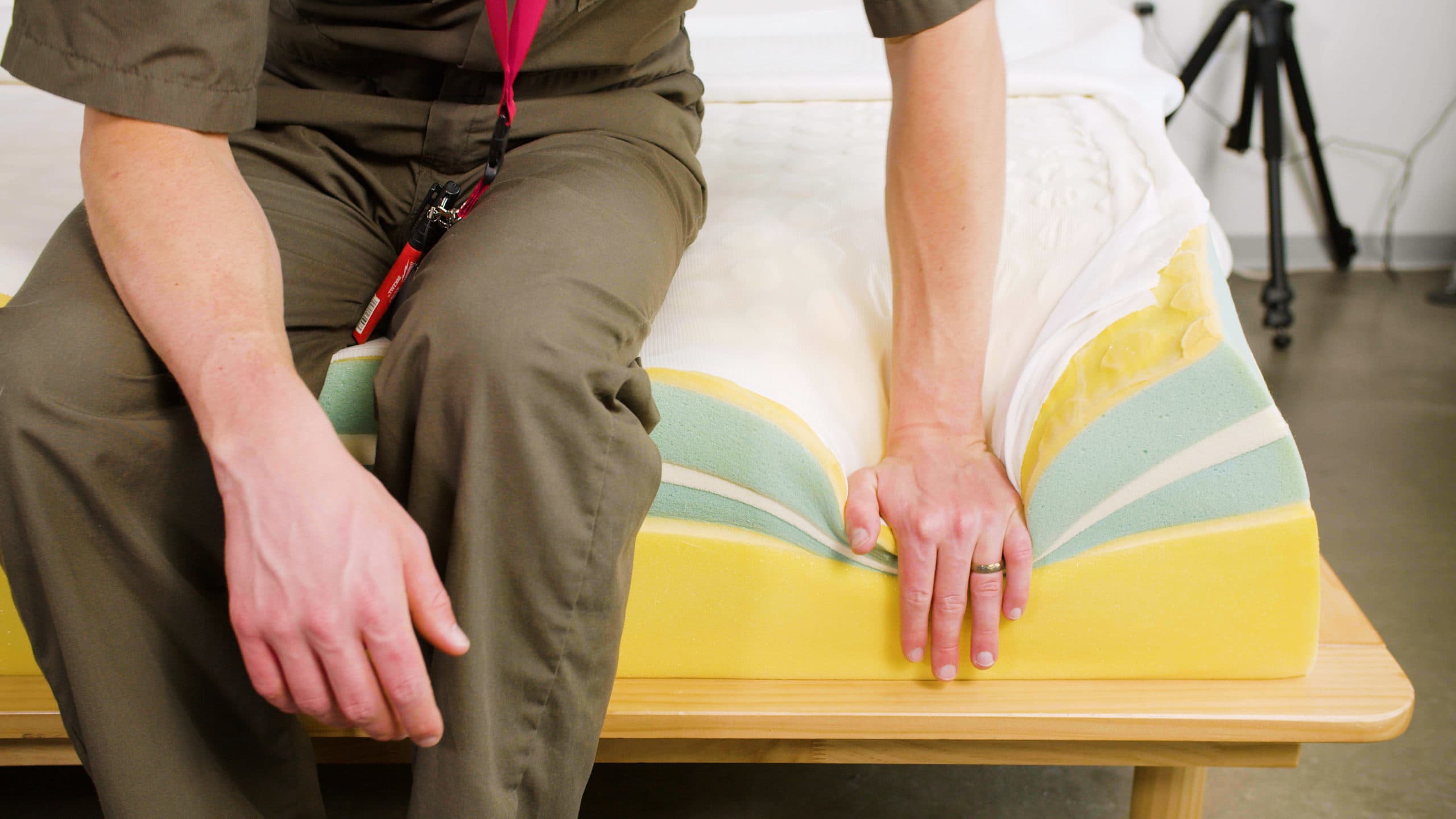
From there, we pulled the top contenders into our Seattle Test Lab for a new round of hands-on assessments. Our team ran each model through various tests, then calculated numerical scores for key performance categories such as motion isolation, edge support, and temperature regulation before assigning accolades to our top picks.
After re-evaluating each model with budget-conscious shoppers in mind, we selected these mattresses under $300 for their standout performance and ability to meet a wide range of sleeper needs and preferences.
Our Testing Team

Logan Foley
Executive Product Director
Full Bio

Mary Fenton
Head of Product Content
Full Bio

Jeremy Klein
Product Testing Manager
Full Bio

Brad Nehring
Product Testing Manager
Full Bio

Colin Simpson
Product Research Manager
Full Bio
Looking at Other Mattresses? Explore Our Mattress Ratings Database
Browse and compare mattress info and our hands-on Test Lab ratings for many of the most popular mattresses on the market.
Learn More About the Best Mattresses Under $300
Best Overall
7.3/10Test Lab Score
Novilla Bliss
A cushy foam mattress with five heights options.
Key Details
- Who It’s Best For: Side and back sleepers, couples, and value seekers.
- Feel: Medium (5) with plush comfort layers that contours closely and dense base layers to keep your body on an even plane.
- What It’s Made Of: Comfort layers of memory foam and adaptive polyfoam, followed by supportive transitional polyfoam and a high-density foam base.
- What We Don’t Like: The softer feel and deep contour means this mattress is too soft for most stomach sleepers who weigh 130 pounds or more.
Scoring & Reviews
The following ratings show how suitable this mattress is for different sleeping positions and sleeper weights. These scores are determined by how well the mattress supports and relieves pressure for each sleeper type.
In addition to the hands-on feedback from our team, we conduct a number of quantitative tests in our Test Lab. The below ratings are based on the experience of our testers.
Performance
Full Breakdown
Construction Breakdown
The Novilla Bliss is available in profiles of 6, 8, 10, 12, and 14 inches. All profiles share the same design, but differ in terms of individual layer thickness. Memory foam and adaptive polyfoam comfort layers create a plush surface that contours to your body, promotes spinal alignment, and cushions sensitive areas like the shoulders and hips. That said, the 6-inch and 8-inch models – both of which are priced below $300 in all sizes – don’t hug your body as closely as their taller counterparts.
The transitional layer is made of convoluted polyfoam, also known as “egg-crate” foam. This material allows air to circulate throughout the interior of the mattress, which in turn helps keep the surface cool. The support core is composed of high-density base foam. A cover made of breathable and moisture-wicking bamboo-derived rayon encases the mattress.
Trial, Shipping, and Warranty
Novilla offers free ground shipping for customers in the contiguous U.S. The company’s sleep trial spans 100 nights in length. If you choose to keep the Novilla Bliss after its return period expires, your purchase is also covered under a 10-year manufacturer’s warranty.
Most Comfortable
6.6/10Test Lab Score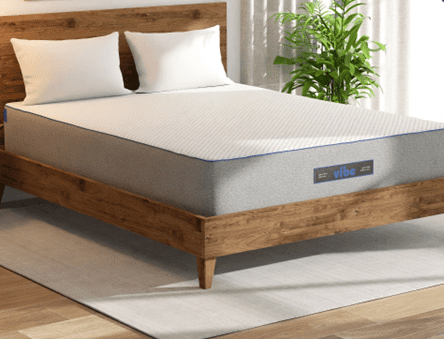
Vibe Cooling Gel Foam Mattress
An ultra-plush foam mattress with an unbeatable price.
Key Details
- Who It’s Best For: Side sleepers under 130 pounds, as well as couples in this weight range.
- Feel: Medium soft (4) with a top layer that hugs the body for a close, pressure-relieving cradle.
- What It’s Made Of: Two memory foam comfort layers over high-density polyfoam base layers.
- What We Don’t Like: Too soft for most back and stomach sleepers, and edge support is very limited.
Scoring & Reviews
The following ratings show how suitable this mattress is for different sleeping positions and sleeper weights. These scores are determined by how well the mattress supports and relieves pressure for each sleeper type.
In addition to the hands-on feedback from our team, we conduct a number of quantitative tests in our Test Lab. The below ratings are based on the experience of our testers.
Performance
Full Breakdown
Construction Breakdown
The Vibe Gel Memory Foam Mattress is designed with gel-infused memory foam and polyfoam comfort layers, a high-density polyfoam support core, and a breathable stretch-knit cover. The mattress stands 12 inches tall in total.
With a medium soft feel, rated 4 out of 10 on the firmness scale, the mattress offers plush comfort. Its comfort system includes a 2-inch layer of gel-infused memory foam and a 3-inch layer of gel-infused polyfoam, both engineered to dissipate heat and conform closely to the body. This design helps evenly distribute weight and alleviate pressure on sensitive areas.
The support core consists of two layers of convoluted polyfoam, forming a 7-inch high-density base that promotes spinal alignment and provides durability and structure to the mattress.
Trial, Shipping, and Warranty
Though shipping varies by seller, mattresses purchased through Walmart and Amazon are eligible for free shipping within the contiguous U.S. Orders typically arrive within a week.
The return policy for this mattress varies by seller because it is primarily available through online retailers, such as Amazon and Walmart. Vibe Gel Memory Foam Mattresses purchased through authorized sellers come with a 10-year limited warranty.
Best for Side Sleepers: FDW Gel Memory Foam Mattress
Best for Side Sleepers
6.3/10Test Lab Score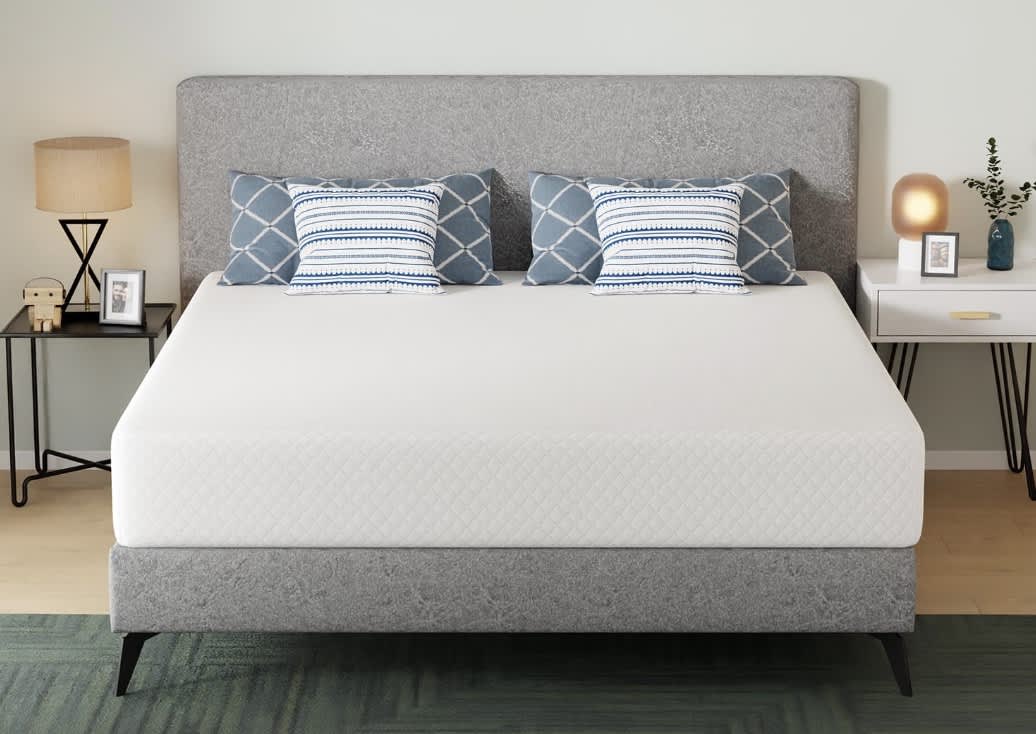
FDW Gel Memory Foam Mattress
An affordable all-foam mattress with a deep, pressure-relieving contour.
Key Details
- Who It’s Best For: Side sleepers up to 230 pounds, couples, and people with chronic shoulder or back pain.
- Feel: Medium firm (6) with an adaptive comfort layer that conforms to your body and a dense base layer to push back against your weight.
- What It’s Made Of: A 2.5-inch layer of gel-infused memory foam in the comfort system, followed by a high-density polyfoam base.
- What We Don’t Like: Most stomach sleepers need a thinner, firmer mattress that doesn’t contour as closely.
Scoring & Reviews
The following ratings show how suitable this mattress is for different sleeping positions and sleeper weights. These scores are determined by how well the mattress supports and relieves pressure for each sleeper type.
In addition to the hands-on feedback from our team, we conduct a number of quantitative tests in our Test Lab. The below ratings are based on the experience of our testers.
Performance
Full Breakdown
Construction Breakdown
You can choose from six different profiles for the FDW Gel Memory Foam Mattress, all of which share the same basic design with a gel-infused memory foam comfort layer and high-density polyfoam base layer. We’re highlighting the 12-inch medium firm (6) option for its balanced construction and cushy-yet-supportive feel, as well as its sticker price.
The cover, which is made of knit polyester, can be removed and machine-washed as needed to keep your sleep surface clean.
Trial, Shipping, and Warranty
The FDW Gel Memory Foam Mattress is available through various retailers. As such, your shipping options and trial period will depend on where you purchase the bed. Those who order from Amazon and hold an Amazon Prime membership receive free expedited shipping. You can also sign up for a 2-year or 3-year protection plan covering your purchase.
Best for Back Pain
8.0/10Test Lab Score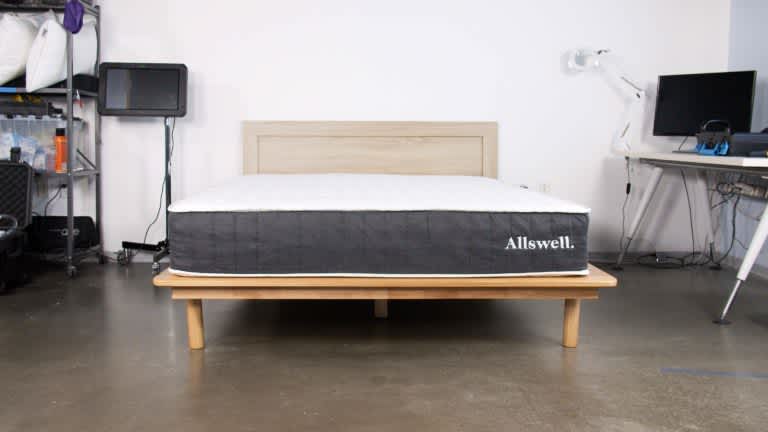
Allswell Mattress
A budget-friendly hybrid with sturdy, responsive support.
Key Details
- Who It’s Best For: Back and stomach sleepers, people who run hot in bed, and budget shoppers.
- Feel: Firm (7) design with minimal contouring from the surface layers and a responsive feel to push back against your weight.
- What It’s Made Of: A thin layer of adaptive polyfoam and graphite-infused memory foam in the comfort system, followed by pocketed coils with perimeter reinforcement in the support core.
- What We Don’t Like: The firm, bouncy feel is not suitable for most side sleepers who weigh 230 pounds or less.
Scoring & Reviews
The following ratings show how suitable this mattress is for different sleeping positions and sleeper weights. These scores are determined by how well the mattress supports and relieves pressure for each sleeper type.
In addition to the hands-on feedback from our team, we conduct a number of quantitative tests in our Test Lab. The below ratings are based on the experience of our testers.
Performance
Full Breakdown
Construction Breakdown
The Allswell is a firm (7) foam hybrid constructed with adaptive polyfoam and memory foam comfort layers. Graphite gel is infused into the latter to help offset heat retention and keep you cool throughout the night. The memory foam is also fairly dense and acts as a transitional layer, creating a buffer between your body and the support core.
Pocketed coils create a robust support system for the Allswell. Thicker springs line the perimeter to reduce sinkage when you get in and out of bed or lie close to the mattress edges. At 10 inches, the Allswell is considered a medium-profile mattress and won’t require a fitted sheet with deep pockets.
Trial, Shipping, and Warranty
The Allswell is priced below or barely above $300 in all sizes, and standard ground shipping is free of charge. Walmart – Allswell’s exclusive retailer – allows you to test out the mattress for up to 90 nights. Your purchase is covered under a 10-year warranty.
How to Choose the Best Mattress Under $300
While buying a mattress on a tight budget is perfectly doable, you’ll want to make sure you’re not conceding more quality than is absolutely necessary. Just as with the more premium mattresses, mattresses under $300 aren’t all equal.
What to Look for in a Mattress
The market for more affordable mattresses is large and difficult to maneuver, with many variables in play. To make the search easier, we have compiled a list of traits that will ultimately decide whether or not a mattress is suited to your specific needs.
Price
Naturally, price is a major factor when looking for a budget mattress. It’s important to remember that a more expensive mattress doesn’t necessarily make it better, so you should weigh price and quality to assess the overall value.
Sleeping Position
Knowing your typical sleeping position is vital to choosing a mattress, as not all mattresses are conducive to all positions. The most important factor for sleep position is firmness. For example, side sleepers will generally be most comfortable with a medium feel, while stomach sleepers usually require a firm mattress.
Quality Materials
The materials that go into a mattress directly contribute to its performance. Certain materials can improve breathability, pressure relief, bounce, and many other aspects. Common affordable materials, like polyfoam, are often a large factor in keeping a mattress budget-friendly without sacrificing overall quality.
Firmness Level
Firmness is an entirely subjective element of a mattress but is particularly important for sleepers who prefer a particular position. Firmness is traditionally rated on a 1-10 scale with 1 being the softest and 10 being the firmest, which makes it easier to gauge based on preference.
In addition to sleep position, body weight is another important factor to consider when determining what firmness is best for you. Individuals who weigh under 130 pounds usually need a mattress on the softer end of the spectrum for contouring, while those who weigh over 230 may need a firmer build for more support.
Pressure Relief
Pressure relief can help prevent nighttime aches and pains. Different parts of the body vary in the force they apply to a mattress depending on their weight and width, and this can lead to pressure points and spinal misalignment. A pressure-relieving mattress spreads out the sleeper’s weight more evenly across the surface to reduce the likelihood of discomfort. Finding a mattress with the correct firmness for your body type and preferred sleep position is key to optimal pressure relief.
Motion Isolation
Motion isolation is how movement on one side of the mattress affects the other side. This won’t be a deciding factor for most individuals who sleep alone, but it is often critical for couples. If one of you has to wake up early or tends to toss and turn, strong motion isolation can prevent the other from noticing and having their sleep disrupted.
Temperature Regulation
One of the most common nighttime annoyances is getting too hot. This occurs largely as a result of your body heat being absorbed into the mattress. Certain mattresses, however, take precautions to prevent overheating. Memory foam has a reputation for trapping heat since it contours around the body and hinders airflow, but many models that use the material have special cooling features designed to counteract this effect.
Edge Support
Edge support is just what it sounds like: how sturdy the mattress is around the perimeter. Foam mattresses are often prone to edge sagging, while innerspring and hybrid models are often more supportive. Edge support comes into play when looking at a mattress’ usable area and the ability to sit on the edge.
Contouring
Contouring is how the mattress hugs and conforms to your body. Softer mattresses, especially those that contain memory foam and/or polyfoam, will generally contour more than firmer mattresses. This can increase pressure relief to prevent joint pain, but it can also hinder cooling by preventing surface airflow. For the best balance of contouring and support, customers should typically select a firmness that corresponds to their body type.
Mattress Types
Each type of mattress has some common features you’re likely to encounter across models. For instance, memory foam mattresses are known for providing greater pressure relief but also for absorbing and retaining more heat.
However, there are also other variables within the categories. Depending on the specific materials in play, one spring mattress might be more suited to your specifications than another.
Hybrid
Hybrid mattresses typically contain a pocketed coil support core and foam or latex comfort system. By combining two different types, a mattress takes on the benefits of both. For example, memory foam mattresses will often trap heat, but a hybrid model with foam comfort layers will provide more cooling as a result of its breathable coil core.
Not every hybrid mattress successfully blends the best of both worlds. The success of a hybrid mattress will depend on the quality of its build. A poorly made hybrid could showcase the downsides of both innerspring and all-foam models.
Innerspring
The innerspring mattress is the most traditional option on the market. Its support core is made with coils, which allow for more airflow than all-foam mattresses, resulting in a cooler surface. An innerspring mattress has many attributes that appeal to couples, such as edge support and bounciness.
Depending on the type of coils used for the support core, an innerspring mattress can take on different attributes. Most modern mattresses use pocketed coils, which balance bounciness and motion isolation. Bonnell coils, which are common in lower-priced mattresses, are durable but often prone to motion transfer.
Foam
Memory foam excels at providing pressure relief and reducing nighttime pain due to how it contours around the body. On the downside, this contouring can also result in heat retention from restricted airflow, but many manufacturers use specially designed memory foam to combat this tendency. Gel-infused and copper-infused foam are both intended to transfer heat away from the body, and open-cell foam has cavities within it to encourage airflow.
While foam typically provides exceptional motion isolation, it can be difficult to move on due to its close hug. The slow response time of memory foam can add to this effect.
Latex
In many ways, latex mattresses offer a middle ground between the cradling of memory foam and the responsiveness of innerspring models. Latex will contour around the body and provide pressure relief but not to the extent of memory foam, which means there’s more overall airflow. Many latex models use aerated latex that’s designed to increase air circulation even more. Latex is also a bouncier material than memory foam but doesn’t isolate motion as well.
Latex can be natural, synthetic, or blended. Natural latex tends to be higher quality, more expensive, and popular with eco-conscious shoppers. Synthetic and blended latex options are typically more affordable but often less durable.
What Can Affect the Price of a Mattress?
As with any product, a wide variety of factors go into establishing the final price for a mattress. When looking for the best mattress under $300, it’s important to know exactly what you’re getting.
Materials
Mattress materials affect pricing. Affordably priced models often use materials like bonnell coils and polyfoam that balance cost and performance. While these components may be less expensive than proprietary memory foam or carefully engineered pocketed coils, they can feel just as comfortable to some sleepers.
Technology and Comfort
The price of a mattress can increase based on its supplementary technology. More expensive mattresses often have more extensive features, including cooling, zoned coils, or proprietary materials designed to boost comfort. An especially thick comfort layer also typically drives the price up.
Durability
Durability is a major factor in a mattress’ value since a low-priced model you have to replace regularly may ultimately cost more than an expensive but durable option that can last for years.
Shipping Rates, Returns, and Warranties
One of the quirks of shopping online is figuring out how the product will make its way to your front door. With products as large as mattresses, there can be some extra steps to the process that are worth considering.
Shipping
Though most online mattress companies ship a compressed and shrink-wrapped mattress in a box, some offer premier delivery services. The most common is White Glove delivery, in which the carriers bring the mattress into your home and set it up for you. This service often costs extra and will take longer than usual delivery.
Whether or not shipping is free is also worth noting, especially when looking for a mattress under a particular price point. You’ll want to read the fine print on the free shipping claims, as certain companies may only offer free shipping to the contiguous United States. Expedited shipping is also sometimes available for an additional charge.
Returns
Anytime you’re shopping online, returns are always a possibility no matter how confident you are in your selection.
Since mattress comfort is highly subjective, many models come with a sleep trial during which you can try the bed in your home. Within the eligible window, you can generally choose to either keep the mattress, trade it in, or return it for a refund. Trial lengths vary between manufacturers, and some have a required break-in period to give your body time to adjust.
You should read the terms and conditions of a trial policy before completing your purchase to better understand the process. While many offer free returns, some may charge processing fees or ask the customer to pay for return shipping. Most trial policies are limited to mattresses still in good condition, and many permit a limited number of returns per household.
Instead of shipping back a used mattress, many companies will have you donate the mattress locally. The company will often coordinate with a charity to pick up the mattress from your home at no charge to you.
Warranties
A warranty protects the customer in the case of eligible mattress defects. Most mattresses come with a warranty to give customers a greater sense of security in their purchase. While a few companies offer lifetime warranties, most span 5 to 25 years.
What constitutes a defect will depend on the company’s policy. Warranties most often include problems with the mattress that are direct results of manufacturing or craftsmanship defects, such as cracking foam or indentations greater than a specified depth. Any problem caused as a result of the owner is not covered under a warranty.
Another component to watch for in a warranty is whether or not it’s prorated. If a warranty is prorated, it means that you’re expected to pay for a portion of the replacement mattress or the mattress repair. A non-prorated warranty means you don’t have to pay directly for the repair or replacement, but shipping charges may apply.
Additional Mattress Costs
While most shoppers focus on the sticker price of a new mattress, other expenses may also apply.
Bed Frames and Bedding: Many customers purchase a new bed frame and bedding to accompany their new mattress. Some companies offer bundles that can save shoppers money over purchasing each component separately. If you don’t want the added expense, you’ll want to make sure that your existing frame and bedding will fit your new mattress.
Mattress Removal: If you’d like the delivery team to take away your old mattress, you’ll usually have to pay extra. This service is often included in White Glove delivery or as an add-on. Many mattress companies do not offer old mattress removal, so you may want to research donation and recycling options near you.
Expert Assembly: Expert assembly is the primary function of White Glove delivery. This service varies in cost depending on the vendor, but it may range from free to around $150. Many companies do not offer the service at all. The value of expert assembly will depend on your circumstances. For instance, individuals with mobility issues and those who do not have a friend or family member willing to help them move the mattress may find more value in White Glove delivery.
How to Get the Best Deal on a Mattress
When shopping on a budget, finding the best deal can make a big difference. If you know where and when to look, there are several ways to save money on a new mattress.
Shop During Mattress Sales
Mattress sales come and go frequently and are most commonly tied to a holiday. President’s Day, Memorial Day, and Labor Day all have coinciding mattress sales. In fact, there are even holidays specifically made for finding deals, such as Black Friday, Cyber Monday, and Amazon Prime Day.
Buy Online
Not only does buying online provide a greater number of options than physical stores, but online mattresses are often more affordable since the retailers have lower overhead without brick-and-mortar retail locations.
Comparison shopping is another major benefit to making online purchases, as you can quickly jump back and forth between mattresses. You also have access to more information, such as professional reviews and customer testimonials.
Coupon Codes, Referrals, and Discounts
Many online companies frequently offer discount codes that can be applied at checkout. Some of these codes may cut the price by a specific dollar amount, others take a percentage off, and some add free accessories, like pillows.
Comparison Shop
Before making a final purchase, it’s a good idea to compare the mattress with those at other vendors. Not only will this help you make a more informed decision, but competing retailers may sell the same mattress or a similar model at a reduced price.
There are even vendors that will price match a competitor. For online retailers, this is most common during holiday sales. Physical stores are more likely to employ price-matching year-round.
How We Test: Your Comfort Is Our Science
Our industry-leading product testing team cares deeply about improving your sleep. Having a holistic understanding of a mattress’s role as part of a sleep system is paramount to our testing process. Since a bed’s comfort and feel depend largely on body weight and sleeping position, our testing team represents a wide range of body types, sleep positions, and comfort preferences.
In our Seattle-based Test Lab, we use an objective, hands-on process to evaluate mattresses across performance categories. The following are the key guidelines that inform our performance ratings. Our ultimate goal is to ensure you have all the information you need to make the best purchase decision for you.
Construction analysis:We begin testing each mattress by analyzing its design and making note firmness, height, individual layer composition, and sticker price. This allows us to evaluate qualities like support, durability, and value.
Product testing:Firsthand testing is crucial to our evaluation and ratings system. We use a wide range of tools and technology to test mattresses in six performance categories: motion isolation, pressure relief, temperature control, ease of movement, edge support, and odor potential.
Field testing: In addition to lab-based tests, we base our ratings on feedback from field testers who use the mattresses in their own homes. They spend several weeks collecting data — this gives us insights into how the mattress performs night after night for an extended period.
User testing:We curate feedback verified owners have provided in surveys, sleep stories, and product reviews. This helps us evaluate our initial findings and, if needed, tweak our ratings to reflect real-world experiences.
How We Determine Our Overall Scores


To determine a mattress’s overall score, we assign weighted percentages to performance categories based on how important they are to the individual sleep experience. For instance, areas like pressure relief and temperature control tend to matter more to people than something like off-gassing, and because more people sleep on their side and back than on their stomach, we weigh those positions more heavily.
Performance Categories
Motion Isolation
This criteria alludes to the amount of motion a mattress absorbs when a sleeper moves on the surface. We use two testers lying side by side to evaluate motion isolation, who each feel for transfer while the other person moves on the mattress.
Temperature Control
To determine how well a mattress regulates temperature, we perform temperature tests and look closely at its materials and construction. Many mattresses are designed with cooling components meant to reduce heat retention.
Pressure Relief
A bed with strong pressure relief excels at preventing pressure from building up in areas like the shoulders and hips. Beds with even contouring and weight distribution are top performers when it comes to pressure relief.
Off-Gassing
A mattress in a box may release unpleasant chemical odors for a short period after you’ve unboxed it. The initial smell may be strong but typically fades within 2 or 3 days.
Ease of Movement
This criteria reflects how easily a sleeper can move across a bed’s surface. Responsive surfaces made of latex typically perform better than foam surfaces, which can inhibit movement.
Edge Support
We perform sit tests along a bed’s perimeter to measure how well the edges push back against weight. Mattresses with strong edge support have minimal sagging when sleepers sit on or lie close to the perimeter.
Dive Deeper – Mattress Guides by Price
If you want to expand your search for a new bed beyond mattresses under $300, you can read through our recommendations broken down by mattress price.

Still have questions? Ask our community!
Join our Sleep Care Community — a trusted hub of product specialists, sleep health professionals, and people just like you. Whether you’re searching for the perfect mattress or need expert sleep advice, we’ve got you covered. Get personalized guidance from the experts who know sleep best.
Logan is a Certified Sleep Science Coach with a deep understanding of what it means to struggle with sleep. Her years of experience researching and testing sleep products – including mattresses, natural sleep aids, and bedding – are critical to her role helping lead the editorial team. When she’s not testing mattresses or researching CBT-I, she enjoys spending time in the sunshine with her husband and her dogs Pepper and Winston.