
When you buy through our links, we may earn a commission. Products or services may be offered by an affiliated entity. Learn more.
Why We Chose the Brooklyn Bedding CopperFlex Memory Foam as the Best Affordable Mattress in 2026

The Brooklyn Bedding CopperFlex Memory Foam is our pick for the best affordable mattress on the market today. During our testing, this all-foam mattress earned strong overall performance ratings, making it a great value for mattress shoppers that won’t break the bank.
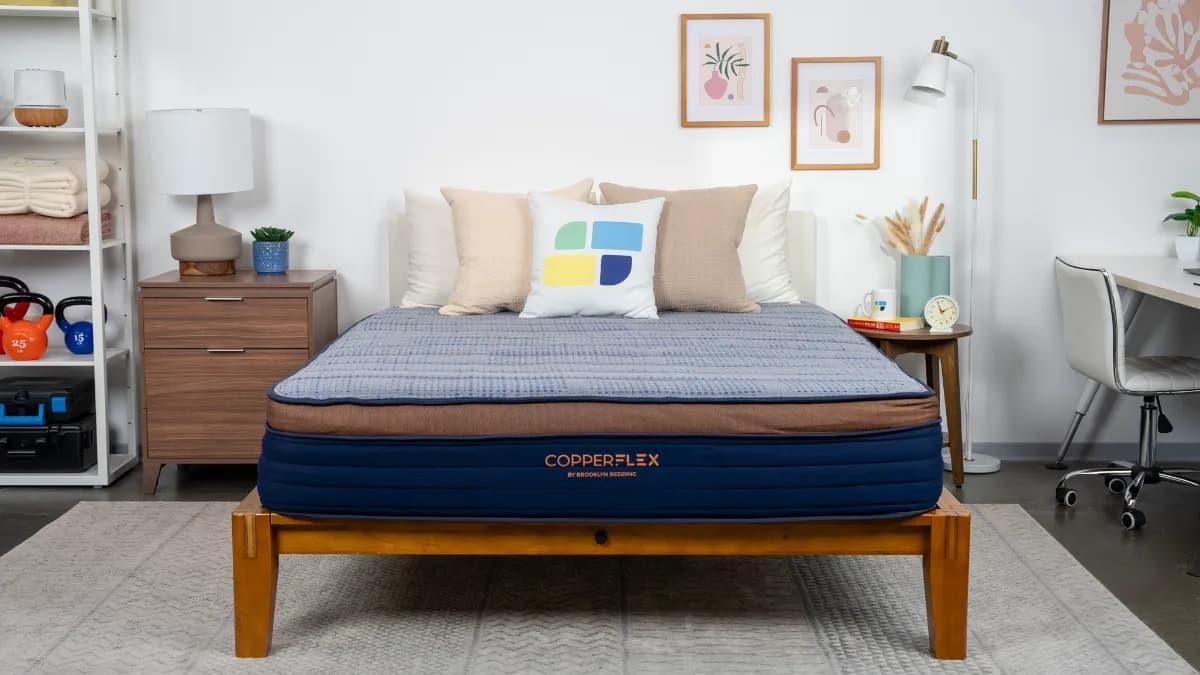
The CopperFlex Memory Foam is built with six different foam layers, including copper-infused memory foam, and has a medium firm (6) feel. We found that it provided high-level pressure relief without excessive sinkage. This balanced design felt comfortable to most of our testers, especially side and back sleepers.
About the Brooklyn Bedding CopperFlex Memory Foam
Best Affordable Mattress in 2026
8.8/10Test Lab Score
Brooklyn Bedding CopperFlex Memory Foam
An all-foam mattress that hugs and soothes pressure points for restful sleep.
The Brooklyn Bedding CopperFlex Memory Foam has six interior layers and measures 12 inches tall. It has a medium firm feel that rates as a 6 on our firmness scale of 1 to 10 (with 10 being the firmest).
The mattress begins with 1 inch of polyfoam quilted into the knit polyester cover. This polyfoam adapts to your body but doesn’t feel overly soft. The next layer is 1.5 inches of memory foam infused with copper, a feature designed to reduce heat buildup. The third layer is .75 inches of responsive polyfoam.
This mixed-foam combination provides moderate contouring to help redistribute pressure away from your joints. At the same time, it has a bit of bounce and keeps your body from sinking in too deeply.
The next two layers consist of transitional polyfoam, and collectively measure 3.75 inches thick. The second layer is zoned to feel denser beneath the lower back. The support core consists of high-density base foam measuring 5 inches thick.
In our testing, the CopperFlex Memory Foam received its highest ratings from side sleepers between 130 and 230 pounds, although it also earned praise from side sleepers in other weight groups. Back sleepers up to 230 pounds and stomach sleepers under 130 pounds found the mattress comfortable and supportive, as well.
How We Determine Our Mattress Rankings
Our Performance Criteria
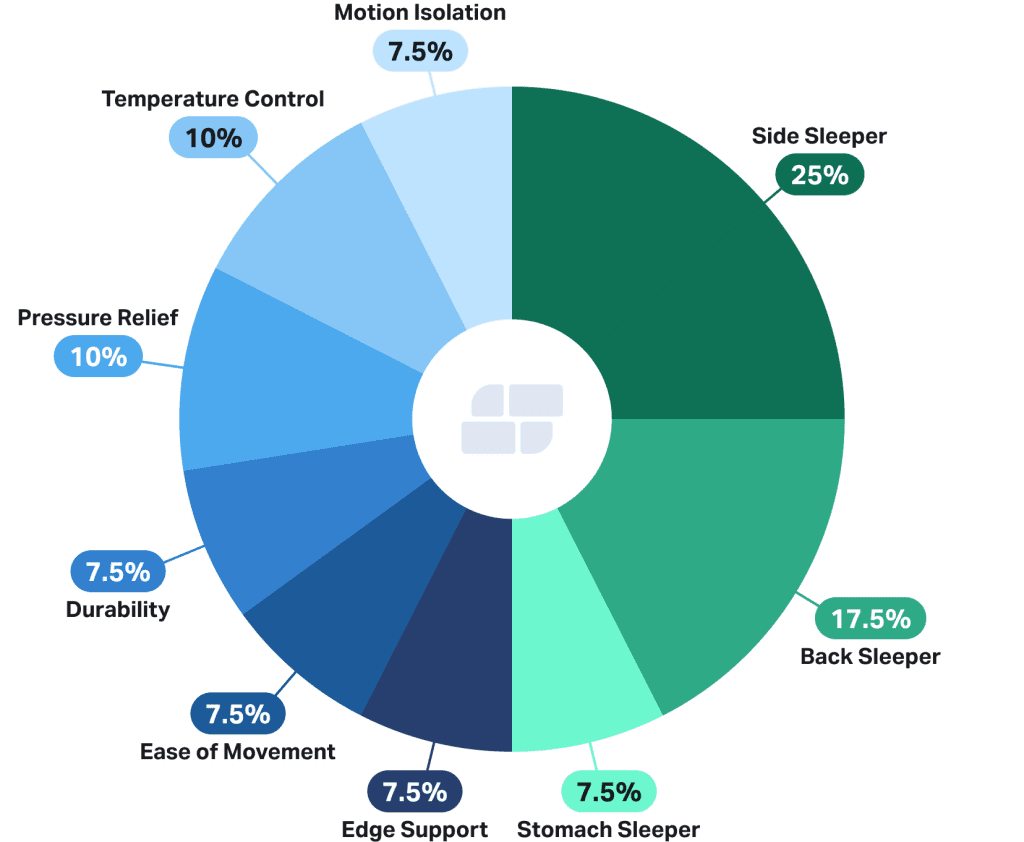
Our Test Lab follows a detailed methodology for every mattress we evaluate. We use various tools and technology to gather data while real people perform the hands-on testing. This process lets us formulate ratings in a number of essential categories.
- Motion isolation: This category refers to how much motion you can feel when someone moves on the other side of the bed. We use a special tool called a vibrometer to measure the intensity of this motion transfer on each mattress. This category is most important to couples, especially if one or both of the sleepers are easily awakened.
- Temperature control: We use temperature sensors to measure how fast a mattress cools down after it’s been used. A mattress that can dissipate heat quickly will help prevent you from sleeping hot.
- Pressure relief: A great mattress redistributes pressure rather than letting it build up around joints or other hot spots. We evaluate pressure relief using a pad embedded with tiny sensors, which measure pressure points in different areas of the tester’s body. This allows us to assess how well the mattress reduces pressure for different body types and sleep positions.
- Durability: We don’t have the luxury of testing mattresses for years on end, so we make estimates about durability based on detailed analyses of each bed’s construction and materials. We also gather data from real-world users. A good mattress should perform well for roughly 6 to 8 years of regular use before it needs to be replaced.
- Ease of movement: This category refers to all movements on a mattress, including sleep position changes, tossing and turning, or intimate activities. To rate ease of movement, we place a kettlebell on the mattress and then remove it. That shows both how deeply the kettlebell sinks and how fast the mattress rebounds. Less sinkage and a springier response typically mean easier movement across the surface.
- Edge support: We test edge support with both weights and actual people. Putting a weight near the perimeter lets us measure sinkage in a controlled way, but we also have people lie down and sit close to the edges. A sturdy perimeter matters most to people with limited mobility and those who regularly sit on their bed (like when putting on their shoes).
- Off-gassing: Mattress materials like foam can off-gas volatile organic compounds (VOCs) that get sealed in when the mattress is packaged for shipping. These VOCs get released when you open the mattress and can give off a bothersome chemical odor for people who are smell-sensitive. We open each mattress in a closed room and ask our testers to give a rating for the smell while also checking to see how long until the odors have dissipated.
These categories are just part of our testing. We also have people with varying body weights and sleep positions use the mattress and share their feedback. This gives us insight into how well a mattress provides comfort and support to different sleepers, and you see that insight reflected in our recommendations.

Our Selection Process
We’ve got a lot of mattresses in our database of test results — more than 2,000, in fact. Our first step in choosing the best affordable mattress was to create a list of options that cost less than $1,000 in most sizes.
From there, we revisited our lab test results and reviews from field testers. This allowed us to cut the list down to 40 mattresses. We then did a deeper dive into this short list, including fresh hands-on testing to focus on a few key factors.
- Materials: “Affordable” shouldn’t be synonymous with “low quality.” While a budget-friendly mattress might not have a lot of bells and whistles, it should still be solidly built.
- Performance: We looked at performance across the board, identifying mattresses that could meet the core sleep needs of most people. We also ruled out options with extremely weak performance in any given category.
- Value and durability: We wanted our top pick to offer great return on investment, which means a strong likelihood of lasting for at least 6 to 8 years.
Taking all these factors into account, we narrowed down the list to a handful of top models. After some debate, we chose the CopperFlex Memory Foam as our best overall affordable mattress winner.
Why the Brooklyn Bedding CopperFlex Memory Foam Won
It’s rare to find a mattress at an affordable price-point that performs as well as the CopperFlex Memory Foam. The mattress is made with quality foams that relieve pressure around the hips and shoulders, which is especially important for side sleepers.
Our Test Lab also gave the CopperFlex Memory Foam strong ratings for motion isolation, which makes it a compelling option for couples. Its durable construction should help it maintain solid performance over time, adding to its overall value.
As an extra benefit, the CopperFlex Memory Foam comes with a 365-night sleep trial. This helps protect your investment by giving you plenty of time to make sure that this mattress works for you. Your purchase is also covered under a lifetime warranty against various manufacturing defects.

Still have questions? Ask our community!
Join our Sleep Care Community — a trusted hub of product specialists, sleep health professionals, and people just like you. Whether you’re searching for the perfect mattress or need expert sleep advice, we’ve got you covered. Get personalized guidance from the experts who know sleep best.
Logan is a Certified Sleep Science Coach with a deep understanding of what it means to struggle with sleep. Her years of experience researching and testing sleep products – including mattresses, natural sleep aids, and bedding – are critical to her role helping lead the editorial team. When she’s not testing mattresses or researching CBT-I, she enjoys spending time in the sunshine with her husband and her dogs Pepper and Winston.