
When you buy through our links, we may earn a commission. Products or services may be offered by an affiliated entity. Learn more.
Best Mattress Toppers for College Dorm Bed of 2026

College dorm beds aren’t known for their comfort, but it’s hard to justify spending money on a mattress that might only see a couple of years of use. Another solution is a mattress topper. A mattress topper can go a long way toward improving the performance of a college dorm bed without the need to invest in a whole new mattress.
There are multiple factors to consider when choosing a mattress topper. Toppers come in various types of materials, which can affect their ability to cushion and support the body, regulate temperature, and provide an inviting sleep surface. The topper also interacts with the mattress below, which is something to keep in mind when evaluating the firmness level.
We’ve rounded up a list of our top picks for mattress toppers for dorm beds in order to help students get the all-important rest they need for success in college.
Our Top Picks
Best Overall
:Sleepyhead Gel Topper
Shop Now
Best Value
:ViscoSoft Select High Density Mattress Topper
Shop Now
Most Comfortable
:Helix GlacioTex Premium Mattress Topper
Shop Now
Best Luxury
:Saatva Graphite Memory Foam Mattress Topper
Shop Now
Best Cooling
:Sleepyhead Super Topper
Shop Now
Best Eco-Friendly
:Birch Plush Organic Mattress Topper
Shop Now
Best Pressure Relief
:Tempur-Pedic TEMPUR-Cloud Topper
Shop Now
Best for Spinal Alignment
:Brooklyn Bedding CopperFlex 201 Mattress Topper
Shop Now
Best for Side Sleepers
:Layla Memory Foam Topper
Shop Now
Looking at Other Mattresses? Explore Our Mattress Ratings Database
Browse and compare mattress info and our hands-on Test Lab ratings for many of the most popular mattresses on the market.
Learn More About Our Top Picks
Best Overall
8.9/10Test Lab Score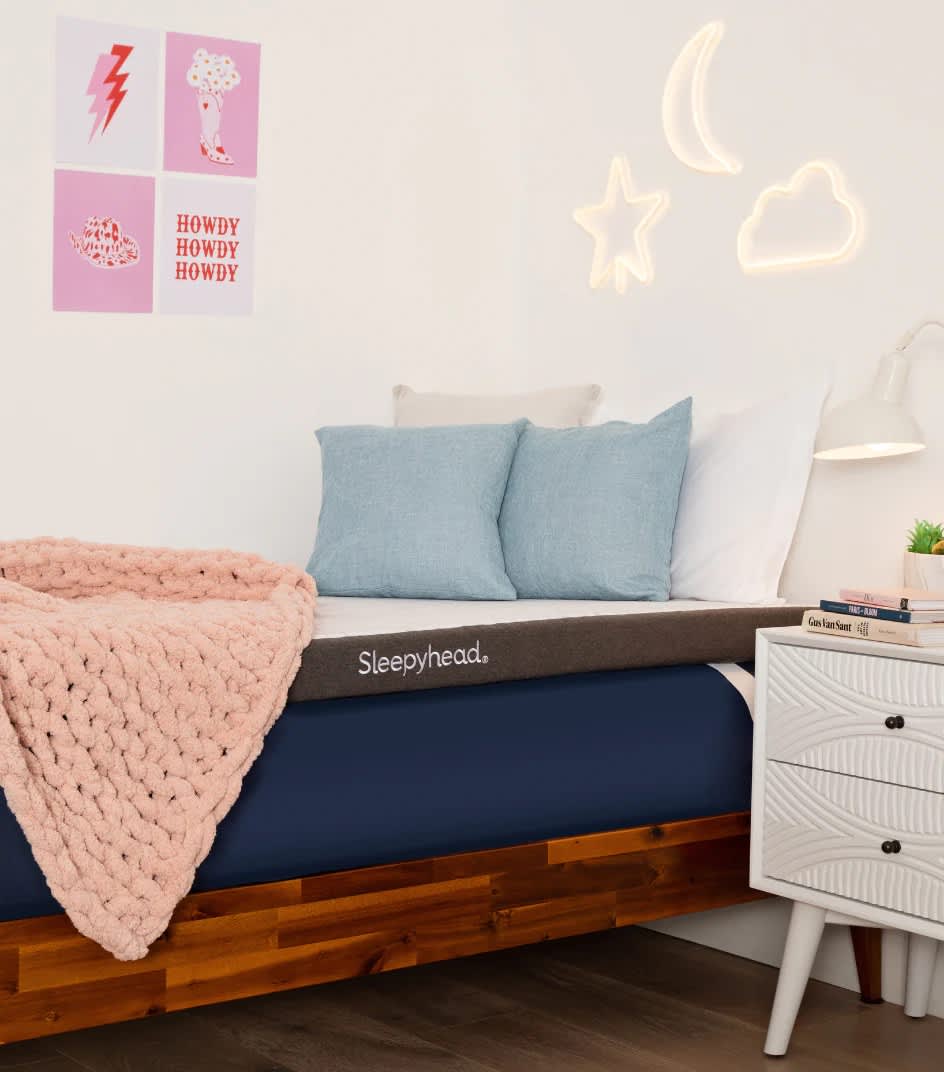
Sleepyhead Gel Topper
Full Breakdown
Many mattress toppers are perfectly suitable for dorm beds, but the Sleepyhead Gel Topper was designed specifically for this purpose. You can choose from five sizes, as well as 2-inch and 3-inch profiles depending on how much cushioning you need to sleep soundly.
How It Performed
During our hands-on tests, most of our team members enjoyed the Gel Topper but differed in their opinion about which profile was most comfortable. Our side sleepers preferred the deep contouring and extra padding of the 3-inch model, which is slightly softer and more adaptive than the 2-inch. Back and stomach sleepers received a bit more support from the lower profile.
Temperature control tests revealed above-average cooling compared to other memory foam toppers we’ve evaluated. This can be attributed to the open-cell structure of the foam and cooling gel infusion, both of which help the topper’s core resist heat buildup. We also found the topper effective at distributing weight and promoting even alignment, which in turn can reduce soreness and pressure points along the spine for sleepers who frequently experience upper or lower back pain.
What It’s Made Of
The Gel Topper’s core contains solid memory foam measuring 2 or 3 inches thick, depending on which profile you choose. A knit polyester cover encases the foam. You may remove and machine wash the cover whenever it needs to be cleaned. Each corner features a thick elastic strap for securing the topper to your mattress, so there shouldn’t be too much shifting when you toss and turn or change sleep positions. Twin, twin XL, full, and full XL sizes are available, as are a queen and king options for dorm residents with private rooms or people who live off-campus.
All current students receive a 10% discount with their purchase. Standard ground shipping is free of charge, and all orders include a sleep trial that runs for 60 nights. Sleepyhead’s “Good Till Graduation Warranty” covers structural and material defects in the Gel Topper for up to 5 years after the purchase date.
Best Value
8.5/10Test Lab Score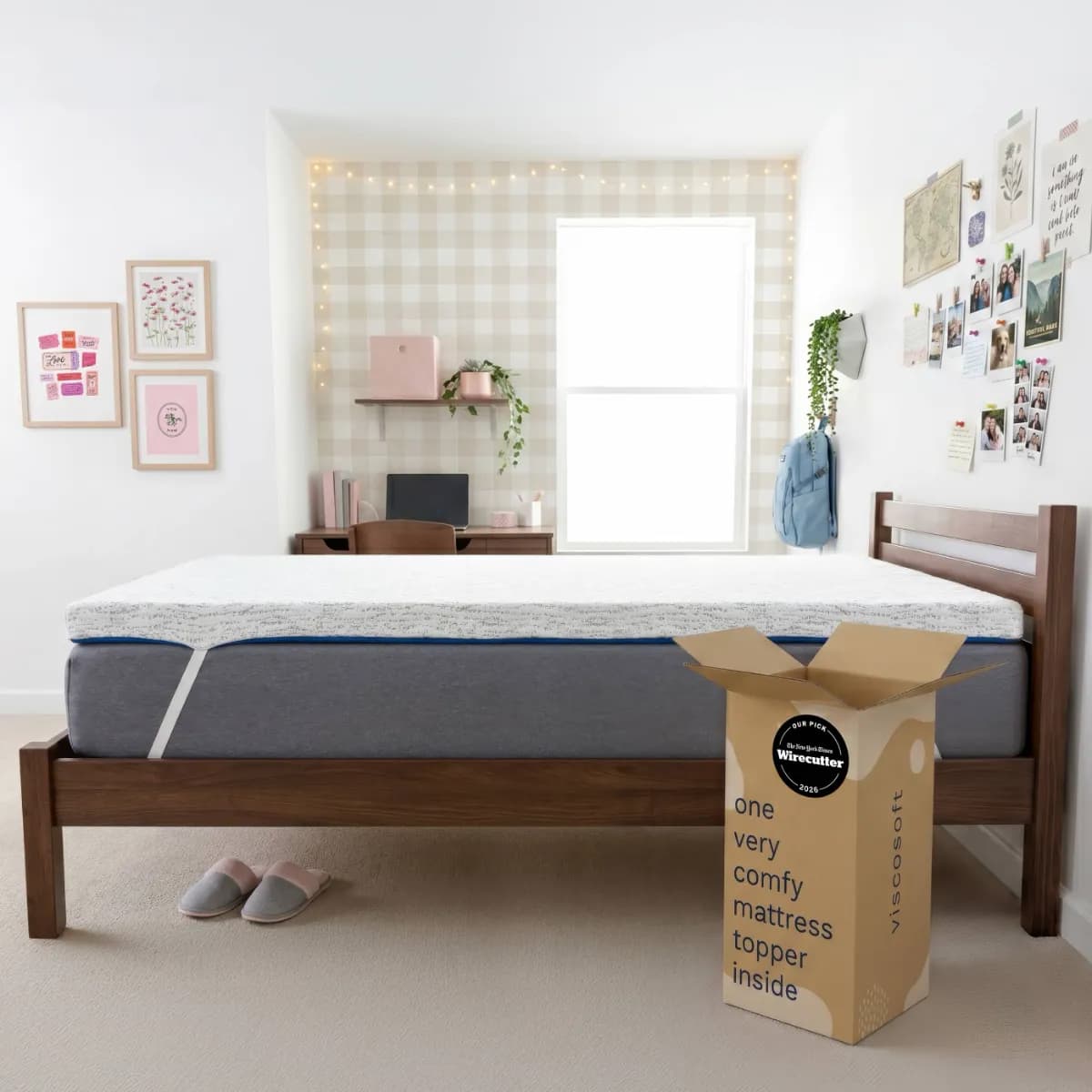
ViscoSoft Select High Density Mattress Topper
Full Breakdown
Available in 2-inch, 3-inch, or 4-inch models, the Viscosoft Select High Density Mattress Topper consists entirely of memory foam and has a medium firm (6) firmness level. The breathable cover and gel-infused foam are designed to mitigate heat retention.
How It Performed
Side and back sleepers on our testing team found that this memory foam topper contoured to the hips and shoulders, reducing pressure and supporting spinal alignment. Its performance was especially well-suited to side sleepers who weigh between 130 and 230 pounds and back sleepers under 230 pounds.
Testers on our team also found the topper outperformed the average memory foam topper in terms of temperature regulation. The topper’s gel-infused foam is intended to prevent heat from collecting in the foam, and tiny holes in the foam are designed to provide ventilation so that heat can escape out and away from the sleeping surface.
Memory foam makes virtually no noise when bearing weight. Additionally, with its medium firm (6) feel, sleepers didn’t perceive that they were sinking too deeply into the topper.
What It’s Made Of
The Viscosoft Select High Density Mattress Topper is made with gel-infused memory foam. Viscosoft offers the option of a 2-inch, 3-inch, or 4-inch profile, all of which have a medium firm (6) feel. Given its thicker foam layer, the 4-inch model may be a better fit for people who have sharp pressure points.
The topper has a breathable cover made with rayon derived from bamboo. To make cleaning easier, the cover is removable and machine-washable. It’s also equipped with adjustable straps as well as an anti-slip mesh bottom. Viscosoft offers upgraded topper options infused with lavender or charcoal intended to enhance other aspects of the topper’s performance.
Our testing showed that the Viscosoft Select High Density Mattress Topper can meet the needs of most students who are looking for a truly comfortable topper that can also offer solid support. The topper is backed by a 90-night sleep trial and a five-year warranty. Toppers ship free to the contiguous U.S.
Most Comfortable
8.8/10Test Lab Score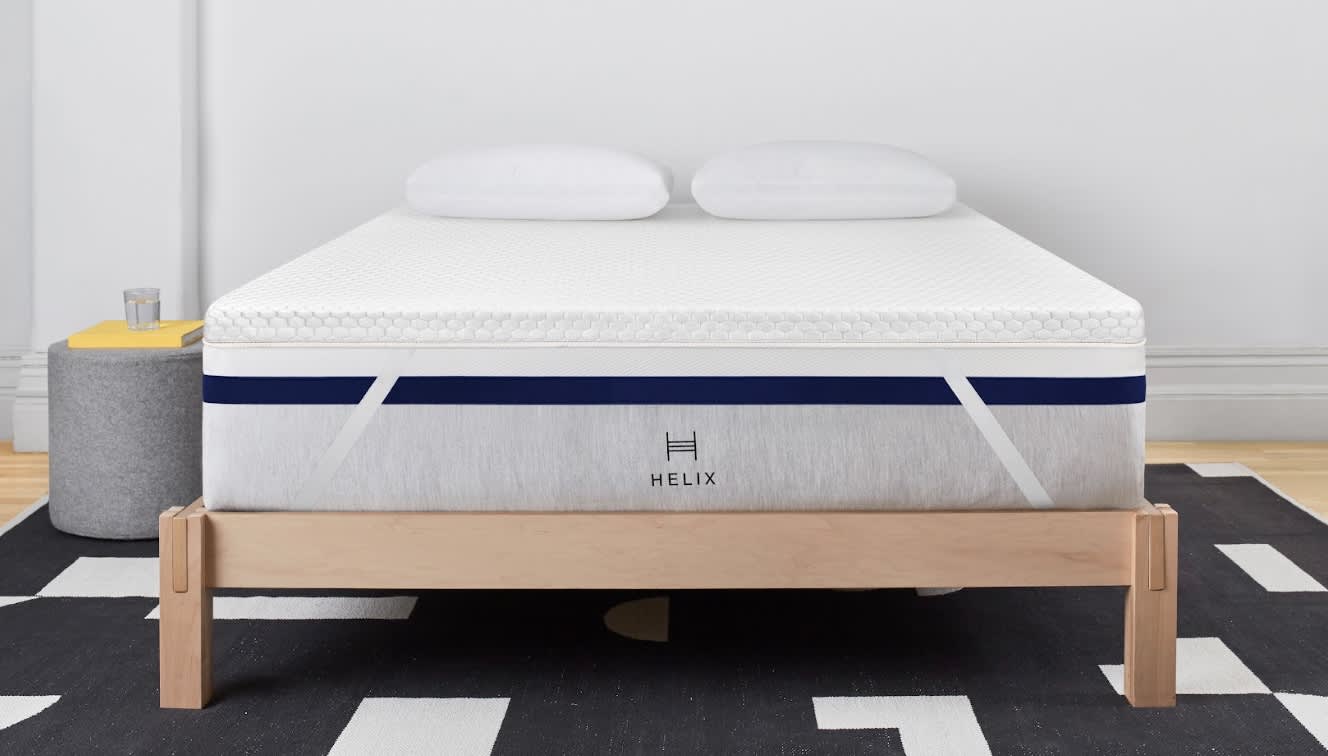
Helix GlacioTex Premium Mattress Topper
Full Breakdown
Topper shoppers should follow a straightforward rule of thumb — the thicker the profile, the more comfortable your current mattress will feel. Measuring nearly 4 inches thick, the Helix GlacioTex Premium Mattress Topper is one of the thickest models on the market and highly suited for people with mattresses that are nearing retirement. The topper contains foam and microcoil layers that deliver deep cushioning and contouring, while the cover is engineered to feel cool to the touch at all times.
How It Performed
The topper is available in two firmness levels. After testing both, our team has determined the medium soft (4) model is ideal for side and back sleepers who weigh less than 130 pounds. This option may also work if your mattress has heavy wear and tear. The medium firm (6) design is a better fit for back and stomach sleepers who weigh 130 to 230 pounds, and side sleepers who weigh at least 130 pounds.
The GlacioTex cover is effective at reducing heat buildup in the top foam layer, while air flows freely through the microcoil layer to help the topper maintain a comfortable temperature for sleep. These qualities are key for hot sleepers. Since the topper is thick, padded with foam, and not very responsive, we also recommend it for couples who value motion isolation in their sleep surface.
What It’s Made Of
The topper consists of three layers, beginning with 1.5 inches of adaptive polyfoam that molds closely to the body. Pocketed microcoils make up the middle layer. While there’s a light bounce, the coils won’t respond to movement or generate much motion transfer when you change sleep positions. The bottom layer consists of high-density base foam for added stability.
A cover made of proprietary GlacioTex fabric encases the topper. This material dissipates body heat on contact to keep you cool. Elastic straps in each corner secure the topper to your mattress. At 3.75 inches thick, the topper has a much higher profile than most competing models sold today.
The sticker price is fairly high, but this topper may be worth the investment if you’re losing sleep due to an uneven sleep surface. Helix also offers free ground shipping throughout the contiguous U.S. Each order includes a 100-night sleep trial, and the GlacioTex Premium Mattress Topper is further backed by a one-year warranty against manufacturing defects.
Best Luxury
8.6/10Test Lab Score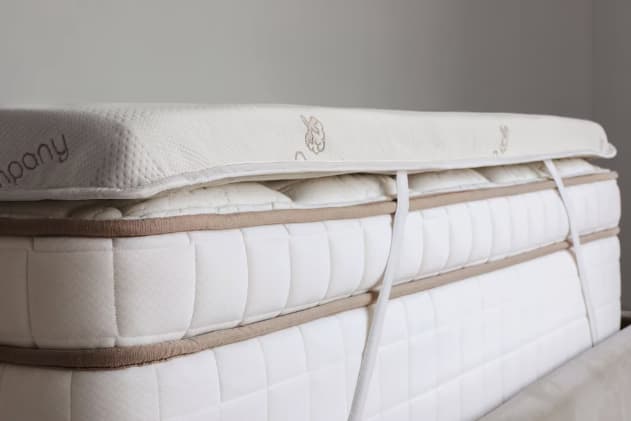
Saatva Graphite Memory Foam Mattress Topper
Full Breakdown
Saatva’s reputation for luxurious sleep products extends beyond the brand’s mattress line. Take the Graphite Memory Foam Mattress Topper, which boasts high-quality construction and thoughtful detailing to help you sleep comfortably on any dorm mattress — even those with deep impressions and indentations.
How It Performed
The topper measures 3 inches thick and has a medium soft (4) feel. As such, it received favorable ratings from our side sleepers weighing up to 230 pounds and our back and stomach sleepers under 130 pounds. We also found that the topper alleviates pressure well, and is a good fit for people with chronic or frequent aches and pains in sensitive areas along their spines.
Stability is another strength. Thick straps in each corner secure the topper to your mattress and prevent it from shifting during the night, even when you change positions or toss and turn. And while the foam may retain some warmth, the graphite infusion and breathable cover should reduce heat buildup to help you stay reasonably cool.
What It’s Made Of
The topper’s core features a top layer of memory foam and a high-density polyfoam base. Graphite infused into the memory foam is intended to dissipate heat from the surface. A cover made of organic cotton encases the topper. Each corner is equipped with a thick elastic strap, and the fabric is treated with Guardin antimicrobial agent to stave off bacteria and keep your sleep area hygienic.
The Graphite Memory Foam Mattress Topper is somewhat expensive, but Saatva offers free ground delivery and a 180-night trial period with all orders. Those who keep the topper also receive a manufacturer’s warranty covering various defects for up to one year.
Best Cooling
8.8/10Test Lab Score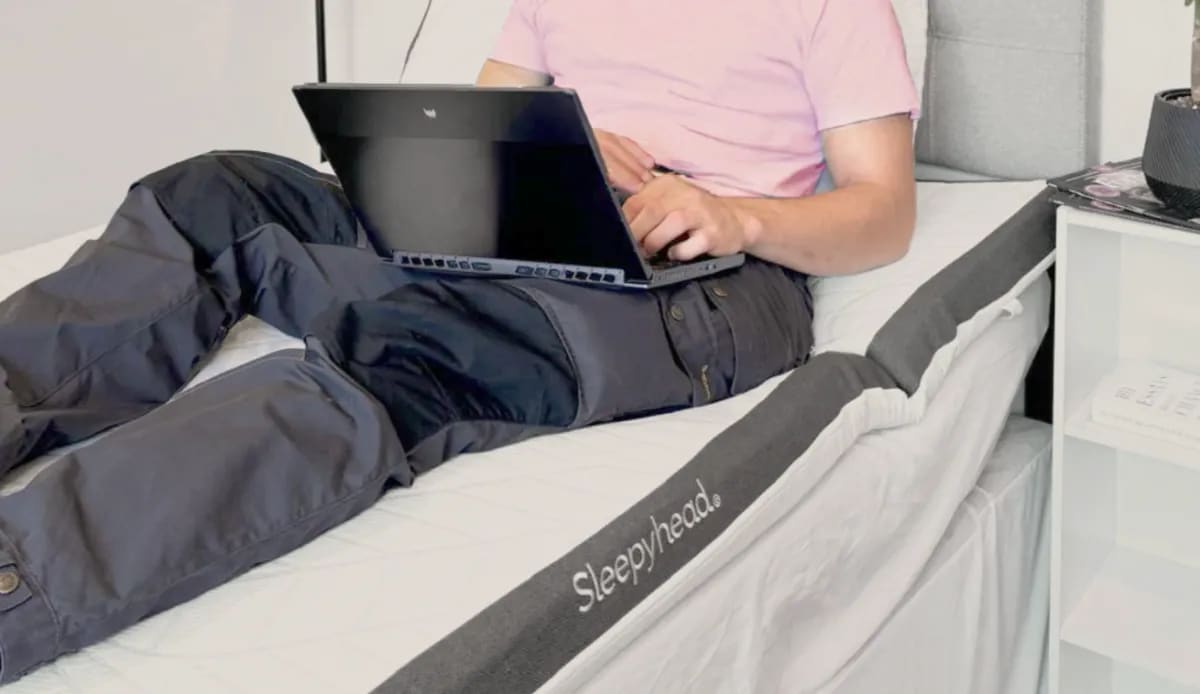
Sleepyhead Super Topper
Full Breakdown
If you’re a hot sleeper hoping to soften up your dorm bed, the Sleepyhead Super Topper sleeps cool and feels luxuriously plush. A specialty cover made of ultra-breathable fabric helps to dissipate heat away from the topper’s surface, while a copper-gel infusion cools down the memory foam core. This construction allows you to enjoy the slow sink and close contour of memory foam without excessive warmth.
How It Performed
The Super Topper is available in two thickness profiles, each with a different firmness level. The 2-inch model, which has a medium (5) feel with moderate cushioning and contouring, received praise from most of our team’s side sleepers up to 230 pounds and back sleepers under 130 pounds. This profile is best suited to mattresses with moderate wear and tear.
The 3-inch topper is medium soft (4) and provides close conforming for a deep cradling effect. Side sleepers under 130 pounds were most impressed with this design, which is plush enough to improve the feel of almost any mattress — even a model with heavy surface indentations.
What It’s Made Of
The Supper Topper contains solid memory foam engineered to soften when it touches heat and respond slowly to your movements. This creates a cloud-like surface that can significantly change how soft your mattress feels. Copper and gel infused into the foam help the topper stay cool. A smooth fabric cover encases the foam.
Each corner is equipped with a thick elastic strap to secure the topper to your mattress. This prevents shifting and bunching when you move or change sleep positions during the night. You may remove and machine-wash the cover whenever it needs to be cleaned. A wide range of sizes is available for the 3-inch topper, but the 2-inch model is exclusively sold in a twin XL “college” size.
Standard shipping is free of charge within the contiguous U.S., and current students and military personnel receive a discount on their order. The Sleepyhead Super Topper is backed by a 5-year warranty.
Best Eco-Friendly
9.1/10Test Lab Score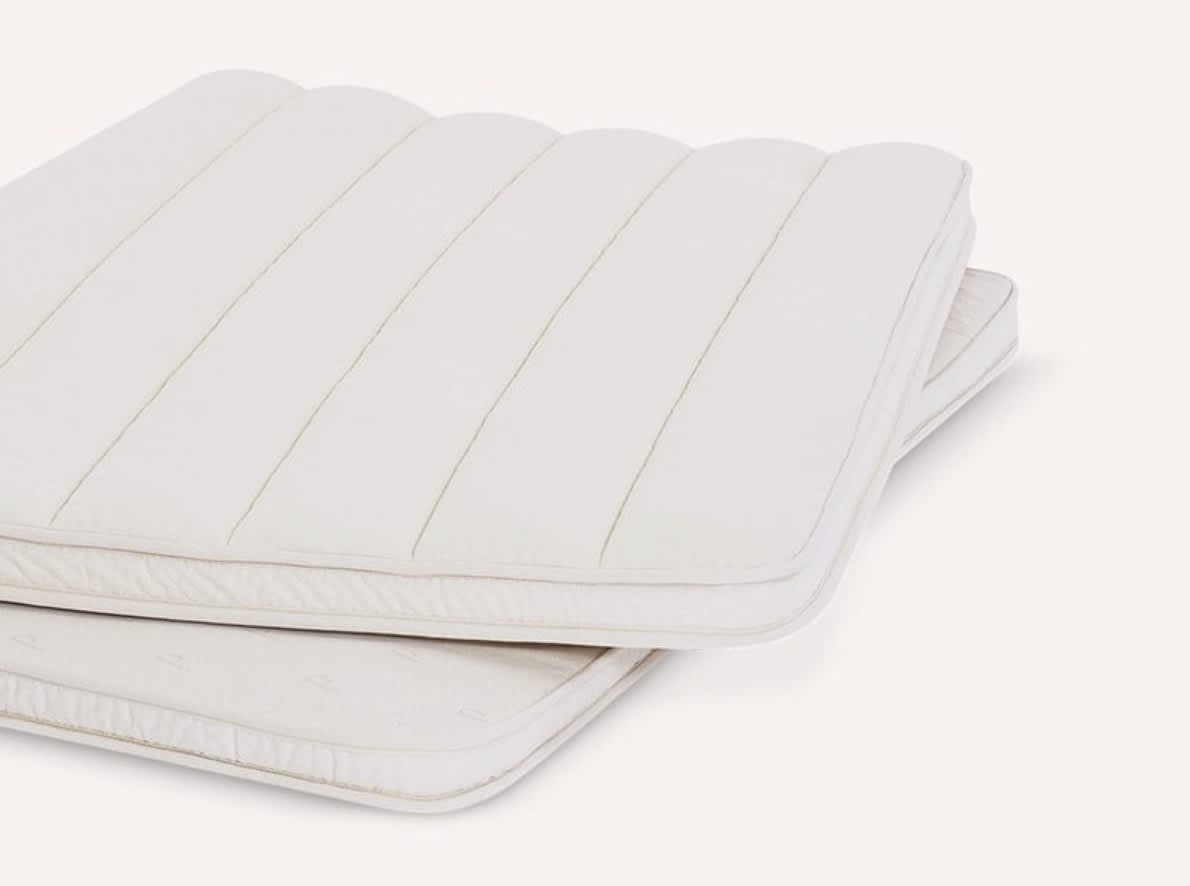
Birch Plush Organic Mattress Topper
Full Breakdown
The Birch Plush Organic Mattress Topper is made with a combination of organic cotton, organic wool, and natural Talalay latex. Its 2-inch profile and medium (5) firmness make it suitable for sleepers of most weights and sleeping positions.
How It Performed
Side, back, and stomach sleepers on our team all rated the Birch Plush Organic Mattress Topper highly. With a medium (5) firmness, the topper relieves pressure points without sinking or sagging. The topper performed best for those under 230 pounds. However, since latex does not compress as much as memory foam, stomach sleepers and those over 230 pounds still received a modest amount of support despite the topper’s firmness level.
Unsurprisingly, the topper excelled at resisting heat buildup thanks to its airy cotton cover and layers of breathable wool and ventilated Talalay latex. Latex also has a natural bounce that facilitates movement on top of the bed. This is helpful for those who frequently change sleeping positions, and it is also a desirable trait for sex.
What It’s Made Of
The Birch Plush Organic Mattress Topper is crafted with an organic cotton cover lined with organic wool fibers that add softness and double as a fire retardant, eliminating the need for fire-repellent chemicals. Cotton and wool are highly breathable, and wool has a naturally resilient structure that adds a subtle springiness.
The bulk of the topper is made with natural Talalay latex, a material that can accommodate pressure points while maintaining bounce and responsiveness. Altogether, the topper measures approximately 2 inches thick and has a medium (5) firmness level.
This topper is most compelling for people who want a topper with eco-friendly materials, including materials with certifications from the Global Organic Textile Standard (GOTS) and Greenguard Gold. It is also a top choice for people who want a topper made with latex instead of foam. For each topper, Birch Living offers free shipping, a 100-night sleep trial, and a 10-year warranty.
Best Pressure Relief
8.7/10Test Lab Score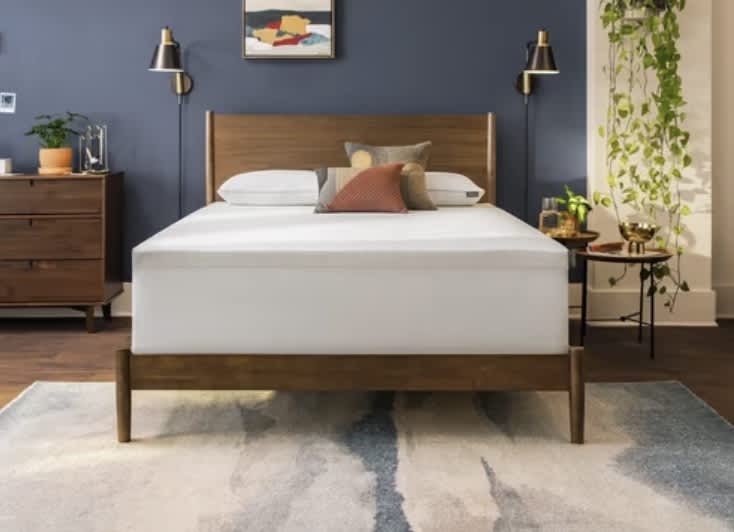
Tempur-Pedic TEMPUR-Cloud Topper
Full Breakdown
The Tempur-Pedic TEMPUR-Cloud Topper offers excellent value for dorm residents thanks to its approachable sticker price and long expected lifespan. Proprietary TEMPUR memory foam is renowned for its durability and lasting power — you could potentially use this topper for the duration of your college years, and beyond.
How It Performed
Our team was greatly impressed with the TEMPUR-Cloud Topper. Measuring 2 inches thick, the topper provides noticeable cushioning and contouring without the deep hug we’ve encountered with thicker memory foam toppers. Side and back sleepers on our team weighing up to 230 pounds found the topper especially comfortable.
Ease of care is a big plus. The stretch-knit cover can be machine-washed and dried whenever a cleaning is needed. We also recommend the TEMPUR-Cloud Topper to anyone with frequent or chronic back pain, as well as couples looking for an extra layer to isolate movement and prevent motion transfer during the night.
What It’s Made Of
The topper contains 2 inches of TEMPUR memory foam, a high-density material that resists wear and tear over time. A cover made of polyester and polypropylene encases the foam and can be pulled around the corners of your mattress like a fitted sheet. The cover is fully machine-washable, but the foam should only be spot cleaned with a damp cloth if stains or smudges occur.
Tempur-Pedic offers free ground shipping for customers in the contiguous U.S. There is no trial period for the TEMPUR-Cloud Topper, so all sales are final, but your order comes with a manufacturer’s warranty that covers material defects for up to 10 years.
Best for Spinal Alignment
8.6/10Test Lab Score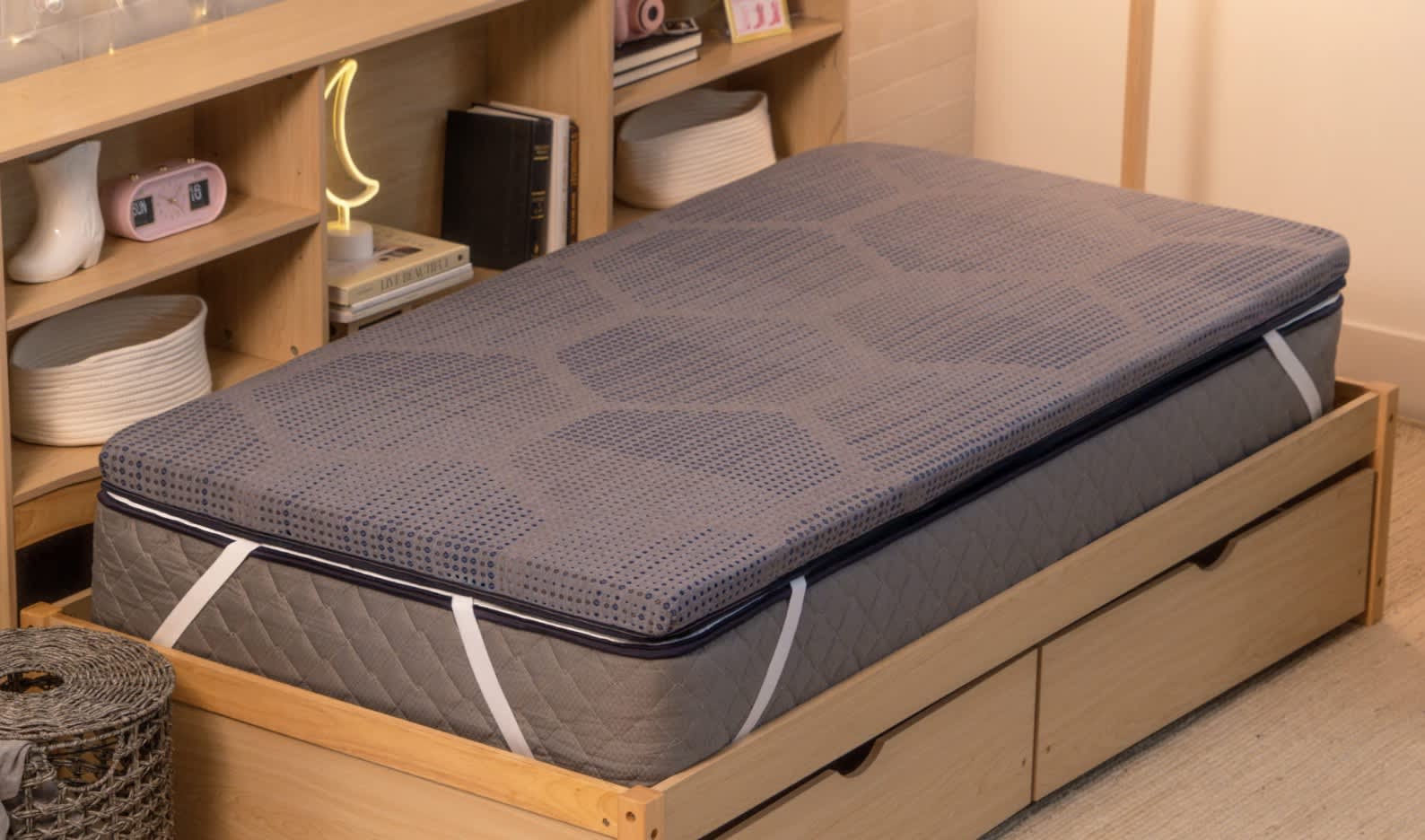
Brooklyn Bedding CopperFlex 201 Mattress Topper
Full Breakdown
For years, Brooklyn Bedding has offered a wide range of wallet-friendly mattress toppers to go along with their extensive mattress line. The CopperFlex 201 is the brand’s first topper specifically geared toward dorm-dwellers. Built on a 2-inch profile, the topper provides just enough padding to make the mattress feel more comfortable without making the sleep surface too thick – this is especially handy for students who sleep in bunk beds and loft-style frames.
How It Performs
The CopperFlex 201 is medium firm (6), so it contours to a minimal extent. Our hands-on tests show the topper is a great fit for side sleepers who weigh at least 130 pounds, and back and stomach sleepers up to 230 pounds. The memory foam forms a cradle around your entire body, which helps improve alignment and prevent the pressure buildup that can easily occur on an indented mattress.
What It’s Made Of
The topper contains 2 inches of CopperFlex memory foam, a proprietary material designed to conform to the body without trapping too much heat. A knit cover encases the foam, adding a bit of extra softness to the surface. Each corner is equipped with a thick elastic strap to secure the topper to your mattress and prevent it from shifting or sliding during the night. The topper is available in all six standard mattress sizes.
In addition to its accessible pricing, the CopperFlex 201 Mattress Topper qualifies for free ground shipping throughout the contiguous U.S. Students also receive an additional 5% off their purchase in addition to Brooklyn Bedding’s current discounts. You can test out the mattress for up to 30 nights after the delivery date. Should you decide to keep the topper after the return period ends, Brooklyn Bedding further backs each purchase with a 3-year manufacturer’s warranty.
Best for Side Sleepers
7.6/10Test Lab Score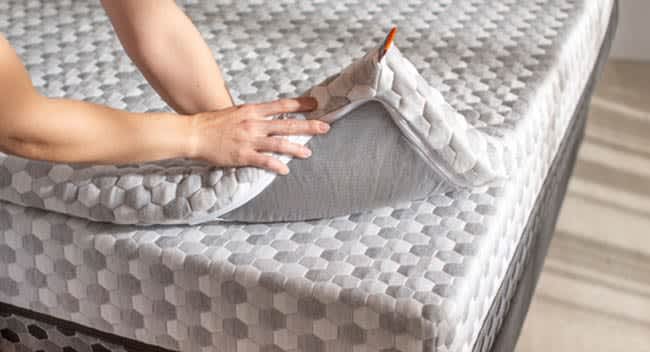
Layla Memory Foam Topper
Full Breakdown
Made with plush memory foam, the Layla Memory Foam Topper helps cradle the body and cushion pressure points. Design elements like copper gel-infused foam and a ThermoGEL agent in the cover are included to promote temperature neutrality.
How It Performed
In our testing, the Layla Memory Foam Topper stood out for pressure relief, particularly when our testers were sleeping on their side. Side sleepers often experience bothersome impact near the hips and shoulders, which bear most of the weight in this position. The plush memory foam helped hug and cushion these areas, especially for people who weigh under 130 pounds. While some people over 130 pounds also liked this topper in our testing, others found it to be too soft.
Back sleepers on our team who weigh under 130 pounds also rated the Layla Memory Foam Topper well, noting that it provided even conforming with just the right touch of support to prevent lower back pain. Back sleepers over 130 pounds and most stomach sleepers found the memory foam to have too much sink.
Like most memory foam toppers, the Layla effectively absorbed motion and noise. In our tests, the cooling features also did their job, helping attenuate the heat buildup that is common with traditional memory foam.
What It’s Made Of
The Layla Memory Foam Topper is built with 2 inches of memory foam with a soft (3) firmness level. Copper gel is infused into the memory foam with the goal of keeping heat from building up around the sleeper. At just 11 pounds for a twin size, the Layla Mattress Topper is practical and easy to move when changing dorm rooms.
The cover is made with polyester, viscose, and lycra, and it contains a ThermoGEL agent engineered to cool things down when body temperature rises.
For students who want a plush feel to their bed but want to avoid overheating, the Layla Memory Foam topper can deliver impressive results. Layla offers free shipping to the contiguous U.S., and the topper comes with a 120-night sleep trial and a five-year warranty.
How We Test: Rigor, Data, and Sleeper Feedback
Our selection of the best mattress toppers for college dorm beds is carefully curated based on extensive testing and research. For this list, we paid particular attention to features that would be desirable in a college dorm setup, such as portability and ease of cleaning.

All of the toppers on this list have been personally tested by our experienced team. Because body weight and sleeping style can influence the performance of a mattress topper, our testing team includes sleepers with different body types and preferred sleeping positions. We also use pressure mapping and motion sensors to compare the attributes of each topper. These objective tests help us draw a fair comparison between different models.
Our testing team approaches each topper with the same criteria in mind. Since each topper’s suitability depends on a sleeper’s body weight and sleeping position, we rely on feedback from testers with different weights and position preferences. The bulk of our tests are conducted in our Seattle Test Lab, but at-home field testing and real-world customer reviews also play roles in our mattress topper ratings.
To learn more about our testing and rating process, you can check out our mattress topper research methodology page, but here is a quick breakdown:
Construction analysis: We begin our testing process for each topper with an in-depth analysis of its construction and materials. This allows us to gauge qualities like durability, temperature control, and overall comfort for sleeping. We also note the topper’s profile – this helps us determine how effectively the topper improves the feel of a mattress.
Quantitative product testing: During these hands-on lab tests, our team uses a wide range of tools and technology to evaluate toppers for motion isolation, pressure relief, temperature control, ease of movement, and potential for odor emissions. We test each topper on at least three mattresses to see how its materials interact with different sleep surface designs.
Field testing: Our field testers sleep on mattress toppers in their own bedrooms for two to three weeks at a time. They make daily notes and provide detailed ratings after their in-home testing has concluded.
User feedback: Observations from mattress topper owners and users outside our team are important for ensuring fair and objective evaluations. We read surveys, sleep stories, and customer reviews to fine-tune our ratings based on these real-world experiences.
How to Choose a Mattress Topper for a Dorm Bed
College dorm beds are notoriously uncomfortable. Poor sleep can lead to poor mental health, making an already disruptive life transition even more challenging. One of the best ways to combat this discomfort is with a mattress topper.
A mattress topper is a layer of material placed on top of a mattress but below the fitted sheet. They usually run about 1 to 3 inches thick and can do wonders in changing the feel of a bed. There are many toppers on the market and a host of factors to think about when looking for the right mattress topper to bring to college. We’ll walk you through common considerations.
What to Consider When Purchasing a Mattress Topper for a Dorm
Between different materials, budgets, and sleep preferences, choosing the right mattress topper for a dorm bed can be difficult. While no two sleepers have the same needs, all shoppers should consider certain factors when buying a mattress topper for a dorm bed.
Size
When purchasing a mattress topper, it is important to look for an option that matches the size of your dorm bed. Most college dorm mattresses are twin XL size, but this can vary by school. Make sure you know your mattress size before making a purchase.
Price
Mattress toppers can cost anywhere from under $100 to over $400 depending on factors like materials and size. Since most college beds use twin XL mattresses, a dorm mattress topper may fall on the lower end of the average price range.
You can buy a mattress topper from a variety of online and brick-and-mortar stores that sell mattresses. Many mattress manufacturers also sell other sleep products, so you may be able to purchase toppers directly through their websites.
Sleeping Position
The ideal mattress topper for your dorm bed depends on your sleeping position. Back and stomach sleepers traditionally need more support, whereas side sleepers tend to prefer extra contouring.
Thickness
The thicker the mattress topper, the more it can affect the feel of the sleep surface. However, many college dorm beds are lofted, meaning a thicker mattress topper might present safety issues. The Consumer Product Safety Commission requires that the top of a bunk bed guardrail be at least 5 inches above the sleep surface. Keep in mind that adding a topper raises the sleep surface, so you may need higher guardrails. Also, factor in the ceiling height to ensure the sleeper won’t bump their head when they sit up.
If the combined height of your mattress and mattress topper is over 14 inches, you may need deep pocket sheets. In these sets, the fitted sheet has a deeper pocket to accommodate a thicker mattress. However, most dorm mattresses are relatively thin, so it’s unlikely that adding a topper will increase the profile to over 14 inches.
Firmness Level
One of the chief benefits of a mattress topper is that it can alter the feel of your bed, helping to make a firm bed softer and vice versa. The best firmness for you depends on many factors, particularly sleeping position and body type. For example, if you’re over 230 pounds, a firmer mattress topper can add support to promote better posture. On the other hand, if you’re under 130 pounds, softer options should allow you to sink in more for greater pressure relief.
Quality Materials
High-quality topper materials tend to offer better support, comfort, and durability. However, as with many products, premium materials typically cost more. The level of quality necessary for a dorm mattress topper may vary based on your intended usage. If you’re looking for a budget-friendly, temporary fix, quality might not be a high priority. However, if you hope to use the topper for several years, it may be more affordable to purchase a well-made model upfront rather than replacing it every year or two.
Pressure Relief
If a mattress topper provides good pressure relief, that means it redistributes body weight to minimize sore spots. Pressure relief is generally critical for side sleepers since their hips and shoulders often dig into the mattress. Dorm mattresses are usually relatively firm, so many shoppers look for a mattress topper with notable contouring to prevent pressure buildup.
Cooling Properties
A cooling mattress topper is designed to regulate temperature, preventing sleepers from overheating. Temperature control varies between materials. Latex, wool, and open-cell polyfoam are popular for their ability to dissipate heat. While memory foam’s density and close hug tend to trap heat, many manufacturers include specially engineered materials intended to counteract this effect.
Care
Mattress topper care guidelines vary depending on the materials and construction. Most can be vacuumed, sprinkled with baking soda, and then vacuumed again. Carefully follow the manufacturer’s care instructions to prevent damage.
Which Type of Mattress Topper Should I Choose?
The best mattress topper for you depends on a variety of factors, including sleep position, body type, and budget. Different materials are better suited to different needs, so shoppers should understand the basics of each type of mattress topper.
Memory Foam
Memory foam mattress toppers are known for their close-conforming pressure relief. Side sleepers with an overly firm dorm mattress may prefer a memory foam topper to spread their weight more evenly across the surface and promote neutral spinal alignment. The material’s ability to absorb motion may also help reduce mattress and bedframe noises.
Polyfoam
Polyfoam mattress toppers offer responsive conforming without as much hug as memory foam. They also tend to be more affordable, so they’re well suited to college students looking for a boost in comfort without breaking the bank.
Latex
Latex mattress toppers are popular for their buoyancy, durability, and temperature control. Two formulations are available: Talalay latex and Dunlop latex. Talalay latex toppers tend to be light and airy. Side sleepers with a dorm bed that’s too firm may prefer this formulation. Dunlop latex toppers are typically firmer, making them especially well suited to back and stomach sleepers.
Feather and Down
Feather and down mattress toppers are generally soft and plush, making them ideal for people looking to add cushioning to a firm dorm mattress. Feather fill typically offers a bit more support than down, but neither of these materials is known for its support. Therefore, they’re usually not a top choice for back or stomach sleepers.
What Are the Benefits of a Mattress Topper in a College Dorm?
A mattress topper allows a college student to customize their sleep experience by altering the feel, support, and breathability of their assigned mattress. In the process, it can take a generic dorm bed and make it better suited to an individual’s needs and preferences. A topper can do this in a few ways:
- Extra comfort: One of the chief benefits of adding a mattress topper to a dorm bed is added comfort. A mattress topper can enhance softness, support, contouring, or temperature regulation depending on its design.
- Mattress protection: Colleges often charge fees if a dorm mattress is damaged. Toppers provide a layer of protection against wear and tear, which might make it easier to return the mattress in acceptable condition.
- Stronger support: Many dorm beds are thin and rigid, offering minimal support and contouring. A mattress topper can improve pressure relief and promote better spinal alignment to reduce aches and pains.
- Better cooling: Certain mattress toppers can improve air circulation around your body, allowing heat to escape. If a dorm lacks air conditioning, a breathable topper may be critical to overall comfort.
Mattress Topper vs. Mattress Pad
The biggest difference between a mattress topper and a mattress pad is the thickness. Mattress toppers typically run between 1 and 3 inches, whereas mattress pads are much thinner. Both rest on top of the mattress underneath the fitted sheet, but they vary in what they accomplish.
A mattress topper can significantly alter the softness or firmness of a bed. In contrast, a mattress pad adds a bit of cushioning without changing the overall firmness of the sleep surface. While a topper can extend the life expectancy of the mattress by shielding it from general wear and tear, a pad protects against accidents and contaminants.
Because of their different purposes, a mattress topper and a mattress pad pair well together. You can put the topper on the mattress and the pad over the topper. This combination can simultaneously protect the mattress itself and the topper.

Still have questions? Ask our community!
Join our Sleep Care Community — a trusted hub of product specialists, sleep health professionals, and people just like you. Whether you’re searching for the perfect mattress or need expert sleep advice, we’ve got you covered. Get personalized guidance from the experts who know sleep best.
Logan is a Certified Sleep Science Coach with a deep understanding of what it means to struggle with sleep. Her years of experience researching and testing sleep products – including mattresses, natural sleep aids, and bedding – are critical to her role helping lead the editorial team. When she’s not testing mattresses or researching CBT-I, she enjoys spending time in the sunshine with her husband and her dogs Pepper and Winston.
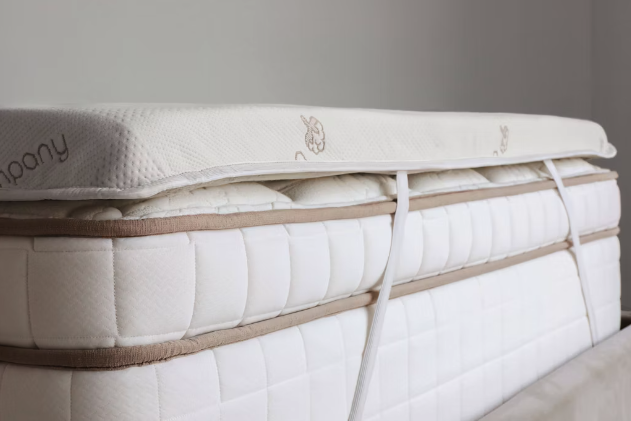
Best Mattress Toppers for Side Sleepers in 2026
Looking for the best mattress topper for side sleepers? We highlight our top picks and…
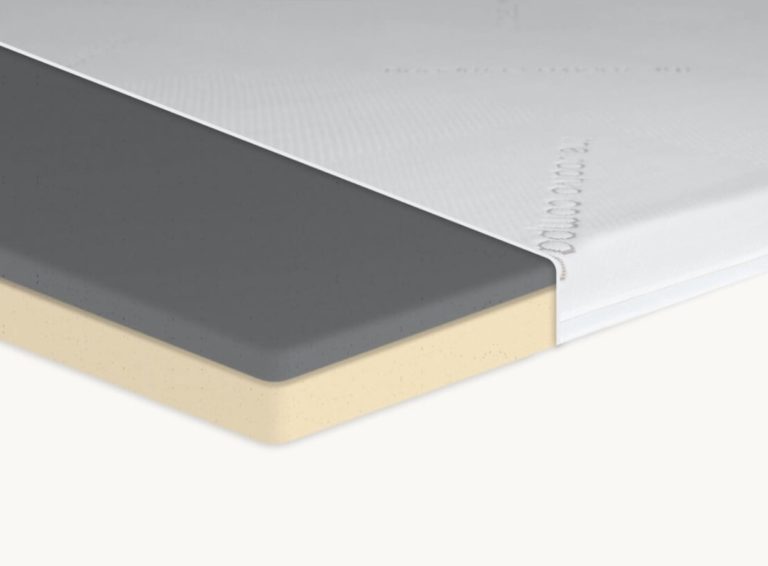
Best Mattress Toppers for Hip Pain of 2026
Hoping to buy the best mattress topper for hip pain? We highlight our top picks…
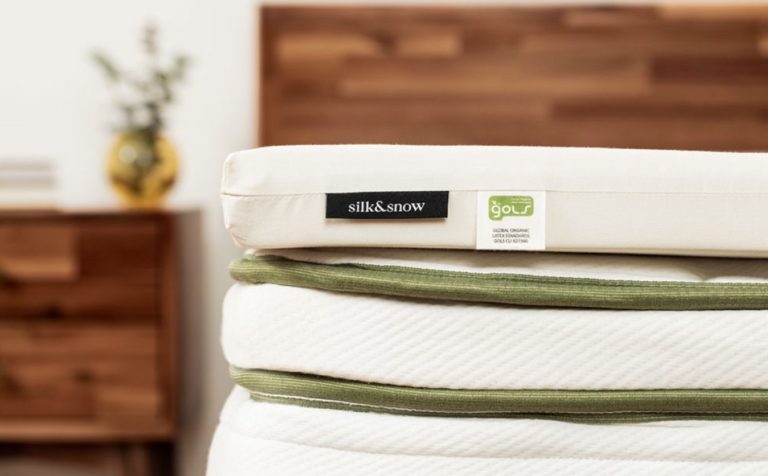
Best Organic Mattress Toppers of 2026
Want to change the feel of your mattress in an eco-friendly way? An organic mattress…