When you buy through our links, we may earn a commission. Products or services may be offered by an affiliated entity. Learn more.

What Happens When You Sleep?


- When you sleep, your brain and body cycle through non-REM and REM sleep, with each stage supporting different aspects of physical recovery, brain function, and overall health.
- During sleep, breathing, heart rate, body temperature, muscle activity, hormone release, and brain activity all change in predictable ways as you move through multiple sleep cycles each night.
- Sleep plays an important role in memory consolidation, immune function, tissue repair, emotional regulation, and other essential processes that support daytime health and performance.
When you sleep, your body undergoes a series of changes that enable the rest that’s vital to your overall health. Sleep allows the brain and body to slow down and engage in processes of recovery, promoting better physical and mental performance the next day and over the long-term.
What happens when you don’t sleep is that these fundamental processes are short-circuited, affecting thinking, concentration, energy levels, and mood. As a result, getting the sleep you need — seven to nine hours for adults and even more for children and teens — is crucial.
Below, we’ll cover what happens during sleep, including how distinct stages of sleep unfold and why sleep is so important for your well-being.
What Are the Stages of Sleep?
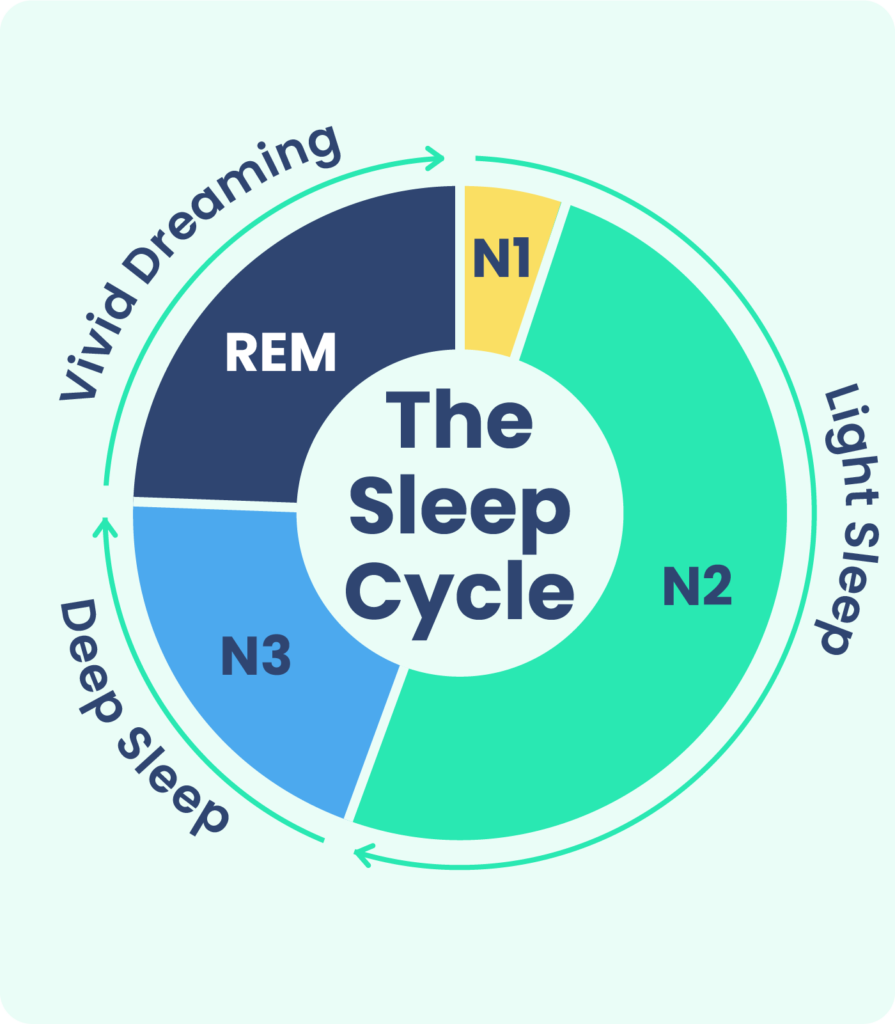
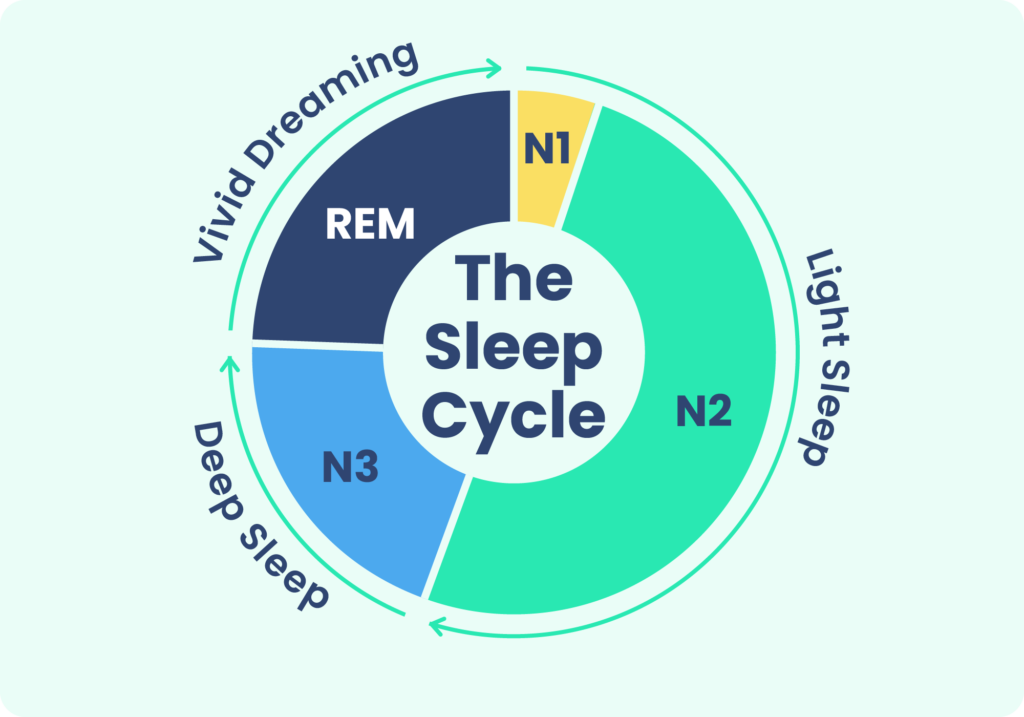
During a normal sleep period, you progress through four to five sleep cycles. Each sleep cycle is made up of four individual sleep stages. These stages are further broken down into two categories: rapid eye movement (REM) and non-REM sleep. These categories are important because what happens during REM sleep is dramatically different from what happens during non-REM stages.
The first three stages of sleep are composed of non-REM activity:
- Stage 1 is short, representing the act of dozing off and transitioning into sleep.
- In Stage 2, the body and mind slow down as you settle into sleep. It’s easiest to be awoken during these first two stages.
- In Stage 3, also known as deep sleep, the body is in recovery mode, slowing down even further. At the same time, overall brain activity slows and shows a tell-tale pattern of pulses of activity that are believed to help prevent unwanted awakenings.
Stage 4 is REM sleep. During REM periods, brain activity shoots back up to levels similar to when you’re awake, which explains why REM is associated with the most intense dreams. While breathing and heart rate increase during REM sleep, most muscles are paralyzed, which keeps us from acting out those vivid dreams.
What Happens to Your Body When You Sleep?
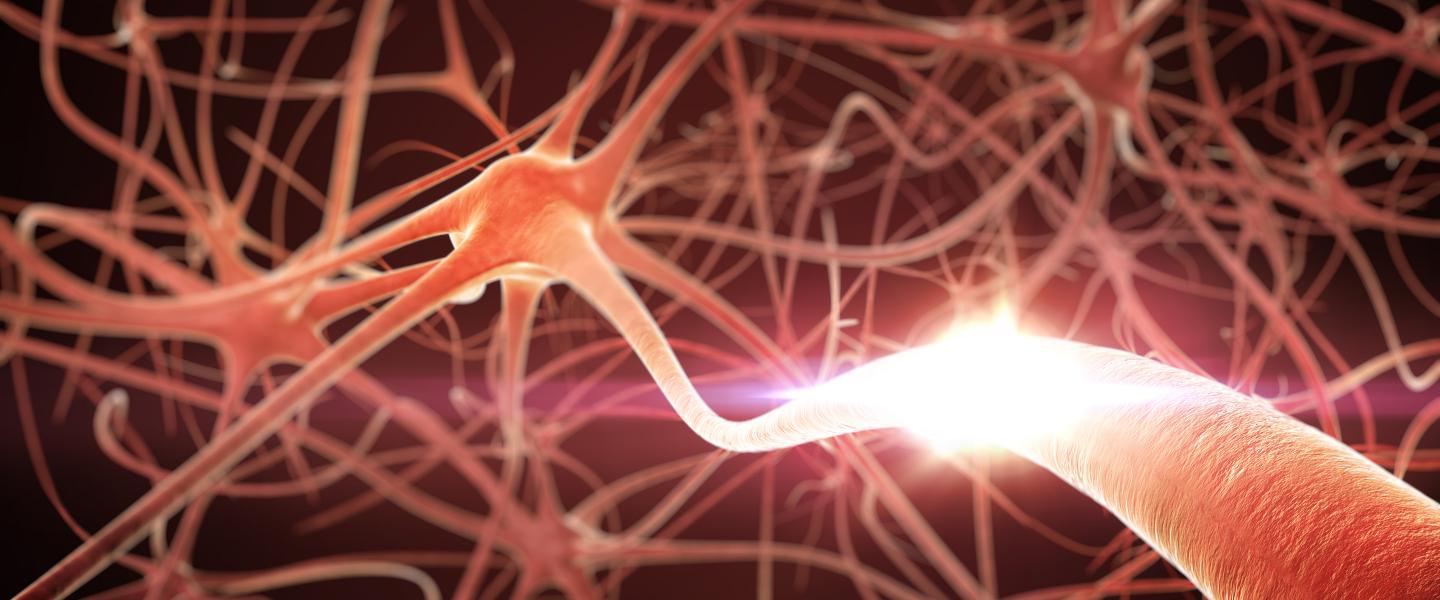
Virtually every part of the body experiences notable changes during sleep. Upon falling asleep, thousands of neurons in the brain switch from waking to sleeping state, sending signals throughout the body.
While the biological role of sleep still isn’t fully understood, research demonstrates that it reinforces the cardiovascular and immune systems and helps regulate metabolism. What happens during sleep can be seen in notable changes in core bodily processes.
Breathing
Breathing slows during non-REM sleep with respiration reaching its lowest rates during deep sleep stage three. Breathing ramps up and may become irregular during REM sleep.
Heart Rate
As with breathing, heart rate begins to slow during Stage 1 and reaches its slowest pace during Stage 3. On the other hand, during REM sleep, the pulse quickens to nearly the same rate as when awake.
Muscle Tone
Muscles gradually relax during each stage of non-REM sleep, and the body’s total energy expenditure drops. During the REM stage, most muscles are paralyzed in a condition known as atonia. This keeps the legs and arms from flailing in response to dream content. Respiratory and eye muscles stay active, though, and the darting of the eyes behind closed eyelids is the inspiration for the name rapid eye movement sleep.

Brain Activity
When measured during sleep, brain waves show clear patterns associated with each sleep stage. In the early parts of non-REM sleep, brain waves slow down considerably; however, in Stage 2 and Stage 3, there are numerous quick bursts of brain activity.
In REM sleep, brain activity accelerates, showing markedly different types of brain waves. Heightened brain activity is why REM sleep is known as the stage most associated with vivid dreaming.
REM sleep is thought to enable critical cognitive abilities, including memory consolidation, but non-REM sleep, even with reduced brain activity, is also believed to play a role in facilitating proper brain function while awake.
Dreaming
Dreaming is most prevalent and intense during REM sleep, but it can occur during any sleep stage. That said, dreams that happen during non-REM and REM sleep tend to show different patterns with REM dreams often being more fanciful, immersive, or bizarre.
Hormone Levels
Sleep and the body’s internal clock, or circadian rhythm, play an important role in regulating the production of numerous hormones including:
- Melatonin, which helps promote sleep
- Growth hormone, which supports bone and muscle development as well as metabolism
- Cortisol, which is part of the body’s stress response system
- Leptin and ghrelin, which help control appetite
Hormone levels fluctuate during different sleep stages, and quality of sleep may also affect daytime hormone production.
Your best sleep starts with the right mattress.
Our expert testing team tried 300+ mattresses to find the top ones for every sleeping style. See our favorite mattresses of 2026 here.
- In-depth ratings and comparisons
- Regularly updated with new products and testing data
- Options for all types of sleepers

What Happens When You Have Problems Sleeping?
When you have sleeping problems, you may not get the restorative benefits that come from what normally happens during sleep. The specific effects depend on the type of sleeping problem and its cause.
What Happens if You Don’t Get Enough Sleep?
Sleep disorders can negatively affect what happens when you sleep. For example, restless leg syndrome or disrupted breathing from sleep apnea can cause frequent awakenings that interrupt the normal sleep cycle, reducing restorative sleep. Circadian rhythm sleep-wake disorders can lead to insufficient sleep or abnormal sleep architecture.
People with insomnia have a hard time falling asleep or staying asleep for as long as they want to, which means that they get insufficient total sleep. As a result, they may not progress through enough sleep cycles to get proper rest, leading to daytime sleepiness as well as negative effects on mood and thinking.
Sleep deprivation, which often occurs with insomnia, can throw off the balance of sleep architecture. For example, after going without enough sleep, people often experience a REM sleep rebound, spending a disproportionate amount of time in REM sleep. This can cause too much brain activity, which in turn can leave you feeling irritable and may worsen mental health issues like anxiety and depression.
What Happens When You Sleep Too Much?
Hypersomnia is a condition marked by sleeping too much. People with hypersomnia often experience excessive daytime sleepiness and may find it hard to stay awake when they need to. Studies indicate that hypersomnia is associated with changes in sleep architecture, such as a reduction in deep sleep and an increase in NREM sleep, which may affect overall sleep quality.

Still have questions? Ask our community!
Join our Sleep Care Community — a trusted hub of product specialists, sleep health professionals, and people just like you. Whether you’re searching for the perfect mattress or need expert sleep advice, we’ve got you covered. Get personalized guidance from the experts who know sleep best.
Eric Suni has over a decade of experience as a science writer and was previously an information specialist for the National Cancer Institute.
Dr. Callender is a board-certified obstetrician-gynecologist who has been working in women’s health for over a decade.
Learn more about our medical advisory boardReferences9 Sources
Schönauer, M., & Pöhlchen, D. (2018). Sleep spindles. Current biology : CB, 28(19), R1129–R1130.
https://linkinghub.elsevier.com/retrieve/pii/S0960982218309345Saper, C. B., Fuller, P. M., Pedersen, N. P., Lu, J., & Scammell, T. E. (2010). Sleep state switching. Neuron, 68(6), 1023–1042.
https://pubmed.ncbi.nlm.nih.gov/21172606/Jung, C. M., Melanson, E. L., Frydendall, E. J., Perreault, L., Eckel, R. H., & Wright, K. P. (2011). Energy expenditure during sleep, sleep deprivation and sleep following sleep deprivation in adult humans. The Journal of physiology, 589(Pt 1), 235–244.
https://pubmed.ncbi.nlm.nih.gov/21059762/Simon HB. Sleep helps learning, memory. Harvard Health Publishing. February 15, 2012.
https://www.health.harvard.edu/blog/sleep-helps-learning-memory-201202154265Pagel, J. F. (2000). Nightmares and disorders of dreaming. American Family Physician, 61(7), 2037–2042, 2044.
https://pubmed.ncbi.nlm.nih.gov/10779247/Payne, J. D., & Nadel, L. (2004). Sleep, dreams, and memory consolidation: the role of the stress hormone cortisol. Learning & memory (Cold Spring Harbor, N.Y.), 11(6), 671–678.
https://pubmed.ncbi.nlm.nih.gov/15576884/Kim, T. W., Jeong, J. H., & Hong, S. C. (2015). The impact of sleep and circadian disturbance on hormones and metabolism. International journal of endocrinology, 2015, 591729.
https://pubmed.ncbi.nlm.nih.gov/25861266/Feriante J, Singh S. (2020, July 19). REM Rebound Effect. StatPearls Publishing.
https://www.ncbi.nlm.nih.gov/books/NBK560713/Plante D. T. (2018). Nocturnal sleep architecture in idiopathic hypersomnia: a systematic review and meta-analysis. Sleep medicine, 45, 17–24.
https://pubmed.ncbi.nlm.nih.gov/29680423/