When you buy through our links, we may earn a commission. Products or services may be offered by an affiliated entity. Learn more.

Sleeping With Your Mouth Open


- Sleeping with your mouth open can lead to dry mouth, bad breath, sore throat, and poor sleep quality, and may be a sign of underlying breathing issues.
- Common causes include nasal congestion, allergies, deviated septum, or sleep apnea.
- Chronic mouth breathing can increase the risk of tooth decay, gum irritation, and dehydration, and may worsen snoring or sleep apnea symptoms.
- Treatments range from mouth taping and nasal strips to using a CPAP or mouth guard for sleep apnea.
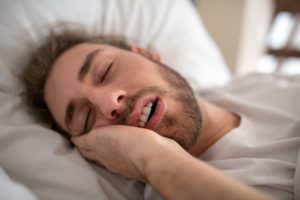
Sleeping with your mouth open is common, but it can cause uncomfortable symptoms and may be a sign of an underlying sleep or breathing issue. While most people breathe through their nose during sleep, people may sleep with their mouths open for a variety of reasons, including nasal congestion, allergies, anatomical factors, or even breathing disorders like sleep apnea.
Understanding why it happens—and how to prevent it—can help you breathe easier, sleep better, and wake up feeling more refreshed.

Why Do I Sleep With My Mouth Open?
People may sleep with their mouths open because it’s a habit, but mouth breathing at night may also be a sign that something is interfering with normal breathing, particularly if it’s accompanied by snoring.
Nasal congestion or blockage is a common cause of mouth breathing. This may be temporary congestion from a common cold or chronic congestion due to asthma or allergies. Young children occasionally stick objects into their nostrils, which may block nasal passages on one or both sides. Large growths in the lining of the nose, called polyps, can also impede breathing through the nose and may result in mouth breathing.
Mouth breathing may be a sign of obstructive sleep apnea (OSA). In children, a common cause of OSA is swollen adenoids, which are glands located in the back of the nose and throat. Many children with swollen adenoids sleep with their mouths open due to difficulty breathing through their noses.
Occasionally, changes to the anatomy of the nose and mouth may cause mouth breathing. A deviated septum of the nose , which describes a bent or crooked wall dividing the two nostrils, can block one nostril and may lead to mouth breathing and snoring. Misaligned teeth can also cause mouth breathing if a person has difficulty fully closing the mouth.
Effects of Mouth Breathing at Night
Occasionally sleeping with the mouth open, such as during a common cold, may not lead to significant health issues. However, chronic mouth breathing may cause several complications.
- Dry mouth and sore throat: Mouth breathing reduces saliva production, leading to dehydration, discomfort, and irritation in the throat.
- Increased risk of cavities and gum problems: Saliva helps protect teeth and gums; without it, bacteria and plaque can build up more easily.
- Oral yeast infections: Because saliva is important to keep the mouth clean and healthy, people with dry mouth can get frequent yeast infections inside the mouth.
- Worsened sleep apnea symptoms: For people with obstructive sleep apnea, mouth breathing can reduce CPAP effectiveness and lower oxygen levels.
Some studies have noted changes to the face and mouth over time in children who chronically breathe through their mouths, particularly in children with swollen adenoids. However, research into the link between mouth breathing and these facial features has found inconsistent results.
Symptoms of Mouth Breathing at Night
Saliva is important for oral health. It keeps the gums and tongue moist, the teeth healthy, dissolves food, and is important for swallowing. Thus, sleeping with your mouth open may result in:
- Waking up with a dry mouth or sore throat
- Morning bad breath that persists even after brushing
- Cracked lips or dehydration upon waking
- Snoring or noisy breathing during sleep
- Restless or fragmented sleep with frequent awakenings
- Daytime fatigue, sleepiness, or brain fog
- Morning headaches caused by low oxygen or poor-quality sleep
- Hoarse voice or throat irritation after sleeping
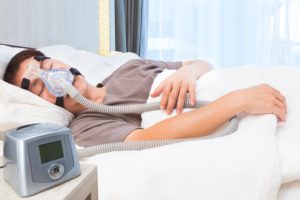
In addition to dry mouth, sleeping with the mouth open has been linked to nasal dryness and congestion. People who use positive airway pressure (PAP) therapy for sleep apnea and who sleep with their mouths open may experience air leaks that could reduce the effectiveness of PAP treatment.
How to Stop Sleeping With Your Mouth Open
If you often wake up with a dry mouth or sore throat, you may be breathing through your mouth instead of your nose during sleep. Fortunately, there are several strategies and treatments that can help promote nasal breathing, improve comfort, and protect your sleep quality.
Address Nasal Congestion
Nasal blockage is one of the most common reasons people breathe through their mouths at night. You can help open your nasal passages by:
- Using a saline spray or nasal rinse before bed
- Trying allergy medications or decongestants (as directed by your doctor)
- Using a humidifier to keep air moist and reduce nasal dryness
- Considering an ear, nose, and throat (ENT) evaluation if congestion is chronic or due to a deviated septum
Use Nasal Strips
Nasal strips are another option for those who may need help breathing through their nose at night. Nasal strips are adhesive strips that stick to the bridge of the nose and use springs to pull the nostrils outward.
Some studies have found that these strips reduce nasal congestion and improve sleep quality. However, research findings have been inconsistent. Other studies have found that nasal strips did not improve nasal congestion, sleep quality, nor sleep-disrupted breathing.
Consider Mouth Taping
Some experts recommend mouth taping to encourage breathing through the nose and to stop snoring. Mouth taping involves taping the mouth shut or covering it with a soft patch at night.
Very few studies of mouth taping have been done, but one small study found that participants reported less daytime sleepiness, less snoring, and fewer breathing disruptions while sleeping with a soft patch over their mouths.
However, while some research indicates that mouth taping might reduce snoring or help with mild OSA, it can pose risks for others. For people who mouth breathe because their nasal passages are obstructed, taping the mouth shut removes their backup airway. In these cases, airflow becomes restricted, which may make sleep apnea symptoms worse. Talk to your doctor if you’re considering mouth taping or if you suspect nasal blockage, difficulty breathing at night, or worsening OSA symptoms.
Change Your Sleep Position
Adjustments to the sleep position may help open the nasal airway and therefore reduce mouth breathing. Sleeping upright or on your side may open airways for some people.
Supportive pillows, specialized backpacks, body position sensors with alarms, or tennis balls attached to the back may help people who otherwise have difficulty sleeping on their sides or upright.
Treat Underlying Sleep Apnea
Mouth breathing can sometimes be a symptom of obstructive sleep apnea (OSA) or another breathing-related sleep disorder. If you snore loudly, gasp for air, or feel excessively tired during the day, talk to your doctor about a sleep study. Treatment options may include CPAP therapy, oral appliances, or nasal surgery to improve airflow.
Ask About Surgery
Some people with severe complications from chronic mouth breathing may need surgery to address their health conditions. Large nasal polyps that block the airway need to be surgically removed. While most children do not need treatment for swollen adenoids, some physicians may recommend having them removed if they cause severe symptoms.

When to Talk to a Doctor
Occasional mouth breathing isn’t usually a cause for concern, but persistent symptoms may signal an underlying condition that requires medical attention. You should talk to your doctor if you:
- Wake up frequently with dry mouth, sore throat, or headaches
- Experience chronic nasal congestion or difficulty breathing through your nose
- Snore loudly, gasp for air, or stop breathing during sleep (possible signs of sleep apnea)
- Have ongoing daytime fatigue or concentration problems, even after a full night’s rest
- Notice dental issues, such as gum irritation or tooth decay, related to mouth dryness
Your doctor may refer you to a sleep specialist, ENT (ear, nose, and throat) doctor, or dentist trained in sleep medicine to determine what’s causing your mouth breathing. A sleep study may also be recommended to check for sleep apnea or other breathing disorders.
Parents or caregivers who notice a newborn baby sleeping with their mouth open should talk to a doctor as soon as possible, because the baby may have serious breathing difficulties.
In addition, parents or caregivers should talk to a doctor if a child begins mouth breathing and snoring, particularly if the child has headaches in the morning, difficulty concentrating, or starts wetting the bed after not having done so before. These may be signs of obstructive sleep apnea.
Parents or caregivers of a child with swollen adenoids should talk to their children’s doctors if they notice changes in the shape of their child’s face or if their child has difficulty closing their mouth.
Frequently Asked Questions
Is mouth breathing bad?
Occasional mouth breathing—such as during a cold or allergy flare-up—isn’t harmful. But chronic mouth breathing can lead to several issues, including dry mouth, bad breath, sore throat, and tooth decay due to reduced saliva flow. It may also contribute to snoring, restless sleep, and fatigue, since breathing through the mouth can reduce oxygen intake and disrupt sleep quality.
In some cases, persistent mouth breathing is a sign of an underlying problem like nasal obstruction or obstructive sleep apnea, which should be evaluated by a healthcare professional.
Can dehydration make you sleep with your mouth open?
Dehydration itself doesn’t directly cause you to sleep with your mouth open, but it can worsen the effects of mouth breathing. However, mouth breathing increases fluid loss, leading to mouth dryness and worsening dehydration. Staying hydrated throughout the day and addressing any nasal congestion or sleep-related breathing issues can help reduce both dehydration and mouth breathing.
Do babies sleep with their mouths open?
Newborn babies tend to breathe through their noses. For this reason, a newborn baby sleeping with their mouth open may be a sign that their nose is blocked or that the septum of their nose was injured during childbirth.
If a child who used to breathe through their nose at night begins to breathe through their mouth, this may be a sign of swollen adenoids
. Adenoids usually grow throughout early childhood and reach their largest size in children aged 2 to 6 years.

Still have questions? Ask our community!
Join our Sleep Care Community — a trusted hub of sleep health professionals, product specialists, and people just like you. Whether you need expert sleep advice for your insomnia or you’re searching for the perfect mattress, we’ve got you covered. Get personalized guidance from the experts who know sleep best.
Dr. Rausch-Phung is a board-certified preventive medicine physician and a freelance medical writer specializing in health, wellness, and prevention with a passion for health communication.
Dr. Abhinav Singh, board certified in Sleep Medicine and Internal Medicine, is the Medical Director of the Indiana Sleep Center, which is accredited by the American Academy of Sleep Medicine. He is also a Clinical Assistant Professor at Marian University College of Medicine in Indianapolis, where he developed and teaches a Sleep Medicine rotation.
Learn more about our medical advisory boardReferences5 Sources
Shetty, S. R., Al Bayatti, S. W., Al-Rawi, N. H., Kamath, V., Reddy, S., Narasimhan, S., Al Kawas, S., Madi, M., Achalli, S., & Bhat, S. (2021). The effect of concha bullosa and nasal septal deviation on palatal dimensions: a cone beam computed tomography study. BMC Oral Health, 21(1), 607.
https://pubmed.ncbi.nlm.nih.gov/34814910/Tahla, B., & Swankar, S. A. (2022, October 27). Xerostomia. In StatPearls. StatPearls Publishing.
https://www.ncbi.nlm.nih.gov/books/NBK545287/Burgess, J. (2020, December 22). Salivary abnormalities in dentistry. Medscape.
https://emedicine.medscape.com/article/2091828-overviewNowak, A. J., & Warren, J. J. (2022, November 14). Oral habits and orofacial development in children. In A. Griffen (Ed.). UpToDate.
https://www.uptodate.com/contents/oral-habits-and-orofacial-development-in-childrenA.D.A.M. Medical Encyclopedia. (2021, August 8). Enlarged adenoids. MedlinePlus.
https://medlineplus.gov/ency/article/001649.htm