When you buy through our links, we may earn a commission. Products or services may be offered by an affiliated entity. Learn more.

Are Sleep Studies Covered by Insurance?


- Most Medicare, Medicaid, and private insurance plans cover sleep studies when they’re medically necessary.
- Insurance generally covers several types of sleep tests, including in-lab polysomnography, at-home sleep tests, and follow-up or CPAP titration tests.
- Insurance often requires prior authorization and documentation of your symptoms before approving coverage.
- Out-of-pocket costs vary by plan: Medicare pays 80% after deductible, while Medicaid usually has minimal cost-sharing. At-home tests generally cost less than in-lab studies.
Sleep studies are an important diagnostic tool that help doctors identify a number of sleep disorders and determine proper treatments, but the cost can vary widely, depending on the type and location. The good news is that in most cases, insurance covers sleep studies and limits out-of-pocket costs.
Below, we’ll walk you through the types of sleep studies insurance may cover, different plans, factors that affect coverage, and how much you should expect to pay.

Does Insurance Cover a Sleep Study?
Insurance plans, including Medicaid and Medicare, typically cover sleep studies, but only if they’re medically necessary. In other words, a doctor must determine that a sleep study is needed to help diagnose a disorder based on your symptoms and medical history. Your doctor will provide you with a referral to a sleep clinic or bill insurance directly for a home sleep test.
What Types of Sleep Studies Does Insurance Cover?
Insurance plans generally cover several types of sleep studies, though the specific coverage may vary by insurer or plan.
In-Lab Polysomnography
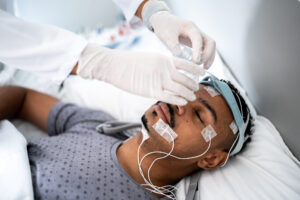
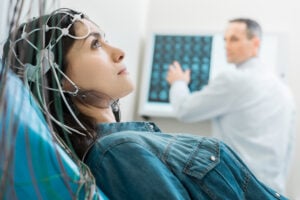
In-lab polysomnography (Type I) is the most comprehensive type of sleep study. You spend a night in a sleep laboratory and a sleep technician applies various sensors on your body to monitor your brain waves, heart rate, breathing, oxygen levels, and body movements.
Home Sleep Test (HST)
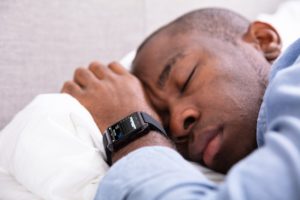
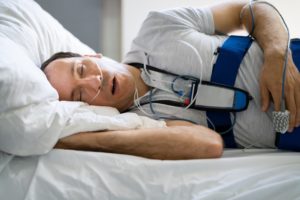
At-home sleep tests (Types II, III, or IV) allow you to take the test in your own bed using portable monitoring equipment. These tests are less comprehensive than polysomnography but have been found effective for diagnosing sleep apnea.
Additionally, a home sleep test cannot reliably diagnose parasomnias, narcolepsy, periodic limb movement disorder, or hypoventilation. They may also underestimate sleep apnea severity in patients with low sleep efficiency and may not be appropriate in patients with complex medical history.
CPAP Titration Study
If you’re diagnosed with sleep apnea, you may need a follow-up study to determine the right CPAP pressure settings. During a CPAP titration study, sleep technicians try different pressure settings on your CPAP machine while you are sleeping to find the ideal level for your treatment and comfort.
While some insurers may cover this type of sleep study, oftentimes, they rely on using an APAP machine to determine pressure settings. This involves using an auto-adjusting CPAP machine at home to track breathing patterns and automatically adjust pressure levels over several nights.
What Insurance Plans Typically Cover Sleep Studies?
Private health insurance, Medicare, and Medicaid all cover sleep studies, but the level of coverage and the requirements vary according to your plan.
Private Health Insurance
Private insurance plans generally cover sleep studies ordered by your healthcare provider, but often include conditions and rules that may vary depending on your plan.
- Referrals: HMO plans often require a referral from your primary care physician, while PPO plans usually do not.
- Prior authorization: Depending on your insurance plan and the type of sleep study, you may need approval from your insurance company before scheduling the test. Your doctor must submit documentation showing why the test is medically necessary.
- In-network providers: Using an in-network sleep clinic typically results in lower out-of-pocket costs. Some plans may not cover out-of-network providers.
- Cost-sharing: You may be responsible for copays, coinsurance, or your deductible, depending on your plan.
Medicare
Medicare Part B covers Type I, II, III, and IV sleep tests when you have clinical signs and symptoms of sleep apnea documented in your medical record and your doctor orders the test.
- In-lab tests (Type I): This type must be performed in an accredited sleep lab facility.
- Home sleep tests (Types II-IV): These can be performed at home or in a sleep lab, attended or unattended.
After meeting the Part B deductible, you pay 20% of the Medicare-approved amount.
Medicaid
Medicaid coverage for sleep studies varies by state and type of study, but cost sharing is usually minimal. Check with your state’s Medicaid program for specific coverage requirements.

What Determines Whether a Sleep Study Is Covered?
Several factors determine whether your insurance will cover a sleep study and how much you’ll pay.
Medical Necessity
Insurance companies only cover sleep studies when they’re medically necessary. Your doctor needs to document symptoms that suggest a sleep disorder, such as:
- Chronic, loud snoring
- Witnessed breathing pauses or gasping during sleep
- Excessive daytime sleepiness despite adequate sleep time
- Morning headaches
- Insomnia
- Sleepwalking
- Leg discomfort or movement at night
- Problems moving or speaking upon waking up
Prior Authorization
Many insurers require prior authorization before they’ll cover a sleep study. This means your doctor must submit a request to your insurance company explaining why the test is medically necessary. This request will likely include:
- Your symptoms
- Your medical history (including any previous sleep studies)
- Necessary codes and information about the accredited sleep facility if applicable
In-Network vs. Out-of-Network Providers
Using an in-network sleep center typically results in significantly lower costs. In-network providers have contracted rates with your insurance company, and you’ll only pay your plan’s copay or coinsurance.
If you choose an out-of-network sleep center, you’ll likely face higher copays or coinsurance percentages, or in some cases, you may have to pay the entire cost out of pocket.
Type of Sleep Study
HSTs generally cost less than in-lab studies. For this reason, many insurance companies prefer that you start with an HST if you’re being tested for sleep apnea. However, an in-lab test may be necessary if you have other medical conditions, if you’re being tested for a condition other than sleep apnea, or if your HST proved inconclusive.
How Much Does a Sleep Study Cost With Insurance?
Your costs for a sleep study depend on your insurance plan and whether you’ve met your deductible.
Typical Out-of-Pocket Costs
- With a copay: You’ll pay a flat fee decided on by your insurance company.
- With coinsurance: You’ll pay a percentage of the total cost. For example, if you have 20% coinsurance and take an HST costing $200, your out-of-pocket cost would be $40.
- Deductibles: You may be responsible for most or all of the insurance-approved cost of a sleep study until the deductible is satisfied. Some plans apply a copay or coinsurance instead, even before the deductible is met.
Cost Differences Between Study Types
- Home sleep test: Typically $100 to over $1,000 total cost. With insurance, you might pay $50 to $200 after cost-sharing, depending on your plan and if you’ve met your deductible.
- In-lab studies: An average of $3,000 total cost. With insurance, you might pay $200 to $600, depending on your plan and if you’ve met your deductible.

Still have questions? Ask our community!
Join our Sleep Care Community — a trusted hub of sleep health professionals, product specialists, and people just like you. Whether you need expert sleep advice for your insomnia or you’re searching for the perfect mattress, we’ve got you covered. Get personalized guidance from the experts who know sleep best.
Brian Clark is a writer and educator based in Los Angeles. His articles have appeared in The Austin Chronicle, Movieline and Screen Anarchy, among others. Like many, he became acutely aware of the importance of sleep after his first child was born.
As a board-certified sleep medicine physician with over 20 years of clinical experience, Dr. Adavadkar is an expert in diagnosing and treating sleep disorders in both children and adults, as well as addressing sleep issues experienced by veterans. Dr. Adavadkar is a member of the Sleep Foundation Medical Advisory Board.
Learn more about our medical advisory boardReferences14 Sources
Chiedi, J. M. (2019, June). Medicare payments to providers for polysomnography services did not always meet Medicare billing requirements. Department of Health and Human Services, Office of Inspector General.
https://oig.hhs.gov/oas/reports/region4/41707069.pdfPaprocki J. Sleep study may be best investment for long-term health. American Academy of Sleep Medicine. Published October 9, 2008.
https://sleepeducation.org/sleep-study-best-investment-for-long-term-health/MedlinePlus: National Library of Medicine (US). (2021, August 9). Sleep study.
https://medlineplus.gov/lab-tests/sleep-study/Rosen, I. M., Kirsch, D. B., Carden, K. A., Malhotra, R. K., Ramar, K., Aurora, R. N., Kristo, D. A., Martin, J. L., Olson, E. J., Rosen, C. L., Rowley, J. A., Shelgikar, A. V., & American Academy of Sleep Medicine Board of Directors (2018). Clinical use of a home sleep apnea test: An updated American Academy of Sleep Medicine position statement. Journal of Clinical Sleep Medicine, 14(12), 2075–2077.
https://pubmed.ncbi.nlm.nih.gov/30518456/Troy D. CPAP Titration Study. American Academy of Sleep Medicine. Published September 2020.
https://sleepeducation.org/patients/cpap-titration-study/LCD – Polysomnography and Other Sleep Studies (L36902). Cms.gov. Published 2025. Accessed December 11, 2025.
https://www.cms.gov/medicare-coverage-database/view/lcd.aspx?lcdid=36902&ver=15&Raphaelson M, Brown DB. Sleep medicine practice adaptations. Neurol Clin Pract. 2014;4(1):63-70. doi:10.1212/01.CPJ.0000442522.30233.34
https://pmc.ncbi.nlm.nih.gov/articles/PMC5765592/Lee Y, Lee S, Lee J. Medicaid Coverage for Home Sleep Apnea Tests. American Academy of Sleep Medicine. 2024;28:101962.
https://aasm.org/wp-content/uploads/2024/03/medicaid-home-sleep-apnea-test-coverage-request.pdfU.S. Centers for Medicare and Medicaid Services. (n.d.) Sleep studies. Medicare.gov.
https://www.medicare.gov/coverage/sleep-studiesCenters for Medicare & Medicaid Services. (2009, March 3). Sleep testing for obstructive sleep apnea (OSA). Centers for Medicare & Medicaid Services.
https://www.cms.gov/medicare-coverage-database/view/ncd.aspx?NCDId=330&ncdver=1&bc=AAAAQAAAAAAAAA%3D%3D&Cost Sharing Out of Pocket Costs | Medicaid. Medicaid.gov. Published 2022.
https://www.medicaid.gov/medicaid/cost-sharing/cost-sharing-out-pocket-costsMedlinePlus: National Library of Medicine (US). (2020, January 3). Sleep disorders.
https://medlineplus.gov/sleepdisorders.htmlHenry, O., Brito, A., Lloyd, M. C., Miller, R., Weaver, E., & Upender, R. (2022). A model for sleep apnea management in underserved patient populations. Journal of Primary Care and Community Health, 13, 21501319211068969.
https://pubmed.ncbi.nlm.nih.gov/35040343/Kim, R. D., Kapur, V. K., Redline-Bruch, J., Rueschman, M., Auckley, D. H., Benca, R. M., Foldvary-Schafer, N. R., Iber, C., Zee, P. C., Rosen, C. L., Redline, S., & Ramsey, S. D. (2015). An economic evaluation of home versus laboratory-based diagnosis of obstructive sleep apnea. Sleep, 38(7), 1027–1037.
https://pubmed.ncbi.nlm.nih.gov/26118558/
Learn More About Sleep Studies