
 10% off Home Sleep Tests
 When you buy through our links, we may earn a commission. Products or services may be offered by an affiliated entity. Learn more.

Will Insurance Cover Ozempic for Sleep Apnea?


- Most insurance plans don’t cover Ozempic for sleep apnea, but some partially cover costs of another GLP-1, Zepbound, that’s prescribed for sleep apnea.
- In 2024, the U.S. Food and Drug Administration (FDA) approved Zepbound for the treatment of moderate to severe obstructive sleep apnea (OSA) in adults with obesity. Currently, Ozempic is only approved to treat type 2 diabetes.
- You can find out if your insurance covers weight loss medications for sleep apnea by checking their online directory or calling your insurer directly.
Glucagon-like peptide-1 receptor agonists (GLP-1s) like Ozempic can help with weight loss, which may assist with sleep apnea symptoms. If your sleep apnea has worsened with weight gain or you have other medical conditions that warrant the use of GLP-1s, your healthcare provider may prescribe one, but they can be pricey. Monthly out of pocket costs often reach several hundred dollars, and some plans require you to try CPAP or a weight-loss program before approving the medication.
So, will insurance cover Ozempic for sleep apnea? The short answer is no, but some insurance plans may cover other GLP-1s for sleep apnea, especially if you also have other health conditions like high blood pressure or diabetes.
Even if your insurance won’t cover a GLP-1, you still have options. Your provider can document medical necessity, which strengthens insurance approval attempts for weight loss medications. Below, learn how weight loss drugs may improve sleep apnea, how to check your insurance coverage, and what other options exist.
Think You May Have Sleep Apnea? Get Help Today
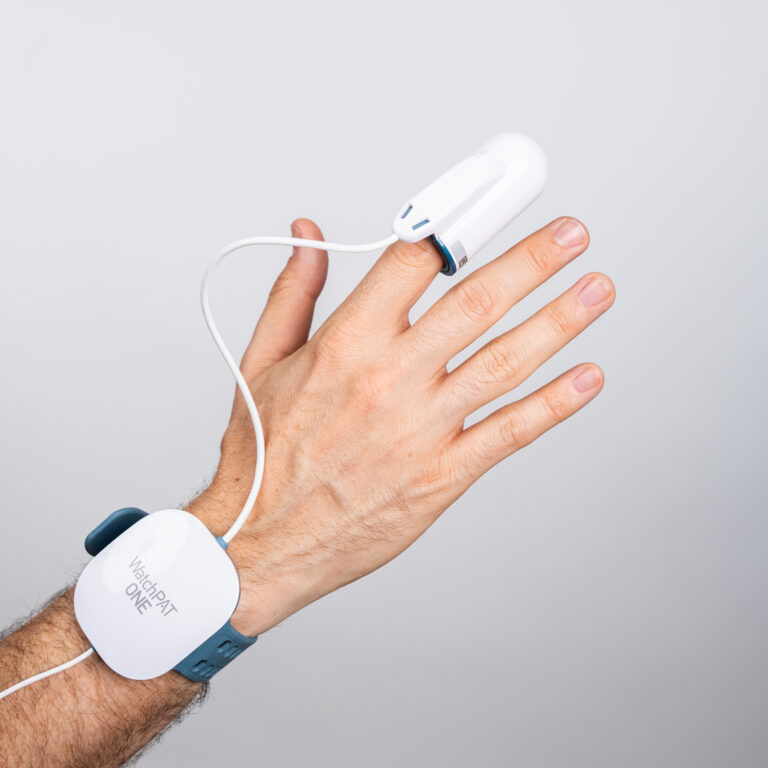
our partner at sleepdoctor.com
10% off Home Sleep Tests
Buy Now“Truly grateful for this home sleep test. Fair pricing and improved my sleep!”
Dawn G. – Verified Tester

Simple and convenient
It’s simple and convenient
- Equipment delivered to your doorstep
- One overnight test in the comfort of your own bed

Uncover sleep apnea
Uncovers type of sleep apnea
- Quietly collects data while you sleep
- 98% effective in detecting sleep apnea
Affordable & ships fast
Affordable and ships fast
- Arrives in 2-4 business days
- In-lab sleep tests cost ~$3,000+ (this one’s $189), HSA/FSA eligible
How Does Ozempic Work for Sleep Apnea?
Obstructive sleep apnea (OSA) happens when your airway gets blocked during sleep, causing a pause in breathing. These episodes can happen many times throughout the night and last anywhere from 10 to 30 seconds.
Carrying extra weight around the neck is a major risk factor for OSA, as excess tissue can crowd your airway while you sleep . About 31% of people with obstructive sleep apnea have obesity while 44% are overweight . Because of this connection, experts have started researching to see if GLP-1s like Ozempic can also improve symptoms of OSA .
A clear relationship exists between weight loss and better sleep apnea outcomes. A study review found that a 20% decrease in BMI led to a 57% reduction in sleep apnea symptoms .
Other research confirms GLP-1s may improve sleep apnea symptoms through weight loss, a lower BMI (body mass index), and a smaller waist size. But not all GLP-1s offer the same benefits. For example, another study review found that tirzepatide (Zepbound) improved OSA symptoms more than liraglutide (Saxenda). Trials also show that tirzepatide improves daytime sleepiness and blood pressure, two issues that often accompany sleep apnea.
Is Ozempic Approved for Sleep Apnea?
Currently, the U.S. Food and Drug Administration (FDA) has not approved Ozempic to treat sleep apnea or weight loss. Ozempic is only approved by the FDA to treat type 2 diabetes. The only FDA-approved GLP-1s for weight loss are semaglutide (Wegovy), liraglutide (Saxenda), and tirzepatide (Zepbound).
Among these, only Zepbound has FDA approval for sleep apnea. In 2024, the FDA approved Zepbound for the treatment of moderate to severe OSA in adults with obesity
. This approval was based on a large clinical trial showing significant reductions in apnea-hypopnea index (AHI) or sleep apnea severity after weight loss.
Will Insurance Cover Ozempic for Sleep Apnea?
Insurance typically won’t cover Ozempic for sleep apnea since the FDA hasn’t approved its use for that condition. Sometimes, providers will prescribe medications “off-label,” meaning they offer them because they may help with a condition not listed in the approved indications. But insurers typically won’t cover a drug for off-label use.
However, if you have another health condition alongside OSA, you may still be eligible for GLP-1 coverage. For example, Ozempic is FDA-approved for type 2 diabetes, so if you have this condition, your insurance may pay for it. Weight loss and improved sleep apnea become added benefits. .
Some insurance plans also cover GLP-1s for obesity-related health conditions like high cholesterol or high blood pressure, but each company sets its own criteria. If you have one of these health conditions plus a high BMI and obstructive sleep apnea, you may get insurance coverage for GLP-1s.
Now that Zepbound has been approved to treat OSA, more insurers may cover this medication. Many payers are adding Zepbound to formularies, although prior authorization is common. Requirements often include a BMI threshold, documentation of CPAP intolerance or failure, and proof of structured weight loss attempts.
How to Check Your Insurance Coverage
Every insurance company has a range of coverage plans and each covers different drugs. The first place you can look is your insurance provider’s website. Most insurers have a formulary listed under each of their plans, so you can see exactly what’s covered and how much you can expect to pay.
Medicare and Medicaid have a similar list available online. If your insurance company’s online formulary is confusing or difficult to use, you can call the customer service number on the back of your insurance card to ask for copay information on any medication.
You can also submit an appeal if your provider submits a GLP-1 request for approval and insurance says they won’t pay. Appeals can push insurers a little harder if they have denied payment for your weight loss drug or if it’s not on their list of approved medications. You may be able to get it covered with an appeal if your provider can prove it’s medically necessary.
For most plans, you have six months to file an internal appeal with your insurer. If that appeal is denied, you can request an external review for a third-party to weigh in. Typically, appeals are submitted through your insurer’s website, but you may also request more information through their customer service.
Alternatives if Insurance Won’t Cover Ozempic
If your insurance plan won’t pay for Ozempic, you can ask about Zepbound or another GLP-1 medication. If no weight loss medication is covered, you still have options. Exercise and diet changes are encouraged for people on GLP-1s, and these changes improve sleep apnea symptoms on their own .
To lose weight through diet, create a calorie deficit: take in fewer calories than you use daily. .
Cutting foods like sweet and alcoholic beverages, may also help you lose weight faster. However, everyone responds differently to diets, so you may need to try more than one approach. . You should also talk to your doctor before making any big lifestyle changes, especially because they may be able to make medically-sound suggestions based on your history or refer you to a nutritionist.
You can also boost your calorie deficit by exercising.. The U.S. Department of Health and Human Services recommends getting 150 to 300 minutes of moderate-intensity exercise or 75 to 150 minutes of vigorous exercise each week. They also suggest you include muscle strengthening exercises at least two days per week . Adding resistance training is especially helpful because increased muscle mass improves metabolic rate.
Beyond lifestyle changes, your provider can recommend sleep apnea treatments like :
- CPAP (continuous positive airway pressure) therapy, which keeps your airways open while you sleep.
- Oral appliances that reposition or retrain your tongue to stay clear of your airway and prevent blockage.
- Surgical options like nerve stimulation, tonsil removal, and excess tissue removal to improve OSA symptoms through a variety of methods.
Frequently Asked Questions
Does Medicare cover Ozempic for sleep apnea?
Medicare does not cover Ozempic for sleep apnea, but partially covers another GLP-1, Zepbound, for this diagnosis. Under Medicare, patients are expected to pay $50 per month for Zepbound.
How much is Ozempic without insurance?
Ozempic costs $499 per month without insurance. Some pharmacies offer discount programs, but costs still remain high.
How much is Ozempic with insurance?
The cost of Ozempic with insurance depends on your plan, but you may pay as little as $25 per month on some plans. To get a better idea of how much Ozempic can cost with your insurance plan, you can contact a representative from your insurance network to talk through any out-of-pocket costs.
How long will insurance cover Ozempic for sleep apnea?
The length of Ozempic coverage depends on your plan and health history. Typically, an initial authorization lasts for six months, but some plans cover this medication for 12 months at a time [/ocm_reference] . Renewals often require documented weight loss progress or updated provider notes.
Medical Disclaimer: The content on this page should not be taken as medical advice or used as a recommendation for any specific treatment or medication. Always consult your doctor before taking a new medication or changing your current treatment.

Still have questions? Ask our community!
Join our Sleep Care Community — a trusted hub of sleep health professionals, product specialists, and people just like you. Whether you need expert sleep advice for your insomnia or you’re searching for the perfect mattress, we’ve got you covered. Get personalized guidance from the experts who know sleep best.
References
10 Sources
-
Does Insurance Cover Prescription Weight Loss Injectables? NAIC. Published 2024.
https://content.naic.org/article/does-insurance-cover-prescription-weight-loss-injectables -
Robert L. O. Obstructive Sleep Apnea (OSA). MSD Manual Professional Version. Published August 2024.
https://www.msdmanuals.com/professional/pulmonary-disorders/sleep-apnea/obstructive-sleep-apnea-osa -
Esmaeili N, Gell L, Imler T, et al. The relationship between obesity and obstructive sleep apnea in four community-based cohorts: an individual participant data meta-analysis of 12,860 adults. EClinicalMedicine. 2025;83:103221. Published 2025 Apr 23. doi:10.1016/j.eclinm.2025.103221
https://pubmed.ncbi.nlm.nih.gov/40330547/ -
Yang R, Zhang L, Guo J, et al. Glucagon-like Peptide-1 receptor agonists for obstructive sleep apnea in patients with obesity and type 2 diabetes mellitus: a systematic review and meta-analysis. J Transl Med. 2025;23(1):389. Published 2025 Apr 3. doi:10.1186/s12967-025-06302-y
https://pubmed.ncbi.nlm.nih.gov/40181368/ -
Malhotra A, Heilmann CR, Banerjee KK, Dunn JP, Bunck MC, Bednarik J. Weight reduction and the impact on apnea-hypopnea index: A systematic meta-analysis. Sleep Med. 2024;121:26-31. doi:10.1016/j.sleep.2024.06.014
https://pubmed.ncbi.nlm.nih.gov/38908268/ -
FDA Approves First Medication for Obstructive Sleep Apnea. U.S. Food and Drug Administration. Published December 20, 2024.
https://www.fda.gov/news-events/press-announcements/fda-approves-first-medication-obstructive-sleep-apnea -
Malhotra, A., & Kundel, V. (2024, December 17). Obstructive sleep apnea: Overview of management in adults. In N. Collop (Ed.). UpToDate.
https://www.uptodate.com/contents/obstructive-sleep-apnea-overview-of-management-in-adults -
Kim JY. Optimal Diet Strategies for Weight Loss and Weight Loss Maintenance. J Obes Metab Syndr. 2021;30(1):20-31. doi:10.7570/jomes20065
https://pubmed.ncbi.nlm.nih.gov/33107442/ -
Giacone L, Siegrist M, Hartmann C. Food choices for weight loss: what dietary strategies would people use?. Br J Nutr. 2024;131(7):1268-1280. doi:10.1017/S0007114523002726
https://pubmed.ncbi.nlm.nih.gov/38012836/ -
Kp.org Criteria-Based Consultation Prescribing Program KAISER PERMANENTE NORTHWEST REGION CRITERIA for DRUG COVERAGE.
https://healthy.kaiserpermanente.org/content/dam/kporg/final/documents/formularies/nw/kp-ozempic-nw-en.pdf