When you buy through our links, we may earn a commission. Products or services may be offered by an affiliated entity. Learn more.
Managing Excessive Daytime Sleepiness


- Excessive daytime sleepiness, or daytime somnolence, is frequent and persistent drowsiness.
- Untreated excessive sleepiness may increase the risk of diabetes, obesity, heart disease, and other chronic conditions.
- Sleep disorders and other health conditions are common causes of excessive sleepiness.
- Treatment can include improving your sleep hygiene, adjusting your medication regimen, and creating a treatment plan for any underlying disorders.
Excessive sleepiness during waking hours, also referred to as daytime somnolence, may be a warning sign of poor sleep quality, sleep disorders, or other health conditions. Though not a disorder in itself, excessive daytime sleepiness is something to take seriously. It is important to recognize the signs of excessive daytime sleepiness to properly identify and remedy the cause.

What Is Excessive Daytime Sleepiness?
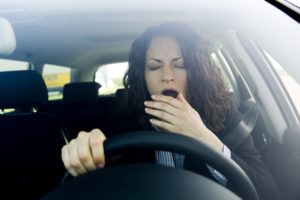
Excessive daytime sleepiness is defined as difficulty staying awake or alert, or an increased desire to sleep during the day. The feelings of sleepiness may be stronger when you are sedentary, such as while driving or sitting at work. Although it is normal to feel sleepy once in a while after going short on sleep, repeated bouts of drowsiness are considered excessive daytime somnolence when this happens almost every day for at least three months .
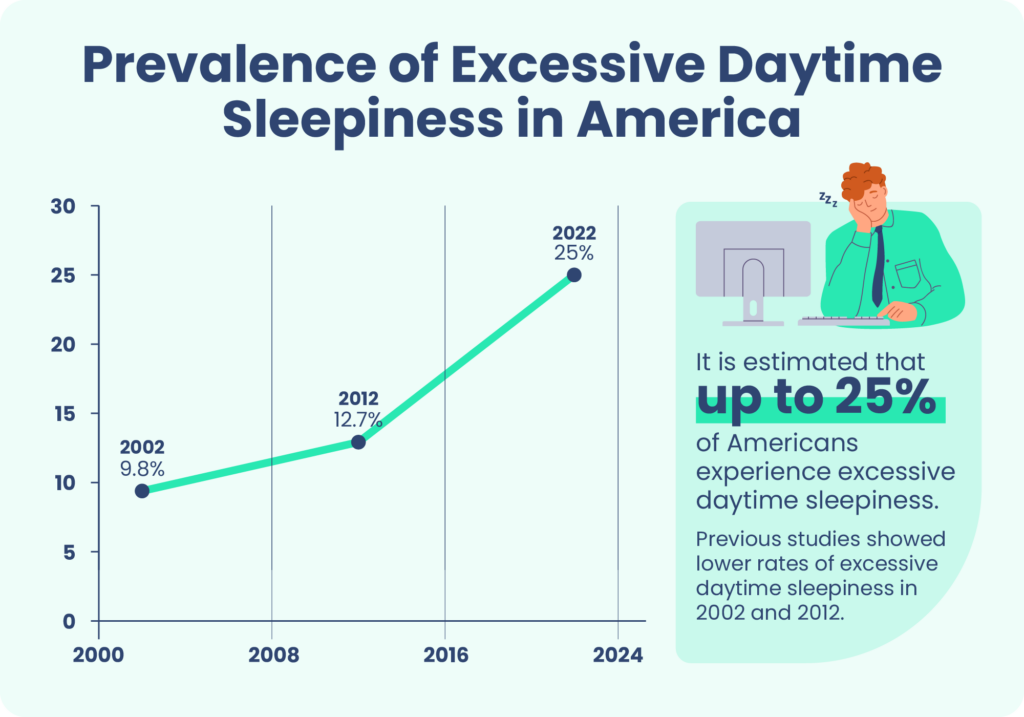
It is easy to confuse sleepiness with fatigue , since both conditions are characterized by a lack of energy and may arise under similar circumstances, such as being awake for extended periods. The principal difference is that people with fatigue are able to remain awake despite feeling tired and sluggish. It is also possible to experience simultaneous fatigue and sleepiness. Excessive daytime sleepiness affects up to 25% of the American population, and some research suggests that prevalence of the condition has increased over time . However, there are different definitions of excessive sleepiness, which can affect its estimated prevalence.
Symptoms of Excessive Sleepiness
Sleep plays an important role in consolidating memory, restoring the immune system, and other vital processes. As a result, a lack of quality sleep may result in a host of symptoms that may not immediately be connected to sleep.
Even if you do not consciously feel sleepy, you may be suffering from excessive sleepiness if you are experiencing any of the following:
- Trouble staying alert
- Feelings of irritation
- Memory problems
- Trouble focusing
- Difficulty retaining new concepts
- Difficulty making decisions
- Slower reaction times
- Risk-taking behaviors
Consequences of Daytime Somnolence
Being sleepy can have wide-ranging effects on health and daily life. Consequences of daytime somnolence include:
- Increased risk of car and work accidents
- Decreased work productivity or academic performance
- Worse quality of life
- Problems regulating mood and emotions
- Social and relationship problems
Excessive sleepiness may be particularly dangerous for young adults, shift workers, medical staff, and people who drive for extended amounts of time.
Long-term sleep deprivation has been linked to a higher risk of developing diabetes, obesity, heart disease, and other chronic conditions. Daytime sleepiness in children may affect development . In older adults, daytime sleepiness heightens the risk for falls and may be a risk factor for cognitive impairment , memory loss, and earlier mortality.

Causes of Excessive Sleepiness
There are many possible causes of excessive daytime sleepiness. One of the most common is a chronic lack of sleep , whether due to long work hours, an irregular schedule, insomnia, or other reasons.
Excessive sleepiness can also be caused by getting fragmented or otherwise poor-quality sleep. Waking up multiple times a night to use the bathroom, for example, disrupts the natural progression of the sleep stages and may reduce the proportion of restorative slow-wave sleep. Smoking, not exercising enough, and other lifestyle habits may also interfere with sleep quality and cause daytime sleepiness.
Many people who experience excessive daytime sleepiness do not appear to have any problems sleeping enough. In these cases, sleepiness may be a sign of an underlying health condition or sleep disorder.
Sleep-Wake Disorders
Sleep disorders such as obstructive sleep apnea (OSA), restless legs syndrome, and periodic limb movement disorder are known for causing fragmented sleep. These conditions can cause micro-awakenings that disrupt the flow of sleep, though people may not be aware they have these disorders until they visit a sleep doctor or participate in a sleep study.
Other sleep-wake disorders influence the neurological mechanisms that regulate the sleep cycle. Conditions such as narcolepsy and idiopathic hypersomnia are thought to influence the hormones responsible for promoting wakefulness, causing sleepiness during the day.
Similarly, people with circadian rhythm disorders experience a disconnect between their inner body clock and the times when they need to be awake. This disconnect can cause both insomnia while trying to sleep and excessive sleepiness while awake.
Other Health Conditions
Chronic medical conditions and mental health disorders are often accompanied by daytime sleepiness. Common culprits include depression, anxiety, schizophrenia, lupus, Parkinson’s disease, multiple sclerosis, cancer, chronic pain, obesity , and hypothyroidism, among others.
Health conditions and sleep problems often have a bidirectional effect. Failure to sleep well can interfere with recovery, and may also predict diagnoses of health issues such as Parkinson’s disease further down the line. Emerging research suggests that the propensity for daytime sleepiness may even have a genetic component.
Medications used to treat health conditions may also cause daytime sleepiness as a side effect, as can substances such as alcohol or narcotics.
When to Talk to Your Doctor
You should see a doctor if you are feeling tired all the time, if excessive daytime sleepiness is affecting your day-to-day life, or if you believe it might be a sign of an underlying disorder.
Your doctor will run tests and ask questions about your sleep habits to pinpoint the reason for your sleepiness. They may also ask your bed partner whether you gasp, snore, or move your legs during the night. If they suspect a sleep disorder, they may refer you to a sleep specialist to run more tests.
Treatment methods for daytime sleepiness depend on the cause. The doctor will likely start by recommending sleep hygiene tips and encourage you to get more sleep. They may adjust the medications you take, and can also work with you to develop a treatment plan for underlying disorders, which may need to be treated independently.

Still have questions? Ask our community!
Join our Sleep Care Community — a trusted hub of product specialists, sleep health professionals, and people just like you. Whether you’re searching for the perfect mattress or need expert sleep advice, we’ve got you covered. Get personalized guidance from the experts who know sleep best.
Danny is a Certified Sleep Science Coach with an in-depth knowledge of sleep health. He has tested hundreds of mattresses and sleep products.
Dr. Anis Rehman, MD is an American Board of Internal Medicine (ABIM) certified physician in Internal Medicine as well as Endocrinology, Diabetes, and Metabolism who practices in Illinois. He completed his residency at Cleveland Clinic Akron General, and fellowship training at the University of Cincinnati in Ohio. Dr. Rehman has several dozens of research publications in reputable journals and conferences.
Learn more about our medical advisory boardReferences11 Sources
Brown, J., & Makker, H. K. (2020). An approach to excessive daytime sleepiness in adults. The British Medical Journal (Clinical Research Edition), 368, m1047.
https://pubmed.ncbi.nlm.nih.gov/32220833/Schwartz, J. R., Roth, T., Hirshkowitz, M., & Wright, K. P. (2009). Recognition and management of excessive sleepiness in the primary care setting. Primary Care Companion to the Journal of Clinical Psychiatry, 11(5), 197–204.
https://pubmed.ncbi.nlm.nih.gov/19956456/Chervin, R. D. (2021, September 29). Approach to the patient with excessive daytime sleepiness. In T. E. Scammell (Ed.). UpToDate., Retrieved February 24, 2023, from
https://www.uptodate.com/contents/approach-to-the-patient-with-excessive-daytime-sleepinessFord, E. S., Cunningham, T. J., Giles, W. H., & Croft, J. B. (2015). Trends in insomnia and excessive daytime sleepiness among U.S. adults from 2002 to 2012. Sleep Medicine, 16(3), 372–378.
https://pubmed.ncbi.nlm.nih.gov/25747141/Gharibi, V., Mokarami, H., Cousins, R., Jahangiri, M., & Eskandari, D. (2020). Excessive daytime sleepiness and safety performance: Comparing proactive and reactive approaches. The International Journal of Occupational and Environmental Medicine, 11(2), 95–107.
https://pubmed.ncbi.nlm.nih.gov/32218557/Kallambella, K., & Hussain, N. (2015). Approach to a child with excessive daytime sleepiness. Archives of Disease in Childhood. Education and Practice Edition, 100(6), 288–336.
https://pubmed.ncbi.nlm.nih.gov/26056052/Gooneratne, N. S., Richards, K. C., Joffe, M., Lam, R. W., Pack, F., Staley, B., Dinges, D. F., & Pack, A. I. (2011). Sleep disordered breathing with excessive daytime sleepiness is a risk factor for mortality in older adults. Sleep, 34(4), 435–442.
https://pubmed.ncbi.nlm.nih.gov/21461321/Okamura, T., Ura, C., Miyamae, F., Sugiyama, M., Niikawa, H., Ito, K., & Awata, S. (2016). Excessive daytime sleepiness is related to subjective memory impairment in late life: a cross-sectional community-based study. Psychogeriatrics: The Official Journal of the Japanese Psychogeriatric Society, 16(3), 196–201.
https://pubmed.ncbi.nlm.nih.gov/26179318/Slater, G., & Steier, J. (2012). Excessive daytime sleepiness in sleep disorders. Journal of Thoracic Disease, 4(6), 608–616.
https://pubmed.ncbi.nlm.nih.gov/23205286/Slater, G., Pengo, M. F., Kosky, C., & Steier, J. (2013). Obesity as an independent predictor of subjective excessive daytime sleepiness. Respiratory Medicine, 107(2), 305–309.
https://pubmed.ncbi.nlm.nih.gov/23159457/Zhou, J., Zhang, J., Lam, S. P., Chan, J. W., Mok, V., Chan, A., Li, S. X., Liu, Y., Tang, X., Yung, W. H., & Wing, Y. K. (2017). Excessive daytime sleepiness predicts neurodegeneration in idiopathic REM sleep behavior disorder. Sleep, 40(5), 10.1093/sleep/zsx041.
https://pubmed.ncbi.nlm.nih.gov/28329332/
Learn More About Excessive Sleepiness